Felipe Zuñe is a PhD researcher at the Universidade Federal Do Rio de Janeiro, in Brazil. He is an ecologist with special focus on vegetation dynamics. Here, Felipe shares his recent work on ecological drivers on vegetation dynamics of the Trindade Island.
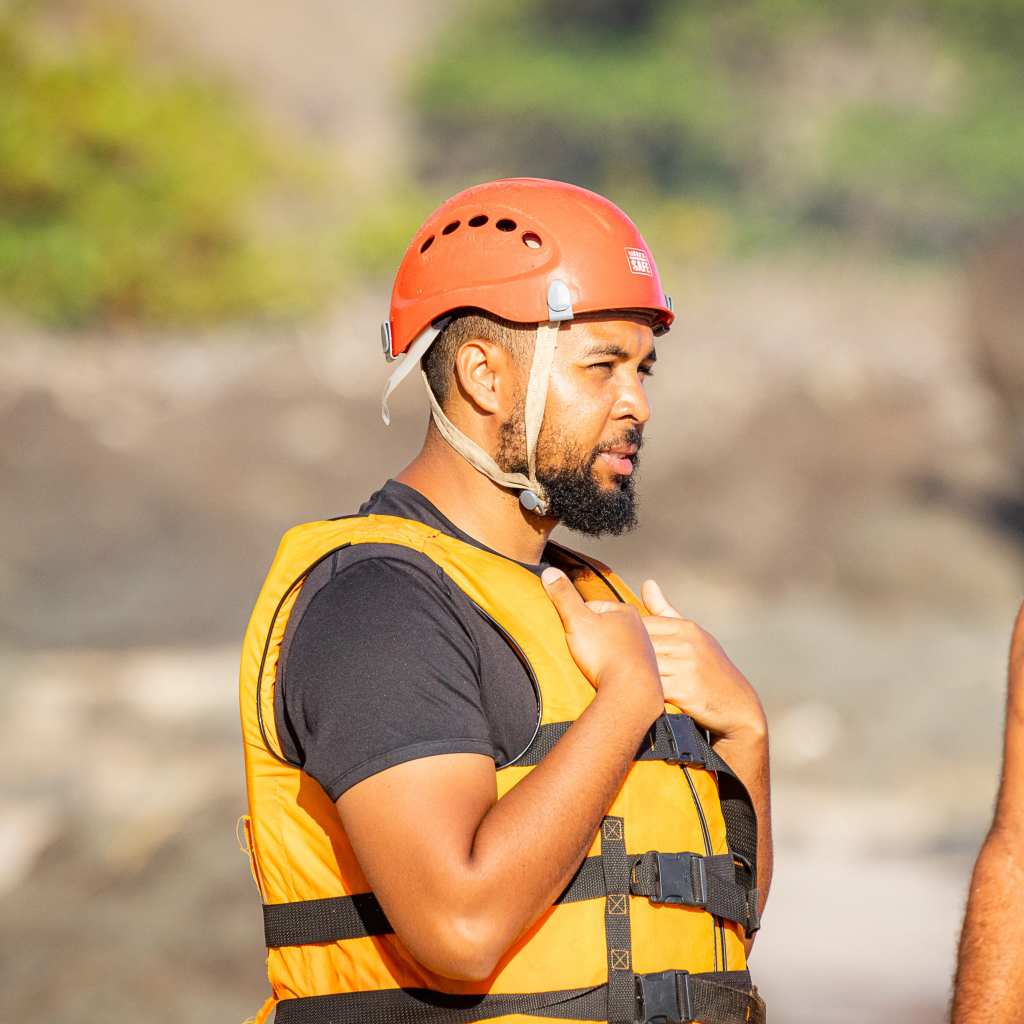
Felipe Zuñe, PhD researcher at the Universidade Federal Do Rio de Janeiro.
Institute. Programa de Pós-graduação Em Ciências Biológicas (Botânica), Museu Nacional, Universidade Federal Do Rio de Janeiro, Brazil
Academic life stage. PhD Candidate
Major research themes. Vegetation dynamics; Biodiversity conservation; Ecology; Botany.
Recent paper (citation). Zuñe, F., Rogério, M. G., Alves, R. J. V., & Silva, N. G. (2025). From Disturbance to Recovery: Unveiling the Role of Goats and Ecological Drivers on Vegetation Dynamics of Trindade Island, South Atlantic, Brazil. Journal of Vegetation Science, 36, e70039. https://doi.org/10.1111/jvs.70039
Current study system. Our research examines vegetation dynamics across tropical ecosystems, with particular focus on Trindade Island, a remote Brazilian oceanic island that serves as a natural laboratory for studying ecosystem responses to human disturbances and climate change. Using remote sensing in combination with field ecology methods, we analyze how invasive species legacies affect vegetation structure, document recovery patterns following eradication, and identify climate-vegetation interactions. These island studies directly complement my work in continental tropical forests, where I investigate similar ecological processes, including disturbance impacts, successional pathways, and resilience mechanisms. Together, this integrated approach contributes to the development of robust frameworks for biodiversity conservation in changing environments.
Motivation behind this paper. Understanding the precise magnitude of invasive herbivore impacts on island ecosystems remains a critical knowledge gap. While previous studies documented goat-induced degradation on Trindade Island, the quantitative extent of their ecological effects was unknown, representing a fundamental gap that motivated our research. Three centuries of uncontrolled herbivory had clearly transformed the landscape, but we lacked systematic measurements of how different vegetation types responded to this prolonged pressure. The 2005 eradication created an unprecedented opportunity to quantify these legacy effects. Our study addressed this need by precisely measuring goat impacts across ecosystems and their interaction with environmental variables, providing essential baselines for restoration science.
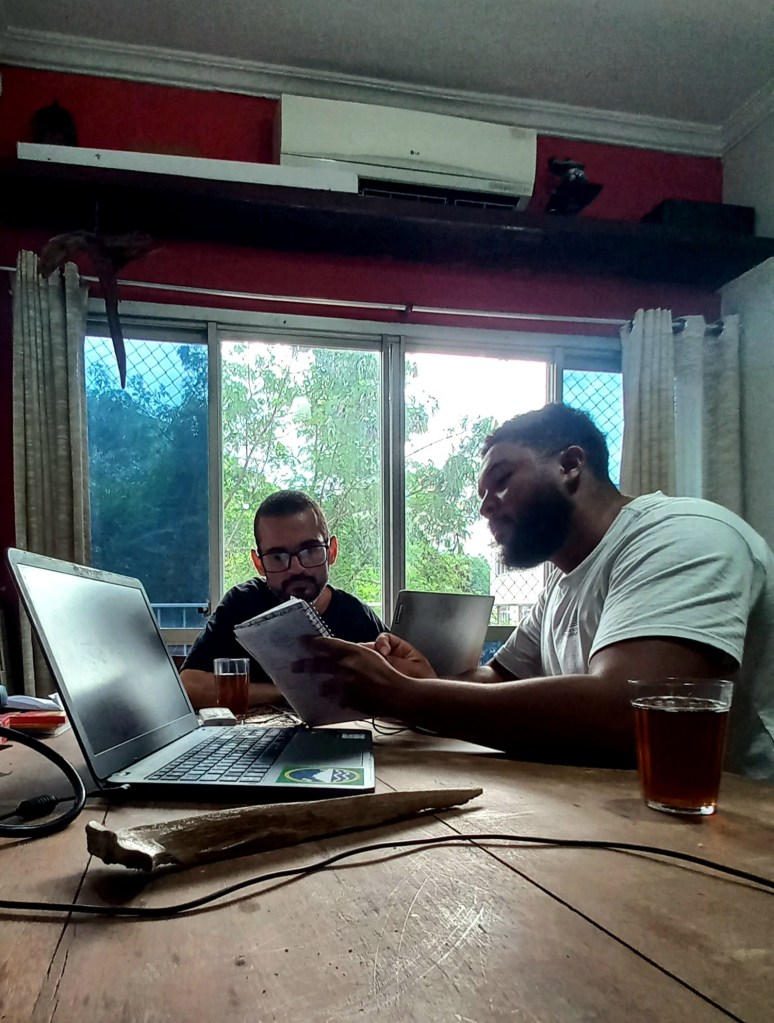
Felipe and Nílber Gonçalves da Silva working behind the scenes on the development, planning, and structuring of this study. Nílber is one of the researchers and also the project coordinator.
Key methodologies. Our study combined multi-temporal satellite imagery with field surveys to reconstruct vegetation changes across Trindade Island. The innovative integration of Random Forest classification with NDVI time-series analysis allowed precise tracking of recovery patterns post-eradication. We developed a novel modeling framework using Generalized Linear Models to disentangle legacy goat impacts from environmental drivers. Crucially, our backcasting approach extended the observational period beyond satellite records by incorporating historical field data. This methodological synergy provided unprecedented resolution for detecting nonlinear recovery trajectories across different vegetation types, offering new capacity to predict ecosystem responses to invasive species removal in island environments.
Unexpected challenges. One major challenge was accurately monitoring vegetation changes on Trindade Island, given its extreme remoteness and restricted access. The island’s limited accessibility required developing specialized remote sensing methods that could function with minimal field validation. We implemented multi-temporal NDVI analysis to track subtle recovery patterns. Incorporating historical expedition data through backcasting approaches allowed us to extend the observational record. These methodological innovations not only addressed the study’s logistical constraints, but also established new protocols for ecological monitoring in similarly isolated island ecosystems where traditional field validation remains impractical.
Major results. Our study revealed that goat eradication led to significant forest (65 ha) and grassland (325 ha) recovery by 2024, though climate factors (e.g., precipitation) amplified these changes. Hybrid models (anthropogenic + climate) had the highest explanatory power, underscoring the need for integrated conservation strategies. This work advances understanding of island ecosystem resilience and informs invasive species management worldwide.
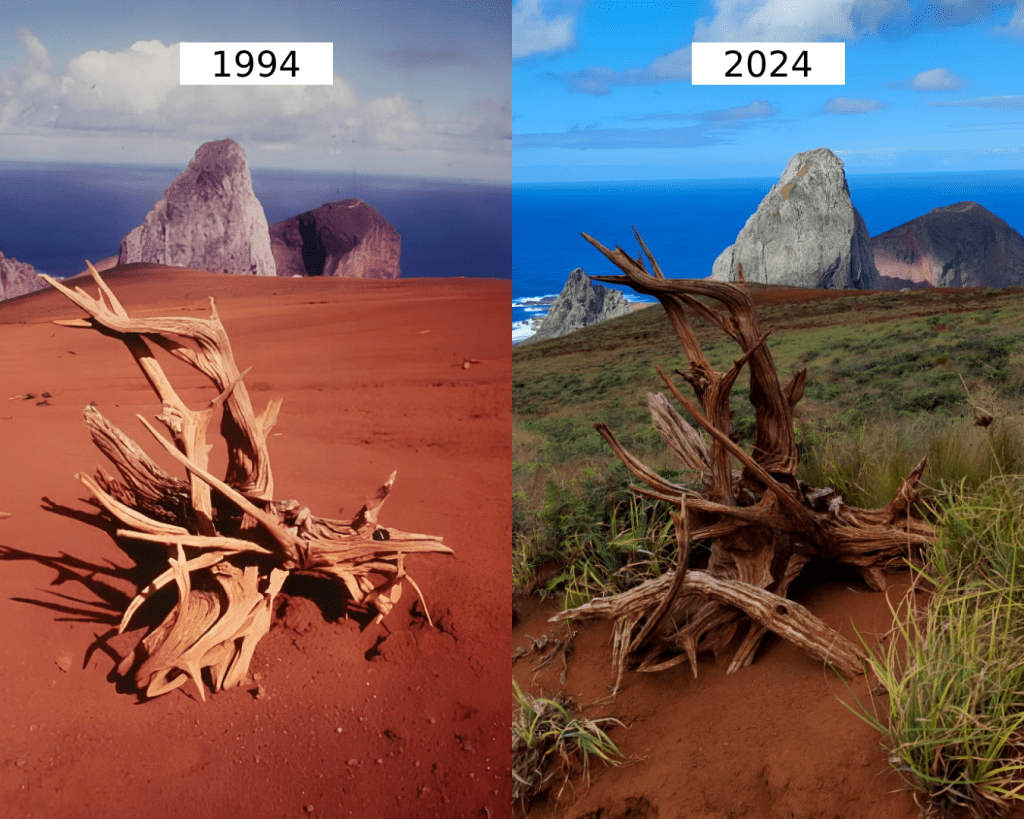
Vegetation comparison on Trindade Island, between 1994, when goats were still present, and 2010, showing ecosystem recovery after goat eradication.
Next steps for this research. Our current research group is studying the functional diversity of Trindade’s endemic ferns (Cyathea copelandii) to understand their role in the island’s recovery. With these insights, we will: develop preventive monitoring strategies to detect reinvasions; refine high-resolution remote sensing for small islands; and analyze genetic diversity in recovering populations.
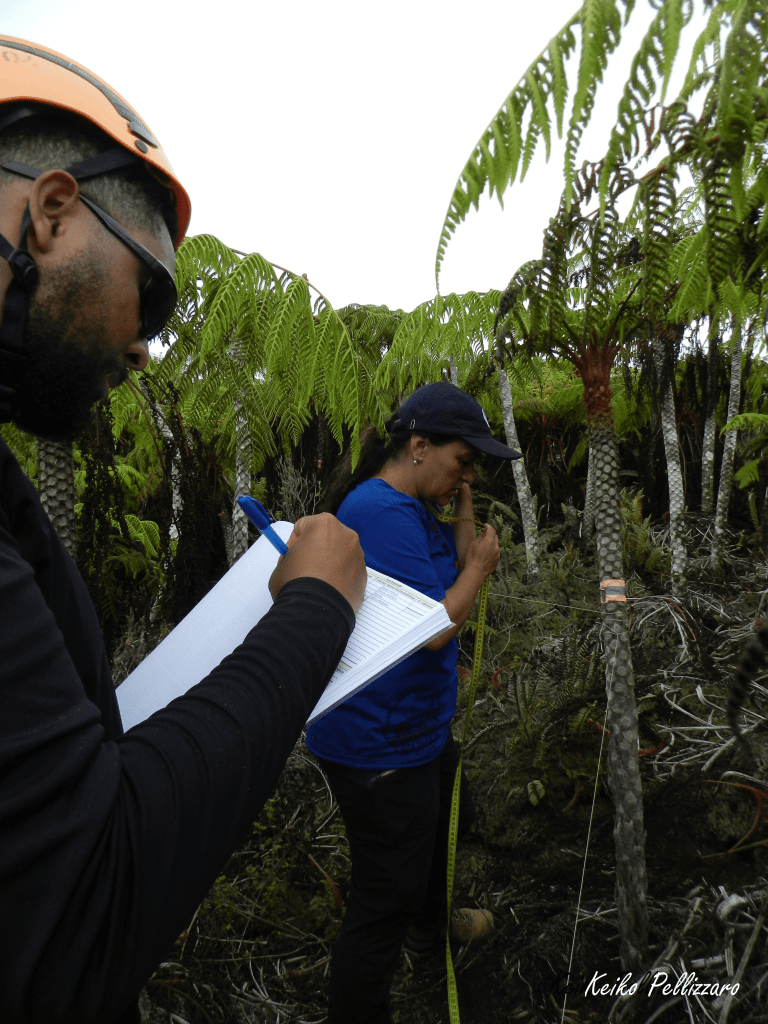
Felipe and Márcia Gonçalves Rogério, one of the researchers involved in the study published in the Journal of Vegetation Science, measuring endemic ferns on Trindade Island.
If you could study any organism on Earth, what would it be? I would like to study tortoises, especially the Galápagos tortoises. I’m fascinated by their size, ancient lineage, and role as ecosystem engineers.
Is there anything else you would like to tell us about yourself or your featured research? Trindade Island’s story is a testament to nature’s resilience, but also a warning. Even after goat removal, non-native plants and mice persist, showing that eradication alone isn’t enough. Collaborative, adaptive management is key!
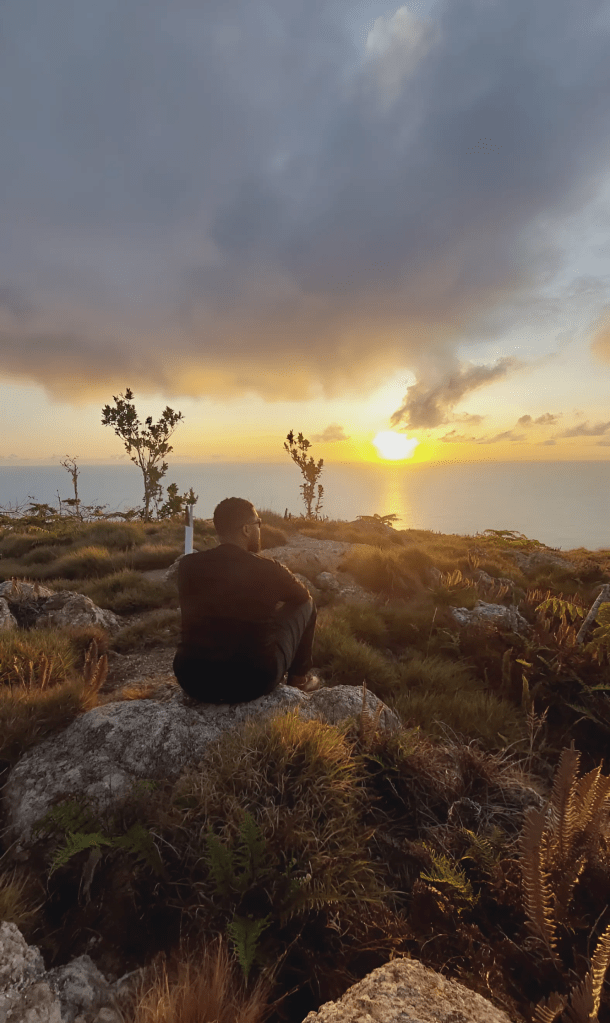
Felipe enjoying the view and sunset on Trindade Island.
 Biogeography.News