Rodolfo is a PhD student at Monash University, Melbourne, Australia. He is a herpetologist with an interest in physiology and biogeography. Rodolfo shares his recent work on the ecophysiological strategies used by an Australian skink, Lampropholis guichenoti, to survive in diverse, variable climatic conditions. Rodolfo on top of Cradle Mountain, Tasmania. Personal. Twitter Institute. SchoolContinue reading “ECR Feature: Rodolfo de Oliveira Anderson on ecophysiology in skinks”
Author Archives: BiogeographyNews
Pseudocongruent phylogeographic patterns in forest-living herpetofauna
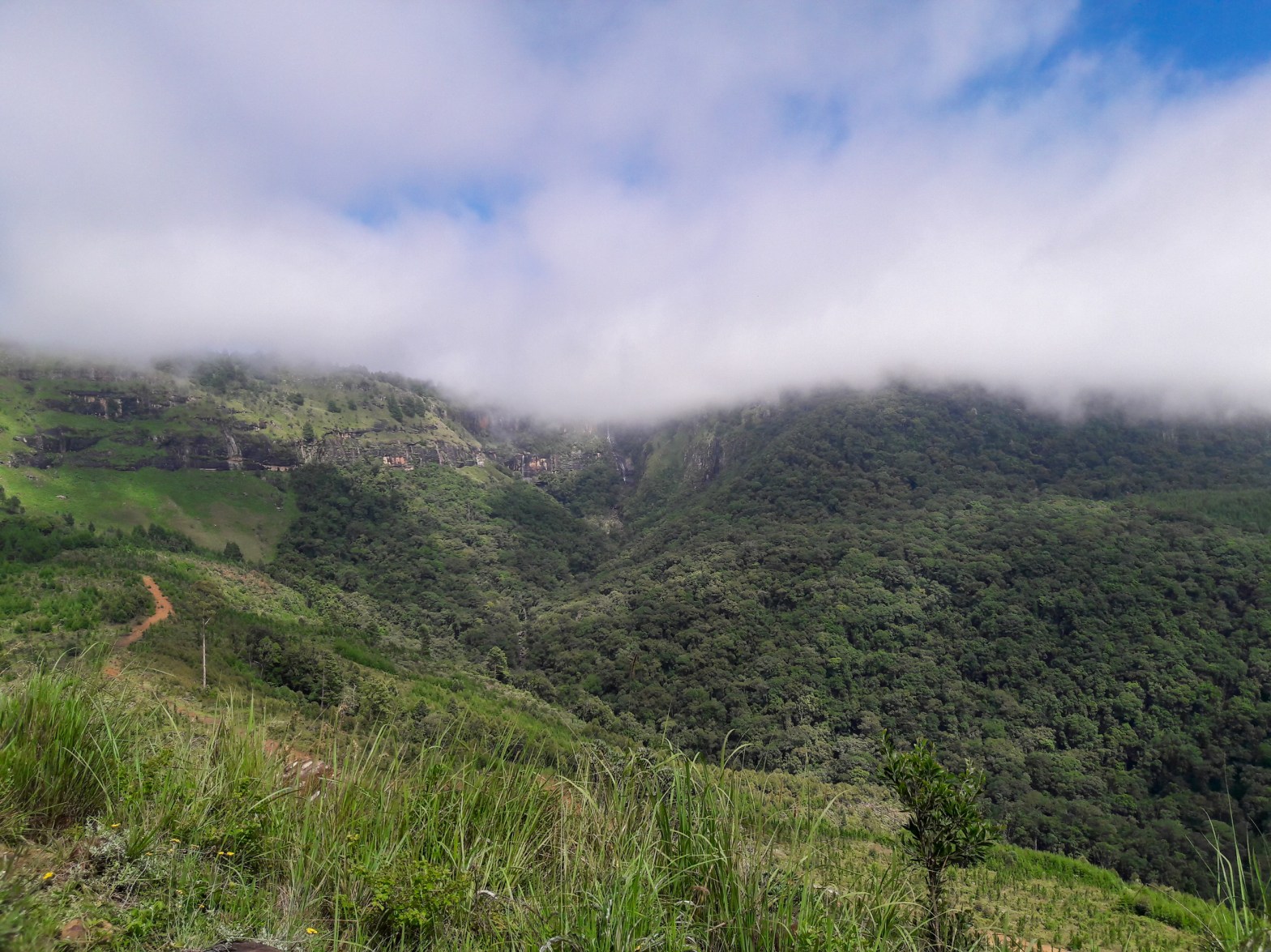
Similar phylogeographic patterns do not necessarily imply similar evolutionary histories. Instead, environmental factors like the formation of rivers, ancient climatic cycles and climatic gradients could collectively interact with the unique life histories species to strengthen dispersal barriers at different times and generate complex biogeographic patterns. Above: Isolated forest fragment in the Eastern Cape Province ofContinue reading “Pseudocongruent phylogeographic patterns in forest-living herpetofauna”
Colonization across oceanic islands, and how to estimate it
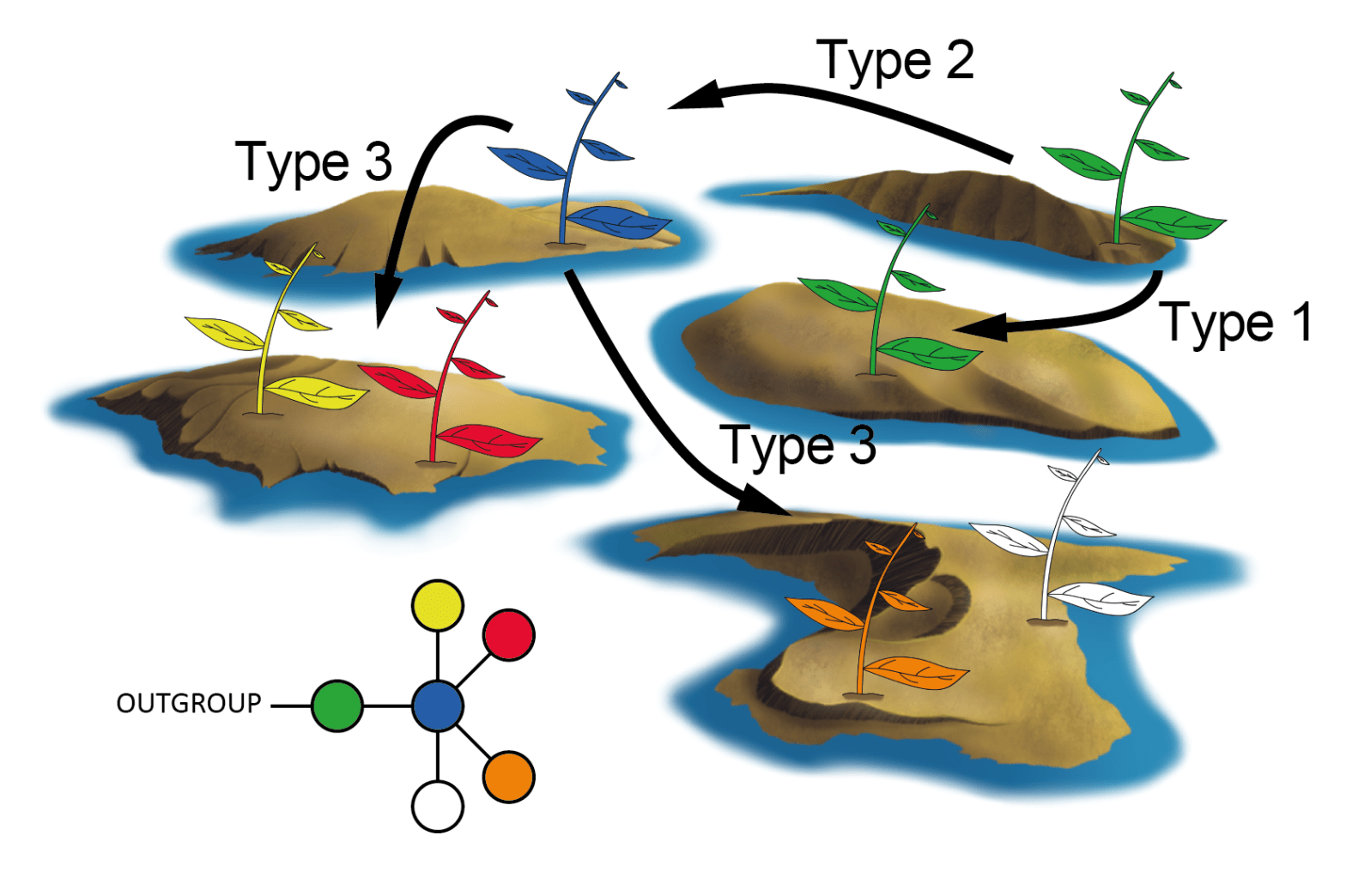
Colonization across oceanic islands is a central topic in island biogeography. PAICE, a new methodological tool to estimate colonization events using floristics, genetics, and accounting for sample size. PAICE is designed to perform comparisons among organisms and archipelagos, and can be used to test explicit biogeographic hypotheses such as the difference in colonization success betweenContinue reading “Colonization across oceanic islands, and how to estimate it”
ECR Feature: Rowan Schley on the diversification of pantropical trees
Rowan J. Schley is a postdoc at the University of Exeter and the University of Edinburgh. He is particularly interested in using genomic approaches to study diversity in tropical ecosystems. Rowan shares his recent work on the diversification of the pantropical tree genus, Pterocarpus, and the relative roles of biome-switching and long-distance dispersal. Rowan withContinue reading “ECR Feature: Rowan Schley on the diversification of pantropical trees”
ECR feature: Maria Guerrina on post-glacial contraction in an Alpine endemic plant.
Maria Guerrina is a postdoc at the Università degli Studi di Genova in Italy. She is a plant biologist interested in the evolution of endemic biota. Here, Maria shares her recent work on the post-glacial contraction of an Alpine endemic species. Maria Guerrina during fieldwork in the South-western European Alps. Personal links. Research Gate Institute.Continue reading “ECR feature: Maria Guerrina on post-glacial contraction in an Alpine endemic plant.”
It is a good day to study lichens

“There is a low mist in the woods–It is a good day to study lichens.” Henry David Thoreau, A Year in Thoreau’s Journal: 1851. Above: Brownish monk’s-hood lichen (Hypogymnia vittata) on a mossy rock wall in an old-growth forest, eastern Norway. Lichens all share a common “lifestyle” – whether you call it a symbiosis, parasitism,Continue reading “It is a good day to study lichens”
Are bluebells too slow for climate change?

Slow demography and colonization rates 17,500 times lower than the current velocity of climate change make range shifts virtually impossible in the emblematic forest plant Bluebell. Above: The Hallerbos in Belgium is nicknamed ‘the blue forest’ because of the carpets of spring-flowering bluebells (Hyacinthoides non-scripta), which attract yearly more than 100,000 visitors. (© Sanne Govaert).Continue reading “Are bluebells too slow for climate change?”
ECR feature: Katie Nigro on disturbances impact on pine distributions
Katie Nigro is a PhD candidate at the Colorado State University in the USA. She is an ecologist interested in plant distributions and their responses to impacts. Here, Katie shares her recent work on the effects of wildfire and beetle outbreaks on the range expansion of trembling aspen. Katie Nigro in the field, after aContinue reading “ECR feature: Katie Nigro on disturbances impact on pine distributions”
ECR feature: Jeronymo Dalapicolla on different forest-association impacts on functional connectivity in the Amazon.
Jeronymo Dalapicolla is a postdoc at the Instituto Tecnológico Vale in Brazil. He is an evolutionary biologist interested in the impact of landscape features on evolutionary processes. Here, Jeronymo shares his recent work on the influence of different forest associations in the genetic variation of two sympatric species of spiny rats in the Western Amazon.Continue reading “ECR feature: Jeronymo Dalapicolla on different forest-association impacts on functional connectivity in the Amazon.”
ECR Feature: Yun Liu on the influence of elevation on bioregionalisation
Yun Liu is a PhD student at the Chinese Academy of Science’s Institute of Botany. She has a keen interest in phylogeography, specifically in plants. Yun shares her recent work on the incorporation of elevation into bioregionalisation classifications of the Sino-Himalaya flora. Yun Liu Name. Yun Liu Personal links. ResearchGate Institute. Institute of Botany, ChineseContinue reading “ECR Feature: Yun Liu on the influence of elevation on bioregionalisation”
 Biogeography.News