The Journal of Biogeography invites submissions of manuscript proposals (brief outlines of manuscripts yet to be prepared) by Early Career Researchers for consideration for publication and awards for innovation. Proposals will be considered in three categories of article: – Perspectives and Syntheses – Original research – Methods (For more information, see https://onlinelibrary.wiley.com/page/journal/13652699/homepage/forauthors.html) Proposals on any subjectContinue reading “RFP: Journal of Biogeography Innovation (JBI) Awards, 2022”
Author Archives: BiogeographyNews
RFP: Small grants for global colloquia in biogeography, 2022
The Journal of Biogeography invites applications for funding to facilitate one or more global colloquia. The event may be stand-alone, or may be staged in association with a larger meeting, it may be in-person or virtual. The topic may be on any aspect of biogeography. A goal of the colloquium should be to publish a synthesis paper and/or aContinue reading “RFP: Small grants for global colloquia in biogeography, 2022”
Island birds

Bird diversity on shelf islands does not benefit from recent land-bridge connections. Above: Brown-throated Sunbird Anthreptes malacensis, a species very commonly found on islands in Sundaland. When studying biogeography, I make a constant effort to tell myself that what I am witnessing today is just a mere snapshot in time. I’m still in my 20s,Continue reading “Island birds”
Towering trees and flying dragons
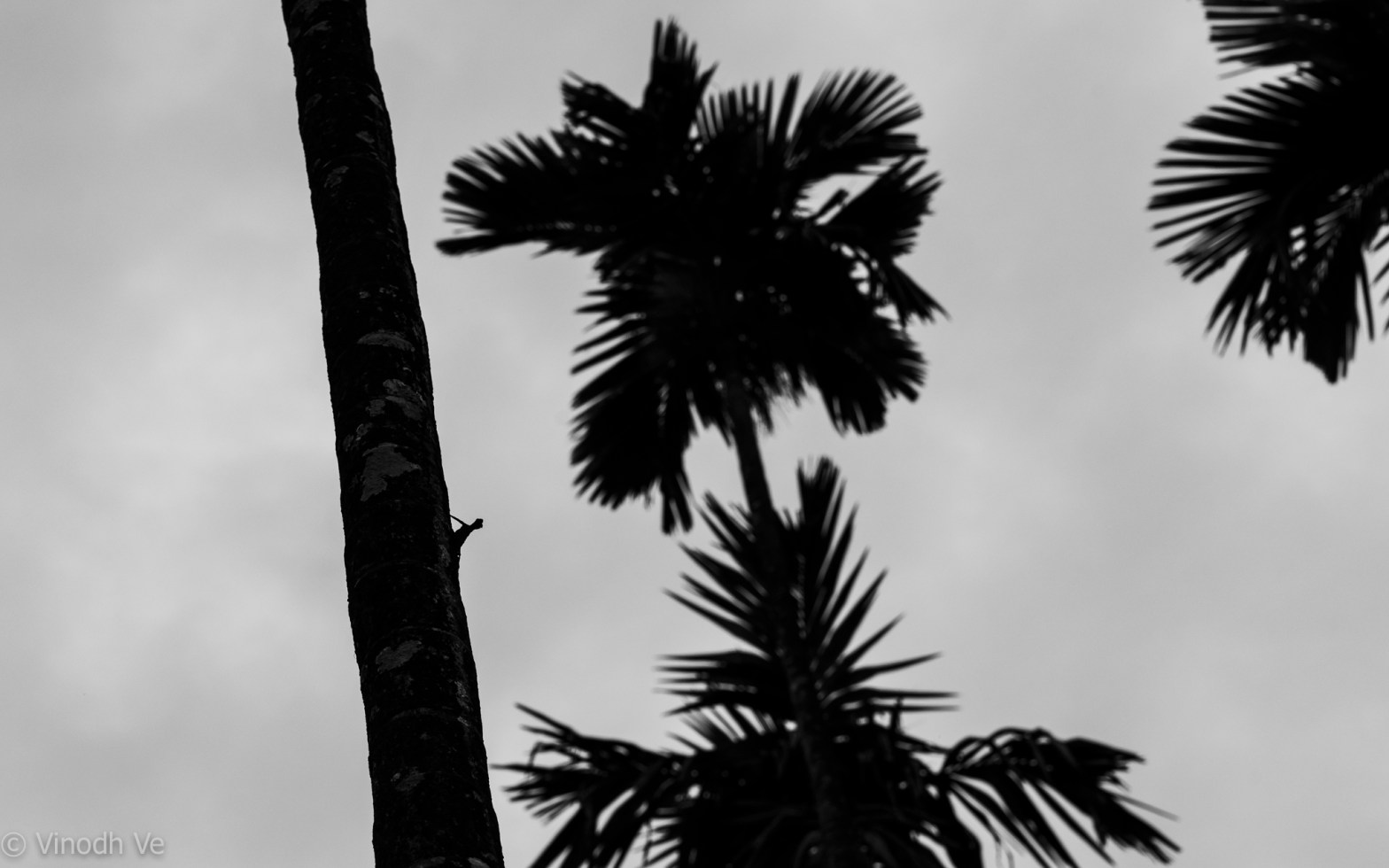
Canopy physiognomy governs the distribution of peninsular Indian flying lizards in regions of climatic suitability. Above: Silhouette of an Indian Flying Lizard in its arboreal habitat. I have always been intrigued by organismal distributions. Why do certain species occur in certain regions? Why do they stop, sometimes abruptly, at certain latitudes where there aren’t anyContinue reading “Towering trees and flying dragons”
JBI Annual Report on Equity, Diversity, and Inclusion: 2021
An increased awareness of systemic bias in institutions requires that we all examine the practices in which we participate. Around the turn of 2020, the Journal of Biogeography (JBI) began considering initiatives to promote opportunities for researchers currently underrepresented in biogeography, a discussion that continues today, and will go on for some time yet. AContinue reading “JBI Annual Report on Equity, Diversity, and Inclusion: 2021”
ECR feature: Tatiana A. Shestakova on unveiling if global forests are performing in sync.
Tatiana A. Shestakova is a postdoc at the Woodwell Climate Research Center in the USA. She is an ecologist interested in understanding the reaction of trees to environmental change. Here, Tatiana shares her recent work on evaluating time series analysis on tree growth to evaluate synchrony in spatially segregated forests. Tatiana Shestakova extracting a tree-ringContinue reading “ECR feature: Tatiana A. Shestakova on unveiling if global forests are performing in sync.”
ECR feature: Sarah-Sophie Weil on plant-soil linkages along elevational gradients
Sarah-Sophie Weil is a PhD student at the Université Grenoble Alpes in France. She is a biogeographer interested in macroecological patterns at different time scales. Here, Sarah shares her recent work on how plant-soil interactions impact environmental changes in terrestrial ecosystems. After climbing up many mountains in the French Alps during fieldwork, time for aContinue reading “ECR feature: Sarah-Sophie Weil on plant-soil linkages along elevational gradients”
New insights into the history of Central European steppe grasslands

Spatial patterns of species and haplotypes suggest long-term continuity of steppes in eastern Central Europe. Above: A species-rich meadow steppe near Cristuru Secuiesc (Hungarian: Székelykeresztúr), Harghita County, Transylvania, Romania. Photographed on 29 May 2017 by Wolfgang Willner.. The steppe grasslands of eastern Central Europe have attracted botanists and vegetation scientists for more than two centuries.Continue reading “New insights into the history of Central European steppe grasslands”
Functional redundancy increases in human-modified habitats
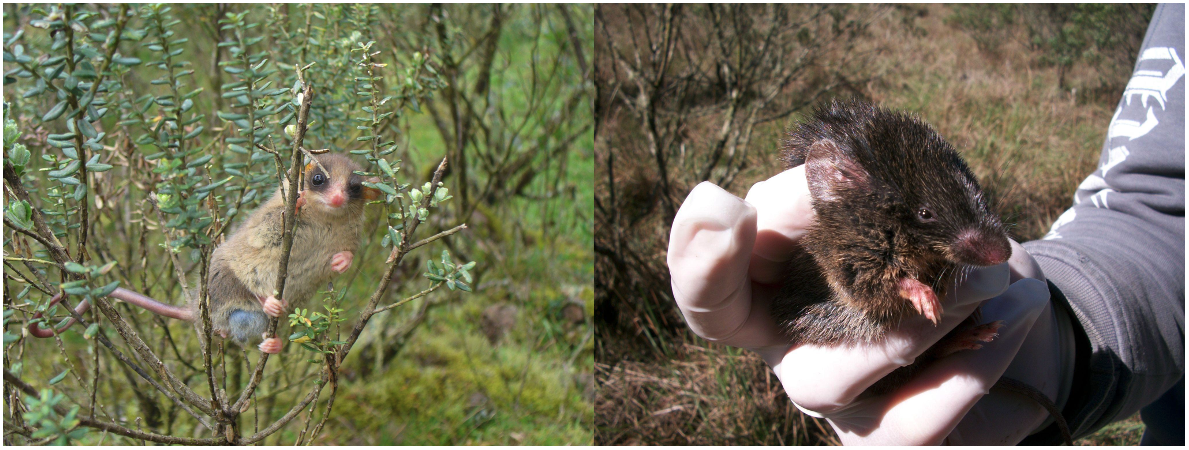
Different species do similar things in anthropic environments. Above: Two examples of small mammals with very distinct biologies. The Brazilian gracile opossum Gracilinanus microtarsus (left) is a generalist that forages in the ground and inhabits a broad range of habitat types — from primary to secondary forests and forest edges. Such generalists usually profit fromContinue reading “Functional redundancy increases in human-modified habitats”
Introducing the Members of the New (2nd) Editorial Academy
The Editorial Academy at Journal of Biogeography aims to help early career biogeographers learn more about publishing with the guidance and support of an experienced mentor. Each of the Editorial Academy members is partnered one-to-one with one of the journal’s chief or associate editors with relevant disciplinary expertise. The academy members have the same roleContinue reading “Introducing the Members of the New (2nd) Editorial Academy”
 Biogeography.News