Featured

A list of society journals that publish biogeographical research

One of the ways to promote a more healthy publishing environment is to choose to publish with society-owned journals (https://doi.org/10.1111/avsc.12705; Societies’ Joint Statement on Scientific Publishing) as these tend to have more autonomy and give back more to the community. Choosing to do your reviewing and editorial service for society-owned journals is another way to support the scientific community.

Society-owned journals that publish biogeographical works include:
American Journal of Botany (published by Wiley)   
Applied Vegetation Science (published by Wiley)   
Austral Ecology (published by Wiley)
Basic and Applied Ecology (published by Elsevier)
Biogeographia (published by eScholarship)
Biological Journal of the Linnean Society (published by Oxford Academic)   
Biotropica (published by Wiley)
Botanical Journal of the Linnean Society (published by Oxford Academic)
Ecography (published by Wiley)
    Sister journals https://nordicsocietyoikos.org/publications (published by Wiley)
Ecological Monographs (published by Wiley)
Evolutionary Journal of the Linnean Society (published by Oxford Academic)
Frontiers of Biogeography (published by eScholarship; N.B. *not* a “Frontiers.in” journal) 
Evolution (published by Oxford Academic)
Heredity (Published by Springer Nature)
Journal of Mammalogy (published by Oxford Academic)
Journal of Vegetation Science (published by Wiley)
Plant Biosystems (published by Taylor and Francis)
Perspectives in Ecology and Conservation (published by Elsevier)
Preslia (published by the Czech Botanical Society)
Proceedings of the Royal Society B: Biological Sciences (published by Oxford Academic)
     Sister journals https://royalsociety.org/Journals/
Preslia (published by the Czech Botanical Society)
Proceedings of the National Academy of Sciences, USA (published by NAS)
Science (published by AAAS)
Systematic Biology (published by Oxford Academic)
Taxon (published by Wiley)
The American Naturalist (published by U. Chicago Press)
Zoological Journal of the Linnean Society (published by Oxford Academic)

(N.B. This is an incomplete list and we welcome recommendations for additions.)
(List last updated 23 May 2024)

Academic publishers (bolded above) often prioritize scholarly criteria in their publications. The eScholarship platform delivered by the University of California (UC) is free-to-use for publishing independent journals by any UC faculty.
Oxford University Press provides information on other journals it publishes, including whether they are society owned, e.g. 
Plant sciences http://www.oupplantsci.com/category/journals/
Similar information on all Oxford journals can be searched at https://academic.oup.com/
Other university presses exist (Unversity of Chicago, University of California, Stanford, etc). 
Featured

How to contribute to Biogeography.News

A brief guide to contributing to Biogeography.News, to help fostering a more equitable and sustainable global community for biogeographical research, featuring society journals.

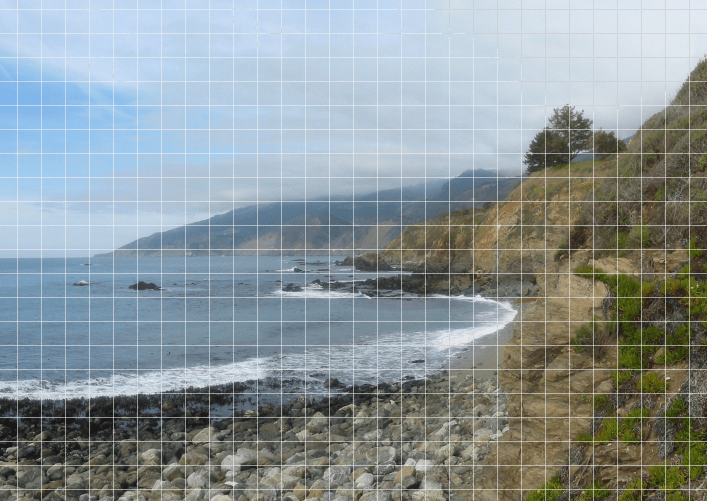
Above: A metaphor: Mill Creek, California, USA. Where the land and sea meet, understanding the puzzle of how large and dynamic forces shape and re-shape landscapes and seascapes is essential for effecting meaningful lasting change.

This blog is maintained to disseminate biogeographical research and publishing news to support authors of articles in society-based journals, to foster more equitable and sustainable, adaptive, natural, and research ecosystems globally. In order to provide more visibility for your publications and to showcase the work of up-and-coming researchers within the global biogeography community, our blog features early career researchers, including PhD students and postdocs.

We invite you to participate in one of our upcoming features. These features provide a way to share your research to a more general audience, communicating it in a way that is accessible, engaging, and with a more relaxed tone compared to that typically used in scientific publications. We recommend perusing the blog for examples of previously published features to gauge the appropriate tone. For example, Rob Smith and Kristen de Graauw.

There are several ways that you can devise a feature for Biogeography.News:

  1. Question + Answer interview. This is our standard format. We provide a questionnaire (see attachment) and work with you to develop answers to each of the questions. The final set of Q+A responses are then transferred directly to the blog.
  • Short essay. This is our alternate format. We recommend this format for individuals who want a creative outlet to communicate science and want to share their individual perspectives and experiences. The nature of the essay would be largely up to you. We would provide guidance but would be less directly involved in helping you develop a response.
  • Short video. We also accept 2-3 minute videos. We recommend this option for individuals who prefer a dynamic and visual way of sharing their research or who have compiled a rich media library of their field experiences. Final files may include field images or videos, maps or graphs, and personal videos. We will provide guidance but would not get involved in direct video editing. The video should be accompanied by (1) a ~100 word written abstract and (2) a ≤200 word biography.
  • If you are feeling more artistic, express your research through a graphical abstract! The exact format and style are up to you, but we encourage good scientific communication of your work with a personal flair. The graphic should be accompanied by (1) a ~100 word written caption and (2) a ≤200 word biography.
  • Significance statement. This short format seeks to highlight the main findings of your paper using few words, similar to the significant statement that you may have provided during the submission process of your article. The length of the text may vary between 100-200 words and should be accompanied by (1) a representative image of the scientific work and (2) a ≤200 word biography.

The attached template contains three components: author’s details, the Q+A interview questions and a metadata table. Providing metadata is optional, but we would appreciate you providing this information because it is important for assessing our commitments to diversity and inclusion. You only need to fill in the Q+A interview questions if that is your preferred format.

We aim to accompany each feature with several photos that will be posted on Biogeography.News’ social media platforms. Ideally, these would be high resolution images and would include: (1) a clear picture of yourself, and (2) several shots of your study organism and/or system, both accompanied with captions. We assume that images belong to you, or that you have permission to use them. Where images do not belong to you, it is important you credit the owner and let us know you have permission.

Why Biogeography.News? See https://biogeographynews.org/2023/12/10/re-introducing-biogeography-news/

To join the editorial team at Biogeography.News write with a few lines about (1) your areas of expertise/interest, (2) the journal and/or geographic region you’d like to cover, and (3) your publishing history, to:
b i o g e o g r a p h y n e w s @ g m a i l . c o m

The same contact information will work if you have any general questions or if you wish to make comments.

We look forward to hearing from, and working with, you!

Featured

11th Hour talks fail, #AssociateEditors #Resigned, @jbiogeography

Deputy editors-in-chief at the Journal of Biogeography (JBI) set up an 11th hour meeting with Wiley trying to resolve the two-month ongoing dispute about affordability, equity, and editorial independence. Initial reports are that the talks failed. The pending mass resignation of the remaining associate editors takes effect.


This blog and related twitter accounts have been relatively quite over the past few weeks, not because nothing has been happening (see below!), but, because the editorial board wanted to give an 11th hour meeting with Wiley chance to make progress. The meeting had been negotiated by the remaining deputy editors-in-chief, who have been busy impressing upon Wiley the gravitas of the matter, the potential damage to the journal’s and publishers’ reputations being caused by Wiley’s as yet inadequate responses, and Wiley’s continuing need to address the editorial board’s concerns about affordability, equity, and editorial independence at the journal.

The sad news is that initial reports indicate the editorial board’s last ditch efforts to make progress have failed. This means that the resignations of the remaining ~1/3rd of the Associate Editors — offered three weeks ago contingent on progress in discussions with Wiley (but accepted immediately by Wiley!) — will now go into effect on 28th August.

It seems Wiley does not know how, and/or is unwilling, to listen and collaborate with their editorial boards. There have been many opportunities: contract discussions in late 2022; the resignation of the first deputy editor-in-chief in January 2023; two all-hands meetings with the editorial board in early March; a month of discussions in April culminating in resignation of the editor-in-chief in May, the start of the associate editors’ work stoppage in June (with a target data of 31 June for resolution), and continuation of the work stoppage and beginning of resignations in August. All of these events signalled to Wiley that these were serious matters and needed attention. Not once did they engage meaningfully.

It’s possible Wiley’s strategy is to encourage resignation of editorial boards that are asking for improvements, so Wiley can replace them with more compliant boards, thus ratcheting forward their unaffordable, inequitable, publication models and decreasing editorial independence at the same time. Indeed, this seems to be happening at J. Biogeography: having created a vacuum by firing the current editor-in-chief — an independent academic and practicing biogeographer — the word on the street is that the next editor-in-chief will be a Wiley employee, lacking serious credentials in biogeography, transferring in from Wiley’s Ecology & Evolution journal, which is something of an APC/OA clearing-house whose “overriding philosophy is to be ‘author friendly’ and editing practice is to ‘look for reasons to publish.’” This appears to confirm beyond any doubt that Wiley’s primary concern is fiscal, not scientific. It is a desperate fall from grace for a journal of JBI‘s prior standing.

It’s reasonable, therefore, to ask whether the actions of the editorial board at JBI have been successful. If the ultimate outcome was a mass resignation, why not just do that in the first place? What was gained by over 8 months of protracted, failed, negotiations?

We believe we have demonstrated a new and effective way to take action:
– This was the first ever #WorkStoppage by #AssociateEditors at a Wiley journal. (Possibly the first for any large publisher?).
– It is clear from our interactoins with Wiley, that they are shaken; this is causing them substantial concerns.
– The extended timeline allowed us to share with the community the extent of our efforts to build a more positive outcome for the publishing community; and to demonstrate that time and time again, Wiley refused to engage seriously.
– This created an unprecedented cross-journal movement that is spreading: associate editors at other journals are asking their chief editors to engage with these issues; someAEs have resigned or started work stoppages at other Wiley journals. Editors-in-chief at related journals are likewise asking Wiley to engage with these issues, lest they face additional reputational loss.
– It became an international conversation, a hopeful harbinger of change, e.g. at Retraction Watch (story 1, story 2, story 3), Times Higher Ed, Andy Stapleton, Metin Aytekin, and Khrono (a newspaper for universities in Norway)
– Over half of authors who submitted their manuscripts during the work stoppage, and who were informed about these issues (after Wiley declined to do this!), have asked that their manuscripts be unsubmitted so they can publish elsewhere (see some options below).
– Authors of some manuscripts at more advanced stages are taking their reviews and decisions from JBI (the journal’s default policy introduced by this board) and pursuing ‘fast track’ submissions at society journals such as Frontiers of Biogeography (published by the International Biogeography Society using the eScholarship platform [*not* part of the ‘Frontiers in‘ series).
– We have heard from multiple publishing platforms about offers to set up new biogeography journals with better practices, which we are following up.
– Societies around the world have also started to sign on to a Joint Statement on Scientific Publishing, endorsing societies’ leading roles in more affordable, equitable, independent publishing that further supports the communities they serve.

The editorial board at JBI has arguably broken new ground in how to demonstrate effectively against modern exploitative publishing practices. We have done all we can for JBI. Many of us are now committing our editorial and reviewing services to only society-owned journals; others are taking a well-earned break. As we move into these next ventures, we thank the broader community of authors, editors, and reviewers for their patience and overwhelming support; we know this has had impacts on you too, for which we apologize; Wiley could’ve avoided those at any point in the past 8 months. We anticipate Wiley hopes the ”noise’ from the community will simply dissipate as the board leaves. We encourage everyone to continue to make your opinions and values clear to Wiley privately and publicly and by investing your authoring, editing, and reviewing expertise in other journals, preferably society journals. Together, we can make scientific publishing #BetterPublishing.

To help build on the advances made by JBI’s outgoing editorial board, we provide the following three resources:
A. The list of the negotiating points prioritized by the JBI Associate Editors (see ‘A‘ below). This does not mean lower-ranked issues are less important — they all need to be addressed — rather it provides a roadmap for where Wiley (and other publishers) need to make change first to simply show they are sincere in wanting #BetterPublishing for all. We recommend existing and incoming editorial boards at for-profit publisher-owened journals to ask for as many of these points as possible; failing that, consider a work stoppage, and recommend alternate society-owned journals in your field.
B. A partial list of alternate, society, journals that publish biogeographical research (see ‘B‘ below).
C. A developing list of additional negotiating points for potential future associate and chief editors, based on our and others’ experiences.


A. Negotiating points prioritized by JBI Associate Editors.

1. Irrespective of the publication model, OA fees for JBI must be more 
affordable, reflecting the actual cost of publication, which will help 
reduce inequity globally.

2. Irrespective of the publication model, there must be a meaningful 
waiver program so that researchers with insufficient funds are not 
disadvantaged.

3. Goals around growth must not come at the expense of the quality of 
the journal. The former should be driven by improvements in the latter. 
Therefore, goals to grow the journal must be accompanied with matching 
additional investment. At this point in time, the senior editorial team 
is against increasing the number of accepted papers. Rather, Wiley must 
invest in strategies that will increase the standing of JBI in 
comparison to other journals of comparable scope.

4. As one of a variety of possible futures, a model must be developed 
for the possible case of fully flipping JBI to Gold OA — irrespective of 
whether there is or is not currently an explicit plan. In this, Wiley 
must guarantee a full or partial waiver (as needed) to any author whose 
manuscript is accepted but who does not have the funds to pay the 
regular APC.

5. Rewards for AEs must be reinstated to prior levels, i.e. at least one 
OA article per year in JBI (as first or senior author) or equivalent 
value (depending on the editors’ circumstances).

6. More investment must be made in the scientific (Biogeography) 
community. We suggest levels akin to those returned to societies as a 
benchmark, as they are analogs for the biogeographic community that 
supports Wiley’s business model for JBI. Also see above re. APC waivers, 
Judith Masters Memorial Fund, honoraria, recompense for AEs.  In 
addition, this means increases in support for global colloquia. And it 
necessitates annual inflation-adjustment for all such investments; 
anything less is an effective disinvestment.

7. Independence of the Editorial Board must be reified, and also 
clarified through contracts (e.g. exclusion of growth targets, transfer 
targets, NDAs, etc).

8. Reinvestment in Production, revision of workflows, and returning 
oversight to the Editor-in-Chief.

9. In addition to the above, other elements supporting the journal’s 
stated ‘Global Biogeography Initiative’ should be enacted:
·         free language support for non-English-as-a-first-language 
author teams during editorial and peer review
·         the Judith Masters Memorial Fund, while appreciated, is 
insufficient to cover all costs of attendance at an international 
meeting. The fund should be increased so that it would cover all 
expenses of attendance at an international conference/lab, for multiple 
eligible researchers.

10. Revise the ScholarOne interface and transfer scheme to facilitate 
JBI’s editorial policy on decisions, including transfers, encouraging 
sharing of decisions and reviews with any journal.

Two of the original twelve points were prioritized for negotiations by future potential incoming associate and chief editors:

i. Non-Disclosure clauses must be removed from editor contracts.

ii. dEiC honoraria should be returned to pre-2019 levels. All honoraria 
should be automatically annually adjusted for Inflation. If more work is 
shifted to people receiving honoraria, the honoraria should increase 
accordingly; criteria for calculating honoraria should be transparent.

See additional negotiating points for potential future associate and chief editors.


B. A partial list of alternate, society, journals that publish biogeographical research

If considering another venue for your biogeographical work, a few years ago we did an analysis of journals publishing biogeography https://escholarship.org/uc/item/67n7x3zk  (see Fig 1), which may provide some ideas. We recommend Society-owned journals as these give more back to the community. Some are published by Wiley; some are not.  

Society-owned journals that publish biogeographical works include (but are not limited to):
American Journal of Botany (published by Wiley)   
American Naturalist (published by U. Chicago Press)
Biological Journal of the Linnean Society (published by Oxford Academic)
Botanical Journal of the Linnean Society (published by Oxford Academic)
Ecography (published by Wiley)
    Sister journals https://nordicsocietyoikos.org/publications (published by Wiley)
Evolutionary Journal of the Linnean Society (published by Oxford Academic)
Zoological Journal of the Linnean Society (published by Oxford Academic)
Evolution (published by Oxford Academic)
Journal of Mammalogy (published by Oxford Academic)
Journal of Vegetation Science (published by Wiley)
Perspectives in Ecology and Conservation (published by Elsevier)
Proceedings of the Royal Society, B (published by Oxford Academic)
     Sister journals https://royalsociety.org/Journals/
Proceedings of the National Academy of Sciences, USA (published by NAS)
Science (published by AAAS)
Systematic Biology (published by Oxford Academic)
Taxon (published by Wiley)

In addition, the International Biogeography Society publishes a general biogeography journal with a very strong editorial team, although it is not listed by Clarivate:
Frontiers of Biogeography (N.B. *not* a “Frontiers.in” journal) 
Biogeographia is another society journal on the same publication platform

Oxford University Press provides information on other journals it publishes, including whether they are society owned, e.g. 
Plant sciences http://www.oupplantsci.com/category/journals/
Similar information on all Oxford journals can be searched at https://academic.oup.com/
Other university presses exist (Unversity of Chicago, University of California, Stanford, etc). 



Featured

Introducing: Journal News

The research being conducted and the media for sharing findings change through time. In the past decade, these changes have been particularly rapid, as the technology available for measuring the world and for publishing papers have each gone through multiple step changes. The journal is adapting to these changes in service of our research community. This Journal News section of the blog is intended to communicate these adaptations to maintain a leading quality outlet for your work.

All changes at the Journal of Biogeography will reflect our commitment to continually (1) keep pace with and lead advances in the discipline, (2) deliver a constructive, productive process for publishing your biogeographical studies, (3) enhance value to the community, such as replication and reuse of your work, and (4) add value to you by widely disseminating your research to a global audience.

To attain these goals, we made several changes at the journal since September 2019:
Cover Image: published for free to highlight research in each issue
Editors’ Choice: will be ‘full access’ for two years at no cost to the author
– Social media: new team to increase visibility and achieve broader reach
– Updated our statement of the journal’s scope

Other improvements are in the works. Watch for announcements in the coming months.

Featured

Introducing: Featured Researchers

The Journal of Biogeography aims to support early career researchers by highlighting their recently published journal articles and providing a space where the community can get to know the authors behind the works and learn from their publication experiences. In our featured posts, researchers dive into the motivations, challenges, and highlights behind their recent papers, and give us a sense of the broader scientific interests that drive their biogeographic research. This is where we also get a sneak peek into novel and interesting research that is yet to come!

Based on the information provided when manuscripts are submitted, the editorial team will routinely contact authors each month to invite a contribution from those who are both (1) early career researchers, i.e. up to and including postdocs, and (2) corresponding author on their upcoming publication in Journal of Biogeography. However, we also welcome contributions from other early career researchers who may be first or middle authors on these papers; if the study has multiple authors, we very much welcome a single submission from the cadre of early career co-authors involved.

To keep the process simple for all involved, we invite contributions to follow a standard format (see below). Responses need not be given to all prompts, but there should be a critical mass of responses to be informative; responses to prompts that are answered should be concise; thus the experience is streamlined, personalized, and easy.

We encourage a tone and standard suitable for social media and that conveys the excitement and intrigue of being a biogeographer.  Previous submissions can provide a guide for your own individualized entries.  The social media editors are happy to provide feedback and assistance in revising content before posting.  The senior editorial team approves all posts.

If you have any questions or would like to submit your own contribution, please contact one of our social media editors: Dr. Leanne Phelps and Dr. Joshua Thia using the journal’s gmail address, jbiogeography@gmail.com. To help you get started, the questionnaire is provided below. Check out recent contributions for examples and ideas!

——————————–

Questionnaire format:

Name

Links to social media and/or personal website(s)

Institute

Current academic life stage (Honours, Masters, PhD, Postdoc?) 

Major research themes and interests

Current study species/system? What makes it interesting (/cool!)? (100 words)

Recent paper in Journal of Biogeography (citation)

Describe the motivation behind this recent paper (100–150 words)

Describe the key methodologies in this recent paper, highlighting anything particularly novel or ingenious and how this provides new insights (100–150 words)

Describe any unexpected outcomes of this research, or any challenges you and your coauthors experienced and overcame along the way (100–150 words)

Describe the major result of this recent paper and its contribution toward the field (100–150 words)

What is the next step in this research? (100 words)

If you could study any organism on Earth, what would it be and why?

Is there anything else you would like to tell us about yourself or your featured research? (Any hidden gems the above questions might have missed?)

If available, please provide three or more visually appealing photos (with captions) that relate to your work, so we can feature you on our social media platforms.

Featured

Introducing: Highlighted Papers

Every month, each new issue of the Journal of Biogeography (JBI) includes at least two highlighted articles—the Editors’ Choice and the paper associated with the cover image—and periodically we highlight a topic with a series of papers as part of a special issue. Our intention on the blog is to communicate additional aspects of these, and other papers published in JBI, from slightly different perspectives.

Every published paper has a story behind it that complements and enriches our understanding of the published science. Very rarely, the parallel narrative might provide as radical a reframing of the entirety of our scientific work as did Thomas Kuhn’s “The Structure of Scientific Revolutions”, Bruno Latour’s study of “Laboratory Life”, and the feminist critique of science by Evelyn Fox Keller, Sandra Harding, Helen Longino, and others. On occasion it may cause us to rethink the history of the discipline and its modern consequences—as in recent works on decolonialization of biogeography—or likewise to consider current approaches and what they may mean for the future. Oftentimes the parallel narrative is simply a personal perspective on how we stumbled upon a particular question, co-opted a tool for a different job, ran into unexpected difficulties or found something easier than anticipated, visited wonderful places, worked with fascinating organisms and systems, became aware of related challenges, saw something on the side that sparked our curiosity for the next study, and so on.

Irrespective of what your story is, these pages are intended to provide a small window onto that complimentary narrative that details the human endeavor of biogeography. The idea is to try to demystify how the polished published biogeographical story emerges from at times complicated studies of a complex world. No matter what our career stage, each study comes with its challenges, the solutions merit acknowledgement (and can potentially help others), and each publication is an achievement to be celebrated. In recognizing these commonalities, we hope the diversity of routes and strategies for publishing become a little more transparent and a little more accessible to all.

The format for highlighting papers is flexible (within a limit of ~750 words [+/- 250]), but we provide a few optional prompts below to get you started and make sure some key information is available.

——————————–

Format & some optional prompts:

Title for blog post

Author name, title, institutional details

Links to social media and/or personal website(s)

Citation including URL for recent paper in Journal of Biogeography 

Describe the motivation behind this recent paper.What’re the major research themes and interests it addresses? — What makes it interesting/cool/important? What surprised you / the team while designing, conducting, completing the study? What knotty problem did you have to overcome? — Reflecting on the whole process, beyond the published research, what were other important outcomes from the project? Where do you / the team go from here? Is there anything else you would like to tell us (any hidden gems the prompts might have missed)?Two to three visually appealing photos/images (with captions) that relate to the work and this narrative is possible.

ECR feature: Wesley Jonatar Alves da Cruz

Wesley is a Postdoctoral researcher at the AMAP (botAnique et Modélisation de l’Architecture des Plantes et des Végétations) research group in Montpellier, France. He is a functional ecologist with special focus on tropical forests and savannahs. Here, Wesley shares his recent work on the distribution of plant functional traits across ecotones.

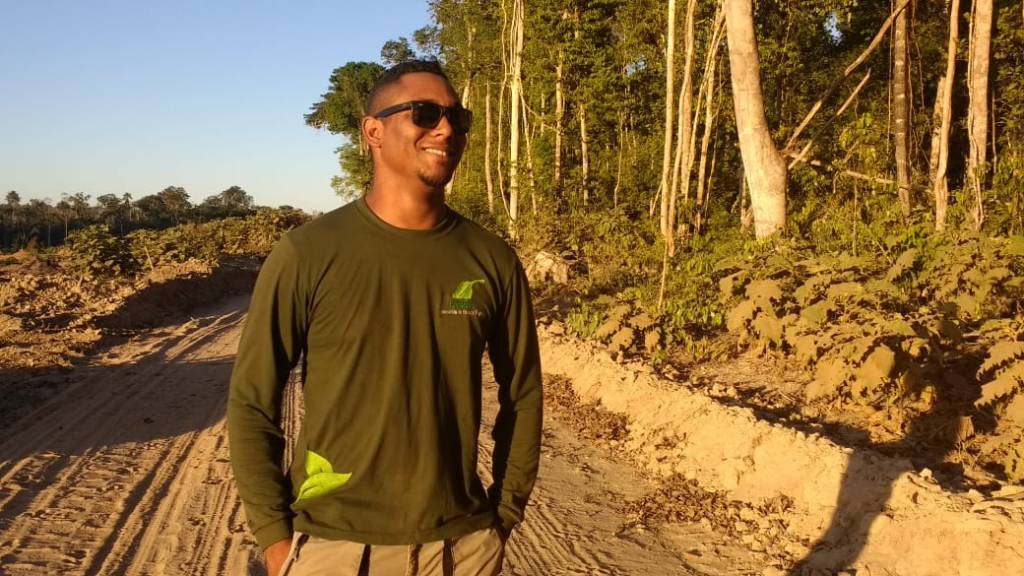
Early career researcher, Wesley, after a field day on the southern edge of the Amazon, Brazil.

Personal links. Google Scholar

Institute. AMAP (botAnique et Modélisation de l’Architecture des Plantes et des Végétations), CIRAD, CNRS, INRAE, IRD, Montpellier, France.

Academic life stage. Postdoc

Major research themes. Functional ecology, tropical forests and savannahs, ecotones, biogeography, ecophysiology, disturbances, vegetation monitoring.

Recent paper (citation). Cruz, W. J. A., Marimon, B. S., Junior, B. H. M., Morandi, P. S., Longhi, S. G., Prestes, N. C. C. D. S., … & Phillips, O. L. (2025). Functional Biogeography and Ecological Strategies of Trees Across the Amazon–Cerrado Transition. Journal of Vegetation Science36(5), e70076. https://doi.org/10.1111/jvs.70076

Current study system. In central Brazil, the Cerrado, Amazon, and Pantanal converge, forming one of the most complex ecological mosaics on Earth. Acting as a continental regulator, this interconnected system links hydrological and climatic processes across tropical South America. The Amazon drives regional rainfall through atmospheric moisture transport; the Cerrado functions as a major water source feeding continental river basins; and the Pantanal acts as a vast hydrological buffer. This unique transition zone, hosting a mosaic of forests, savannas, and grasslands, remains poorly understood regarding its vulnerability to compound drought–fire–heat stresses.

Motivation behind this paper. Understanding how species traits and ecological processes respond to environmental variations and disturbances in this region. This ecotone is home to striking gradients in climate, soil, and vegetation structure, which directly influence the functional strategies of plants and the resilience of ecosystems. By integrating species distribution patterns and ecological functions, it is possible to identify mechanisms that determine the maintenance of biodiversity and predict responses to climate change and land use. In addition, little-explored types of vegetation, such as woodland savannahs, seasonal forests, floodplain forests and riparian forests, represent key components of this transition, but still lack detailed studies on their ecological functions and biogeographical roles.

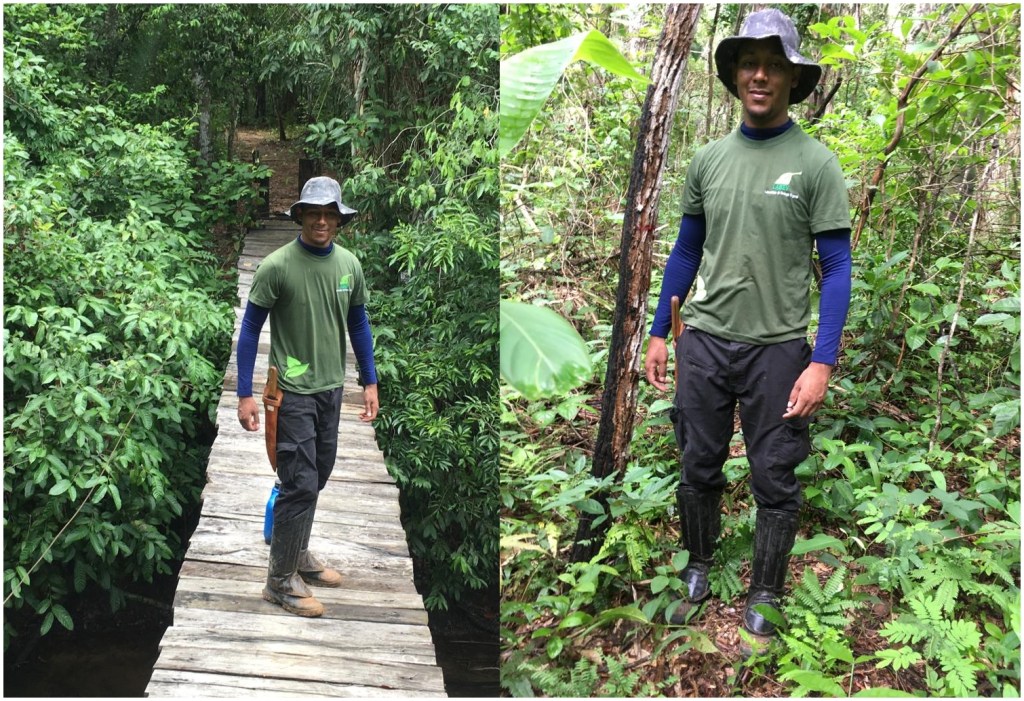
Wesley crossing bridges and investigating transitional forests in the ecotone between the Amazon and the Cerrado, at the Serra das Araras Ecological Station, Mato Grosso, Brazil.

Key methodologies. The paper presents a relevant methodological innovation by applying a standardised protocol for collecting functional traits of trees in a transition zone between biomes. We gathered data for approximately 200 tree species distributed across six different vegetation types, generating 55,895 measurements of functional traits. We selected 15 traits, covering key aspects of ecological processes and species strategies, and applied the same measurement protocol in environments ranging from typical savannahs to moist forests. Thus, the study enables a robust and homogeneous comparison between different vegetation formations, something rare until now on this ecological and biogeographical scale. The single, standardised protocol ensures that the differences observed reflect real variations in functional traits rather than methodological biases, strengthening inferences about how environmental filters and species strategies change along this Amazon–Cerrado gradient.

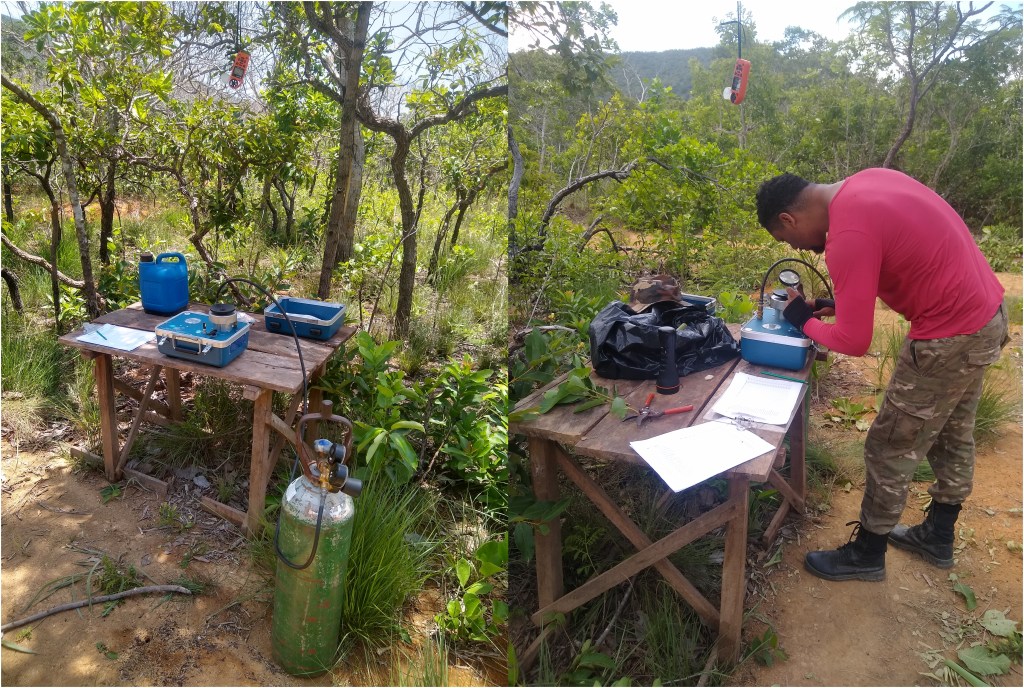
Mega structure of Wesley’s Functional Ecology and Ecophysiology Laboratory. Set up outdoors, within a savannah, in central Brazil. At the time, measuring functional leaf traits and the water potential of leaves at midday.

Unexpected challenges. To me, the greatest challenge of this research was the intense fieldwork and complex processing of samples collected across a wide spatial scale. The study areas were spread over approximately 1,000 km between different types of vegetation in the Amazon–Cerrado transition zone, requiring careful logistics, long expeditions, and rigorous standardisation of collections. Obtaining functional data for approximately 200 species required precision and consistency at all stages, from collection to laboratory analysis. This effort was only possible thanks to the dedication of a highly trained team and the technical support of a laboratory of excellence – Plant Ecology Laboratory of the Universidade do Estado de Mato Grosso (UNEMAT), Nova Xavantina, Mato Grosso, Brazil.

Major results. The main result of this paper was to demonstrate how the functional strategies of tree species vary systematically along the gradient between the Amazon and the Cerrado, reflecting the combined influence of climatic and edaphic factors. This novel approach integrates functional biogeography into one of the most ecologically complex regions on the planet, providing a solid empirical basis for understanding how biodiversity and ecosystem functioning respond to broad environmental gradients. The study also advances our understanding of the functional structure of underexplored vegetation types such as the Cerradão (woodland savannah), gallery forests, and semi-deciduous and evergreen seasonal forests. The study represents a significant contribution to functional ecology and to the development of predictive models of tropical vegetation response to climate change and land use.

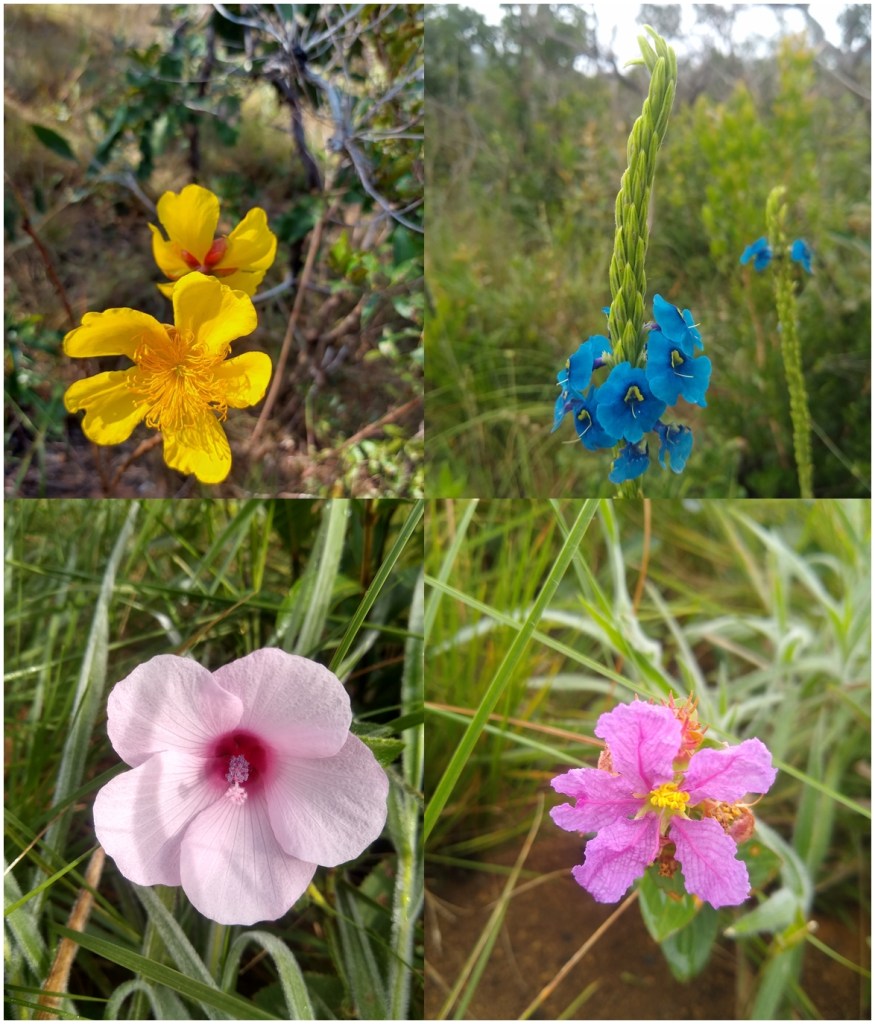
Flowers and colours of the herbaceous component of a transitional savannah in Brazil, at the Serra das Araras Ecological Station.

Next steps for this research. The next logical step in this research is to investigate the intraspecific variability of the functional traits of species occurring along the Amazon–Cerrado transition. Although the current study revealed robust patterns between species and vegetation formations, understanding the variation within species themselves is essential to assess their adaptive potential in the face of environmental gradients and disturbances. This approach will allow us to identify locally adapted populations and draw boundaries of functional plasticity, providing crucial information for predicting ecological responses to climate change and guiding conservation and restoration strategies.

Wesley walking on the ashes of a transitional forest burned in the catastrophic fires of August 2024. Assessing the impact of fire on forests in the transition zone between the Amazon and the Cerrado (photo: Francisco Navarro-Rosales).

If you could study any organism on Earth, what would it be? I consider the duality of trees that live in seasonally flooded savannahs to be fascinating. Trees established in floodplain savannahs play a key ecological role in maintaining the structure and functioning of these ecosystems. They must cope with extreme environmental conditions, alternating between long periods of flooding and phases of intense drought, which requires remarkable physiological plasticity.

ECR feature: Axel Arango

Axel Arango is a postdoctoral researcher at the Universität Würzburg, Germany. He is a evolutionary biologist with special focus on Macroecology and Macroevolution. Here, Axel shares his recent work on how ecological specialization, rather than geographic dispersal, shapes diversification in Emberizoidea songbirds.

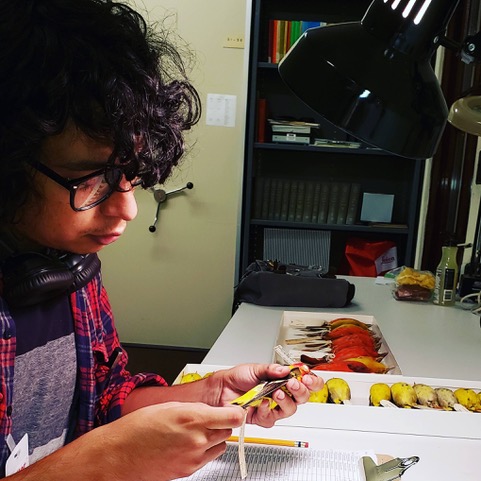
Axel Arango, postdoc at the Universität Würzburg, Germany.

Personal links. https://axelarango.github.io

Institute. Center for Computational and Theoretical Biology (CCTB), Universität Würzburg, Germany

Academic life stage. Postdoc

Major research themes. Evolutionary Macroecology; Biogeography; Phylogenetics; Macroevolution

Current study system. Birds

Recent paper (citation). Arango, A., Pinto-Ledezma, J., Rojas-Soto, O., & Villalobos, F. (2025). Broad geographic dispersal is not a diversification driver for Emberizoidea. Proceedings of the Royal Society B292(2039), 20241965.

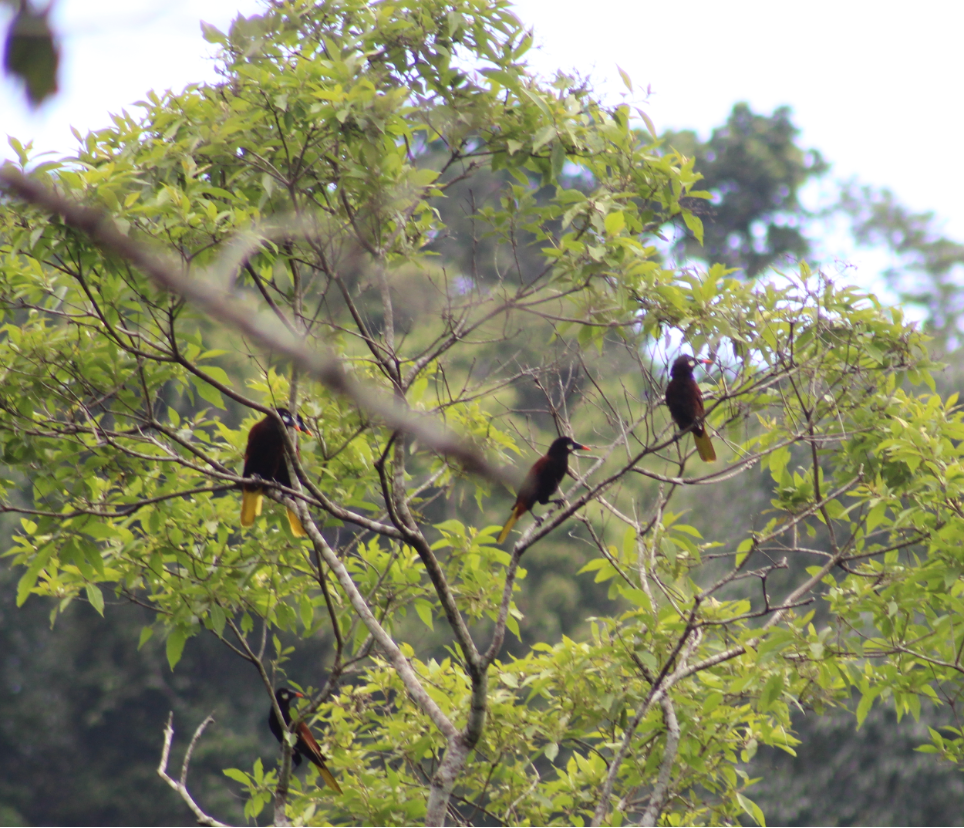
Essay. Emberizoidea is a bird lineage that has long captivated both scientists and cultures with their vibrant plumage, beautiful songs, and ubiquitous ecological range, inhabiting the whole of the New World and most of Eurasia, and Africa. Their diversity includes tanagers, cardinals, sparrows, warblers, and buntings. Darwin observed the beaks and diet of Galapagos finches, which played an essential role in the inception of the natural selection theory while later becoming a classic example of adaptive radiation. A century later, MacArthur observed that some good warblers were sharing the same trees but using them subtly differently. These species of the then Dendroica, now Setophaga genus became textbook examples of niche partitioning. But long before evolutionary and ecological theory, pre-Hispanic cultures across the Americas had already incorporated Emberizoidea into their worldviews. The Mexicas honored the tzanatl (Great-tailed grackle) and oropéndolas (Montezuma’s oropendula) for their song and majesty; the Mayans saw cardinals as symbols of fertility and life.

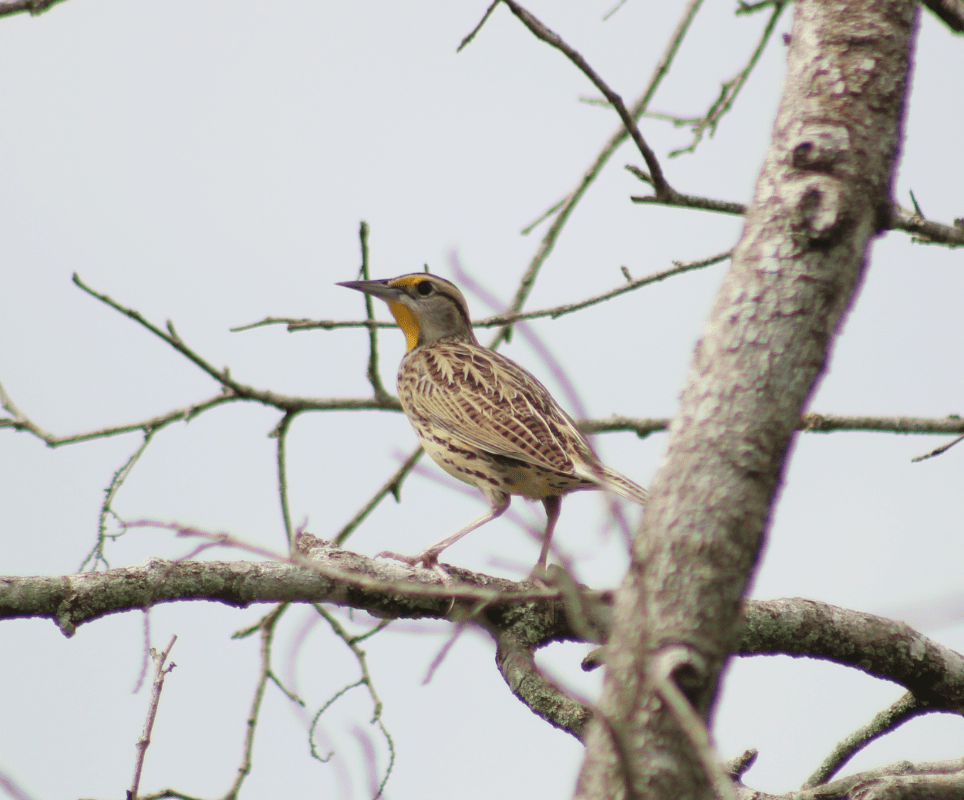
Pradero Tortillaconchile (literally translated to “Meadow Tortilla with chilli”; Sturnella magna) in the dry forest of Ozuluama,Veracruz. Distinctive member of the Icteridae family.

While finishing my Master’s, I became captivated by this dazzling avian diversity. As someone from the Americas, I couldn’t help but notice how unevenly bird species are distributed across the continent. Some areas (like the Andes or Mesoamerica) are bursting with species, while others have fewer species. Why? What drives these differences?

A leading hypothesis in evolutionary biology is that geographic dispersal (species colonization of new areas) plays a central role in triggering speciation. This idea presents an intuitive possibility: when a lineage moves into a novel area, it might escape competitors and predators, find unexploited resources, and become geographically isolated. That isolation can break gene flow, allowing populations to diverge, adapt to new conditions, and eventually become a distinct species. So, in theory, the more a group disperses, the more opportunities it has to diversify.

So, is this actually true for Emberizoidea?

To find out, we used phylogenetic bioregionalization to define geographic regions based on where species live and their evolutionary relationships. Then, we reconstructed the historical biogeography of lineages using several models of range evolution. This approach allowed us to figure out the most likely scenarios of when and where lineages expanded into new territories (dispersal) and when their distribution shrunk (range contraction). Finally, we quantified the changes in evolutionary rates across the Emberizoidea tree, detecting when certain lineages had higher speciation rates, and asked whether lineages that moved into new bioregions actually diversified faster.

The iridescent tzanatl (Great-tailed grackle; Quiscalus mexicanus), former Aztec treasure. Now in most Mexican cities (and beyond).

The surprising answer? Despite the proposed hypothesis, the lineages that dispersed didn’t speciate faster.

In fact, most diversification in Emberizoidea seems to have happened within regions, not after colonizing new ones. We even tested this statistically by comparing nodes that dispersed with similarly aged nodes that didn’t and found no consistent increase in speciation. Furthermore, families that maintained stable ranges over millions of years tended to be more diverse. In short, staying put may be more beneficial for speciation than spreading out.

This challenged a major assumption. Dispersal is often treated as the spark that lights the diversification fire. For instance, the Corvidae family, shows significantly elevated rates of both speciation and regional transition, suggesting that diversification is promoted by frequent dispersal and colonization events (Kennedy et al., 2017). In anurans, the interplay between regional geomorphology and species-specific dispersal abilities drives distinct diversification patterns (Fouquet et al., 2021), and likewise, in plants, the Chamaesyce clade of Euphorbia diversified through repeated dispersal followed by local adaptation (Yang & Berry, 2011), but in Emberizoidea, dispersal looks more like a side story.

     Chingolo (Rufous-collared sparrow; Zonotrichia capensis) in the temperate forest. An abundant South American bird of the Passerellidae family.   

Currently, we’re focusing our attention to ecological specialization. If movement isn’t the main driver, maybe what matters more is how lineages adapt to specific roles within their environments. Could specializing in certain diets or habitats drive diversification from within a stable range? For example, Galapagos finches could also dramatically illustrate how a single ancestral population on a stable island system gave rise to diverse species through dietary specialization. Or how wood warblers could have specialized to have different foraging behaviors, minimizing competition and fostering divergence. To test that, we’re exploring the effects of traits like diet, habitat specialization, and foraging behavior in speciation dynamics.

Ultimately, this work has reshaped how we think about evolution in a group of birds and perhaps even reminded us that sometimes, the story we do not expect is the one worth telling.

Reference list.

Kennedy, J. D., Borregaard, M. K., Jønsson, K. A., Holt, B., Fjeldså, J., & Rahbek, C. (2017). Does the colonization of new biogeographic regions influence the diversification and accumulation of clade richness among the Corvides (Aves: Passeriformes)?. Evolution71(1), 38-50.

Fouquet, A., Marinho, P., Rejaud, A., Carvalho, T. R., Caminer, M. A., Jansen, M., … & Ron, S. (2021). Systematics and biogeography of the Boana albopunctata species group (Anura, Hylidae), with the description of two new species from Amazonia. Systematics and Biodiversity19(4), 375-399.

Yang, Y., & Berry, P. E. (2011). Phylogenetics of the Chamaesyce clade (Euphorbia, Euphorbiaceae): Reticulate evolution and long‐distance dispersal in a prominent C4 lineage. American Journal of Botany98(9), 1486-1503.

ECR feature: Gabriel Pavan Sabino

Gabriel is a PhD researcher at the Universidade Estadual de Campinas (UNICAMP). He is a plant ecologist with special focus on floristic patterns and distributions. Here, Gabriel shares his recent work on the diversity patterns in continental islands along the Brazilian coast.

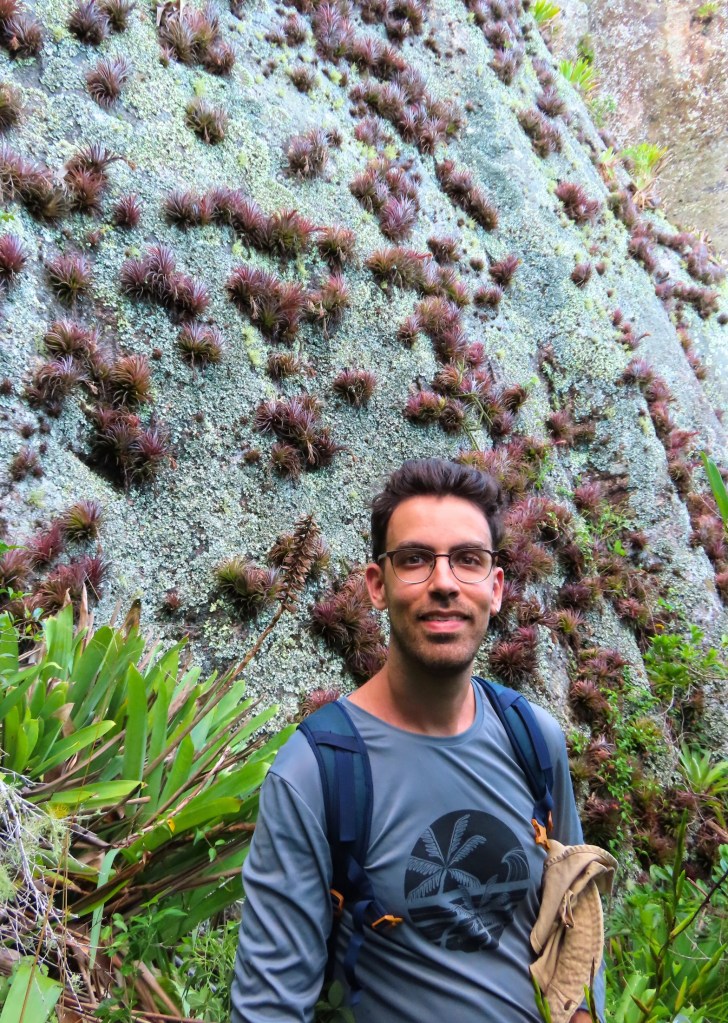
Early career researcher Gabriel Pavan Sabino in front of a granite cliff covered with Tillandsia alcatrazensis (Bromeliaceae), an endemic species recently described by the research team [Photo by Gabriel Marcusso].

Personal links. Researchgate | Instagram

Institute. Universidade Estadual de Campinas – UNICAMP

Instituto de Biologia

Departamento de Biologia Vegetal, Campinas, São Paulo, Brasil

Academic life stage. PhD researcher

Major research themes. I’m interested in plant ecology and evolution, particularly in floristic patterns, biogeography, and species distributions. My current research focuses on the diversity patterns in continental islands along the Brazilian coast.

Recent paper (citation). Sabino, G. P., Pinheiro, F., Cabral, J. S., Koch, I., Marcusso, G. M., Tavares, M. M., Cunha, I. M., & Kamimura, V. A. (2025). Islanded Islands: Dual isolation drive distinctive and threatened floras of Neotropical maritime inselbergs. Journal of Vegetation Science, 36(3), 1–14. https://doi.org/10.1111/jvs.70037

Current study system. Plant communities of Neotropical maritime inselbergs:
Inselbergs, which are isolated rock outcrops, host unique plant communities and are considered insular environments due to their distinct conditions, compared to the surrounding landscape. During interglacial periods, sea level rise can turn some of these inselbergs into true islands, further increasing their isolation from the mainland. This isolation promotes local adaptations and endemism, making these systems natural laboratories for studying ecological processes and the mechanisms that shape plant communities.

Motivation behind this paper. This study started with a pretty simple idea: to survey the plants growing on Alcatrazes Island, a stunning and ecologically unique island off Brazil’s southeastern coast. But the deeper we got into its flora, the more we started asking ourselves a bigger question: How does all this plant diversity compare to what we find on other islands? This question opened the door to a broader, macroecological view. However, we soon realized that it wasn’t enough to compare Alcatrazes to just any island. So, we turned our attention to islands with similar geological characteristics, shifting our focus to other coastal inselbergs, as well as to their continental counterparts. By bringing together plant data from these sites, we were able to dive deeper into how factors like oceanic isolation and climate influence both species richness and their evolutionary uniqueness. In other words, we weren’t just asking how many species live there, but also how different they are from one another in evolutionary terms.

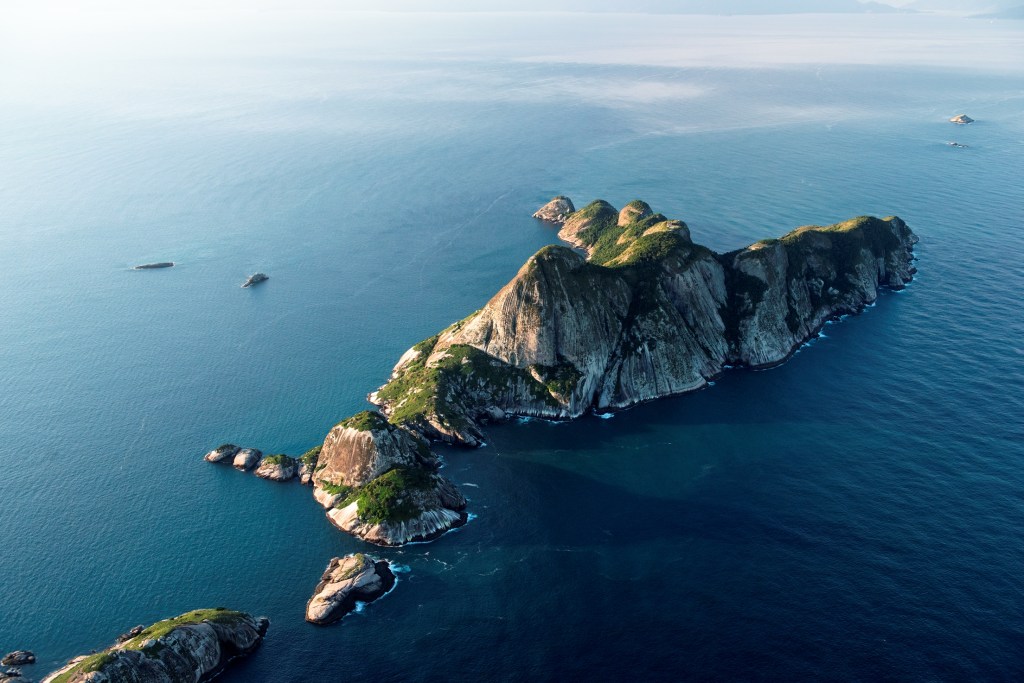
An overview of Alcatrazes Island, located 35 km off the southeastern coast of Brazil [Photo by Luciano Candisani].

Key methodologies. We introduced the concept of maritime inselbergs (MIs), isolated rocky outcrops that became true islands after sea level rose, and, for the first time, explored the unique plant communities living on them. To understand how these ocean-bound systems work, we compared them with continental inselbergs (CIs). Instead of focusing only on species, we looked at the deeper evolutionary patterns behind them, asking how different these communities are—not just in terms of who’s there, but in terms of what lineages they belong to. Are the plants on MIs close relatives of those on CIs, or do they represent distinct branches on the tree of life? We also wanted to know if climate plays a role in shaping these patterns and whether certain conditions favor specific species or evolutionary histories. Beyond that, we examined the conservation status of the plants we found, using Brazil’s official Red List. Then we went one step further: We used modelling to simulate what might happen to entire evolutionary lineages under different extinction scenarios.

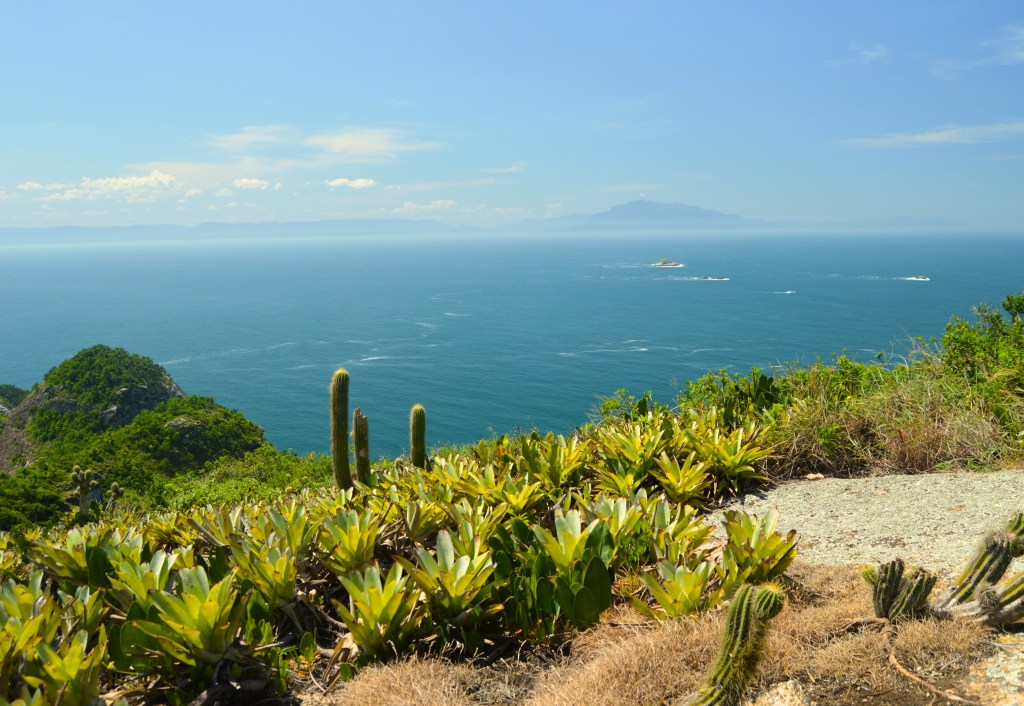
Landscape showing the rupicolous vegetation of Alcatrazes Island and, on the horizon, the mainland [Photo by Gabriel Pavan Sabino].

Unexpected challenges. A well-established idea in biogeography is that similar environments located closer together tend to share more species than those farther apart. However, in our floristic similarity analysis, we found the opposite. The MIs in Rio de Janeiro (The archipelago of Cagarras), which are only about 10 km from the nearest CI (like Pão de Açúcar), are actually more similar to other MIs located at least 280 km to the southwest. This highlights how strong the environmental filters imposed by the ocean can be in shaping the plant communities of these environments. 

Fieldwork in such extreme environments is already a major challenge in itself. We experienced this firsthand while conducting fieldwork on Alcatrazes Island. This helps explain why floristic surveys on islands in Brazil are so rare. We also noticed this during our literature review, as we searched for floristic surveys to include in the compilation used for our study.

Returning to camp after a day of fieldwork. Moving across such steep terrain with all the equipment is a real challenge [Photo by Yan Marcos].

Major results. In addition to identifying that MIs possess a distinct floristic identity, we found substantial heterogeneity among the communities, with only 11% of species shared between them. Roughly 10% of all recorded species are officially threatened, underscoring the role of inselbergs as key refuges for endangered flora. Climate also played a major role in shaping these communities, especially variables like annual temperature range, temperature of the warmest quarter, and isothermality, which reflects how stable day-to-night temperatures are compared to annual shifts. Perhaps most striking, our models suggest that losing 25% of species could significantly disrupt the evolutionary structure of these communities. We argue that the most important insight from this work is understanding how plant communities assemble under a combination of permanent ecological isolation, due to the natural insularity of inselbergs, and temporary geographic isolation caused by sea level changes over glacial and interglacial cycles.

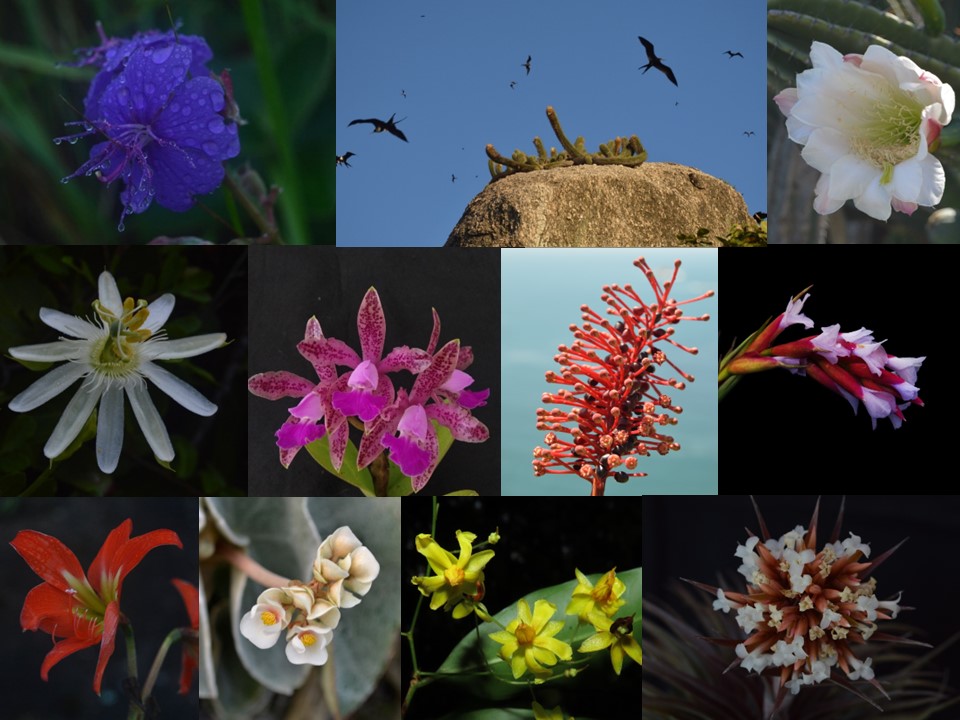
Some examples of the flora of Alcatrazes Island (left-to-right and top-to-bottom): Pleroma clavatum (Melastomataceae); Coleocephalocereus fluminensis (Cactaceae) and Magnificent frigatebird, Fregata magnificens in the background; Cereus hildmannianus (Cactaceae); Passiflora mucronata (Passifloraceae); Cattleya x intricata (Orchidaceae); Schwartzia brasiliensis (Marcgraviaceae); Tillandsia uiraretama (Bromeliaceae); Hippeastrum blossfeldiae (Amaryllidaceae); Begonia venosa (Begoniaceae); Ouratea parviflora (Ochnaceae); Tillandsia alcatrazensis (Bromeliaceae) [Photos By Gabriel Pavan Sabino].

Next steps for this research. We know this is a multi-generational effort, but we are highly motivated to expand our sampling across different types of islands along the Brazilian coast. Currently, we are focusing on how functional traits vary between insular species and their continental populations. We aim to identify the adaptive strategies of plants that are isolated from pollinators, herbivores, and other plant species that would normally compete with them in continental environments but are no longer present in insular systems. This will provide important ecological insights and help us understand how evolutionary processes operate in plant communities within highly diverse systems.

If you could study any organism on Earth, what would it be? One of the organisms that intrigues me the most are rupicolous plants. They germinate and anchor their roots directly onto rocks in extremely harsh environments, often exposed to strong winds, high salinity, and extreme temperature fluctuations. They are true champions of adaptation! I began studying them accidentally during my PhD.

ECR feature: Josh Brian

Josh is a Postdoc researcher at King’s College London. He is a community ecologist with special focus on plant invasions. Here, Josh shares his recent work which reviews the use of scale terms in plant biology and consequent implications for biogeographic research.

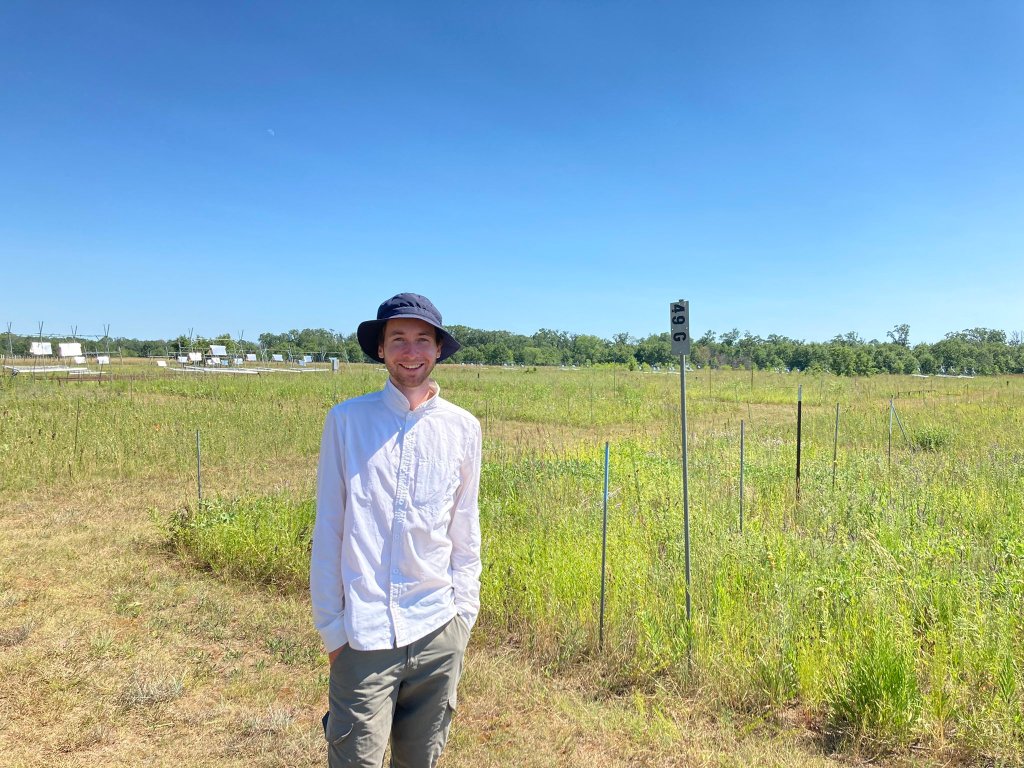
 Josh standing in ‘BigBio’, one of the longest-running experiments testing the role of plant diversity on ecosystem function.

Personal links. Personal website | Google Scholar | X | Bluesky

Institute. King’s College London

Academic life stage. Postdoc

Major research themes. Community assembly, diversity and persistence, with a particular emphasis on plant invasions and cross-trophic interactions (e.g. parasitism, mutualism, herbivory), and how evidence for all the above varies with the scale at which communities are studied!

Recent paper (citation). Hung, C. Y., Pérez‐Navarro, M. Á., & Brian, J. I. (2025). Lost in Space: When Spatial Scale Terms Blur Actual Study Size in Plant Community Ecology. Journal of Vegetation Science36(3), e70035. https://doi.org/10.1111/jvs.70035

Current study system. We study plant communities, particularly terrestrial grasslands, though this paper covered all major terrestrial plant habitats (e.g. forests, shrublands, etc). Grasslands are globally distributed and highly diverse, which means they provide a great opportunity for understanding how factors like environmental variation drive community diversity and interactions. Grasslands are also highly invaded ecosystems, so by studying which grasslands are more or less invaded, we might be able to understand more about the biogeography of invasion. However, this relies on being able to make fair comparisons between studies carried out in different locations, which stimulated the motivation for this paper.

Motivation behind this paper. It is well recognised that many biogeographic patterns are scale-dependent: For example, at ‘small’ scales, invasive plant diversity and native plant diversity are negatively correlated (possibly reflecting signals of plant-plant competition), but at ‘large’ scales they are positively correlated (likely reflecting increased habitat heterogeneity at larger scales). Many different words, which we call ‘scale terms’, are used to denote these different scales. Scale terms like “local” or “neighbourhood” are used to indicate the scales at which plants might compete, while terms like “region” are used to indicate scales where the role of habitat type might be detected. However, we were unsure whether these terms are used consistently: are different papers that use the term “local” actually referring to similar study scales? Or does one paper use it to refer to 1m2 plots (for example), while another uses it to refer to 20m2 plots? If these scale terms are used inconsistently, it could have major negative implications for drawing biogeographic conclusions by synthesising results from different studies.

Key methodologies. To our knowledge, we carried out the first review of this question in plant biology. We searched studies that use one or more scale terms to frame their results and conclusions, then examined the methods to see what actual area they were referring to when they used these scale terms. We also tested whether the area referred to by scale terms varies with habitat type (e.g. grassland vs. forest), geographic location (e.g. Europe vs. Asia) and type of study (e.g. experimental vs. observational). This provides the first insights into how these scale terms, which are often used and accepted uncritically by authors, are employed across the globe.

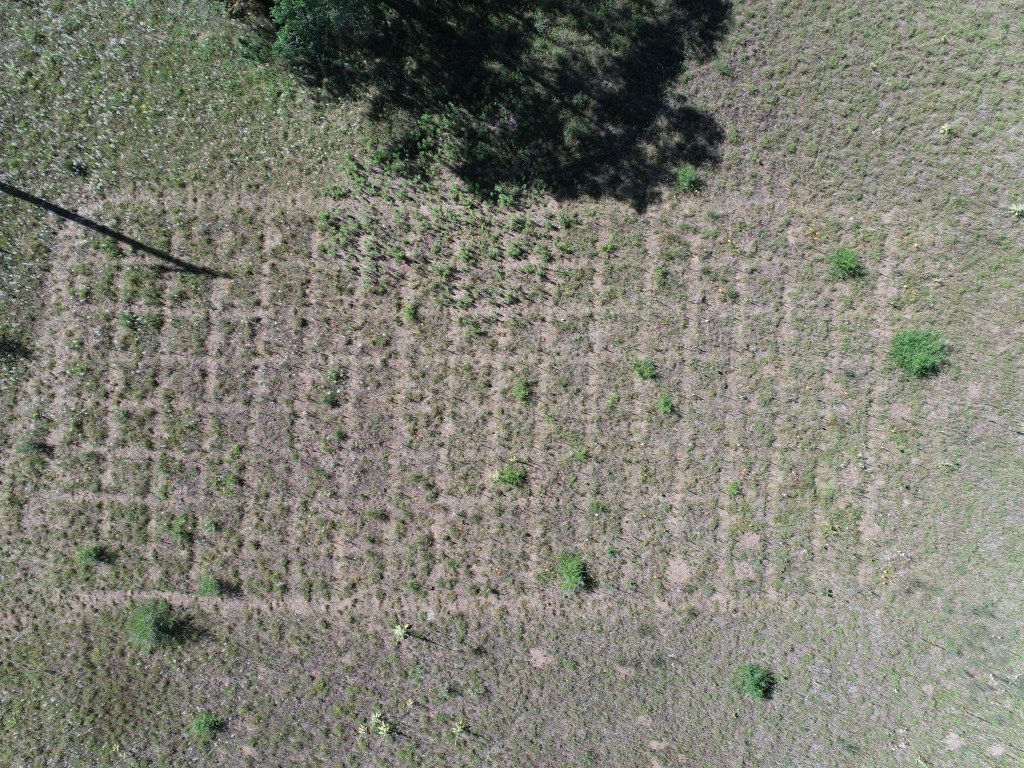
Experimental plots like these are common in plant ecology. But how transferable are findings from this experiment to plots that are bigger or smaller? (Drone photo Maggie Anderson; experimental set-up Josh Brian)

Unexpected challenges. One unexpected challenge was how difficult the literature review was! We had expected that the area (e.g. the size of a plot used) should be easy to find, as this is basic methodological information. However, this information was often hard to interpret, buried in the supplementary materials, or not there at all! Over 21% of studies didn’t report the actual area for at least one of the scale terms they used – so 21% of studies are not reproducible from this minor methodological point alone!

Major results. We found massive variation in the use of individual scale terms – on average, 4.7 orders of magnitude. While this variation could partially be explained by the type of study (e.g. observational scales tend to be larger than experimental scales for any given scale term) and habitat type (e.g. forest scale terms tend to be larger than in grasslands), there was still variation of 3.8 orders of magnitude within single habitats. For example, “local” scales in grasslands alone can refer to areas from 1m2 to 100,000m2! We did a little simulation, and found that this inconsistency could have major implications for calculating and comparing biodiversity metrics (e.g. Shannon’s Index) across studies. If biogeographic research is going to be reproducible and synthesisable, attention needs to be paid to how we use such terms.

Next steps for this research. The next step is really up to the community! We provide some guidelines in the paper on how we can improve matters. Authors of individual papers should make sure that the actual study area is clearly stated in the methods (at a minimum!), and authors of syntheses should make sure studies are being combined or compared based on their actual areas of investigation, rather than relying on scale terms to combine papers.

If you could study any organism on Earth, what would it be? I would love to study parasites of organisms in Antarctica – parasites in general are understudied, and I’m sure the extreme conditions there must have led to some amazing adaptations for transmission and survival. Plus, who wouldn’t want to go to Antarctica?

Is there anything else you would like to tell us about yourself or your featured research? This work was led by an undergrad, Chung Yi Hung, and funded by a King’s College London Undergraduate Research Fellowship. It’s absolutely amazing to see an undergrad do most of the work for a scientific paper – my co-senior author María and I got incredibly lucky to work with someone so talented!

ECR feature: Felipe Zuñe

Felipe Zuñe is a PhD researcher at the Universidade Federal Do Rio de Janeiro, in Brazil. He is an ecologist with special focus on vegetation dynamics. Here, Felipe shares his recent work on ecological drivers on vegetation dynamics of the Trindade Island.

Felipe Zuñe, PhD researcher at the Universidade Federal Do Rio de Janeiro.

Personal links. instagram | X

Institute. Programa de Pós-graduação Em Ciências Biológicas (Botânica), Museu Nacional, Universidade Federal Do Rio de Janeiro, Brazil

Academic life stage. PhD Candidate

Major research themes. Vegetation dynamics; Biodiversity conservation; Ecology; Botany.

Recent paper (citation). Zuñe, F., Rogério, M. G., Alves, R. J. V., & Silva, N. G. (2025). From Disturbance to Recovery: Unveiling the Role of Goats and Ecological Drivers on Vegetation Dynamics of Trindade Island, South Atlantic, Brazil. Journal of Vegetation Science, 36, e70039. https://doi.org/10.1111/jvs.70039

Current study system. Our research examines vegetation dynamics across tropical ecosystems, with particular focus on Trindade Island, a remote Brazilian oceanic island that serves as a natural laboratory for studying ecosystem responses to human disturbances and climate change. Using remote sensing in combination with field ecology methods, we analyze how invasive species legacies affect vegetation structure, document recovery patterns following eradication, and identify climate-vegetation interactions. These island studies directly complement my work in continental tropical forests, where I investigate similar ecological processes, including disturbance impacts, successional pathways, and resilience mechanisms. Together, this integrated approach contributes to the development of robust frameworks for biodiversity conservation in changing environments.

Motivation behind this paper. Understanding the precise magnitude of invasive herbivore impacts on island ecosystems remains a critical knowledge gap. While previous studies documented goat-induced degradation on Trindade Island, the quantitative extent of their ecological effects was unknown, representing a fundamental gap that motivated our research. Three centuries of uncontrolled herbivory had clearly transformed the landscape, but we lacked systematic measurements of how different vegetation types responded to this prolonged pressure. The 2005 eradication created an unprecedented opportunity to quantify these legacy effects. Our study addressed this need by precisely measuring goat impacts across ecosystems and their interaction with environmental variables, providing essential baselines for restoration science.

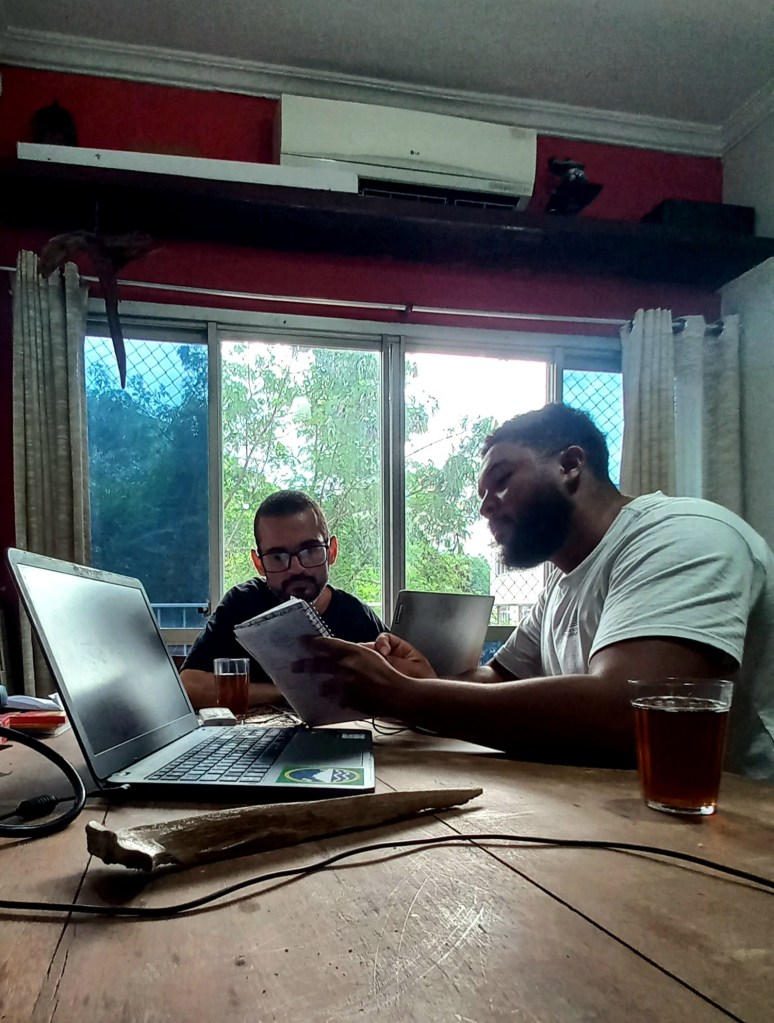
Felipe and Nílber Gonçalves da Silva working behind the scenes on the development, planning, and structuring of this study. Nílber is one of the researchers and also the project coordinator.

Key methodologies. Our study combined multi-temporal satellite imagery with field surveys to reconstruct vegetation changes across Trindade Island. The innovative integration of Random Forest classification with NDVI time-series analysis allowed precise tracking of recovery patterns post-eradication. We developed a novel modeling framework using Generalized Linear Models to disentangle legacy goat impacts from environmental drivers. Crucially, our backcasting approach extended the observational period beyond satellite records by incorporating historical field data. This methodological synergy provided unprecedented resolution for detecting nonlinear recovery trajectories across different vegetation types, offering new capacity to predict ecosystem responses to invasive species removal in island environments.

Unexpected challenges. One major challenge was accurately monitoring vegetation changes on Trindade Island, given its extreme remoteness and restricted access. The island’s limited accessibility required developing specialized remote sensing methods that could function with minimal field validation. We implemented multi-temporal NDVI analysis to track subtle recovery patterns. Incorporating historical expedition data through backcasting approaches allowed us to extend the observational record. These methodological innovations not only addressed the study’s logistical constraints, but also established new protocols for ecological monitoring in similarly isolated island ecosystems where traditional field validation remains impractical.

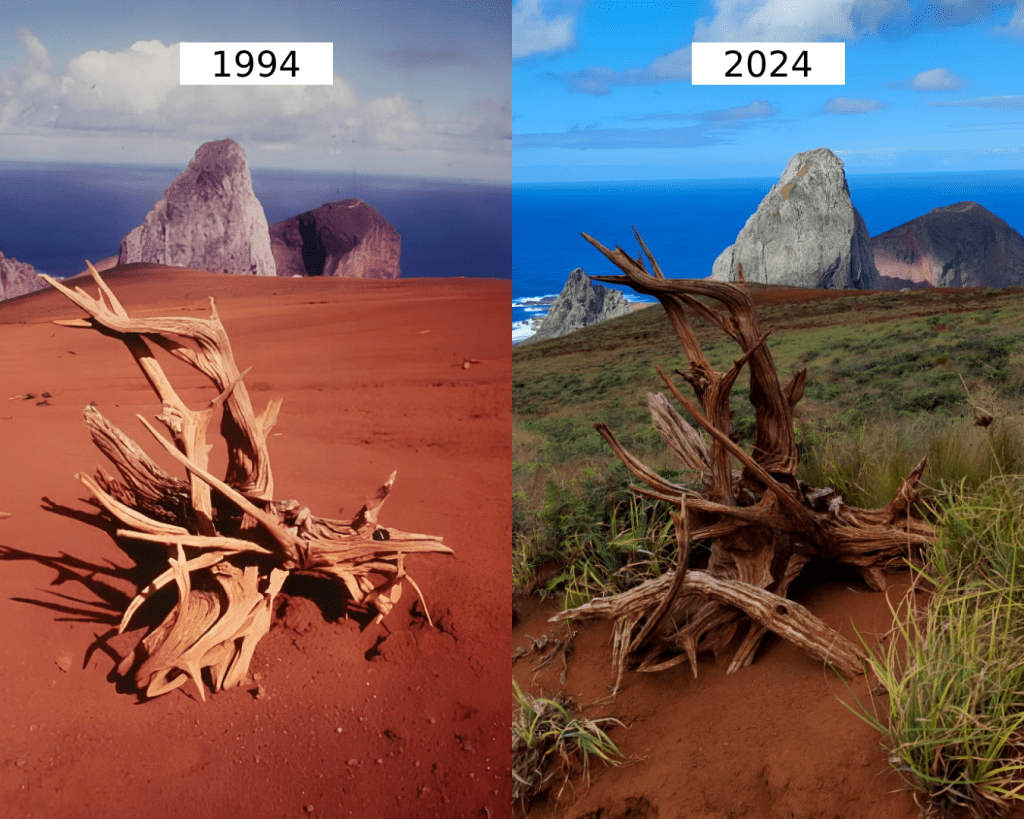
Major results. Our study revealed that goat eradication led to significant forest (65 ha) and grassland (325 ha) recovery by 2024, though climate factors (e.g., precipitation) amplified these changes. Hybrid models (anthropogenic + climate) had the highest explanatory power, underscoring the need for integrated conservation strategies. This work advances understanding of island ecosystem resilience and informs invasive species management worldwide.

Vegetation comparison on Trindade Island, between 1994, when goats were still present, and 2010, showing ecosystem recovery after goat eradication.

Next steps for this research. Our current research group is studying the functional diversity of Trindade’s endemic ferns (Cyathea copelandii) to understand their role in the island’s recovery. With these insights, we will: develop preventive monitoring strategies to detect reinvasions; refine high-resolution remote sensing for small islands; and analyze genetic diversity in recovering populations.

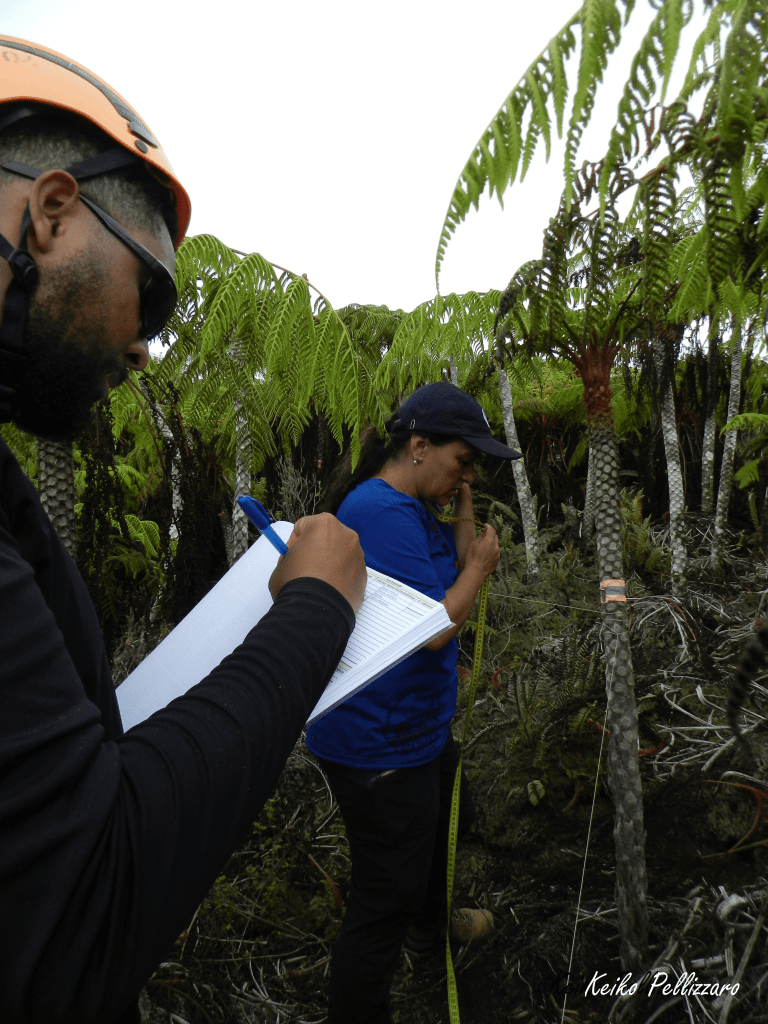
Felipe and Márcia Gonçalves Rogério, one of the researchers involved in the study published in the Journal of Vegetation Science, measuring endemic ferns on Trindade Island.

If you could study any organism on Earth, what would it be? I would like to study tortoises, especially the Galápagos tortoises. I’m fascinated by their size, ancient lineage, and role as ecosystem engineers.

Is there anything else you would like to tell us about yourself or your featured research? Trindade Island’s story is a testament to nature’s resilience, but also a warning. Even after goat removal, non-native plants and mice persist, showing that eradication alone isn’t enough. Collaborative, adaptive management is key!

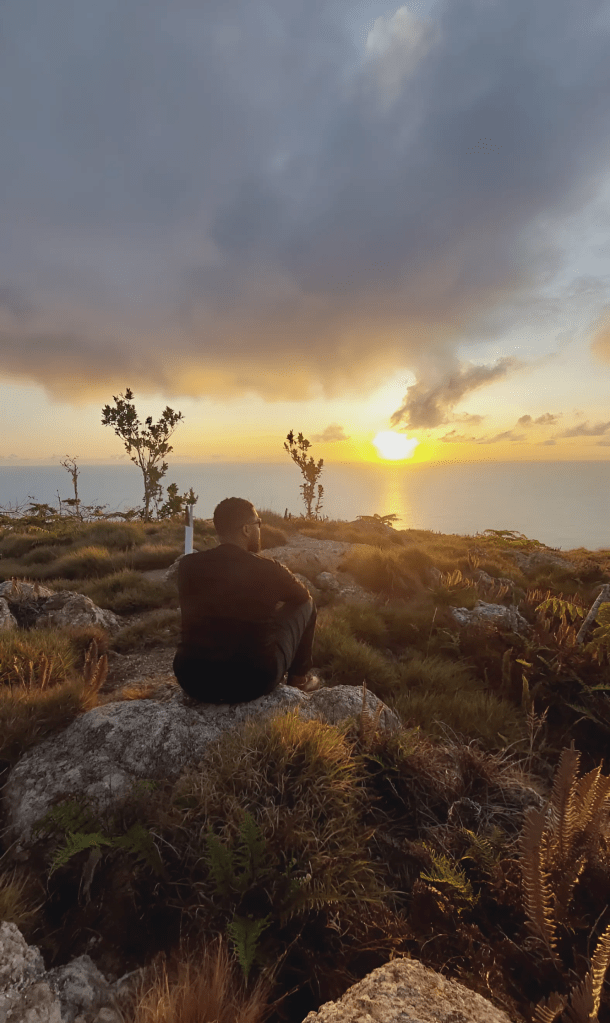
Felipe enjoying the view and sunset on Trindade Island.  

Building more community for Biogeography

Multiple society journals are collaborating to bring you more biogeography news

Above: A montage of the societies whose journals are now bringing you Biogeography.News

We are delighted to announce that we are breaking new ground in our mission at Biogeography.News https://biogeographynews.org/2023/12/10/re-introducing-biogeography-news/

Over the past year-and-a-half we have been working on several projects to build community across journals and societies. At Biogeography.News we are now delighted to report that we are collaborating with The American Naturalist, Biogeographia, Applied Vegetation Science, Journal of Evolutionary Biology, and the Journal of Vegetation Science to highlight research across the journals and to bring more biogeography news more easily to our shared communities. Our focus remains to highlight early career and global research, to help promote a more equitable and sustainable global research and scientific community.

As the number of venues for publishing biogeographical research has increased in recent years and support for the community from the Wiley journals historically serving the discipline’s core has become unreliable (Peterson et al. 2019; Williams et al. 2023), the biogeographical literature has become more fragmented. With those dynamics — driven by competition among for-profit publishers for copy — we rely more on search tools for making sense of the literature and there has been a certain loss of coherence and natural organization. Societies are addressing this by doing important work in supporting their communities and publishing in their discipline, while many of us are members of multiple societies and publish in multiple journals. As such, there is an important opportunity to build a meta-community for biogeography that reaches across journals and societies. This is our goal here at Biogeography.News — to provide easily digestible summaries of new research across a diversity of disciplines — and we expect the number and range of journals and societies that are involved to keep growing. 

If you are an author, journal editor, or society board member and would like to support this Biogeography.News initiative, please see the contact information below. Drop us a line and learn how!

This initiative is consistent with the goals of a related project — Publishing for an Ethical and Equitable Environment in Research (PEEER) —  whose goal is “to foster a culture in which authors, editors, and reviewers … support … a healthy scientific and research community.” For more information see https://peeer.net.

About the collaborating journals and societies

The American Naturalist, since its inception in 1867, has maintained its position as one of the world’s premier peer-reviewed publications in ecology, evolution, and behavior research. Its goals are to publish articles that are of broad interest to the readership, pose new and significant problems, introduce novel subjects, develop conceptual unification, and change the way people think. The American Naturalist emphasizes sophisticated methodologies and innovative theoretical syntheses — all in an effort to advance the knowledge of organic evolution and other broad biological principles. The journal is published by the American Society of Naturalists (ASN) which is the oldest scientific society dedicated to the study of ecology, evolution, and behavior. The goal of the society is to advance and to diffuse knowledge of organic evolution and other broad biological principles so as to enhance the conceptual unification of the biological sciences.

Biogeographia – The Journal of Integrative Biogeography is a scientific journal publishing original research and reviews in biogeography since 1970. The journal considers papers dealing with clear hypotheses, large data sets, convincing analyses or interesting results on the distribution of organisms, as well as purely descriptive studies embedded in a theoretical framework or providing unique primary data of high potential future scientific value. The journal is published on behalf of the Italian Biogeography Society (Società Italiana di Biogeografia, SIB [in Italian only]). The society was officially founded in 1962 from the previous informal Gruppo Italiano Biogeografi, and from 1970 has published its own journal (originally, Biogeographia – Lavori della Società Italiana di Biogeografia).

– The Journal of Evolutionary Biology (JEB), founded in 1988 is a peer-reviewed, international journal owned by the European Society of Evolutionary Biology (ESEB). The journal seeks to publish articles that advance the understanding of the evolutionary process and are of interest to a broad evolutionary readership. The journal prioritises robust and well-executed studies that ask novel questions and/or provide new insights, generalisable across taxonomic groups. JEB considers submissions describing research from across the field of evolutionary biology, including evolutionary genetics and genomics, molecular evolution and phylogenetics, life histories, evolutionary ecology, development, or morphology. The journal covers both micro- and macro-evolution, as well as empirical, computational, and theoretical work.

ESEB itself, f​​ounded in 1987, aims to promote the study of evolution on an international scale. The society brings together thousands of evolutionary biologists from Europe and the rest of the world – researchers, lecturers, students, as well as journalists and other interested parties. 

– The Journal of Vegetation Science (JVS), established in 1990, focuses on all aspects of plant community ecology and the macroecology of vegetation. Articles may cover any aspect of vegetation science, including community structure, biodiversity, spatial patterns, temporal changes, and processes, and emphasizing research that develops new concepts or methods, tests theories and reveals general patterns in plant communities.

Applied Vegetation Science (AVS), established in 1998, focuses on plant community ecology topics relevant to human interaction with vegetation. Global environmental change, nature conservation and management, restoration of plant communities and natural habitats, and planning of semi-natural and urban landscapes are of particular interest.JVS and AVS are owned by the International Association for Vegetation Science (IAVS). IAVS is a worldwide union of scientists and others interested in theoretical and practical studies of vegetation: its composition and structure, history, classification, distribution, ecology, dynamics, management and uses in the landscape. The society was officially founded in 1954 from the previous informal International Phytosociological Society.

Covers of journals contributing to Biogeography.News
Above: A montage of the journals contributing to Biogeography.News

How to contribute:

Via the societies’ journals

When you receive an acceptance letter from participating journals, it will include information on how to contribute. Look for text similar to the following:  

For journals that focus on biogeography (e.g. Biogeographia): “If you are interested in contributing a blog post about your accepted paper to Biogeography.News, please reach out to biogeographynews@gmail.com with the subject “BN contribution – ” and your name.”

For journals that include, but do not focus primarily on, biogeographical studies (e.g. The American Naturalist, Journal of Evolutionary Biology, and the IAVS journals): “If your article focuses on a biogeographical topic, you can contribute a blog post about it to Biogeography.News. If you are interested, please reach out to biogeographynews@gmail.com with the subject “BN contribution – ” and your name.”

Direct to Biogeography.News 

Write to biogeographynews@gmail.com and for full instructions see our original post on “How to Contribute to Biogeography.News.” Briefly, there are several ways that you can devise a feature for Biogeography.News:

– Question + Answer
– Short essay
– Short video
– Graphical abstract
– Significance statement. 

We aim to accompany each feature with several photos that will be posted on Biogeography.News’ social media platforms. Ideally, these would be high resolution images and would include: (1) a clear picture of yourself, and (2) several shots of your study organism and/or system, both accompanied with captions. We assume that images belong to you, or that you have permission to use them. Where images do not belong to you, it is important you credit the owner and let us know you have permission.

Why Biogeography.News? See https://biogeographynews.org/2023/12/10/re-introducing-biogeography-news/

To join the editorial team at Biogeography.News write with a few lines about (1) your areas of expertise/interest, (2) the journal and/or geographic region you’d like to cover, and (3) your publishing history, to: biogeographynews@gmail.com

The same contact information will work if you have any general questions or if you wish to make comments.

We look forward to hearing from, and working with, you!

Contributors:

Mike Dawson, UC Merced, USA – Biogeography.News
Milan Chytrý, Masaryk University, Czech Republic – Journal of Vegetation Science & Applied Vegetation Science
Diego Fontaneto, CNR-IRSA Verbania, Italy – Biogeographia
André Liz, BIOPOLIS/CIBIO-InBIO: Porto, Portugal – Biogeography.News
Max Reuter, University College London, UK – Journal of Evolutionary Biology
Volger Rudolf, Rice University, USA – The American Naturalist

Understanding attitudes toward the current publishing landscape

A survey by the Ecological Society of America offers an opportunity to better understand attitudes toward scientific publishing

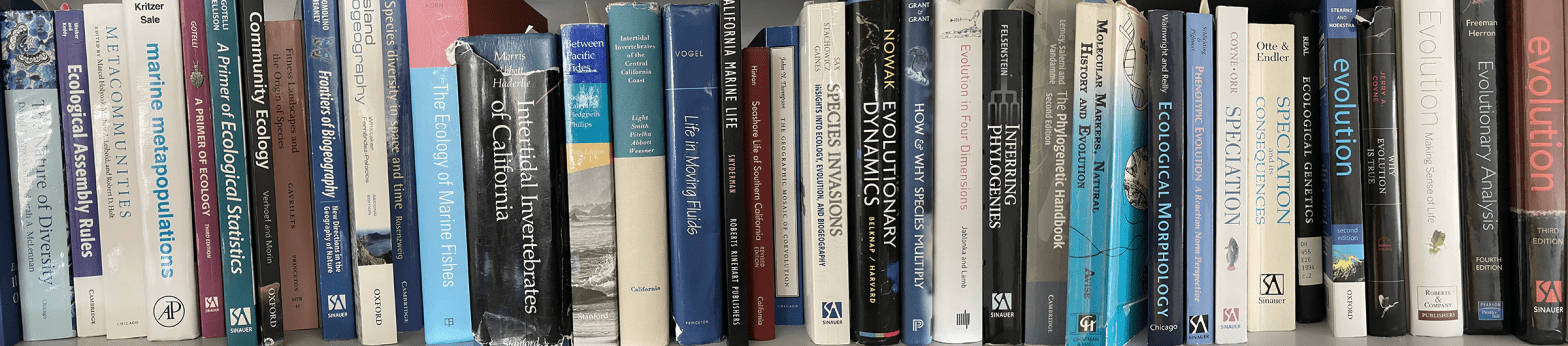
Above: A bookshelf. Oh my, how times change in scientific publishing!

The Ecological Society of America (ESA) would like to know more about the challenges you face when publishing. Your feedback will help better understand the barriers to scientific publishing in general and improve the authoring process for the community. Your responses and information will be kept confidential.

Click Here to Enter the Survey

The survey will take approximately 15 minutes to complete. Please respond by 28 March 2025 to have your views included.

Thank you very much for your time and feedback!

Please contact the research team with questions, concerns, or complaints about the research study and any research related injuries by calling 202-833-8773 or emailing Adrienne@esa.org.

If you have any questions or complaints, you may contact a person not on the research team at the Biomedical Research Alliance of New York Institutional Review Board at (516) 318-6877 or at http://www.branyirb.com/concerns-about-research.

The research is funded by the National Science Foundation [Award Number: 2209643].

Best regards,

Catherine O’Riordan
Executive Director at Ecological Society of America
coriordan@esa.org

Re-introducing “Biogeography.News”

To better serve our goal of fostering a more equitable and sustainable global community for biogeographical research we have updated our scope to emphasize a broader authorship in society journals.

Above: A metaphor: Mill Creek, California, USA. Where the land and sea meet, large and dynamic forces shape and re-shape the environment for organisms that inhabit the intertidal zone, and beyond.

This blog was established in early 2020 and has been maintained for the past three-and-a-half years by members of the biogeography community. Our goal has always been to highlight research at the intersection of biology and geography that is scientifically important and of broad general interest. Importantly, it was intended from the outset to foster a more equitable and sustainable global community for biogeographical research. For many years these goals overlapped with an emerging emphasis at the Journal of Biogeography (JBI) and, as JBI had provided a ‘big tent’ for the biogeography community for almost 50 years, it made pragmatic sense to focus on highlighting research published in that journal as a proxy for supporting the community that orbited around it. However, the past year has shown how much JBI has departed from this blog’s mission of listening to and supporting the biogeography community. In September, we parted ways.

The past three months provided some much-needed time for reflection: on our mission, on what we learned during the year, on the implications, on how we could better serve the biogeography community. We are now pleased to announce our return, as Biogeography.News, with many of the same initiatives — early career researcher features, research highlights from the literature, news of developments in publishing affecting biogeographers — but re-orienting our focus. Instead of looking to a single journal to represent biogeography, we are now looking to the broad spectrum of journals that publish biogeographic research. Specifically, our focus will be on biogeography that is published in society journals.

Society-owned journals that publish biogeographical works include (but are not limited to):
American Journal of Botany (Botanical Society of America; published by Wiley)   
American Naturalist (American Society of Naturalists; published by U. Chicago Press)
Biogeographia (Italian Biogeography Society; published by eScholarship)
Biological Journal of the Linnean Society (eponymous; published by Oxford Academic)
Botanical Journal of the Linnean Society (eponymous; published by Oxford Academic)
Ecography (Nordic Society Oikos; published by Wiley)
    Sister journals https://nordicsocietyoikos.org/publications (published by Wiley)
Evolutionary Journal of the Linnean Society (eponymous; published by
Oxford Academic)
Frontiers of Biogeography (International Biogeography Society; published by
eScholarship. N.B. *not* a “Frontiers.in” journal)  
Zoological Journal of the Linnean Society (eponymous; published by Oxford Academic)
Evolution (Society for the Study of Evolution; published by Oxford Academic)
Journal of Mammalogy (American Society of Mammalogists; published by
Oxford Academic)
Journal of Vegetation Science (International Association for Vegetation Science;
published by Wiley)
Perspectives in Ecology and Conservation (‘Brazilian Association for Ecological Science’
and Conservation; published by Elsevier)
Proceedings of the Royal Society, B (eponymous; published by Oxford Academic)
     Sister journals https://royalsociety.org/Journals/ 
Proceedings of the National Academy of Sciences, USA (eponymous; published by NAS)
Science (American Association for the Advancement of Science; published by AAAS)
Systematic Biology (Society of Systematic Biologists; published by Oxford Academic)
Taxon (International Association for Plant Taxonomy; published by Wiley)

The list of societies, journals, and publishers makes it clear that the current publishing environment is complicated for biogeographers who want to support #BetterPublishing through their authorial, editorial, and/or reviewing work. While avoiding journals such as JBI and it’s sister journals (Diversity and Distributions, Global Ecology and Biogeography), which are fully owned and published by Wiley, may be a relatively straight forward decision these days, should biogeographers wishing to support #BetterPublishing also then avoid society-owned journals that are published by Wiley? (And, likewise, society-owned journals published by other large for-profit companies?) What are the relevant benefits and costs? We can dig into these issues in more detail at another time, but, in short, a rough rule of thumb is that society journals take less from and/or give more back to the community than publisher-owned journals, and some smaller publishers provide lower costs / better benefits. Many of these journals have long rich histories; others are more recent. We each have some disciplinary favorites, and a soft-spot for Biogeographia and Frontiers of Biogeography (N.B. *not* a “frontiers.in” journal!) published with the University of California’s eScholarship.

We’ll also continue to highlight biogeography, via our linked social media —
X/twitter (‘https://twitter.com/JBiogeography), Facebook (https://www.facebook.com/people/Biogeographynews/100050027385851/), and Instagram (https://www.instagram.com/jbiogeography/) — and including following the society journals we highlight.

With the expansion of this blog’s scope, there is much more work to be done. It is a particularly exciting time in publishing, looking to see more affordable equitable journals rising to replace JBI. With more journals to cover, we look forward to welcoming more authors. With more authors penning summaries of their recent research, we’ll need more ‘editors’ to review and format posts for the blog. There’s no greater reward than helping each other be successful. We hope you’ll join us in this endeavor …

To see how to submit a summary of your recent research to the blog, see LINK (https://biogeographynews.org/2023/12/10/how-to-contribute-to-biogeography-news/)

To join the editorial team at Biogeography.News write with a few lines about (1) your areas of expertise/interest, (2) the journal and/or geographic region you’d like to cover, and (3) your publishing history, to:
b i o g e o g r a p h y n e w s @ g m a i l . c o m