ECR feature: Scale insects with Thomas D. Whitney

Thomas Whitney is currently a postdoc at Washington State University, Puyallup. He studies the ecology and evolution of insect species. His recent work in the Journal of Biogeography has sought to understand the extensive dieback in eastern white pines (Pinus strobus) and its association with a scale insect (Matsucoccus macrocicatrices). It has been unclear if this association is historical or recent, perhaps indicative of a recent host shift. Using population genetic approaches, Thomas sought to determine the likely context of this plant-insect association.

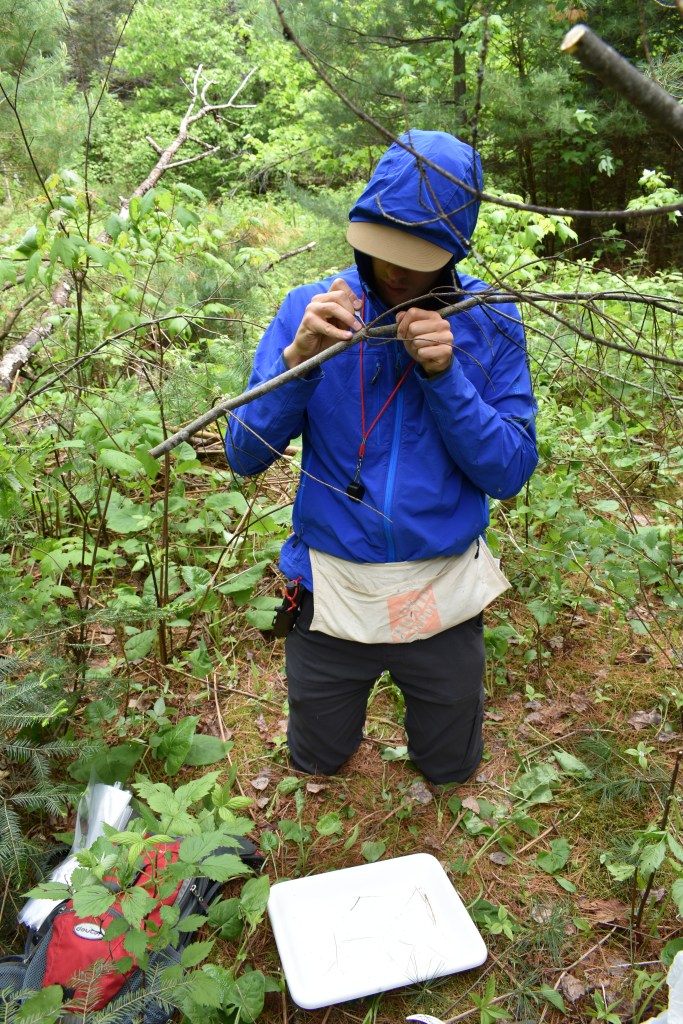
(left) Thomas meticulously removing scale insects from a branch in Wisconsin, USA. Not pictured very well are the hundreds of swarming mosquitos. (right) Thomas presenting his work.

Links: Personal webpage | Google Scholar | Research Gate

Institution: Washington State University – Puyallup

Current academic life stage: Postdoc

Research interests: I apply principles in ecology and evolution to better understand insect pests

Current study system: I currently study the little-known Douglas-fir twig weevil (Cylindrocopturus furnissi), a native beetle to the Pacific Northwest of North America. It has long been known to use Douglas-fir (Psuedotsuga menziesii) as a host, but only recently have we noticed it is developing within true firs (Abies spp.) as well. This has caused concern for the Christmas tree industry. This is a mystery, and the possibility of cryptic species, a host-shift, or something else entirely is what stimulates my curiosity about the system.

Recent paper in Journal of Biogeography: Whitney TD, Gandhi KJK, Lucardi RD. In press. Native or non-native? Historical biogeography of an emergent pest, Matsucoccus macrocicatrices. Journal of Biogeography. DOI: 10.1111/jbi.13702

Motivation for the paper: Eastern white pine (Pinus strobus) is an important and widespread tree across eastern North America. Since the early 2000s, the species has suffered from a novel phenomenon of branch dieback and mortality. Only recently was it discovered that an insect-pathogen complex is associated with the symptoms. The pathogen (Caliciopsis pinea) is assumed native, but there was no prior indication as to the past distribution of the insect, the eastern white pine bast scale. It was first described in Canada and was never known south of Massachusetts until 2006. Since then, reports of the insect in association with dieback symptoms have occurred frequently and as far south as Georgia and as far west as Wisconsin. Determining whether this insect has historically co-occurred with eastern white pine throughout the tree’s range was important to rule out or confirm the possibility of an invasive species. This information can help guide management strategies.

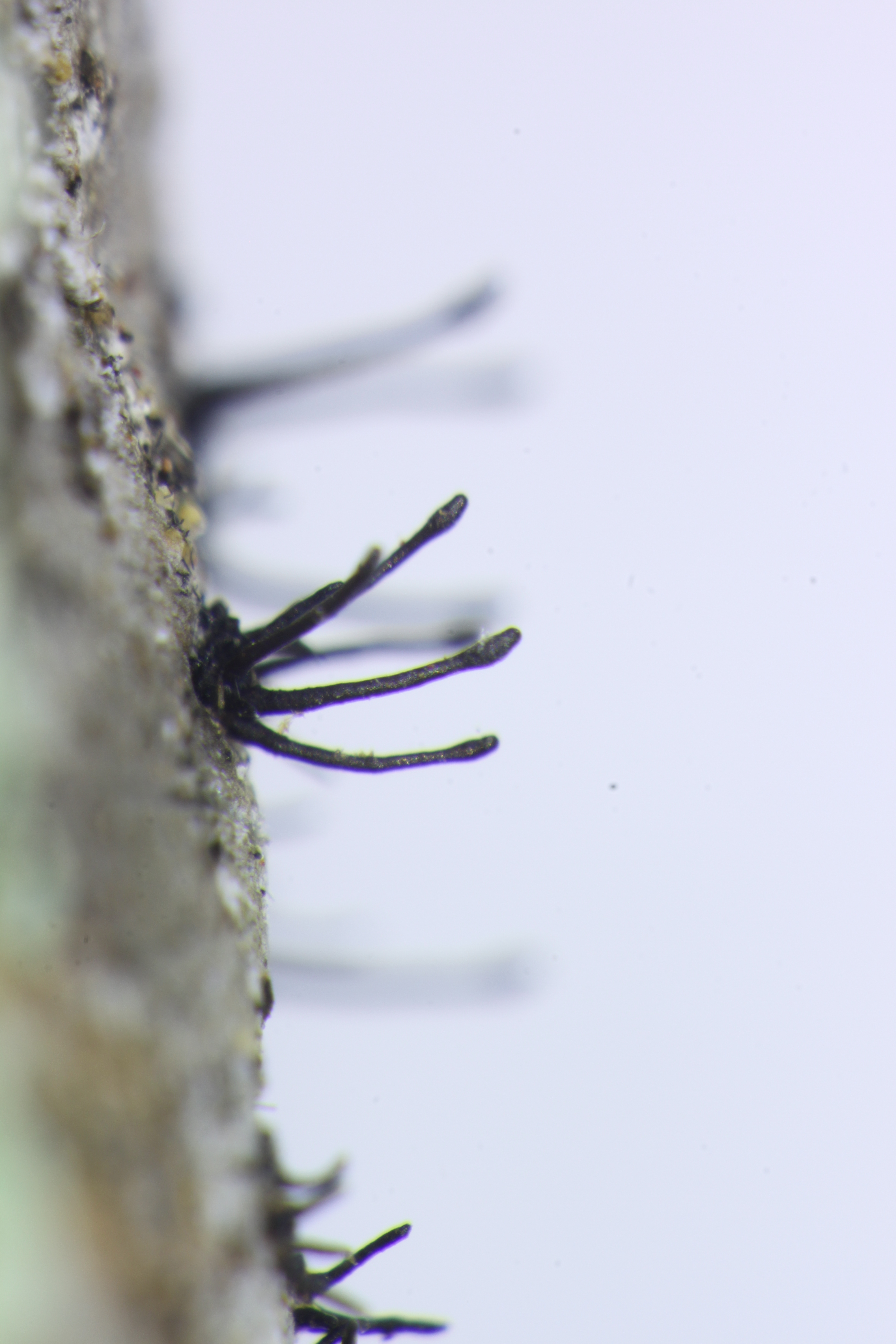
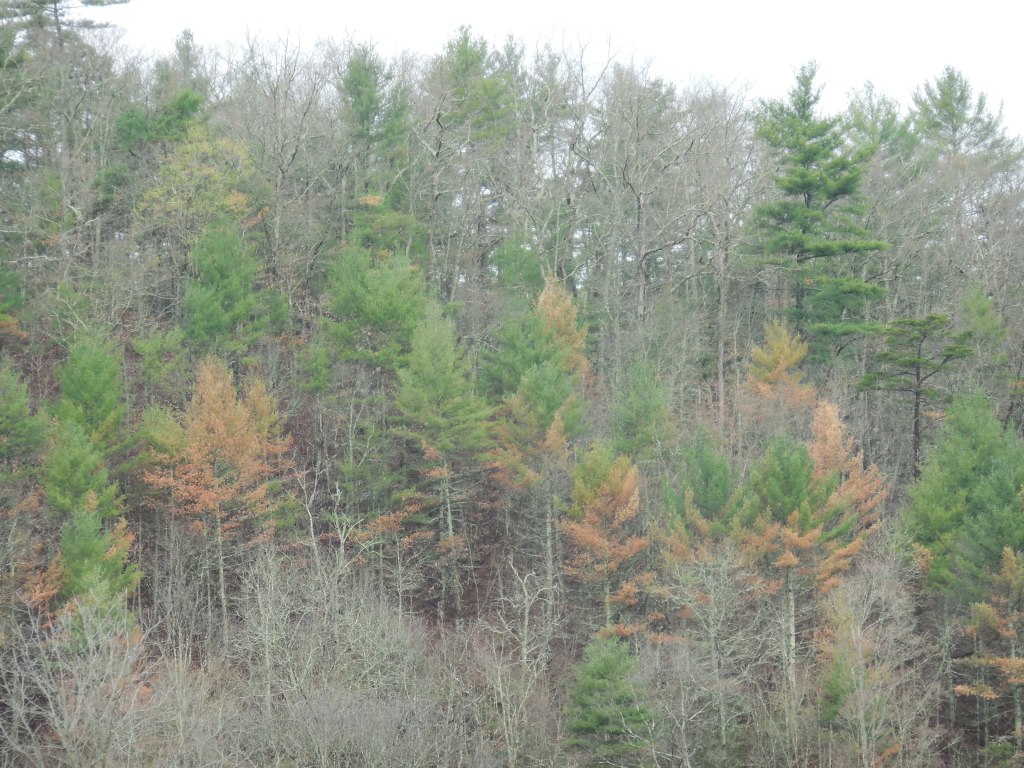
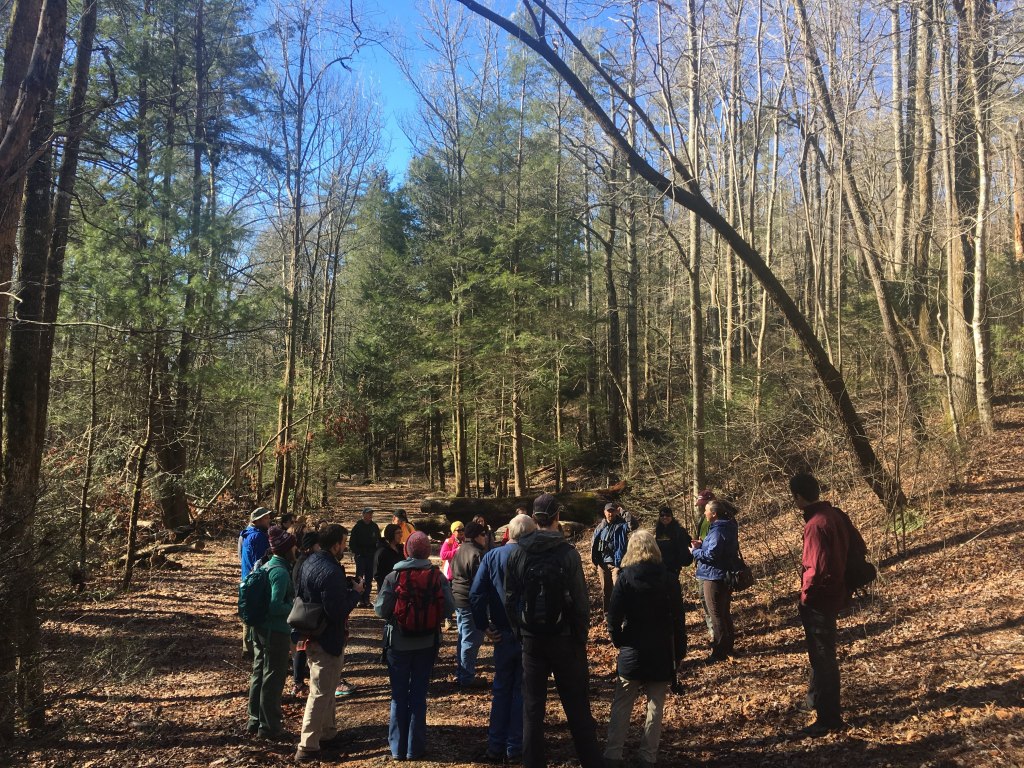
(A) Fruiting bodies of Caliciopsis pinea protruding from a bark canker. As part of an insect-pathogen complex, the feeding behaviors of eastern white pine bast scales are hypothesized to create ideal infection courts for this pathogen to penetrate the bark and establish in the cambium. These cankers are leading to white pine dieback symptoms. (B) A cluster of eastern white pine bast scales (Matsucoccus macrocicatrices) found on the bark surface feeding on the host tree’s vascular fluid. (C) Eastern white pine trees exhibiting dieback symptoms. Photo credit: Lori Chamberlain. (D) State, federal, and university researchers attend a field trip in the Southern Appalachian Mountains of Georgia, USA, as part of the first White Pine Health Workshop in February 2018.

Key methodologies: We conducted a population genetics study to assess the presence of structure across the range of the insect. We also looked for evidence of genetic bottlenecking, which would be consistent with a recent introduction from source populations to newly documented populations. We developed a panel of microsatellite markers using next generation sequencing to assess genetic diversity and structure. We also conducted landscape genetic analyses to determine if host tree connectivity (using data from Forest Inventory Analysis) could explain an apparent barrier to insect dispersal located in the Blue Ridge Mountains.

Unexpected challenges: These insects are tiny and very difficult to sample! As of now, there is no method to passively collect them. They must be hand sampled at the 2nd instar juvenile stage. This is the point in their development where they resemble a tiny black pearl – no eyes, no legs, only mouthparts perpetually inserted into the bark of the tree extracting sugars. These sentient sap-filled balloons are cryptically hidden in bark crevices and under lichen, and they require a delicate touch with forceps to pluck them from a branch or trunk. With such a big area of the continent to sample, training others was impractical. Instead, I did all the sampling myself, either travelling to sample in situ with a hand lens or receiving overnight shipments from my colleagues to sample under a microscope. It was tedious, but it was also a joy to explore these remote areas and collaborate with so many good folks.

Major result and contribution to the field: We found that the eastern white pine bast scale is indeed a native species to its newly documented areas. In fact, we found evidence to suggest it may have been associated with eastern white pine in refugial populations located in the Southern Appalachian Mountains during the Last Glacial Maximum. This rules out the possibility of the insect being a non-native invader exploiting naïve hosts. Why this insect has only now become associated with eastern white pine dieback and mortality remains a central question, but this work has successfully narrowed the possibilities.

What are the next steps? There are several steps to take with this system. One will be to investigate the mechanism that allows the insect’s feeding wounds to facilitate infection of the tree by fungal pathogens. Additionally, it will also benefit research efforts to develope a pheromone lure to accurately survey adult males, which will help us gain a better understanding of its density and range-wide distribution.

If you could study any organism on Earth, what would it be and why? I would study ice crawlers (Notoptera: Grylloblattodae), which are insect extremophiles! They live on alpine mountains, cannot tolerate temperatures over 10 °C, and are super rare. I think they’d be interesting to study for their unique biology, sure, but also because they seem to be an interesting system in terms of speciation and evolution. Oh, and how cool would that field work be?

Any other little gems you would like to share? I used to study wolf spiders that inhabit forest leaf litter. If you are unfamiliar, wolf spiders have an iridescent layer behind their retinas. At night, you can easily locate them with a headlamp – their eyes give off a subtle shimmer. It’s a fun thing to try. Whether in a forest, a grassland, or a desert, you’ll be surprised with how many wolf spiders are around.

Biogeography in the Age of Big Data

Journal of Biogeography, 47:1 Special Issue

https://onlinelibrary.wiley.com/toc/13652699/2020/47/1
ALL SPECIAL ISSUE ARTICLES ARE FREE ACCESS for 2020 & 2021

Between 10-13th April, 2018, the annual meeting of the Specialist Group for Macroecology of the Ecological Society of Germany, Austria and Switzerland convened in Zurich, Switzerland around the topic of “Macroecology in the age of big data”. The outcomes of that meeting are now featured in the January 2020 issue of the Journal of Biogeography.  All articles in the special section are free to download from the journal website until the end of 2021.

The “Specialist Group on Macroecology of the Ecological Society of Germany, Austria, and Switzerland” is one of the leading scientific platforms for macroecological topics in central Europe. The primary goal of the annual meeting was to support the development of macroecological research in central Europe and beyond. The special issue papers are a reflection of the macroecological community’s excitement, hopes, and concerns about the emerging power of ‘big data’ to reshape ecological research.

Fifteen papers provide a variety of perspectives on, and examples of, modern macroecological research using big data.  According to the overview article by Wüest et al. (2019), several main patterns fall out.  Notably, major new sources of macroecological data have become available in recent years, reducing three major gaps: across spatial scales (the “scale shortfall”), in the biomes covered (the “Wallacean shortfall”) and in the number of taxa covered (the “Linnean shorfall”).  Particularly, advances in airborne and satellite imagery have rapidly increased the volume and variety of data linking multiple spatial scales, increasingly using synchronous or near-synchronous measurements.  Advances in bulk collections and databases are making more clear the locations of discrepancies between predicted and measured biodiversity, which can guide both new collections and assessment of error.  As additional approaches such as eDNA and advances in drone technology accelerate in the coming years, and new satellite programs such as NASA’s Surface Biology and Geology come online, we can expect to see continued rapid growth in data, knowledge, and understanding.

Landmarks in the growth of big data in macroecology and how it has shaped a variety of disciplines, including biology, biogeography and ecology. From Wüest et al. (2019).

Nonetheless, further progress must be made to standardize data collection, data integration, method development and process integration. Particularly, as more data becomes more accessible, and analyses of large datasets become easier, it will become ever more important to be vigilant about the basics of raw data quality, reproducibility of data compilation and analytical methods, and the communication of uncertainties.

The Journal of Biogeography has, for some time now, been listening to the community on these issues and has recognized their emerging importance.  In 2019, we completed implementing our commitment to replicability of studies we publish.  As a condition for publication, Journal of Biogeography requires that data supporting the results in the paper be archived in an appropriate permanent public repository and strongly encourages that the scripts and other artefacts used to generate the analyses presented in the paper should similarly be permanently publicly archived. We hope this will go some way to supporting the community’s efforts to build better biogeographic and macroecological understanding during this period of rapid global change.

We are, thus, delighted to bring this survey of the state of the discipline to you in the pages of the Journal of Biogeography. Particularly we thank the team of editors (Holger Kreft, Wilfried Thuiller, Damaris Zurell), reviewers, and the many authors who provided such a cogent summary and many thought-provoking examples of what is and can be possible.  All articles in the special issue are free access for two years. We hope you enjoy reading them!

References

Wüest, RO, Zimmermann, NE, Zurell, D, et al. 2020. Macroecology in the age of Big Data – Where to go from here? J Biogeogr. 47: 1– 12. https://doi.org/10.1111/jbi.13633

ECR feature: Bird migration behavior with Paul Dufour

Paul Dufour spotting and counting large groups of shorebirds that overwinter and migrate through the bay of Dakhla in the Western Sahara (photo credit: Boris Delahaie).

Links: Research Gate | Flickr

Institution: Laboratoire d’Ecologie Alpine – Grenoble, France

Current academic life stage: PhD

Research interests: Understanding the evolution of migration behavior in birds and its ecological and evolutionary consequences.

Current study system: I am interested in the whole avian class, but I am also studying more specifically the order Charadriiformes, which shows quite exceptional and diverse migration strategies. Also, I have recently started studying populations of Richard’s Pipit in Europe, a species of Asian passerine that normally overwinters in Southeast Asia, which we suspect uses a new migration route towards Western Europe.

Recent paper in Journal of Biogeography: Dufour P, Descamps S, Chantepie S, Renaud J, Guéguen M, Schiffers K, Thuiller W, Lavergne S. 2020. Reconstructing the geographic and climatic origins of long‐distance bird migrations. Journal of Biogeography 47: 155– 166. DOI: 10.1111/jbi.13700. FREE ACCESS for 2020 & 2021

Motivation for the paper: There are still many unanswered questions around biogeographic scenarios that could explain the emergence and evolution of seasonal migration—in particular large geographic migration—in birds. As previous studies on smaller families or clades have shown rather diverse results, we wanted to test whether general evolutionary patterns could be described for large clades of migratory birds. At the same time, we wanted to examine how these evolutionary patterns could be related to the tracking of climatic niches during different seasons.

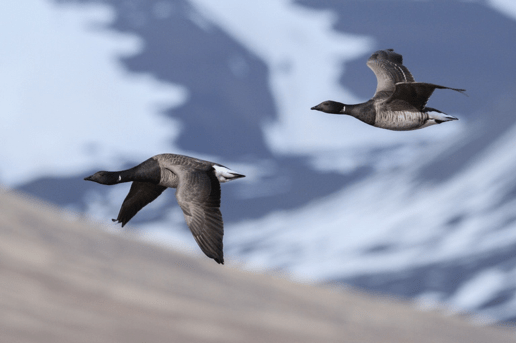
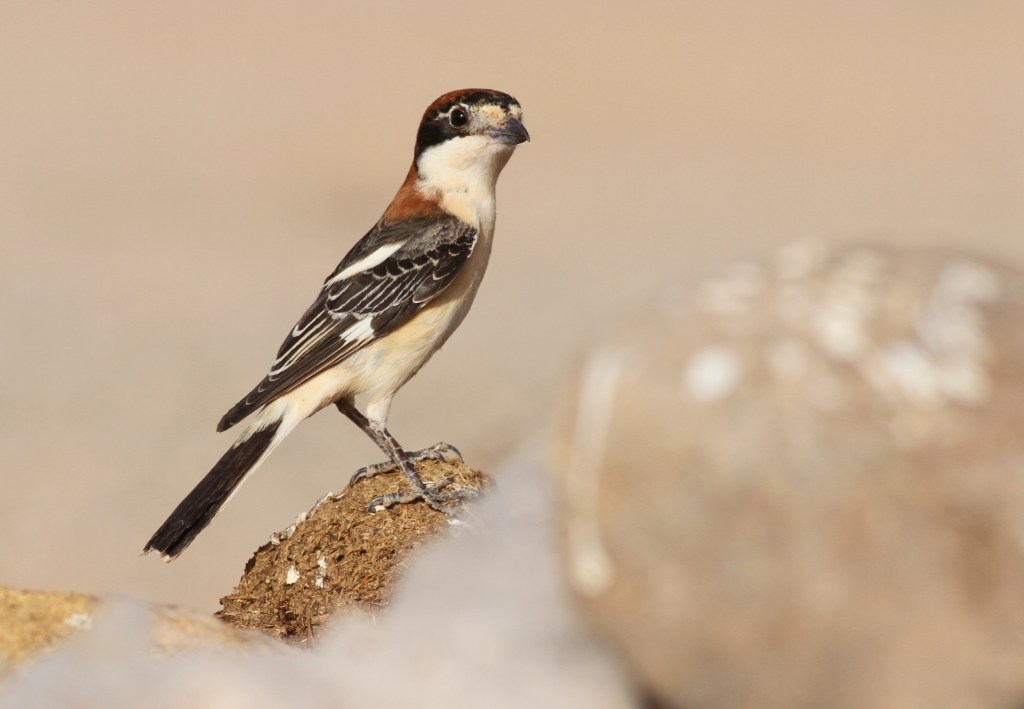
(A) A group of Brent Geese (Branta bernicla hrota) just returning from their wintering grounds, photographed in Longyearbyen (Svalbard, Norway) when Paul was working on seabird colonies. (B) A Woodchat Shrike (Lanius senator), probably on its way to its breeding grounds, looking for insects on a garbage mound in the middle of the Western Sahara.

Key methodologies: Since our aim was to understand the biogeographic and climatic context for the evolutionary emergence of seasonal migration at global scale, we first manually coded the migration strategies for all current species of birds. While many distribution maps reflect the migration strategy (i.e. strict migratory species), this is not the case for resident or partially migratory species, for which it is necessary to look precisely at the available information in reference handbooks. Similarly, compared to what has been done in the past, we wanted to address the issue of niche tracking between season, in particular through a measurement of climatic overlap, on all extant bird species to study global patterns of these metrics. We also wanted to place this question in an evolutionary context by using phylogenetic regressions.

Unexpected challenges: Describing the niche of a species often requires consideration of the climatic and environmental variables to be taken into account. In the case of our study, we had to make a choice between being able to consider the avian class as a whole and using more variables to define the niche of the species. Since a significant proportion of species overwinter over marine areas, we chose the first option but had to rely on temperature alone to define climatic niches, finding no other variables related to our biological assumptions and available over land and ocean. We believe that addressing this issue by comparing all these different migration strategies at global scale is an interesting approach and that this simplification is acceptable as temperature has been shown to be a good proxy in the distribution of bird species.

Major result and contribution to the field: We found that migratory species, and even more so long-distance migratory species, generally experience a warmer climate on their wintering grounds than on their breeding grounds, although there are notable exceptions. We also confirmed that seasonal migration is a labile trait that has appeared and disappeared at different periods in the history of several avian lineages. As a consequence, we have not reported dominant biogeographic scenarios (i.e., both temperate and tropical ancestors) that could have explained the evolution of migratory behaviour in the major migratory orders. Interestingly, we found an ancestral migratory behaviour deeply rooted in the history of the great radiation of the Passeriformes that could coincide with the great expansion of this clade.

What are the next steps? This last result calls for further analysis of the potential role of migration behaviour in diversification processes. The richness of large groups of migratory birds suggests that migration might be a driver of speciation. Similarly, different migratory species show different strategies or year-round niche tracking: the fact that both short- and long-distance migrants showed lower thermal overlap values than variable‐distance migrants opens up interesting approaches to study the evolution of migration. A first idea might be to test whether migratory birds do not migrate ‘too’ far compare to their optimal climatic niche and to link this result with the progressive shift of breeding and wintering areas.

If you could study any organism on Earth, what would it be and why? There are hundreds of birds that I would like to study (seeing them would be very enjoyable in itself) because their migration strategies are so extraordinary and open the door to a multitude of questions. However, at the moment I am happy to be able to study Richard’s Pipit, an Asian passerine species whose appearance in Europe remains enigmatic. If our hypotheses are correct, we may have the chance to observe really drastic changes in migration routes in a very short period of time.

Cover Images

Your research upfront.

Historically, the cover image of journals, including the Journal of Biogeography, was donated by the authors of an article published in that issue and chosen by the editors to highlight research that represented the breadth of the discipline and was of particular note. However, a number of years ago, the Journal of Biogeography unfortunately switched to a for-profit model: it began charging authors who were able and willing to pay for the placement of the cover image. This had multiple negative consequences. The cover image potentially became unequally accessible to the full diversity of biogeographers — and so ecosystems, organisms, and places. The cover image became less interesting, being replaced in multiple instances by a stock image of little relevance to biogeography. The cover image thus, in a short period of time, lost its value to the community.

It is with great pleasure, therefore, that we are able to announce that the journal is — as of November 2019 — resuming highlighting the best biogeography in each issue with an attractive author-contributed image, which will be featured free of charge. This is one of several ways that the journal is working harder to better support you as biogeographers and the community of which we all are a part.

As your articles are accepted for publication, we encourage and welcome your suggestions of images that meet the following specifications: 215 mm width , 162 mm height and 300 dpi resolution.

Browse the Cover Image Gallery for the Journal of Biogeography

Editors’ Choice

Chosen by all. Free for everyone.

The Journal of Biogeography has for many years featured an “Editor’s Choice” article in each issue: a contribution considered to represent a particularly interesting facet or matter of broad interest. While the increased profile has been beneficial, one of the downsides of this process has been that the article was not as widely accessible as possible, as it was mostly behind the journal’s paywall. However, beginning with volume 47 of the journal (January 2020), we are making one smaller and one larger change to this featured research.

The first (smaller) change, is that it will become the “Editors’ Choice.” The article will be chosen each month through discussion by the entire senior editorial board of the journal, i.e. chosen by all. The idea here is that we will ensure broad representation across the many disciplines within biogeography and seek input from the editors who have handled all of the papers during the review process. Primary among the characteristics of the chosen articles will be that they “[are] scientifically important and of broad general interest,” “address understudied, vexing, and urgent questions”, and “advance our basic understanding” (see JBI: Scope). However, many articles each month meet these criteria, so we also will take into consideration other aspects, such as the articles being initially well-prepared and receiving and being responsive to good initial reviews.

The second (larger) change, is that the Editors’ Choice article will be ‘full access‘ — i.e. free to everyone — for two years at no cost to the author. Given that the article and authors are being recognized for outstanding biogeographical research in all respects from project conception through to publication, we feel it should be receive a commensurate reward. Putting it infront of the paywall for two years, so that it is accessible to everyone globally at no cost, is our ‘thank you’ to you as authors for your creativity and hard work.

We will continue to work to add value to all papers that we publish in the Journal of Biogeography, and to ensure equitable access to these opportunities. Other recent initiatives include return of the author contributed Cover Image, at no cost to authors, and increased social media effort on your behalf.

Our Social Media

Increasing the reach of your biogeographical research is a key element of the modern publication process. The Journal of Biogeography established its presence on Twitter (@JBiogeography) about three years ago, during past-Editor-in-Chief Peter Linder’s tenure and rapidly became an important outlet for sharing announcements about new ‘early view’ publications. As of the writing of this article, the account now has 3,955 followers and has become, for us, an indispensible way to communicate with the community. Yet other formats are newly, or remain, popular for different purposes and other formats. As such, we are expanding our social media presence to better disseminate not only news about new articles, but also some of the beautiful imagery that represents our discipline (e.g. Instagram), longer and related community posts (e.g. Facebook), and features about research and researchers and the journal (this blog). We invite you to get involved with any or each of these, as their true value is in creating and supporting the biogeography community.

These social media resources will be supported by members of the journal’s editorial board, including the senior editorial team at the Journal of Biogeography. Key among the team, however, are the two new social media editors, who also are practicing biogeographers with keen interests in sharing breaking stories in and around the discipline. It’s my great pleasure to introduce them here …

Dr. Leanne Phelps – University of Edinburgh, Scotland; Royal Botanic Gardens Edinburgh, Scotland
Leanne researches the ecological crossover between land use and land cover change on broad spatial and temporal scales. Her primary research interest is to improve our understanding of changing human-environment relationships, so that this can inform sustainable conservation and land management. Her current postdoc research through the University of Edinburgh and the Royal Botanic Garden Edinburgh focuses on the Holocene development of grassy biomes in Madagascar, and investigates the influence of human land use.

Dr. Joshua Thia – University of Queensland, Australia 
Josh is an evolutionary biologist who’s primary interests lie in understanding how the ecological dimensions of space, time, and ontogeny affect the distribution of biological variation. Some major recent research themes include understanding: (1) how (or whether) adaptation occurs in the presence of high gene flow; and (2) how developmental constraints within individuals affect the distribution of phenotypes within and among populations. He is also known to dabble in R package creation. Josh has recently started a postdoc at the University of Melbourne where he will be studying the genetic basis of insecticide resistance. 

Introducing: Journal News

The research being conducted and the media for sharing findings change through time. In the past decade, these changes have been particularly rapid, as the technology available for measuring the world and for publishing papers have each gone through multiple step changes. The journal is adapting to these changes in service of our research community. This Journal News section of the blog is intended to communicate these adaptations to maintain a leading quality outlet for your work.

All changes at the Journal of Biogeography will reflect our commitment to continually (1) keep pace with and lead advances in the discipline, (2) deliver a constructive, productive process for publishing your biogeographical studies, (3) enhance value to the community, such as replication and reuse of your work, and (4) add value to you by widely disseminating your research to a global audience.

To attain these goals, we made several changes at the journal since September 2019:
Cover Image: published for free to highlight research in each issue
Editors’ Choice: will be ‘full access’ for two years at no cost to the author
– Social media: new team to increase visibility and achieve broader reach
– Updated our statement of the journal’s scope

Other improvements are in the works. Watch for announcements in the coming months.

JBI: Scope

With the beginning of 2020, the journal is updating our statement of scope to better reflect the forward-thinking position that the journal has maintained since its inception in 1974. We remain committed to both the foundations and frontiers of biogeography and dedicated to publishing the best across the breadth of biogeographical research, and want the scope to also reflect our enthusiasm about presenting for you the most influential, interesting, research that will shape the future of biogeography.

2020 SCOPE:

The Journal of Biogeography publishes research at the intersection of biology and geography that is scientifically important and of broad general interest. We seek papers describing patterns and revealing mechanisms that shape biodiversity, through time, throughout the planet, from the deep past into the future, and from local to global scales. Diverse approaches are encouraged—including ecological, evolutionary, genomic, geographic, empirical, theoretical—considering any aspect of biogeography, from molecules to ecosystems and from microbes to plants and megafauna. Through this broad and inclusive scope, we aim for papers that address understudied, vexing, and urgent questions, and that advance our basic understanding of the origins, distributions, and fates of life on Earth.

Manuscripts submitted to the Journal of Biogeography should be original and innovative, concise, well written, rigorously analyzed and argued, and consequential. While many such studies will be multifaceted, comparative, and draw generalities, we also welcome exceptional case studies that illustrate particularly interesting deviations that, in their aggregate, shift preconceptions.

The Journal of Biogeography is edited and reviewed for the community by a team of practising biogeographers.  We support open data, accessibility to publish and read, and a constructive peer-review process.

Introducing: Featured Researchers

The Journal of Biogeography aims to support early career researchers by highlighting their recently published journal articles and providing a space where the community can get to know the authors behind the works and learn from their publication experiences. In our featured posts, researchers dive into the motivations, challenges, and highlights behind their recent papers, and give us a sense of the broader scientific interests that drive their biogeographic research. This is where we also get a sneak peek into novel and interesting research that is yet to come!

Based on the information provided when manuscripts are submitted, the editorial team will routinely contact authors each month to invite a contribution from those who are both (1) early career researchers, i.e. up to and including postdocs, and (2) corresponding author on their upcoming publication in Journal of Biogeography. However, we also welcome contributions from other early career researchers who may be first or middle authors on these papers; if the study has multiple authors, we very much welcome a single submission from the cadre of early career co-authors involved.

To keep the process simple for all involved, we invite contributions to follow a standard format (see below). Responses need not be given to all prompts, but there should be a critical mass of responses to be informative; responses to prompts that are answered should be concise; thus the experience is streamlined, personalized, and easy.

We encourage a tone and standard suitable for social media and that conveys the excitement and intrigue of being a biogeographer.  Previous submissions can provide a guide for your own individualized entries.  The social media editors are happy to provide feedback and assistance in revising content before posting.  The senior editorial team approves all posts.

If you have any questions or would like to submit your own contribution, please contact one of our social media editors: Dr. Leanne Phelps and Dr. Joshua Thia using the journal’s gmail address, jbiogeography@gmail.com. To help you get started, the questionnaire is provided below. Check out recent contributions for examples and ideas!

——————————–

Questionnaire format:

Name

Links to social media and/or personal website(s)

Institute

Current academic life stage (Honours, Masters, PhD, Postdoc?) 

Major research themes and interests

Current study species/system? What makes it interesting (/cool!)? (100 words)

Recent paper in Journal of Biogeography (citation)

Describe the motivation behind this recent paper (100–150 words)

Describe the key methodologies in this recent paper, highlighting anything particularly novel or ingenious and how this provides new insights (100–150 words)

Describe any unexpected outcomes of this research, or any challenges you and your coauthors experienced and overcame along the way (100–150 words)

Describe the major result of this recent paper and its contribution toward the field (100–150 words)

What is the next step in this research? (100 words)

If you could study any organism on Earth, what would it be and why?

Is there anything else you would like to tell us about yourself or your featured research? (Any hidden gems the above questions might have missed?)

If available, please provide three or more visually appealing photos (with captions) that relate to your work, so we can feature you on our social media platforms.

Introducing: Highlighted Papers

Every month, each new issue of the Journal of Biogeography (JBI) includes at least two highlighted articles—the Editors’ Choice and the paper associated with the cover image—and periodically we highlight a topic with a series of papers as part of a special issue. Our intention on the blog is to communicate additional aspects of these, and other papers published in JBI, from slightly different perspectives.

Every published paper has a story behind it that complements and enriches our understanding of the published science. Very rarely, the parallel narrative might provide as radical a reframing of the entirety of our scientific work as did Thomas Kuhn’s “The Structure of Scientific Revolutions”, Bruno Latour’s study of “Laboratory Life”, and the feminist critique of science by Evelyn Fox Keller, Sandra Harding, Helen Longino, and others. On occasion it may cause us to rethink the history of the discipline and its modern consequences—as in recent works on decolonialization of biogeography—or likewise to consider current approaches and what they may mean for the future. Oftentimes the parallel narrative is simply a personal perspective on how we stumbled upon a particular question, co-opted a tool for a different job, ran into unexpected difficulties or found something easier than anticipated, visited wonderful places, worked with fascinating organisms and systems, became aware of related challenges, saw something on the side that sparked our curiosity for the next study, and so on.

Irrespective of what your story is, these pages are intended to provide a small window onto that complimentary narrative that details the human endeavor of biogeography. The idea is to try to demystify how the polished published biogeographical story emerges from at times complicated studies of a complex world. No matter what our career stage, each study comes with its challenges, the solutions merit acknowledgement (and can potentially help others), and each publication is an achievement to be celebrated. In recognizing these commonalities, we hope the diversity of routes and strategies for publishing become a little more transparent and a little more accessible to all.

The format for highlighting papers is flexible (within a limit of ~750 words [+/- 250]), but we provide a few optional prompts below to get you started and make sure some key information is available.

——————————–

Format & some optional prompts:

Title for blog post

Author name, title, institutional details

Links to social media and/or personal website(s)

Citation including URL for recent paper in Journal of Biogeography 

Describe the motivation behind this recent paper.What’re the major research themes and interests it addresses? — What makes it interesting/cool/important? What surprised you / the team while designing, conducting, completing the study? What knotty problem did you have to overcome? — Reflecting on the whole process, beyond the published research, what were other important outcomes from the project? Where do you / the team go from here? Is there anything else you would like to tell us (any hidden gems the prompts might have missed)?Two to three visually appealing photos/images (with captions) that relate to the work and this narrative is possible.