JBI Global Colloquium: Rethinking dispersal-related traits

Dispersal is a key process to study ecological and evolutionary aspects of biodiversity, such as species richness, geographical distribution, adaptation, and speciation. Researchers often rely on functional traits as proxies for the dispersal process, but the mechanistic link between trait and dispersal is not often clear. Furthermore, these traits vary among and within taxa and systems, making a generalization of the dispersal process and its effect on biodiversity challenging.

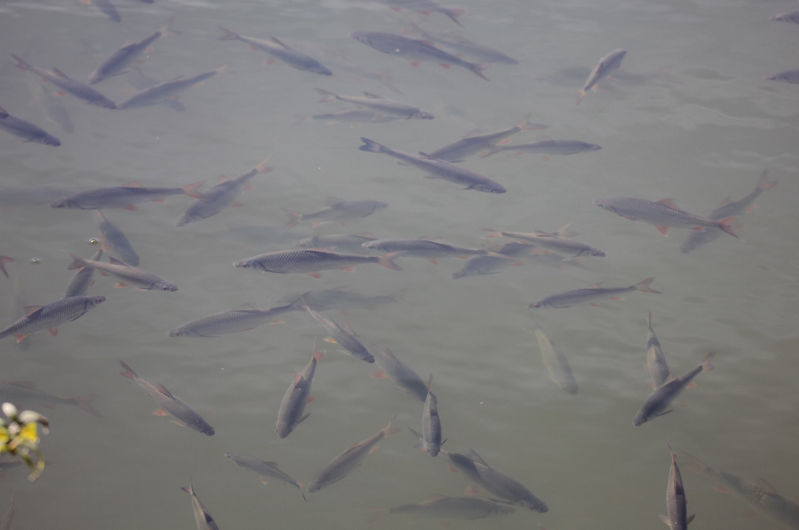
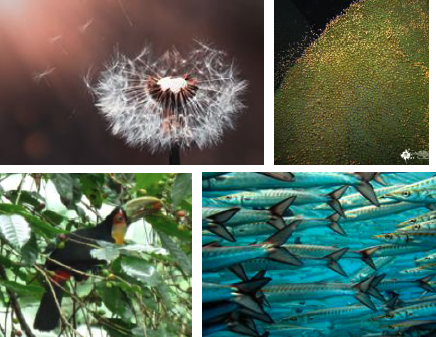
Above (from top-left to bottom-right): wind dispersal in dandelion (photo: Creative Commons), passive dispersal in corals after spawning (ph oto: Andres Rojas ), plant dispersal by frugivory (photo: Renske E. Onstein ), body size and mobility as proxies of dispersal in fish (photo: Carlos G. Muñoz).

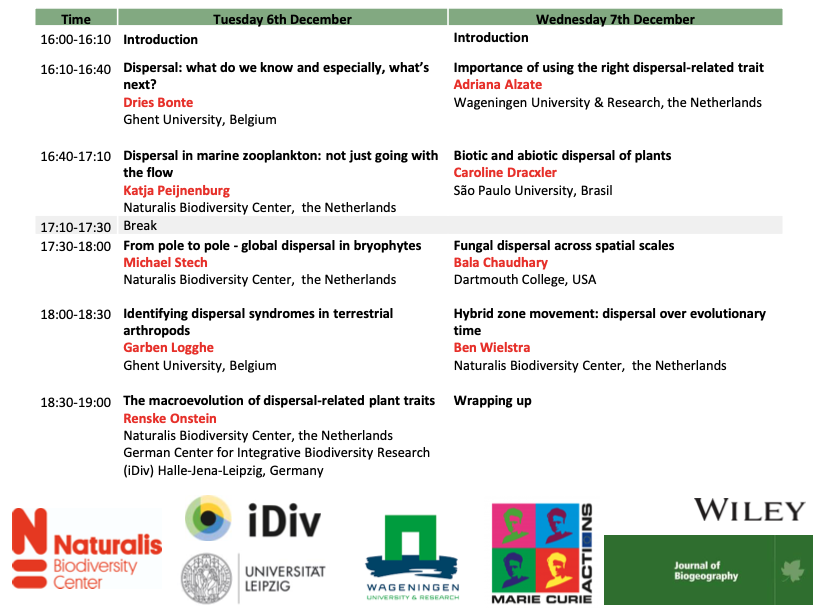
This hybrid colloquium is part of the workshop “Rethinking dispersal related traits”, aiming to further discuss a framework for dispersal-related trait identification and selection that allows for a more unified conceptualization and assessment of dispersal abilities for multitaxa systems. We asked the presenters to take the audience on a journey through their dispersal related system, the research questions they tackle, and challenges they are facing. Everyone is welcome to join the colloquium in person or online, and rethink dispersal related trait research with us.

When: 6th and 7 th December 2022, 16:00 to 19:00

Where:
LifeScience , Naturalis Biodiversity Center, Darwinweg 2, Leiden, the Netherlands.
Online at https://uni-leipzig.zoom.us/j/67936280593?pwd=eEFVQXVoTlNBaG01VUl5dFFpdDVxQT09
Meeting ID: 679 3628 0593, Passcode: 237854

.

Written by:
Text and images kindly provided by A. Alzate.

Wandering Vultures: Understanding behaviour and space-use for conservation

Vultures travel over large distances; identifying where they are most at risk is imperative to effective conservation work. Vultures are most at risk from illegal poisoning when they are foraging and feeding. Using telemetry data from tagged vultures, we identified these risky behaviours from GPS data and the spaces vultures choose to do them to target interventions and mitigate human-wildlife conflict to reduce poisoning events.

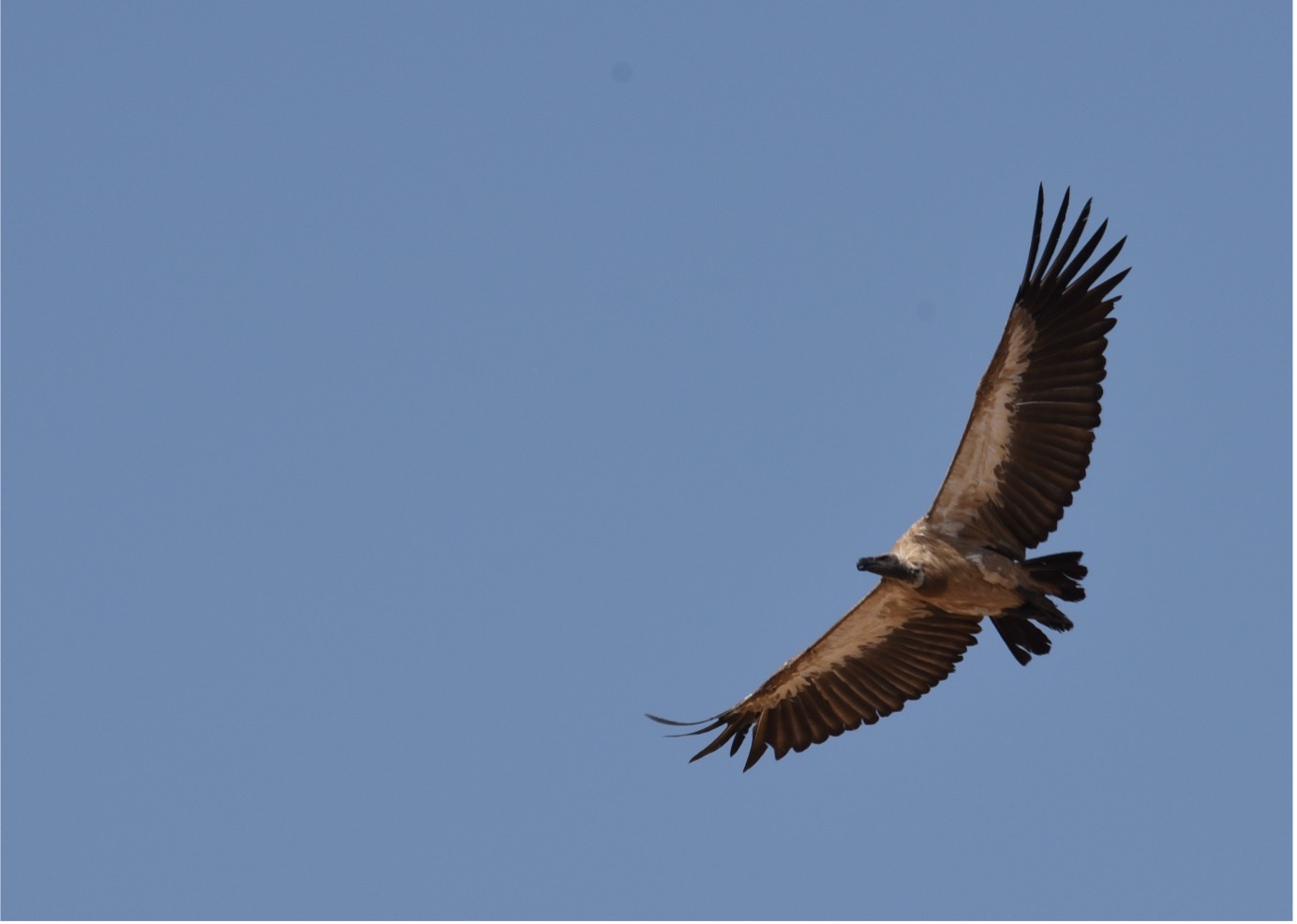
Above: White-backed vulture (Gyps africanus) flying overhead in southern Tanzania.

Vultures are some of the widest ranging species in the world thanks to their soaring flight, which allows them to range over 100,000km² in a year and travel over 200km in a single day with no regard for protected areas or national boundaries. Telemetry studies through GPS tagging offer a unique opportunity to understand where vultures go and how behaviours may vary across the landscape. GPS transmitter studies can provide insights into individual movements, range size, habitat use, foraging behaviour, and mortality. North Carolina Zoo began studying vultures in southern Tanzania in 2015, and though the typical home range sizes of vultures in this area turned out to be small they also discovered the potential of white-backed vultures for huge dispersal events: one juvenile travelled over 1800km visiting multiple countries and going all the way to South Africa before returning home. In addition, the project has helped to identify two distinct populations in east and west Tanzania that do not overlap and seemingly have very different behaviours. Due to their vast ranges, protection of vultures requires safe landscapes both inside and outside protected areas. Our project sought to identify priority areas where conservation efforts could be focused; where vultures are both actively foraging or feeding and thus likely to encounter threats.

Cover article: (open access)
Peters, N. M., Beale, C. M., Bracebridge, C., Mgumba, M. P., & Kendall, C. J. (2022). Combining models for animal tracking: Defining behavioural states to understand space use for conservation. Journal of Biogeography, 49, 2016– 2027. https://doi.org/10.1111/jbi.14483

The current greatest threat to vulture populations in East Africa is direct and indirect poisoning, with many vulture species suffering associated population declines across their range. This is usually the result of human-wildlife conflict, where humans will put out poisoned meat targeted at lions, hyenas, or leopards which pose a threat to their livestock. Because it is an efficient and silent method, most poisoning incidents are likely never found or reported making the true impact on populations substantially higher and difficult to quantify. In addition, poisoning events are often discovered days or weeks after they occur, making the full scale of the mortalities hard to quantify.


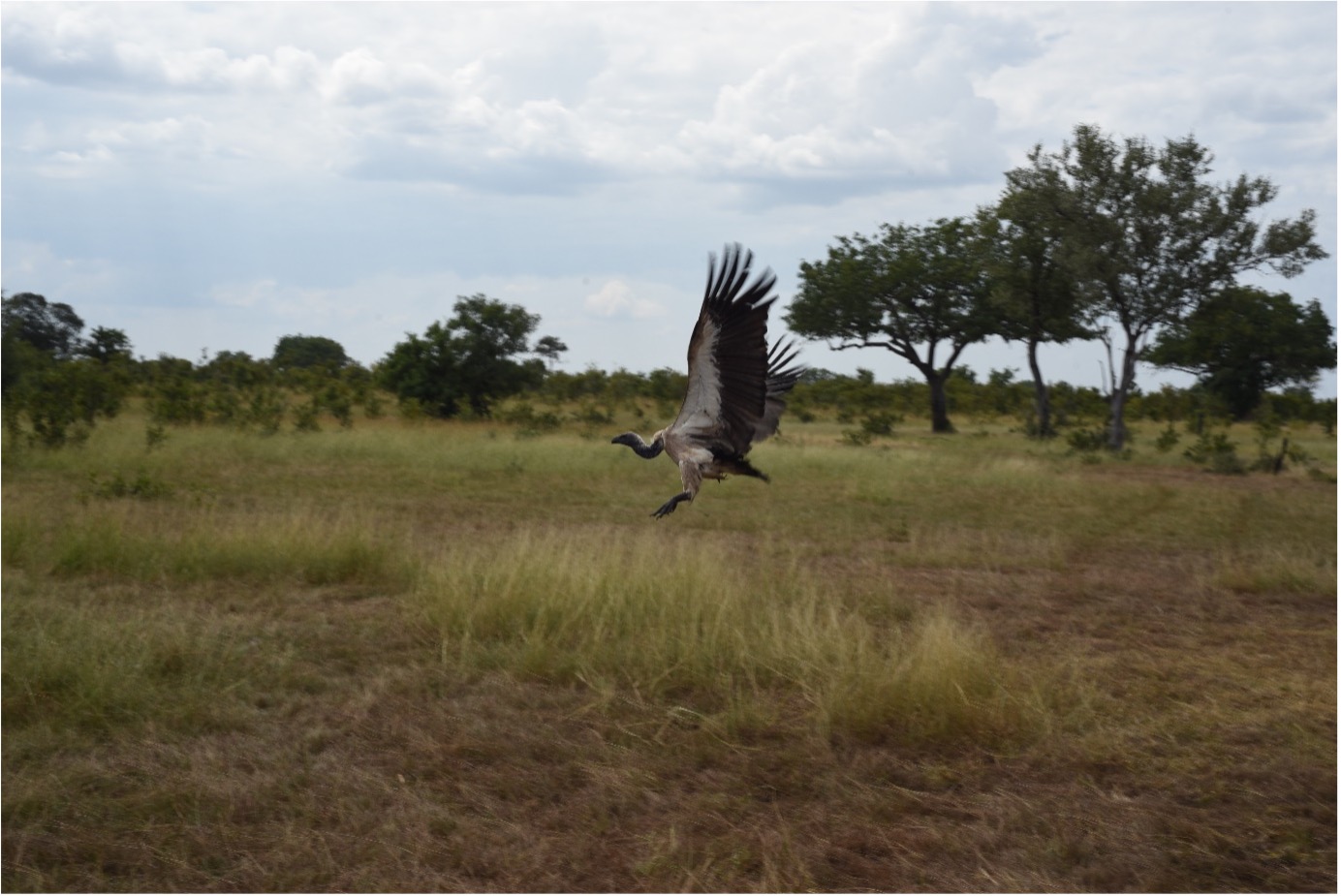
Above: White-backed vulture (Gyps africanus) being released after trapping and GPS tagging in Tanzania.

Poisoning is a secretive and illegal activity, but using GPS tagged vultures we have been able to identify several problem areas. In addition, we know that poisoning is only a risk while vultures are foraging and feeding, so keeping those areas safe for vultures is critical.  Modelling techniques, such as Hidden Markov models, allow for the identification of behaviours based on telemetry data. When combined with a spatial model such as a Point Process Model, this allows us to discover the preferred foraging and feeding areas for vultures. Using this two-step process we were able to refine space-use analysis by specific behaviours to identify areas to focus human-wildlife conflict community work.

We found that vultures in general prefer areas alongside rivers and open habitats, which may be in part due to their nesting alongside rivers and preference for open areas due to their reliance on eyesight. We also found that vultures spend most of their time stationary (75.5%) which as a large, soaring scavenger is a good evolutionary trait to conserve energy when relying on sparse and unpredictable food source (carrion). Perhaps most surprisingly, we found that vultures when foraging and feeding do not select for areas of high livestock density. Despite this, livestock carcasses laced with poison are fed on by vultures.


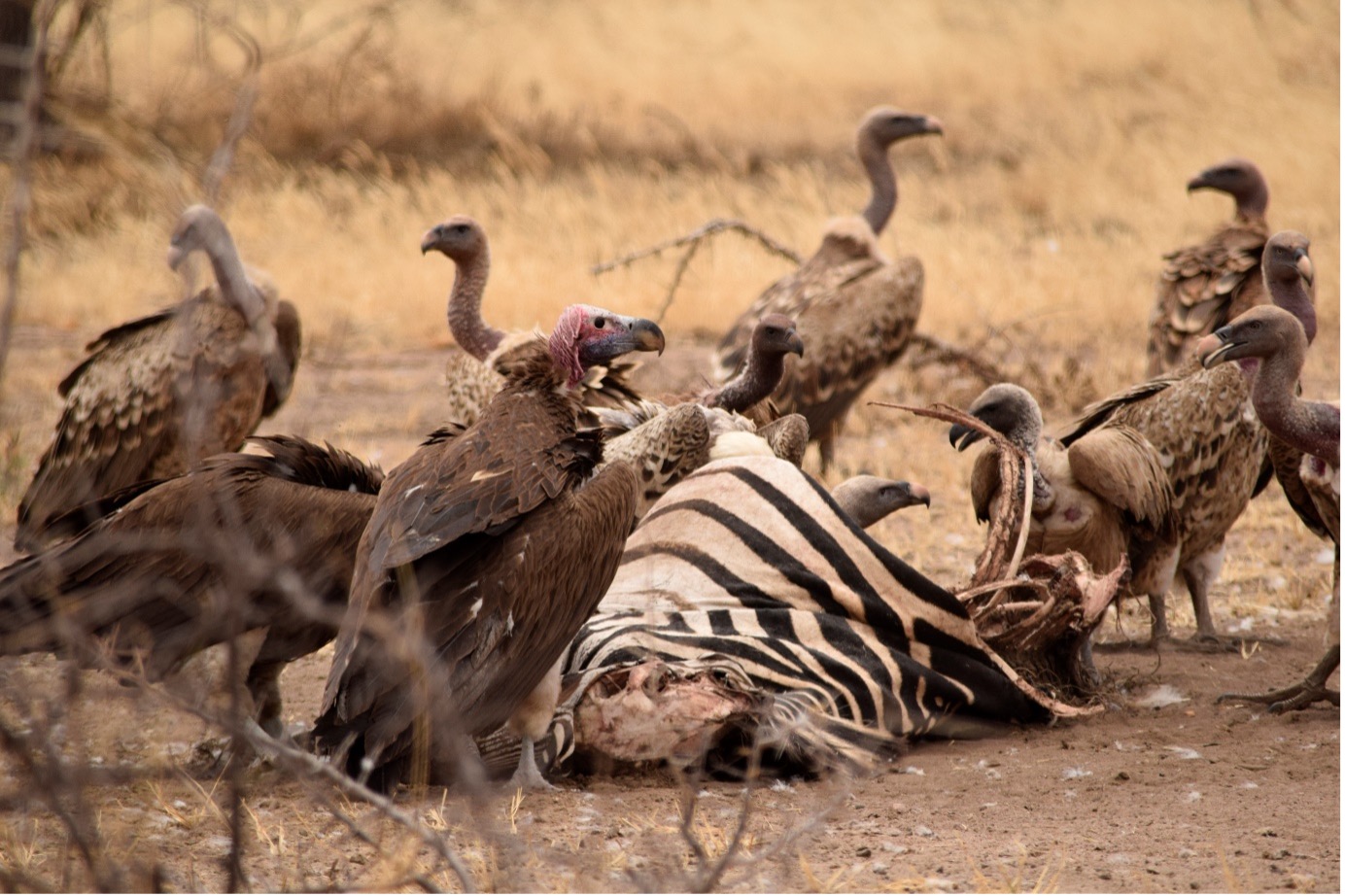
Feeding events usually include multiple different vulture species: here the Lappet-faced (Torgos tracheliotos), Rüppell’s (Gyps rueppelli), and White-backed (Gyps africanus) vulture can all be seen. White-backed vultures are the most social species and usually dominate the carcass based on numbers alone.

Animal behaviour and movement intertwines with human landscapes to create complex conservation issues. With the constant expansion of the human population and our activities, risks to wildlife such as habitat loss, poaching, and conflict will continue to increase where humans and wildlife overlap. Our findings provide a fascinating insight into the vast distances covered by vultures and how habitat use varies with different behaviours, and is a reminder of the interconnected nature of animals and landscapes. Our paper aims to provide additional tools to scientists to help create effective species conservation and prioritise community-led conservation work.

Written by:
Natasha M. Peters
PhD Student, Department of Biology, University of York, York, UK

Additional information:
Colin Beale: https://www.york.ac.uk/biology/research/ecology-evolution/colin-beale/

How seals made Nautilus a ‘Living Fossil’

Increasing predation pressure by pinnipeds through the late Cenozoic drove Nautilus into its present-day refuge in the deep tropical Indo-West Pacific Ocean

Above: Reconstruction of the fossil Nautilus taiwanus inhabiting deeper waters of the tropical Indo-West Pacific Ocean about 20 million years ago. Illustration by Cheng-Han Sun.

Predator-prey interactions are important drivers of evolution. For example, the iconic ‘living fossil’ Nautilus is thought to inhabit deep water mainly as a way to avoid predation. Due to the general difficulties of exploring the deep-sea, very little is known about which animals actually prey on Nautilus, and how. This makes it particularly difficult to infer which animals might have preyed on Nautilus in the geologic past. As a consequence, the question of why Nautilus is today restricted to the tropical Indo-West Pacific Ocean despite having had a worldwide distribution only 50 million years ago, had always been assumed to be related to changes in oceanic water circulation patterns and temperature; whether or not this distribution was instead predator-driven had never been asked. Indeed, we had nothing like this in mind when we went on a fossil collection trip to Taiwan in early 2019. One locality unexpectedly produced a fossil Nautilus specimen and while my co-workers tried to identify the species they noted, based on their own field and research experience, that Nautilus disappeared from the fossil record of western North America and Japan as soon as pinnipeds – the seals – appeared. Realizing that we might be on to something, we embarked on an extensive literature review involving the global distribution of nautiloids and their potential mammalian predators through the entire Cenozoic era, writing to colleagues about specimen images, advice on local geology and geologic ages, and hard-to-get literature.

Editors’ choice article: (Free to read online for two years.)
Kiel, S., Goedert, J. L., & Tsai, C.-H. (2022). Seals, whales and the Cenozoic decline of nautiloid cephalopods. Journal of Biogeography, 00, 1– 8. https://doi.org/10.1111/jbi.14488 

These compilations nicely demonstrated that the appearance of pinnipeds in the geologic record of any given region coincided with the disappearance of Nautilus from that region. A few now extinct groups of early whales may also have played a role in the local extinction of Nautilus. Some of these early whales had different cranial morphologies – and hence feeding strategies – than the living whales, opening the intriguing possibility that a wider diversity of prey items had triggered this wider range of feeding adaptations. This is particularly interesting as there is one unusual fossil nautiloid – Aturia – that did not immediately become extinct with the appearance of pinnipeds. Aturia is special as it shows adaptations to fast and agile swimming, such as a rather flat and thin shell, that might have enabled it to escape hungry mammalian predators.

This raised the question  as to whether there was direct evidence for predation on fossil nautiloids, such as bite marks on shells. There are numerous reports on predation scars on ammonites and nautiloids from the Mesozoic era, including bite marks by mosasaurs. But to our surprise, we found nothing about bite marks on Cenozoic nautiloids. This may or may not suggest that the Cenozoic marine mammals had a different – and perhaps more efficient – hunting style compared to Mesozoic marine reptiles. It certainly calls for a closer look for predation scars in Cenozoic nautiloid fossils, to better understand the interactions between marine vertebrate predators and their invertebrate prey, and how this has shaped their evolution and biogeography.

Written by:
Steffen Kiel, Swedish Museum of Natural History

Additional information:
https://www.researchgate.net/profile/Steffen-Kiel

ECR Feature: Yuting Vicky Lin on reef fish and climate change

Yuting Vicky Lin is a PhD student at the Institute of Oceanopgraphy at National Taiwan University. Her interests lie in the biodiversity and conservation of benthic reef communities. Vicky shares her recent work on forecasting the distribution of coral reef fish under a changing climate

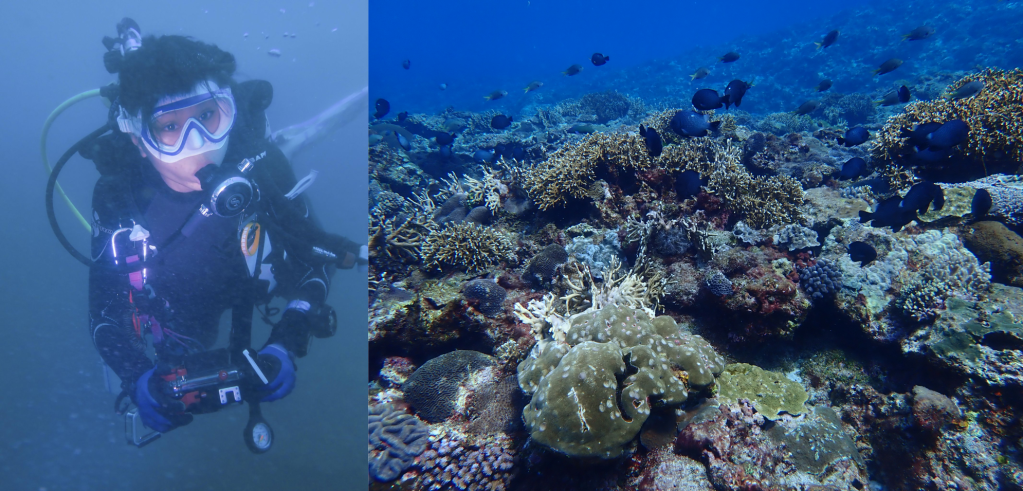
(left) Vicky, diving in Tawai. Photo credit: Guan Yen Chen and Yuting Vicky Lin. (right) Tropical habitats with complex morphologies of corals and high richness in reef fishes. The picture was taken in the shallow waters (10 meters in depth) of Green Island, Taiwan. Photo credit: Yuting Vicky Lin.

Personal links. Twitter | GoogleScholar | Website

Institute. Institute of Oceanography, National Taiwan University

Academic life stage. PhD.

Major research themes. My research focuses on community ecology, benthic ecology, coral reef ecology, marine biodiversity and conservation. I am particularly interested in the impacts of climate change and pollution on marine ecosystems.

Current study system. I am studying marine coastal benthic communities with a specific focus on their structures, the environmental drivers responsible for their structuring, and the responses of their associated reef fishes to climate change. These benthic communities are composed of diverse sessile megabenthos, such as corals, algae, and sponges. These communities function as houses for reef fishes, and are used as shelters, nurseries, feeding, or reproduction grounds by fishes across life history stages. However, ongoing climate change and marine pollution are jeopardizing these benthic communities, which may, in turn, have a cascading effect on their associated fish species. My job is to understand how benthic communities and their associated reef fishes are affected by climate change and human activities and anticipating future coastal ecosystems. This information could be critical for the conservation management of coastal ecosystems.

Recent paper in JBI. Lin YV, Hsiao WV, Chen W-J, Denis V (2022) Habitat change and its consequences on reef fish specialization in biogeographic transition zones, Journal of Biogeography, 49, 1549-1561. DOI: 10.1111/jbi.14450

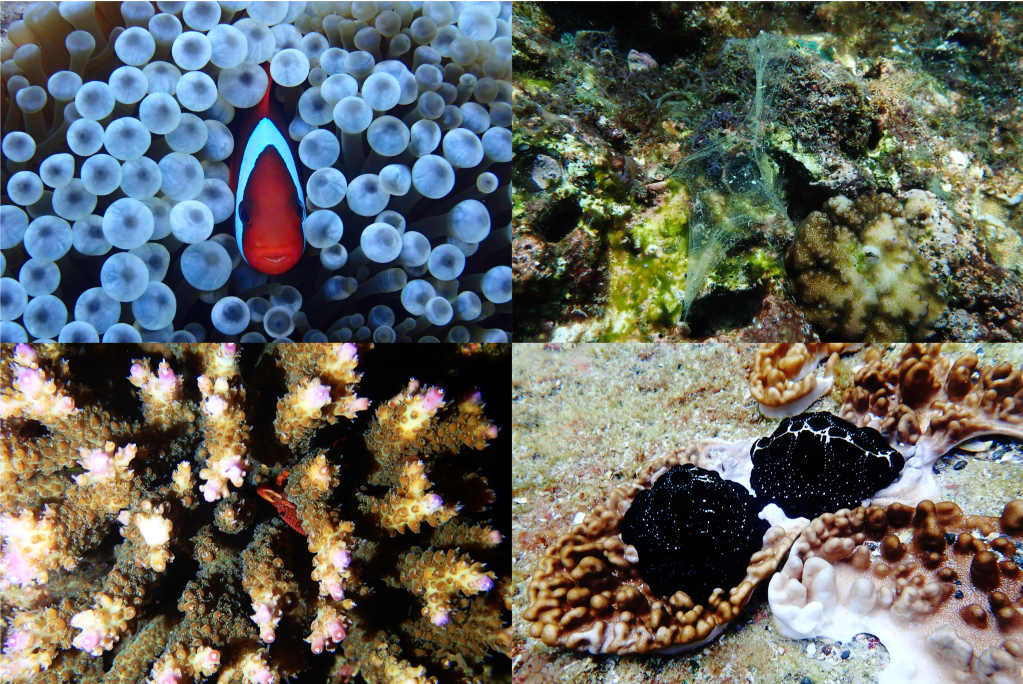
Different reefal organisms rely on marine sessile benthos. (top left) A sea anemone provides shelter and residence to a clownfish. (top right) A vermetid snail inhabits under a scleractinian coral. (bottom left) A crab uses a Acropora coral as the shelter and residence. (bottom right) Two egg cowries are eating Alcyonacea corals. Photo credit: Yuting Vicky Lin.

Motivation behind this paper. To survive under the threats of global warming, reef fishes have been documented to move their distribution poleward as suitable environments expand. Temperature plays an important role in this distributional shift and has been a major focus in previous works. In this aspect, the dependence of fish on benthic habitats has often been ignored, although it could be a critical factor to consider for species having a strong affinity for benthic resources. Specifically, understanding how temperature and benthic habitat constrain the present distribution of reef fishes can help better predict future distributions of fishes in the warming ocean. This is especially paramount in biogeographic transitions where distributional shifts of species have often been observed. The position of Taiwan as a tropical-subtropical transition zone implies that it has likely been an important pivot point in the distributional shift of benthic communities and their associated fishes under climatic change. We, therefore, used this feature of Taiwan to infer the importance of habitat tracking, warming tracking, or their interplay on the distribution of reef fish.

Key methods. The novelty of our paper resides in combining several analytical approaches to test the effects of temperature and benthic habitat in constraining the current distribution of reef fishes. To do this, we first collected fish and benthic data from underwater transect surveys as well as sea temperature from satellite-based meteorological data at 18 sites along the tropical-subtropical gradient in Taiwan. We then applied several analyses such as k-means, bipartite networks, species indicator analysis, and joint-species distribution models in order to 1) distinguish tropical and subtropical benthic habitats, 2) identify fish specialist and generalist species to either tropical or subtropical habitats, and finally 3) test whether the current distributions of these specialists were controlled by temperature, benthic habitat, or both combined. Among these specialists, we further selected fishes whose distributions were strongly constrained by both factors as warming indicators and proposed to use these indicators to track changes in the thermal and benthic environment.

Major results. We demonstrated three responses by reef fish habitat specialists: 1) those constrained by temperature alone; 2) those constrained by benthic habitat alone; or 3) or those constrained by both temperature and benthic habitat. Among the specialists constrained by both factors, we proposed three species as the indicators to track both the temperature and benthic habitat changes in the future, as their distributions were strongly constrained by these two factors compared with other specialists. Consequently, we proposed two scenarios for fish specialists under ocean warming: 1) the distribution of some species may shift according to the poleward movement of a suitable thermal environment; 2) the distribution of some others may change following the poleward shift of both suitable thermal and benthic environments. These results showed that not all fishes have the same responses to environmental change. We also highlight the need to consider the benthic habitat to explicitly estimate the responses of reef fishes to ocean warming.

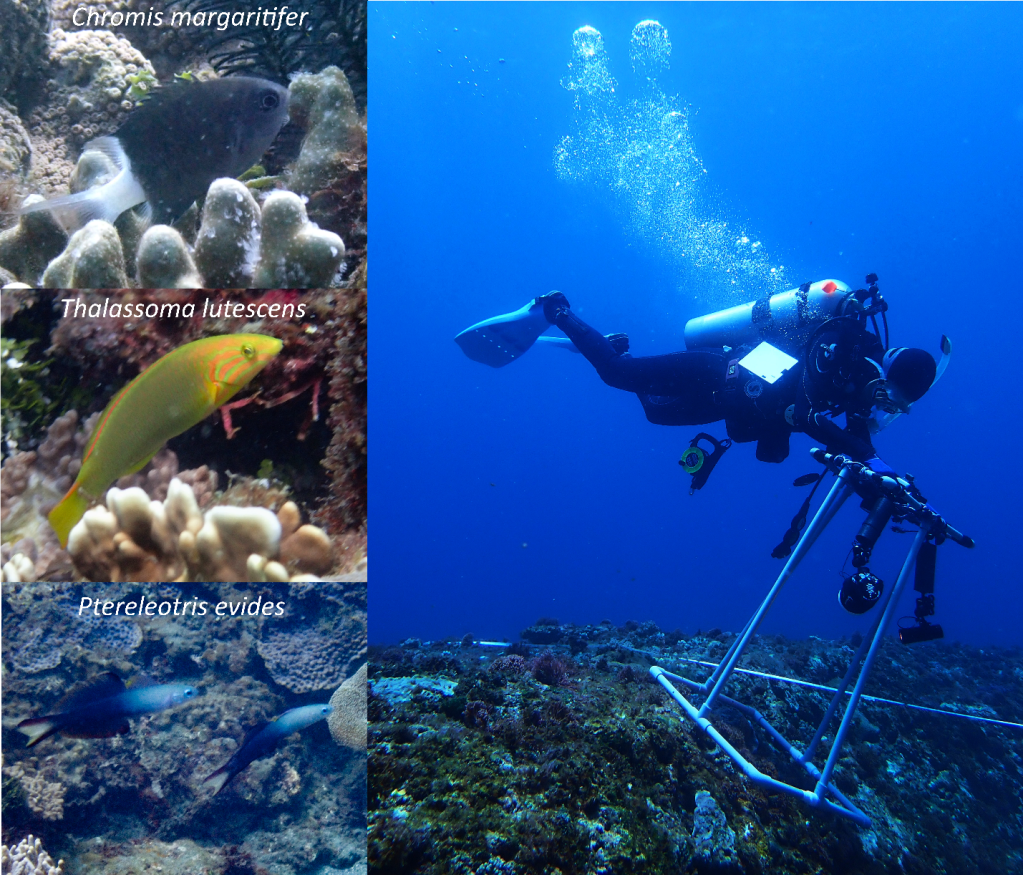
Three fishes were identified as indicators of tropicalization in Taiwan (left panel) following both fish and benthic surveys in the country (right panel). Photo credit: Tsai-Hsuan Tony Hsu and Yuting Vicky Lin.

Challenges overcome. We encountered two major challenges in this research. The first one was acquiring enough sampling locations to represent the tropical-subtropical gradient while working on a short research budget. It was especially challenging at some sites located on the East coast of Taiwan, where many areas remain unexplored. Some of the sites are managed by indigenous people and we had to explain our research to local residents in order to receive their approval to perform our surveys. During our discussion, we understood more about how indigenous tribes manage coastal resources and the importance of preserving traditional ecological knowledge. The second challenge was that our initial version of this manuscript did not actually disentangle the effects of benthic habitat from sea surface temperature on reef fish distribution. Fortunately, the reviewers were very helpful and guided us with very constructive suggestions greatly improving our analytical framework. The review was tough, but inspiring. We learned a lot from it and are extremely glad about the outcomes. 

Next steps? The next step should be to acquire the long-term fish and benthic data to confirm our hypotheses. Especially, we would like to verify if the indicators we proposed could respond as expected and reflect more severe changes affecting the ecosystems. In addition, it would also be interesting if we could apply a similar methodology to the other reef taxa that likewise rely on the benthos, such as molluscs. The answers to those questions will encourage us to think deeply about how to adapt the coastal conservation according to the local situations, eventually resulting in a customized management rather than a one-size-fits-all one.

If you could study any organism on Earth, what would it be? I am interested in all reef marine organisms. In addition to the reef fishes that I studied in this paper, I would like to perform similar research using nudibranchs (sea slugs) since they are often highly specialized in their food sources, primarily benthic organisms such as corals, sponges, and algae. Accordingly, I expect that they could be highly sensitive to the changes in benthic habitats and could represent even better sentinels of environmental changes than reef fishes. Their striking beauty and colors often attract my attention as an amateur underwater photographer. However, there is very little understanding of their taxonomy, ecology, and behaviors which I would like to improve if I have the opportunity.   

Anything else to add? If you are interested in my research or would like to have some collaborations, feel free to contact me by email (vicky.linyuting@gmail.com)

ECR feature: Tobi Oke on data synthesis as a diagnostic tool for capturing biodiversity problems

Tobi is a post-doctoral fellow at University of Saskatchewan and Wildlife Conservation Society, Canada. He is interested in assessing species distributions and vulnerability in relation to climate change and natural disturbance. Here, Tobi shares his perspetive on quantifying biodiversity change in relation to data gathering tools.

Tobi during a fieldwork to explore how fish use seagrass beds following disturbance (Stredman Island, Gulf of Mexico, Aransas Pass, Texas United States)

Institute. Wildlife Conservation Society Canada & University of Saskatchewan, Saskatoon.

Academic life stage. Postdoc.

Recent JBI paper. Oke, T. A., Zhang, S. Y., Keyser, S. R., & Yeager, L. A. (2022). Sea‐surface temperature anomalies mediate changes in fish richness and abundance in Atlantic and Gulf of Mexico estuaries. Journal of Biogeography 49(9), 1609-1617. https://doi.org/10.1111/jbi.14451

Data synthesis as a diagnostic tool for capturing biodiversity problems. Evaluating biodiversity change is becoming a valuable diagnostic tool for capturing the impacts of global change on our ecosystems. We now have data gathering tools (e.g., biodiversity databases) and open-source programming and computational platforms that allow for data processing, analytics and visualization at a scale that we are still beginning to appreciate. While this area of research is exciting, it also presents us with a new set of debates that extends our traditional views about ecological concepts and scale-dependent effects in ecology and biogeography. In particular, how should we quantify biodiversity and can we meaningfully quantify biodiversity change at a regional or global scale given data deficiencies? The latter part of the question particularly pertains to global analyses of biodiversity change because we often lack data from key biodiversity regions, namely the global south. Also for diagnostic purposes, the ultimate interest is to identify the mechanisms influencing biodiversity change rather than changes in biodiversity per se, which can be challenging.

We addressed some of these issues in our recent paper in Journal of Biogeography on the relationships between sea-surface temperature anomalies and fish diversity. Our approach was, first, to acknowledge that there are different aspects of biodiversity and thus we need complementary metrics that would capture all dimensions of biodiversity, rather than relying on richness alone. We thus explored richness, abundance and turnover patterns, and the relationships between these metrics, to get insight into different aspects of change in estuarine fish diversity. Second, we acknowledged that drivers of biodiversity are hierarchical and there can be a mismatch between the scale at which biodiversity is quantified and the scale at which different drivers may be relevant. Such conceptual mismatches perhaps underlie some of the contentions from differing analyses of biodiversity. We thus addressed this by parsing our biodiversity and environmental data into biogeographic boundaries, which helped with some of the patterns that we described in the paper. Specifically, using long-term fisheries independent surveys that comprised over 500 fish species and over 30 million individual fish, we showed that species richness, abundance and turnover have increased across the Atlantic and Gulf of Mexico estuaries since the 1980s. These changes were due to sea-surface temperature anomalies, especially in the more northern estuaries where ocean warming has been pronounced. Also, contrary to the poleward range shifts that have been documented in marine systems, we found strong bidirectional range shifts among estuarine fish species. We attributed the southward movements of species to periods of cooling, which we detected in the sea-surface temperature anomalies for southern estuaries. The various insights derived from this study were far beyond what we could have imagined from only looking at a subset of the data.

Perhaps the less appreciated but most important aspect of our study was data gathering. The success of our study, and of other similar ones, depends on the efforts of field biologists and researchers across different institutions. Further, acquiring the kind of data required for biodiversity synthesis is often expensive, especially in marine systems and less adaptable to citizen science. More so, many of these data were collected for non-academic purposes and often by small government departments. Thus, the data are often hidden and rarely deployed beyond their original purposes, especially if they have not been included in a published document. For these reasons, pulling data from primary sources and compiling them into usable formats can be laborious. There can also be resistance to data sharing in some places, which in our experience has derailed the implementation of similar research ideas. Although journals like the Journal of Biogeography, through their data sharing policies, have been instrumental in putting some of these data into public places, those captured are still a fraction of what is out there because most of these data were gathered by non-academics and for non-academic purposes. At the same time, most of these long-term surveys were public-funded. Perhaps government and funding agencies can take a lead to ensure that data from public-funded programs are routinely archived in public places. To my knowledge, there are currently no such requirements. This would also entail developing data gathering infrastructure, especially for time-series data. Sensitive data such as those involving endangered and species at risk can be handled on an individual basis. There is no doubt that large-scale quantitative protocols would be a part of the tools for addressing the issue of dwindling biodiversity across the globe. But progress would depend on changes in attitude toward data sharing.

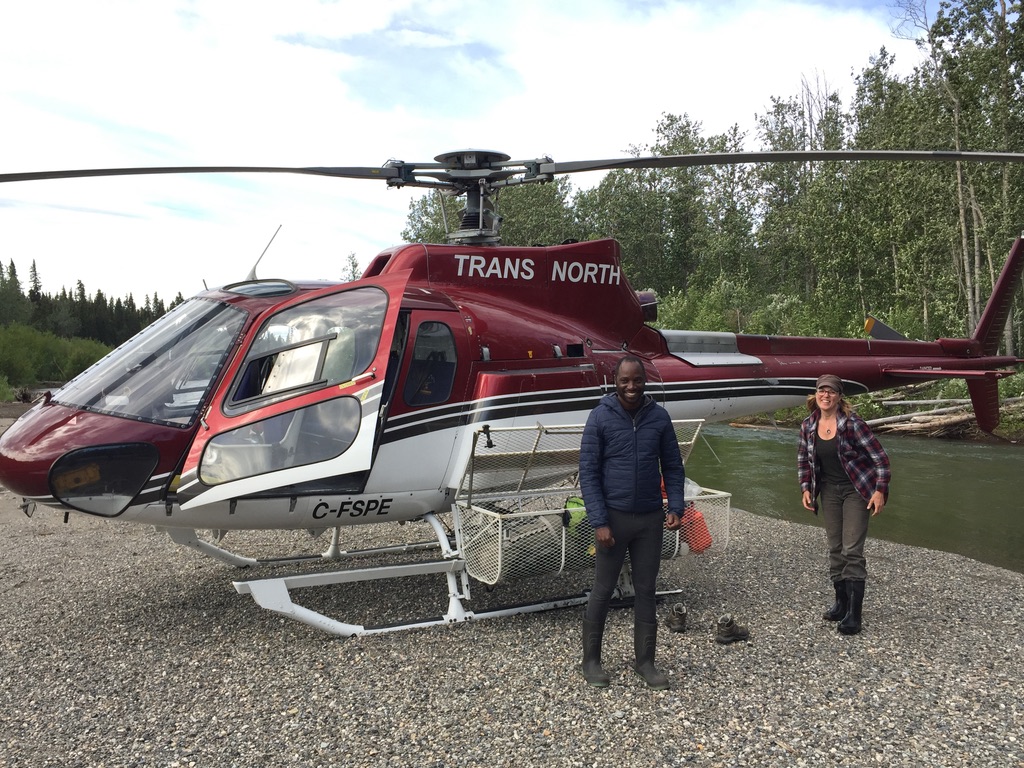
Tobi during a helicopter ride for a climate refugia project in Northern Yukon, Yukon Territory, Canada.

How landscape connectivity shapes genetic structure of alpine species over time

How did dispersal and habitat changes over 20,000 years shape the genetic structure of alpine species? We investigated by simulating the spatial dynamics of populations since the glaciation in combination with a large genomic data set on northern chamois.

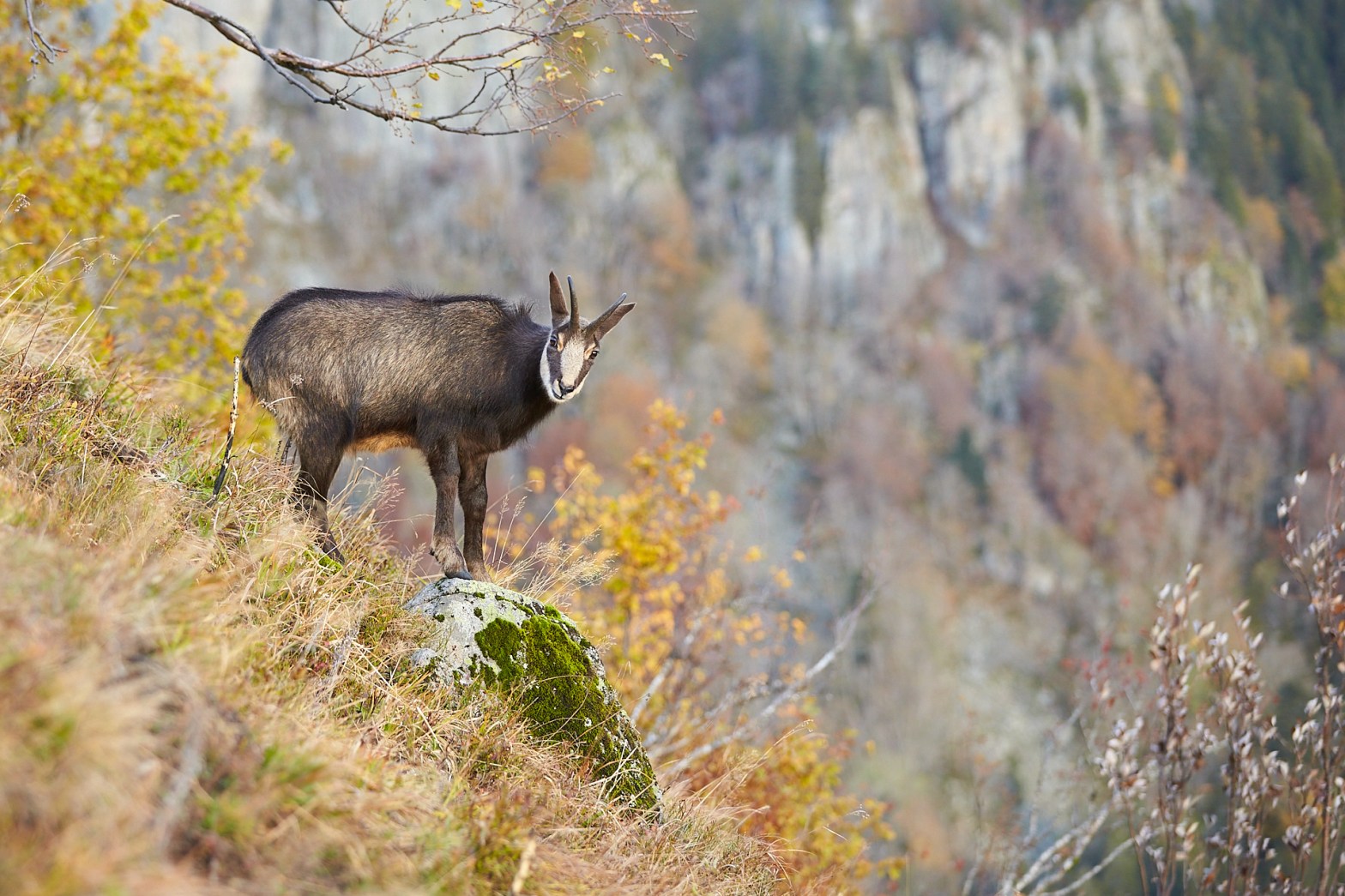
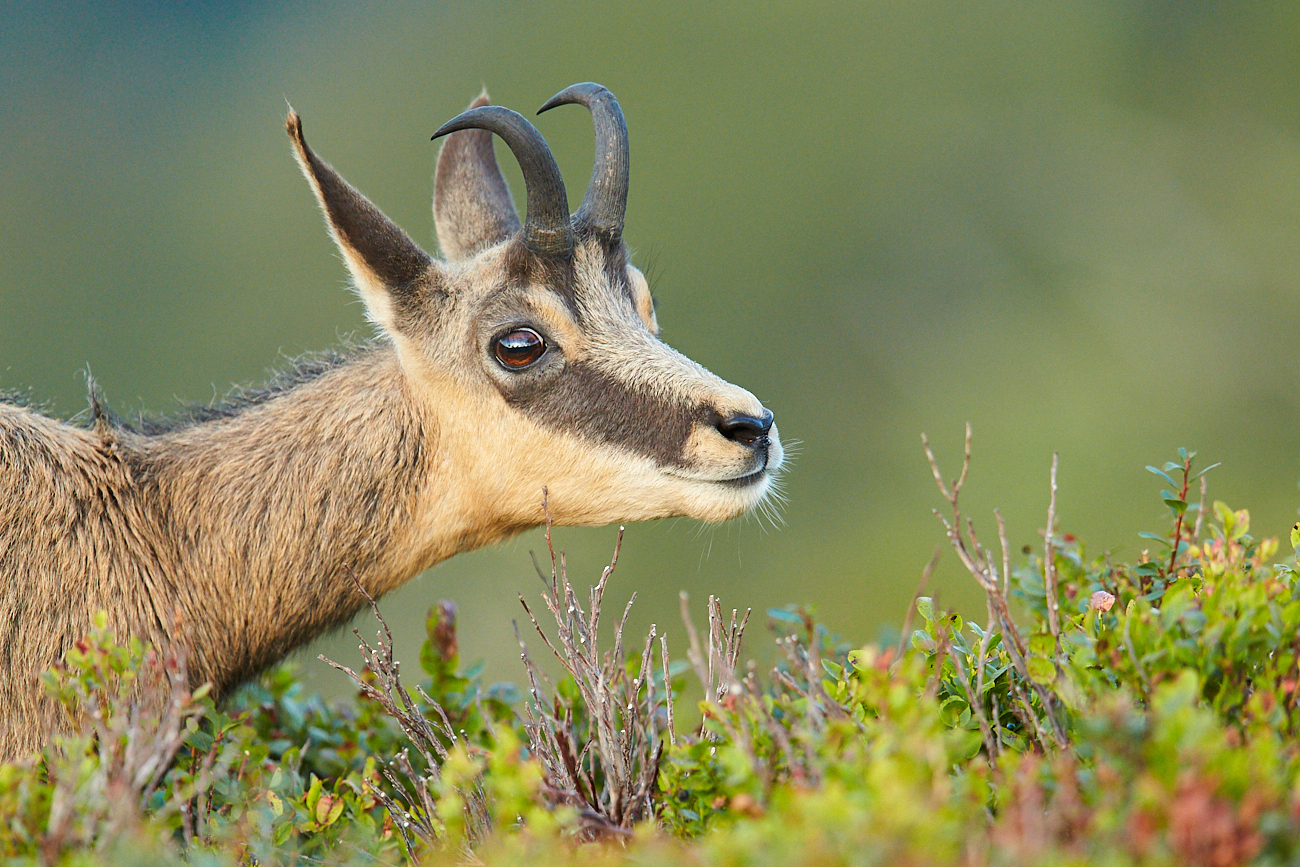
Above: Northern chamois (Rupicapra rupicapra) inhabit steep terrain slopes. They can escape predators in steep slopes with their outstanding climbing abilities.

Alpine glaciers melted at unprecedent rates this summer, as a striking sign of the profound effects of climate change on alpine ecosystems. The alpine landscape is changing at a fast pace and these modifications may even accelerate over coming decades impacting the suitability for mountain species. Understanding how species reacted to past climate changes and habitat fragmentation is paramount to predicting and mitigating the effects of the current global changes. The dramatic changes since the last glaciation in the Alps (20,000 years ago) offer a particularly well-suited opportunity to study the dispersal and impact of landscape features on population structure.

Most alpine species were forced to live in the periphery of the Alps during the last glaciation. Alike many species, Northern chamois (Rupicapra rupicapra) recolonized the alpine range after the glacial retreat. They were able to colonize high-alpine areas due to their adaption to harsh weather conditions and outstanding climbing abilities. Chamois are not only charismatic mammals, but also well suited to study population genetic structure due to their widespread distribution nowadays throughout the Alps. We were interested in the long-term drivers of the population structure. What are obstacles to the master climbers? How far do they disperse and how did they probably recolonize the Alps?

Cover image article: (Free to read online for a year.)
Leugger, F., Broquet, T., Karger, D. N., Rioux, D., Buzan, E., Corlatti, L., Crestanello, B., Curt-Grand-Gaudin, N., Hauffe, H. C., Rolečková, B., Šprem, N., Tissot, N., Tissot, S., Valterová, R., Yannic, G.& Pellissier, L. (2022). Dispersal and habitat dynamics shape the genetic structure of the Northern chamois in the Alps. Journal of Biogeography, 49, 1848– 1861. https://doi.org/10.1111/jbi.14363. 

To answer those questions, we combined a newly generated genomic data set and paleo-environmental reconstructions with process-based modelling of population movements. The genetic data had to be sampled across the entire alpine range, spanning over five different countries. Collecting samples over such a large spatial scale and several countries can be difficult. Thanks to the efforts undertaken by many collaborators – involving interactions with several hunting departments or organizations – we were able to assemble samples for DNA sequencing from the entire massif of the Alps. The subsequent genetic analysis revealed that the chamois fall into two main groups separated by one of the main alpine valleys, the Rhone Valley (CH).

We modelled the species habitat suitability from the last glacial maximum (21ky) to the present before we could simulate dispersal events and population connectivity from the glaciation forwards in time. The habitat suitability models required occurrence data over the entire Alps. Citizen science projects, such as ornitho, collect the observations of thousands of contributors and offer a data synthesis at high resolution. We showed with the habitat suitability models that chamois inhabited areas not only at the periphery of the massif, but also far from the Alps during the glaciation which matched evidence from the fossil records. Maps of suitable habitats from the last glaciation to the present allowed to simulate dispersal and population connectivity over time. We explored a wide range of dispersal and landscape features and their effect on population connectivity with over 1,000 simulations.


Northern chamois reside nowadays in most parts of the Alps, the Jura mountains, Black Forest and Vosges (bluish background). Each pie chart represents a sample and is colored according to the ancestry proportions from the four populations. The eastern population expands nearly over half of the Alps and is closely related to the population living in Switzerland (central Alps). Interestingly, the Rhone valley in Switzerland forms the barrier between two populations.

Compared to the complex structure of the genomic data based on thousands of small genomic markers, the representation of genetic distances in the model was simple: we tracked population connectivity over time. We used a combined metric of the group assignment and Procrustes analysis to have a robust comparison combining the strengths of both metrics.

The likeness of the simulations tracking population connectivity since the last glaciation and the empirical data was striking! Our analysis revealed that the dispersal distance of chamois is short, i.e. most chamois’ home range is very close to their place of birth. Additionally, large valleys or rivers form considerable obstacles for the master climbers which results in a strong genetic structure across the Alps. Chamois likely avoid them, as they rely on steep terrain slopes to shelter from predators such as wolves and lynx. These results indicate that isolated populations of chamois might be at risk, e.g., if they are intensively hunted and/or additional anthropogenic barriers are built.

We showed how combining process-based modelling and genomics can inform about the formation of population structure in complex and dynamic landscapes: limited dispersal ability and habitat dynamics determined the genetic structure of Northern chamois. Applying this workflow to various taxa and ecosystems could enhance our understanding of the intraspecific diversity dynamics. Additionally, the models could be used to predict future changes, due to land use or climate change, and provide valuable information for conservation measures. For example, we could simulate to which extent anthropogenic barriers or strongly increasing temperatures decrease population connectivity and therefore intraspecific diversity. We hope that our study stimulates further projects combining modelling with genomic data to investigate species-landscape interactions.

Written by:
Flurin Leugger & Loïc Pellissier
Ecosystems and Landscape Evolution, WSL / ETH Zürich

Additional information:
twitter: @FlurinLeugger, @loic_pellissier, @ELE_ETHWSL
websites: https://ele.ethz.ch, https://flurinleugger.ch


Close-up of a two-year-old Northern chamois.

ECR Feature: Felipe Vieira de Freitas on bee diversity

Felipe is a postdoc at Washington State University. He uses phylogenetics to study the evolution of bees. Felipe shares his recent work on the origins and unusual antitropical diversity of Eucerinae bees.

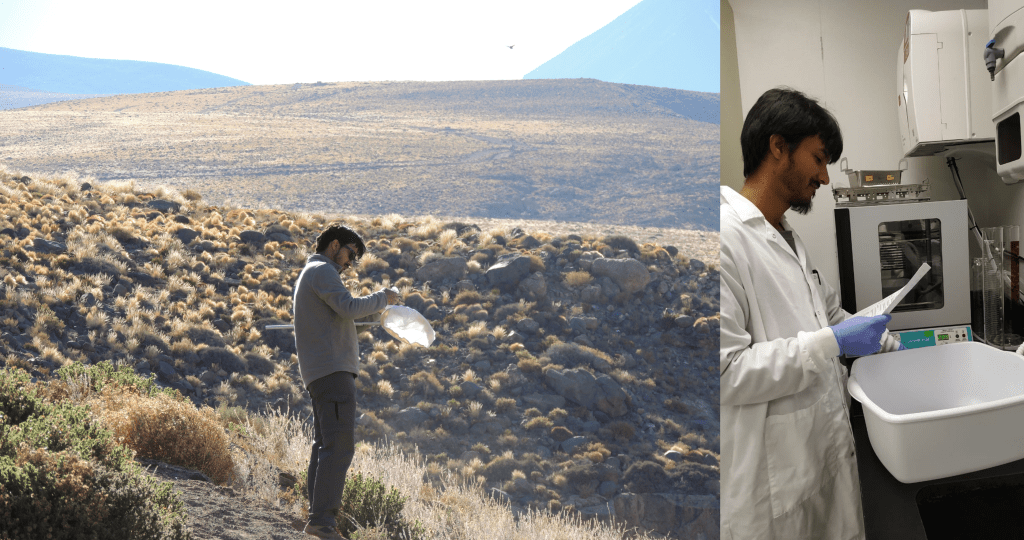
(left) Collecting bees in the Atacama Desert – Chile. (right) At the USDA bee lab in Utah, trying to understand the protocols for UCE work.

Personal links. Twitter | ResearchGate

Academic life stage. Postdoc

Institutes. Department of Entomology, Washington State University, Pullman/WA, USA

Research themes. Historical biogeography, Entomology, Phylogenomics, Phylogenetics, Insect systematics, Bee diversity.

Current study system. I study bees, which are impressive because of their diversity in body form, color, biology, and behavior. They are also some of the most important groups of insects as providers of ecosystem services. There are over 20,000 species of bees distributed throughout all zoogeographical regions of the world, most of them acting as pollinators. Despite being a relatively well-studied group of insects, there are still several open research questions related to the evolutionary origin of bees. Notably, some open questions have to do with origin in the Late (~100Mya) or Early (130Mya) Cretaceous, and with their origin in Africa, South America, or both (during the period when these continents were connected). Biogeography is a crucial aspect of the interpretation of the evolution of any taxon, and bees are not an exception.

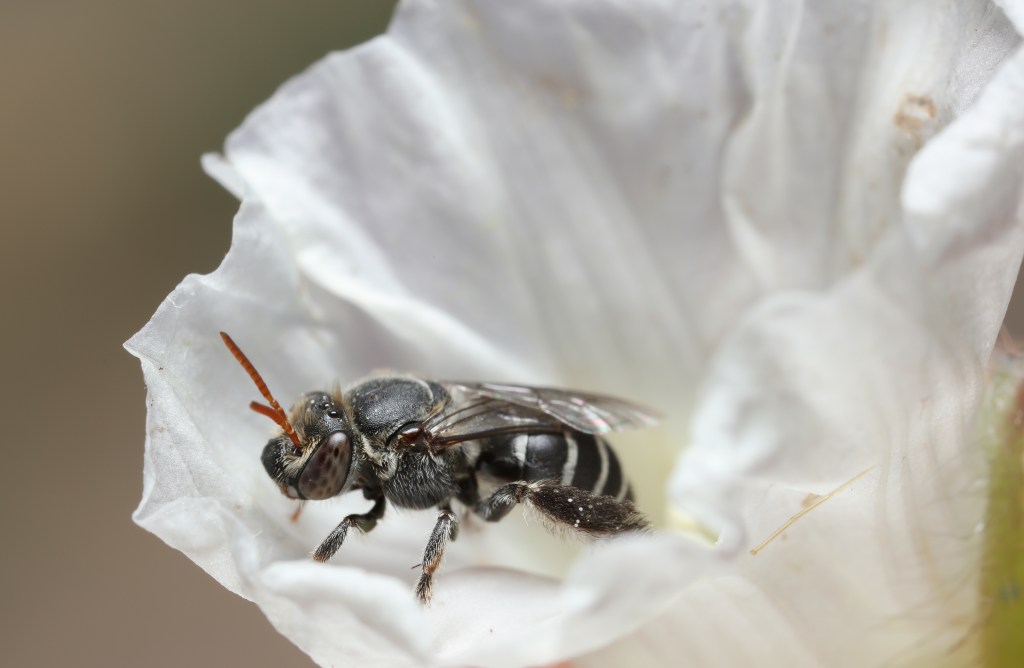
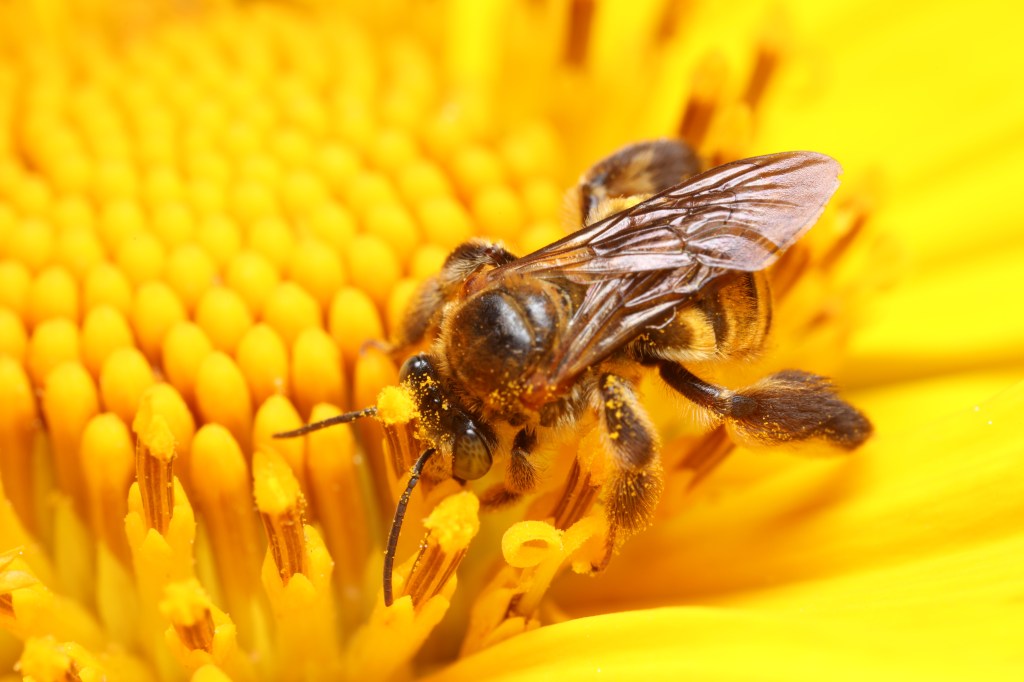
Ancyloscelis sp. on a flower of Convolvulaceae (photo credit: Adriana Tiba and Julio Pupim).

Recent paper in JBI. Freitas, F. V., Branstetter, M. G., Casali, D. M., Aguiar, A. J., Griswold, T. & Almeida, E. A. B. (2022). Phylogenomic dating and Bayesian biogeography illuminate an antitropical pattern for eucerine bees. Journal of Biogeography. https://doi.org/10.1111/jbi.14359

Motivation behind this paper. Eucerinae is a group of solitary bees in the family Apidae that comprises more than 1200 species. Bees within this group exhibit a peculiar distribution, in which most of the diversity is concentrated in mid latitudes. This pattern is described as an ‘antitropical pattern’ (diversity increases away from the equator), contrasting with the typical pattern in which diversity increases toward the equator observed in most other taxa. This concentration of mid-latitude diversity is exceptionally high in areas of open vegetation in the New World, although there are several species in the Old World. The lack of a comprehensive historical biogeographic investigation of eucerine bees motivated our study. In this work, we sought to identify the processes that have led to an antitropical distribution in this group of bees based on a reliable phylogenomic framework.

Methodology. Our primary motivation was to infer the underlying species tree from eucerine bees across most of their range using a 2500 UCE (ultra-conserved element) loci dataset. A thorough phylogenomic framework is essential to dive into the past and investigate biogeographic events responsible for shaping how ranges changed through time. UCEs are highly conserved gene regions that provide reliable phylogenomic reconstruction across many animal groups. We hoped that by sampling UCEs across 197 species of eucerine bees, we would obtain robust estimates of their divergence times. We evaluated hypotheses that (1) Eucerinae originated from South America, (2) Eucerinae originated from Africa after these continents had separated, or (3) Eucerinae originated in both South America and Africa when these continents were connected in the supercontinent, Gondwana. An additional goal of our study was to understand the minimum amount of data for reliable phylogenomic-based divergence time estimation. Our full UCE dataset of 2500 loci (1.3Mb) is extensive and computationally demanding. So, we tested whether subsets of UCEs could produce comparable estimates to the entire dataset: 127 (~70kb), 83 (~50kb), and 31 (~20kb) UCE loci, chosen according to features that could reflect their quality for phylogenetic inference.

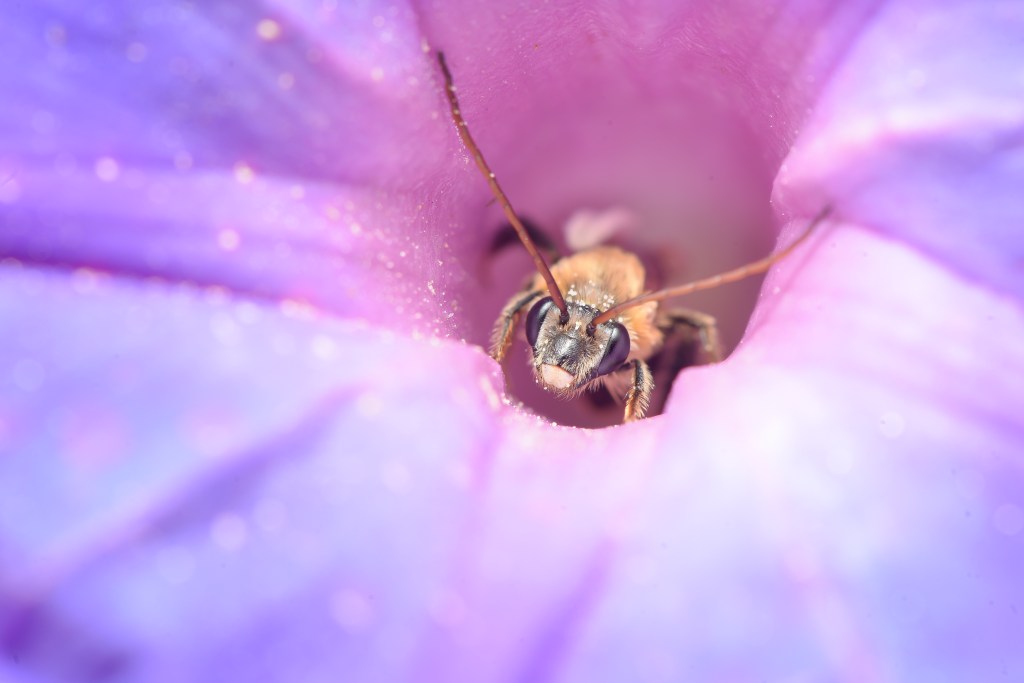
A male of Thygater analis on a flower of Ipomoea sp. (Convolvulaceae) (photo credit: Adriana Tiba and Julio Pupim).

Major results. Our main analyses support the hypothesis that eucerine bees emerged in South America. Following their origin in South America, there was likely a northward range expansion into North America, which was facilitated by the increase in open habitats. Although the main eucerine radiation occurred within South America, there is also evidence that some species, for example, the subgenus Eucera (Synhalonia), may have dispersed from Eurasia to North America. We believe that movements between South and North America were facilitated by large stretches of open habitat. However, with the rewarming of the planet during the mid-Miocene, forests would have reestablished, closing intercontinental connections and isolating the movement of bees over the equator. We suggest that these processes led to the antitropical pattern of distribution that we see today in eucerine bees.

Unexpected outcomes. Interestingly, we found the positive effect of adding more loci to estimate divergence times rapidly plateaus. With only 31 loci (~20 Kb), we achieved the same results as when using 127 loci (~70 Kb). We needed to select these subsets once the whole dataset (2500 loci) for these analyses would take months to conclude. And more than that, there is evidence suggesting that there is not a need for large datasets to reach good estimates of divergence times.

A female of Exomalopsis sp. on a flower of Asteraceae (photo credit: Adriana Tiba and Julio Pupim).

Next steps. The next steps are more related to improving our knowledge about smaller taxonomic groups of eucerine bees (the six tribes and their component genera). Understanding better the peculiarity of each one of them will probably help us to refine our interpretation of the broader scenario of Eucerinae as a whole. Our team continues to work on eucerine bees: we have projects in progress with Eucerini, the most species-rich of the tribes composing Eucerinae, Tapinotaspidini, and Emphorini.

If you could study any organism on Earth, what would it be? I would love to study other groups of Hexapoda, like Entognatha, especially Diplura and Protura. Because most species are associated with soil and caves, they probably have most of their diversity undescribed, and most of their behavior and natural history are still unknown.

ECR feature: Waleska Elizangela dos Santos Barbosa

Waleska Barbosa is a PhD student at the National Institute of Amazonian Research in Manaus, Brazil. She is an ecologist interested in the evolutionary history of Amazonian birds. Here, Waleska shares her recent work on species historical demography and habitat associations along Amazonian floodplains.

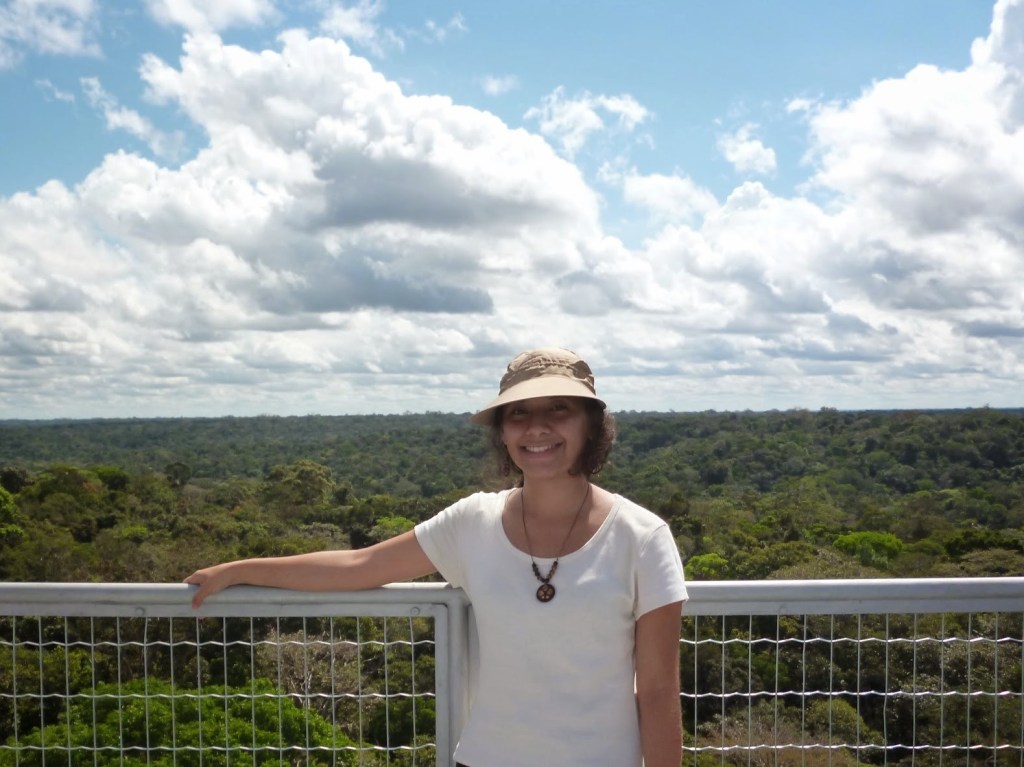
Waleska Barbosa on the observation tower at the Amazonian Museum (Museu da Amazônia – MUSA)

Personal links. Twitter | Instagram

Institute. National Institute of Amazonian Research (INPA)

Academic life stage. PhD student

Major research themes. Biogeography; Evolutionary history of birds; Climate change

Current study system. Bird species with different habitat associations are interesting systems to investigate the history of landscapes and their environments. Life habits make some birds intrinsically related to specific vegetation types; through the study of species’ evolutionary history, we can infer the past dynamics of these natural communities. In our recent paper, we study Synallaxis albigularis and Mazaria propinqua, a sympatric and closely related pair of ovenbirds; S. albigularis occurs mostly along the floodplains on the river banks, using more diverse habitat types, while M. propinqua is specialized on early succession vegetation of river islands.

Recent JBI paper. Barbosa, W. E. S., Ferreira, M., Schultz, E. D., Luna, L. W., Laranjeiras, T. O., Aleixo, A., & Ribas, C. C. (2022). Habitat association constrains population history in two sympatric ovenbirds along Amazonian floodplains. Journal of Biogeography, 49, 1683– 1695. https://doi.org/10.1111/jbi.14266

Motivation behind this paper. This paper emerged from a larger project, in which one of the main objectives was to improve our knowledge about birds associated with flooded Amazonian environments and their biogeographic history. Wetlands represent almost 15% of the total area of Amazonia. They include permanently and seasonally flooded areas and many distinct habitat types, which are quite dynamic, controlled by the continuous processes of sedimentation and erosion driven by precipitation patterns, river discharges and local topography. During sedimentation processes, channel changes may occur, modifying existing habitats and creating new ones, resulting in isolation or contact among populations. Some bird species prefer specific habitat types within the floodplains, as it is the case of M. propinqua and S. albigularis. Thus, in our recent paper we wanted to understand how did these species (which are co-distributed in the floodplains, but exhibit environmental differences) respond to the evolution of these environments, taking into account spatial/ecological heterogeneity.

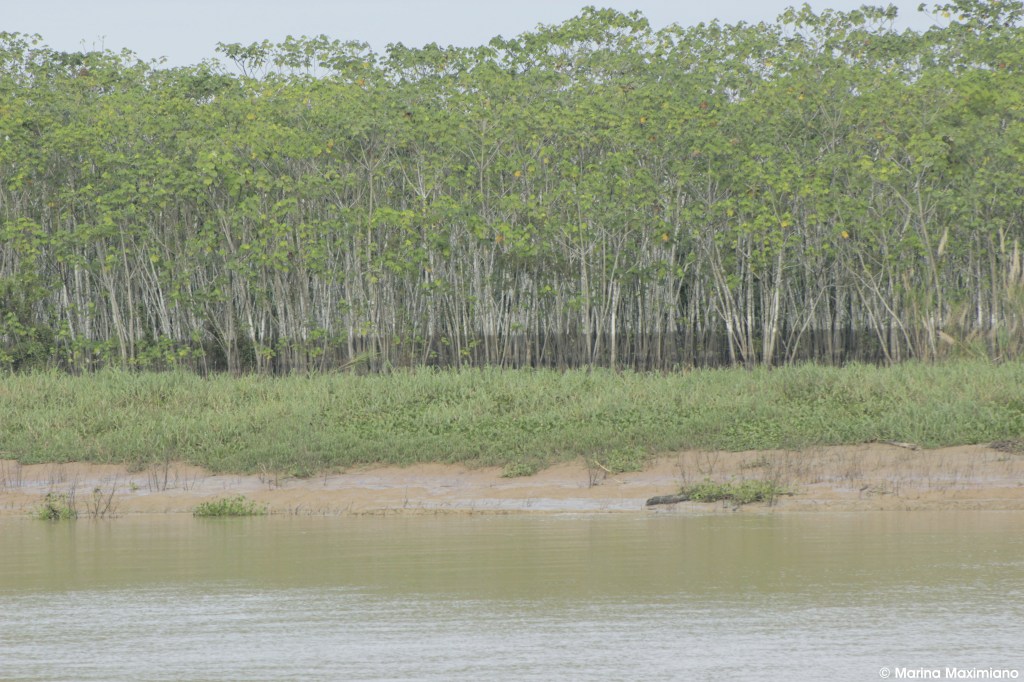
Flooded forest in Juruá River; the dark line in the trees shows the inundation height (Credits: Marina Maximiano).

Key methodologies. We started by compiling occurrence records from online databases and scientific collections to corroborate the previously described distribution patterns and habitat affinities of our study species, building a new and more complete dataset that improves our knowledge on their entire distribution areas. Then, we used genomic data (UCE- Ultraconserved Elements, SNPs, mitogenome) to understand the evolutionary history of the two species. For this, we analysed their genetic structure, phylogenetic relationships, divergence times and demographic history.

Unexpected challenges. The biggest challenge that I experienced was becoming a mother during my Master’s degree, and to have another baby during the process of reviewing this paper. Luckily, I had a lot of support from my family and the BioGeoAm study group team, as well as from my supervisor Camila Ribas and colleagues, who helped me during all stages of research and publication of this paper. They also helped me to overcome all obstacles and inspired me to continue investigating the evolution of Amazonian birds. Another challenge was learning how to process genomic data, but this is part of the learning process, and nothing is more difficult than raising a baby.

Major results. We found differences in population histories related to distinct habitat associations along Amazonian floodplains. More resilient habitats, which are inhabited by S. albigularis, may sustain local populations, generating and maintaining diversity. In contrast, M. propinqua’spreference for more ephemeral island habitats may favour local extinctions, leading to demographic change, low genetic variability, no population structure, and smaller effective population size. Our results suggest that climatic variations during the late Pleistocene and Holocene caused changes in distribution and connectivity of the different habitats types along the Amazonian floodplains, affecting gene flow and population sizes of associated bird populations.

Synallaxis albigularis in a river bank vegetation (Credits: Tomaz de Melo).

Next steps for this research. We are currently investigating the effects of historical climate changes on bird populations associated with different environments across the Amazonian sub-basins of Negro River and Xingu River. Paleoclimate studies have shown that climate variations along the Amazon basin were not homogeneous; for instance, the climate history of the western Amazon seems to be more stable than the eastern part. At present, the Amazon landscape is made up of a mosaic of different types of environments. Climate variations during the Quaternary may have affected bird populations associated with these different environments distinctly, and it is here that our current research goals lie.

If you could study any organism on Earth, what would it be? It could be any organism that helps me understand how the Amazon was in the past and how it evolved. The Amazon is a magical place. Unfortunately, it is extremely vulnerable and terribly endangered. But I love birds and I am very happy to study them. When I was a child, like any child, I loved dinosaurs and now I study their living descendants! This is so cool! And I could study anything about birds, like their plumage, vocalizations, behaviour, and so on. Birds are incredibly interesting!

Anything else to add? I am wishful to go on an expedition into the Amazon. Even though I was born and currently live there, I feel that I know too little about this incredible biome. When I read about the expeditions of the first naturalists that visited the region, like Wallace and Bates, I start to think about how much I crave this experience.

Aridification-driven evolution: Three lineages, two data sets, one story

We tested the hypothesis that aridification of Australia during the Pleistocene promoted the isolation and divergence of three lineages of a migratory fish. We found support for this using an integrative framework of environmental and genomic modelling.


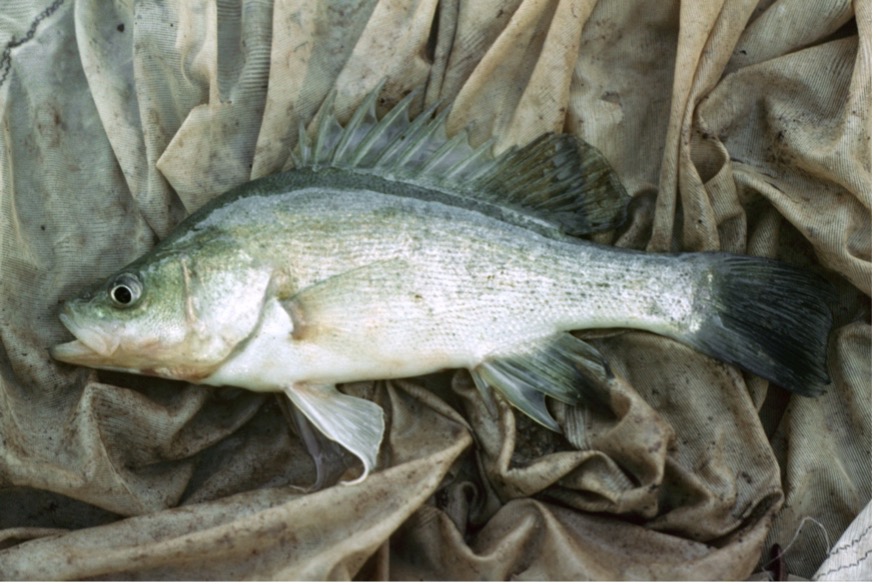
Above: Golden perch, Macquaria ambigua. Photo credit: Peter Unmack.

The Australian landscape has not always been so arid. In fact, if you travelled back to the early Cenozoic, in place of the central deserts you would find rainforests and lavish wetlands supporting very different ecosystems than we see today. But over millions of years, the plants and animals of Australia have had to adapt to a gradually drier climate, with heightened aridification during the glacial phases of the Pleistocene (~2.6 million to 11.7 thousand years ago) having caused major changes to the distribution and connectivity of populations. Despite having a good understanding of how this aridification has impacted terrestrial species, less is known about how it has affected the diversification of freshwater taxa.

Cover article (free-to-read for two years):
Booth, E. J., Sandoval-Castillo, J., Attard, C. R., Gilligan, D. M., Unmack, P. J. & Beheregaray, L. B. (2022). Aridification-driven evolution of a migratory fish revealed by niche modelling and coalescence simulations. Journal of Biogeography,   49,  1726– 1738. https://doi.org/10.1111/jbi.14337

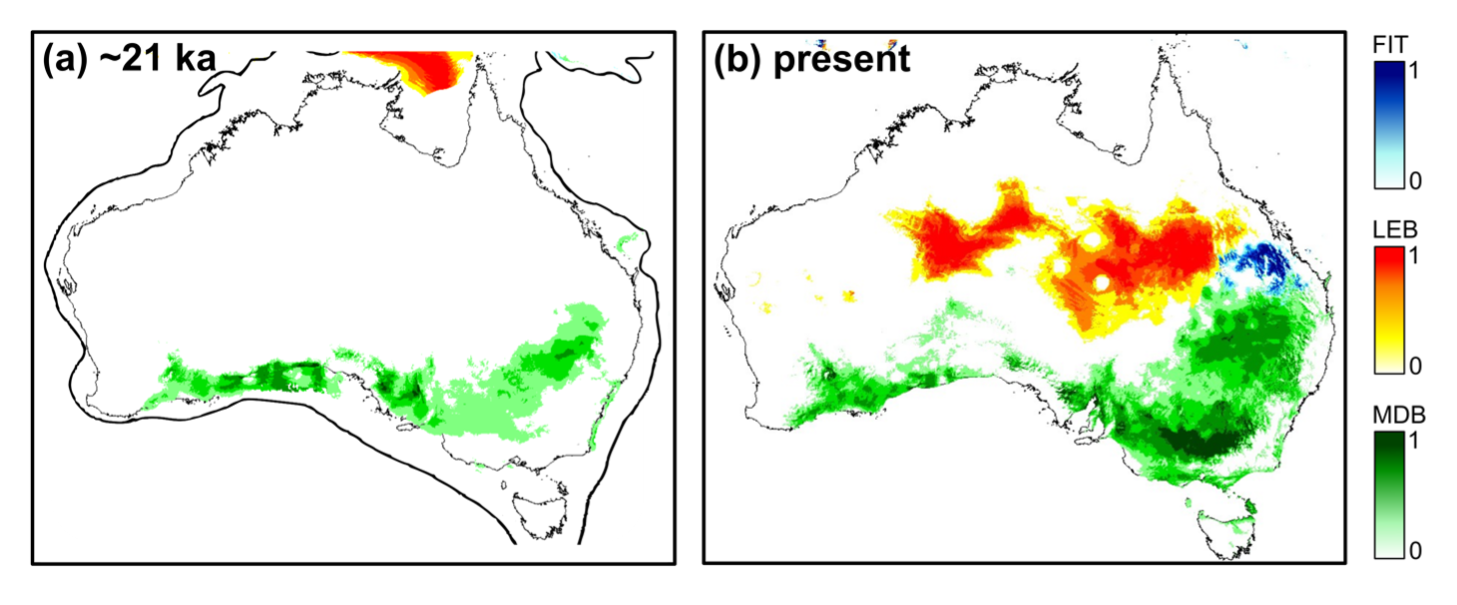
In this study, we were curious to understand how historical aridification of Australia has influenced the evolution of an iconic freshwater fish, the golden perch (Macquaria ambigua). Specifically, we wanted to find out whether the divergence of three lineages of golden perch from three different river basins has been driven (or at least reinforced) by aridification. Previous research has found strong genetic differentiation between these lineages, and it has been proposed that they are actually three different ‘cryptic’ species. Clarifying this taxonomic ambiguity is important for the management and conservation of golden perch, especially since the species is regularly stocked from hatcheries into rivers and impoundments to support its recreational fishery.

We already had a ton of genome-wide data from previous work, so we thought we’d repurpose it to run some complex ‘coalescent’ models to better understand when these lineages diverged and experienced demographic changes. But what we needed first were some specific hypotheses to test. Rather than making hypotheses up out of thin air (or should I say water?), we used an environmental data set to develop contemporary and historical species distribution models. These models allowed us to predict how the amount of suitable habitat for golden perch has changed over time and theorize about how population sizes and connectivity of the lineages might have fluctuated between glacial and interglacial times.


Species distribution models for three golden perch lineages that are endemic to three major Australian drainage basins: Fitzroy (FIT), Lake Eyre (LEB), Murray–Darling (MDB). We found support for reduced habitat availability during the Last Glacial Maximum (~21 ka) compared to the present day.

What’s really cool is that our two independent data sets (environmental and genomic) found support for the same story. We discovered that during the Last Glacial Maximum (~21 thousand years ago), all three lineages had much smaller population sizes compared to the current day. Furthermore, the connectivity of suitable habitat between drainage basins was reduced at that time. This supports the idea that aridification caused the isolation (and facilitated the divergence) of the three golden perch lineages. We also found phylogenetic support for the delimitation of these lineages as separate species.

Our paper provides an exciting new insight into the diversification of freshwater taxa in Australia, and this integrative analytical framework could be applied to other study systems in the future. This research also has relevance for understanding how anthropogenic climate change might affect the connectivity of freshwater lineages, but that’s a story to explore elsewhere … 

Written by:
Emily Booth
PhD candidate, Molecular Ecology Laboratory, College of Science and Engineering, Flinders University, Adelaide, South Australia, Australia

Additional information:
Twitter: @molecolflinders; @EmilyJBooth
https://molecularecology.flinders.edu.au

Will Geogenomics change the future of Phylogeography?

Phylogeography is celebrating its 35th birthday; Geogenomics its 8th. We asked authors of papers in a recent special section of Journal of Biogeography to reflect on how these two approaches can increase our understanding of the distributions of genetic diversity.

Above: Cover for the Geogenomics virtual issue .

Biogeography is an integrative discipline, as is reflected in familiar conjunctions including bio⋅geography, phylo⋅geography, and macro⋅ecology. One recently introduced term — geo⋅genomics — represents interdisciplinary approaches using “large-scale genetic data to test or to constrain geological hypotheses” (sensu Baker et al. 2014, p.38). Geogenomics is eight years young, arguably in its foundational phase, and its relationship with other disciplines in biogeography is developing. A special section in the Journal of Biogeography — which is running for the three months (v.49.9–49.11) and being compiled into a virtual issue — reviews the origins of geogenomics and compiles a suite of new studies that reflect geogenomics’ current purview (as practiced by biogeographers). A major contention of this special section is that Geogenomics has potential to substantially change the way we combine genetics and geology to increase rigor and insight when answering biogeographic questions. Here, we provide perspectives from some of the authors of papers in the special section on what they see in the future for Geogenomics. We posed three questions to them:
– What are the predominant limitations on (or opportunities for) advances in Phylogeography?
– What do you find new and exciting about Geogenomics?
– Can Geogenomics change the future of Phylogeography? (And/or what else will be needed?)

Their answers, and links to their papers, are provided below. We hope the special section and this discussion provoke thought and stimulate advances in this rich area. We look forward to publishing more on these topics in the coming years!

Editorial: (Free to read online for a year.)
Dawson, M.N., Ribas, C.C., Dolby, G.A. and Fritz, S.C. (2022) Geogenomics: Toward synthesis. J Biogeogr. 49(9):1657–1661. https://doi.org/10.1111/jbi.14467 

The special section on Geogenomics was conceived and edited by Paul Baker (Duke University, USA), Greer Dolby (University of Alabama at Birmingham, USA), Sherilyn Fritz (University of Nebraska – Lincoln, USA), Anna Papadopoulou (University of Cyprus, Cyprus), and Camila Ribas (Instituto Nacional de Pesquisas da Amazônia, Brazil) in association with the chief editors.  


Key attributes in geogenomic thinking include the bidirectionality of process and inference, and the integrative iteration of ecological, evolutionary, and earth processes, scaling from generational to geological times. See Dawson et al. (2022) for more detail.

-=-=-=-=-=-=-=-=-

Barbosa, W. E. S.,  Ferreira, M.,  Schultz, E. D.,  Luna, L. W.,  Laranjeiras, T. O.,  Aleixo, A., &  Ribas, C. C. (2022). Habitat association constrains population history in two sympatric ovenbirds along Amazonian floodplains. Journal of Biogeography,  49,  1683– 1695. https://doi.org/10.1111/jbi.14266

Molecular biology has advanced a lot in the last decade, and the development of new sequencing techniques and a decrease in sequencing costs made a lot of phylogenomic studies possible. Given the availability of different sequencing platforms and sequencing strategies, strategic planning in phylogenomic studies has become more difficult, and analysis of all these data remains at a high cost. In addition, such complex data analysis requires scientists to be trained in bioinformatics, which makes them capable of solving the problems that arise throughout the stages of data processing and analysis.

What I find most exciting about geogenomics is the possibility of comparing dates of geological or climatic events with biological data at various scales with robust data, which allows even more accurate reconstructions of Earth‘s history.

Geogeonomics can make phylogeographic studies more interdisciplinary. In phylogeographic studies, biologists use dating and geological interpretations to understand the processes governing the distribution of closely related lineages. Meanwhile, in geogenomics, geologists can use genomic data as a proxy for their earth history studies. Thus, through bioinformatics, biologists and geologists can work together to test hypotheses as well as formulate new ones and obtain increasingly robust reconstructions.

– Waleska Barbosa


Northern chamois (Rupicapra rupicapra) inhabit steep terrain in Central Europe and are well-adapted to cold climate. They recolonized the European Alps after the glaciation. Photo credit: Flurin Leugger. 

Leugger, F.,  Broquet, T.,  Karger, D. N.,  Rioux, D.,  Buzan, E.,  Corlatti, L.,  Crestanello, B.,  Curt-Grand-Gaudin, N.,  Hauffe, H. C.,  Rolečková, B.,  Šprem, N.,  Tissot, N.,  Tissot, S.,  Valterová, R.,  Yannic, G. &  Pellissier, L.(2022).  Dispersal and habitat dynamics shape the genetic structure of the Northern chamois in the Alps. Journal of Biogeography,  49,  1848– 1861. https://doi.org/10.1111/jbi.14363

Phylogeographic studies at the very beginning were purely descriptive, linking molecular data to geography, e.g., investigating the spatial distribution of genotypes (Avise et al., 1987[1]). Early phylogeographic studies were based on mtDNA markers which included only few 100s base pairs and only describe female-related patterns (Avise 1998[2], 2009[3]). Compared to the multi-locus or more recently used whole genome analyses (see also response below), they provide limited insights into the history of the study organism. Advances in statistical approaches and modelling helped to overcome some limitations, i.e., to receive more realistic estimations or investigate additional species-environment relations (Knowles, 2009[4]) and test hypothesis of genetic diversity over time. The spatio-temporal resolution of genetic and/or geographic data is until now often a limiting factor in phylogeographic studies.

The connection of genomic (i.e., data from entire genomes and not only from a very restricted marker) data and landscape evolution at large spatial scales is exciting in the field of Geogenomics. Although initially defined as way to investigate geological patterns based on biological data (Baker et al., 2014[1]), Geogenomics is often perceived in a reciprocal illumination: geological or geographic data is used to improve our understanding of biodiversity and biological properties (Dawson et al., 2022[2]). New insights can be obtained by combining genomic with geographic data (and various models) compared to classical genetic analysis. For example, we[3] used genomic data of chamois across the European Alps in combination with several hundred landscape connectivity models over 20,000 years to test hypothesis on chamois’ dispersal which would not have been possible with distribution data or genetic data alone. Given that many researches use the reciprocal definition of Geogenomics (e.g., Barbosa et al., 2021[4]; Luna et al., 2021[5]; Ortego et al., 2022[6]), I argue that Geogenomics should be considered as part – or rather advancement – and not opposite of Phylogeography, where whole-genome data is used compared to the single or few genetic markers used during the emergence of Phylogeography. The core of Geogenomics is to test various hypothesis using genomic data in combination with both models and landscape data to gain new insights into biodiversity (e.g., migration) and landscape evolution (e.g., formation of migration barriers). Understanding how biodiversity evolved facing past environmental changes is paramount to predict and/or mitigate adverse effects of the current global changes where Geogenomics can contribute valuable information.

The core of Geogenomics is the hypothesis-driven approach using large-scale genomic data to improve our understanding of geological or biological properties. Advancements in genetic analysis and computational modelling are likely to foster Geogenomics in the next years and result in ever more hypothesis which can be addressed. Additionally, the tools of Geogenomics offer new possibilities to study biodiversity and landscape evolution at a finer scale than ever before. Genomic (whole-genome) data, i.e., SNP-based approaches, allows for more detailed analysis compared to classical phylogeographic studies, that is for example, on population level instead and over shorter time to estimate anthropogenic impacts. Using ancient DNA (aDNA) from fossils will offer new insights into Phylogeography. For example, aDNA could improve models about historic population changes and connectivity between populations.

– Flurin Leugger


(Left) The Striped Woodcreeper (Xiphorhynchus obsoletus, Dendrocolaptidae), a bird species with wide distribution in the Amazon floodplains. Photo: João S. Barros. (Right) Amazonian floodplains of the Rio Branco, at the foot of the Serra Grande, Roraima, Brazil. Photo: Thiago O. Laranjeiras.

Luna, L. W.,  Ribas, C. C., &  Aleixo, A. (2022).  Genomic differentiation with gene flow in a widespread Amazonian floodplain-specialist bird species. Journal of Biogeography,  49,  1670– 1682. https://doi.org/10.1111/jbi.14257

Modern phylogeography still lacks conceptual and methodological definitions in incorporating multivariate data (e.g., environmental, biotic, behavioral, climatic, and geological variables) into biogeographic models. In this context, the predominant limitation is how we can incorporate information from multiple species traits and historical changes in the landscape (constrained by dated geological events) into a statistical framework that can infer the current distribution of genetic diversity of the species and communities. Another issue is that the incorporation of whole genomes into the discipline has just begun, and several new tools and approaches will have to be developed or adjusted to fully incorporate the massive amount of data provided by this type of DNA sequencing. 

Geogenomics can be seen as a step forward in phylogeography in terms of concept and methodological approach. This advance comes from defining the study design more rigorously, using geological constraints and high-throughput genomic technology to tackle biogeographic hypotheses. That is, it adds the context of geological history into the investigation of biogeographic patterns, or vice versa, using known biogeographic patterns to illuminate geological processes at both regional and intercontinental scales.

Explicitly using dated geological events within phylogeographic approaches can help refine the hypotheses being tested. For the past two decades, phylogeography relied on the description of spatial genetic patterns as a posteriori explanation of possible events that shaped the evolutionary histories of taxa. With the addition of concepts from geogenomics, phylogeography can be profoundly changed, whereby the addition of an explicit historical/geological context into sampling designs will help illuminate complex evolutionary and biogeographic patterns.

– Leilton Luna & Alexandre Aleixo


The thermophilous grasshopper Dericorys carthagonovae. Photograph by Francisco Rodríguez.

Ortego, J.,  González-Serna, M. J.,  Noguerales, V., &  Cordero, P. J. (2022).  Genomic inferences in a thermophilous grasshopper provide insights into the biogeographic connections between northern African and southern European arid-dwelling faunas. Journal of Biogeography,  49,  1696– 1710. https://doi.org/10.1111/jbi.14267

In my opinion, an important limitation is the difficulty to integrate geological information into process-based phylogeographic inference, which is particularly challenging when ancient events are involved. Geology and phylogeography illuminate each other, but what is probably needed is more active collaboration between researchers of the two disciplines. Among others, this could help to consider more carefully uncertainty surrounding geological reconstructions when interpreting phylogeographic evidence (e.g., dating of events).

Something I find very exciting are the discrepancies between geology/geography and phylogenomic evidence, as such findings can provide important counterintuitive insights into disregarded phenomena governing species distributions and geographical diversification. For instance, mounting biogeographical evidence – including our study published in this special issue – suggests that the colonization of semiarid areas of Iberia by thermophilous organisms of African origin most likely took place from the central Maghreb region (Algeria or Tunisia). This indicates that the exchange of terrestrial organisms between Iberia and Africa did not exclusively take place across the strait of Gibraltar (i.e., through the shortest geographical distance) and suggests that long-distance overseas dispersal might be much more common than previously thought.

Understanding the processes shaping species distributions and their spatial patterns of genomic variation requires the effective integration of multiple disciplines and, as such, geogenomics will be instrumental to the advance of phylogeography. However, organismal traits (i.e., dispersal capacity, interspecific interactions, ecology, etc.) must be also considered to formulate and test phylogeographic hypotheses, as not all taxa are expected to respond in the same way to a shared abiotic background and only certain geological events (e.g., Quaternary climatic oscillations) but not others (e.g., landmass/ocean configuration) might explain their demographic and evolutionary trajectories depending on species-specific attributes. Phylogeographic studies on geophilic organisms with low dispersal capacity might particularly benefit from a “geogenomic approach” and provide insights that, in turn, could contribute to refine geological hypotheses, particularly when developed within a multi-species comparative framework.

– Joaquín Ortego


Additional information:
Virtual issue on Geogenomics: https://onlinelibrary.wiley.com/doi/toc/10.1111/(ISSN)1365-2699.Geogenomics

REFERENCES
[1] Baker, P. A., Fritz, S. C., Dick, C. W., Eckert, A. J., Horton, B. K., Manzoni, S., … & Battisti, D. S. (2014). The emerging field of geogenomics: constraining geological problems with genetic data. Earth-Science Reviews, 135, 38-47.
[2] Dawson, M.N., Ribas, C.C., Dolby, G.A. and Fritz, S.C. (2022), Geogenomics: Toward synthesis. Journal of Biogeography, 49, 1657-1661.
[3] Leugger, F., Broquet, T., Karger, D. N., Rioux, D., Buzan, E., Corlatti, L., … & Pellissier, L. (2022). Dispersal and habitat dynamics shape the genetic structure of the Northern chamois in the Alps. Journal of Biogeography 49,  1848– 1861. https://doi.org/10.1111/jbi.14363
[4] Elizangela dos Santos Barbosa, W., Ferreira, M., de Deus Schultz, E., Willians Luna, L., Orsi Laranjeiras, T., Aleixo, A., & Cherem Ribas, C. Habitat association constrains population history in two sympatric ovenbirds along Amazonian floodplains. Journal of Biogeography, 49, 1683-1695.
[5] Luna, L. W., Ribas, C. C., & Aleixo, A. (2021). Genomic differentiation with gene flow in a widespread Amazonian floodplain‐specialist bird species. Journal of Biogeography, 49, 1670-1682.
[6] Ortego, J., González‐Serna, M. J., Noguerales, V., & Cordero, P. J. (2022). Genomic inferences in a thermophilous grasshopper provide insights into the biogeographic connections between northern African and southern European arid‐dwelling faunas. Journal of Biogeography, 49, 1696-1710.