Ecological traits matter

Differences in dispersal abilities and habitat specialization determine the postglacial range expansion of three high-elevation plants

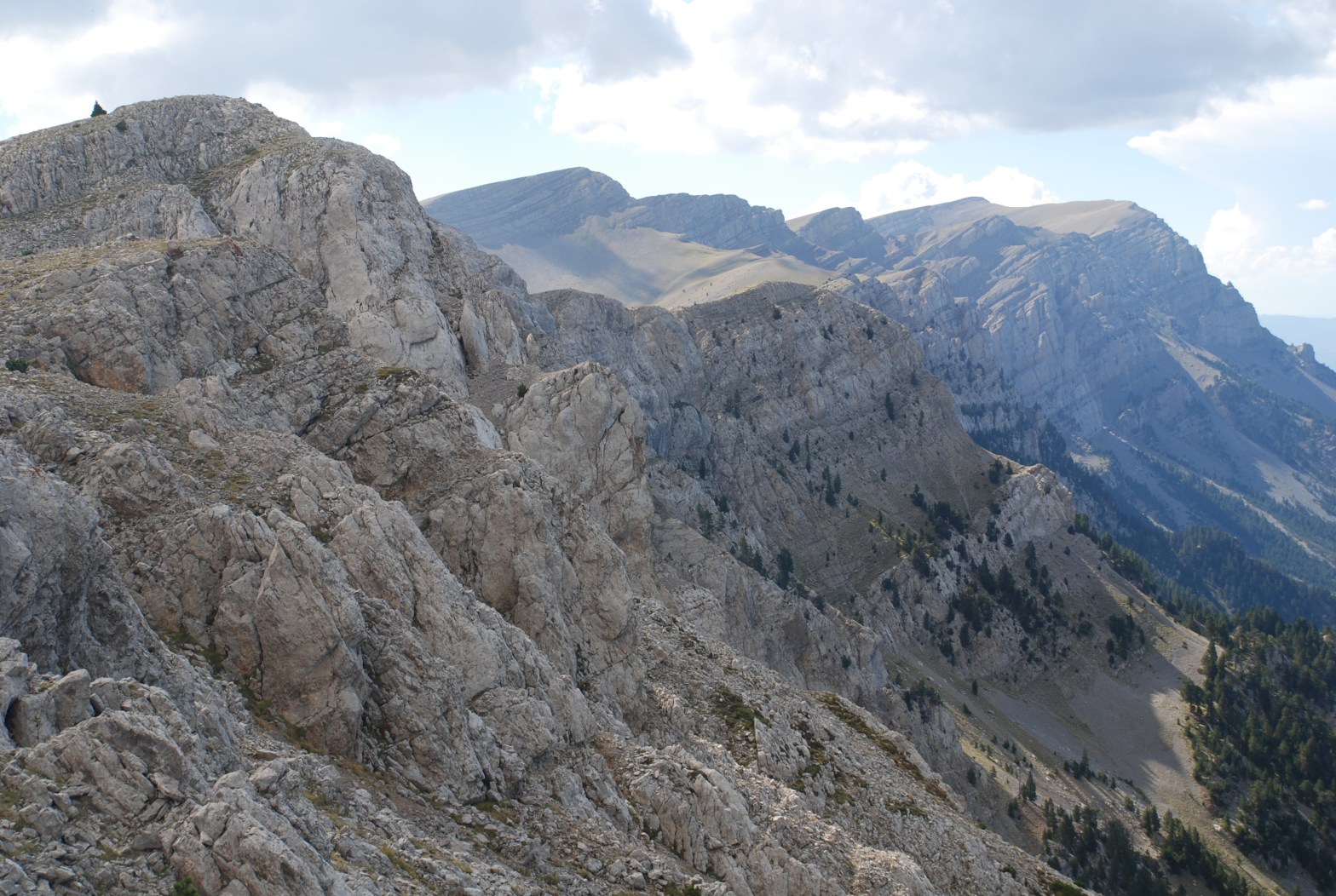
Above: Steep limestone cliffs in the Pre-Pyrenees, a glacial refugium for the study species.

When I first visited the Pyrenees as a child from the Mediterranean lowlands, I got fascinated by the accordion-like folded landscape, the green and dense meadows, and the amount of unknown colorful flowers which painted the entire picture. In the coming years, I began to understand what processes and conditions produced that landscape and vegetation, and the original fascination slowly turned into questions. Inspired by classical and more recent literature about glacial refugia for plants from the European Alps, the question started to burn inside me: what about the Pyrenees? What happened in these mountains that create an almost perfect border between the Mediterranean and the template climate? As claimed in some classical studies, did mountain plants in the Pyrenees have more possibilities of surviving the cold stages than their counterparts in the Alps? And looking in the opposite temporal direction, what possibilities do they have to cope with climate change in the near future? To date, the lack of a critical mass of molecular data for Pyrenean mountain plants does not allow us to answer these questions, and that is the reason why we started the project in which our publication is framed.

Cover image article: (Free to read online for a year.)
Carnicero, P., Wessely, J., Moser, D., Font, X., Dullinger, S. & Schönswetter, P. (2022). Postglacial range expansion of high-elevation plants is restricted by dispersal ability and habitat specialization. Journal of Biogeography, 49,  1739– 1752. https://doi.org/10.1111/jbi. 

In this project entitled Conserving intraspecific diversity in a warmer world, we aimed at tackling the above mentioned questions and to understand the impact of past and current changes in the diversity within species. Nine species endemic to the Pyrenees were selected for this purpose, and in this first publication of the project, we present the results for three species with preference for carbonate bedrock. In the general trend of searching for individual examples, which could be a proxy for a wider group of ecologically similar species, I expected these three species to be good models to explain what happened to other species with similar bedrock preference. Nothing further from the truth. Our results showed two different responses to the end of the cold stage: one expanded rapidly, while the other two showed postglacial stasis; they remained in the areas where they survived the cold stages, with only a few colonizations of areas previously under the ice. Why?

When we were seeking an answer to this incongruent pattern, we went back to basic questions that a biologist should never forget: where and how do our study species live, disperse, reproduce, etc.? And these indeed brought us to a reasonable explanation. Salix pyrenaica, the species, which rapidly expanded and colonized previously glaciated areas, is a very good disperser and often able to find a place to grow provided a carbonate bedrock. In a way, we can call Salix pyrenaica a generalist of carbonate bedrocks. This ecological trait allowed it to rapidly and efficiently explore the newly available terrain after glaciation, by dispersing many fruits, and a considerable amount of them finding a proper spot to grow. Instead, Cirsium glabrum and Silene borderei showed a much more static picture. The areas where, according to our genetic and climatic data, they survived the cold stages are almost a perfect match to the areas where they occur nowadays. In contrast, they barely occur in potentially suitable areas that were under the glaciers during the ice ages. Silene borderei has no particular adaptations for long-distance dispersal, but Cirsium glabrum does. While it is true that Silene borderei indeed showed a more static postglacial history than Cirsium glabrum, something still has to explain why both expanded so little after the glaciations as compared to Salix pyrenaica. In contrast to the latter, Cirsium glabrum and Silene borderei are microsite-specialists in terms of habitat selection, which imposes a severe drawback in terms of colonization of new areas: even if dispersing seeds efficiently, only a very small portion of them will find a suitable habitat to grow, rendering the colonization of new areas an extremely slow process.


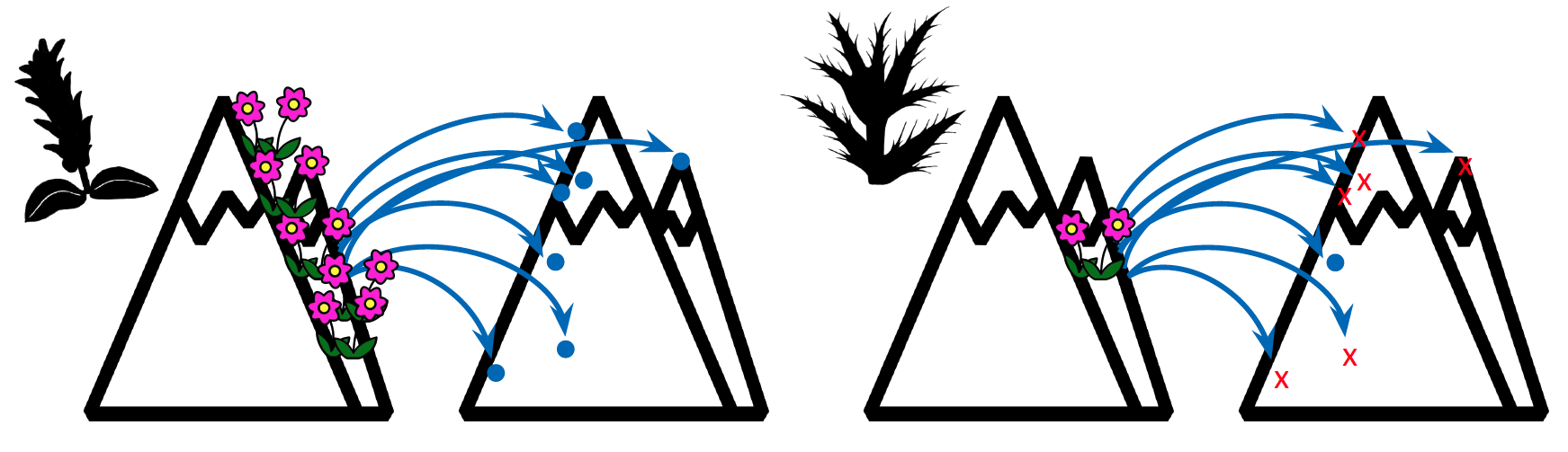
Schematic representing the impact of habitat specialization in range expansion. In the left panel, a generalist like Salix pyrenaica showing multiple successful dispersal events. In the right panel, for a micro-site specialist like Cirsium glabrum, most of the dispersal events will not succeed.

How close do these results bring us to inferring where the glacial refugia for high-elevation species in the Pyrenees actually were? Despite the uncertainties conferred by the above mentioned results, we are in the position of formulating some statements and, of course, new questions. On the one hand, Salix pyrenaica shows the expected behavior of contraction-expansion of glacial refugia: survival of a harsh period in refugia, and posterior expansion from there. Unfortunately, this expansion seems to have been so fast and involved a high degree of exchange of genes between expanding populations, that the signal for identifying the refugia in detail is too weak. In this case, we can state that there were at least two refugia in the east and the west. Instead, for Cirsium glabrum and Silene borderei we can clearly state that the eastern and western Pre-Pyrenees played an important role for the survival of the species during the ice age. The Pre-Pyrenees have already been suggested as a main refugium for species with carbonate bedrock preference, and our results confirm this.

In conclusion, our results show that species-specific ecological traits play a major role in the recent history of the studied species. Thus, for species like Cirsium glabrum and Silene borderei, refugia remained their permanentdistributions, while others, like Salix pyrenaica, started remarkable range expansions from the refugia. Ecological traits therefore strongly impact which species have narrow or widespread distributions. Future molecular data coming from our and other projects will provide further evidence to confirm, reject or reformulate the general applicability of the hypotheses formulated here.

Written by:
Pau Carnicero, PhD, Department of Botany, University of Innsbruck

Additional information:
@CarniceroPau
https://www.uibk.ac.at/botany/staff/scientific_staff/carnicero-campmany_pau.html.en

Acknowledgements
I would like to thank Peter Schönswetter for his relevant feedback on this blog post.

ECR feature: Leilton Willians Luna

Leilton W. Luna is a postdoc at the Pennsylvania State University. He is a biologist with a broad interest in how species adapt, diversify, and become extinct. Here, Leilton shares his recent work on birds of the Amazonian floodplains.

Leilton Luna doing research or just having fun bird watching.

Personal links. Twitter | Personal website

Institute. Department of Ecosystem Science and Management, Pennsylvania State University, USA

Academic life stage. Postdoc

Major research themes. Connections between the evolution of Earth and living organisms, ecological drivers of biological diversity, and the application of population genomics to the conservation of endangered species.

Current study system. I am currently studying the birds of the Amazonian floodplains. These river-created environments have a unique diversity of species, in contrast to adjacent habitats, such as upland (terra firme) forests. To me, the coolest thing is to understand how a riverine landscape produces such a wide variety of species. Perhaps one of the keys to understanding this question is to investigate the past, using genomic technologies. Using genomic data, I can explore the relationships between floodplain bird populations and the historical events in the Amazon that possibly made these populations so differentiated today.

Recent JBI paper. Luna, L. W., Ribas, C. C. & Aleixo, A. 2022. Genomic differentiation with gene flow in a widespread Amazonian floodplain-specialist bird species. Journal of Biogeography 49(9): 1670-1682. https://doi.org/10.1111/jbi.14257

Motivation behind this paper. The biogeographic history of floodplains is poorly known in comparison to other Amazonian environments. Therefore, we would like to understand what factors are responsible for generating diversity in Amazonian floodplains. Could it be differences between flooded environment types, such as blackwater igapó versus white-water várzeas forest? Or changes in the riverine landscape caused by past climate changes? Or even an interplay between these factors? To answer these questions, we study the Striped Woodcreeper (Xiphorhynchus obsoletus), the most common and widely distributed bird in the Amazonian floodplains. The tight relationship of this bird to the floodplains could tell us a little bit about the history of the environment, and for this purpose, we analysed its DNA. Another motivator was to underscore the importance of collections and expeditions for biodiversity research. Our study used tissues deposited in genetic resource collections, in museums from Brazil and the USA, which are the result of more than two decades of expeditions into the Amazonian floodplains.

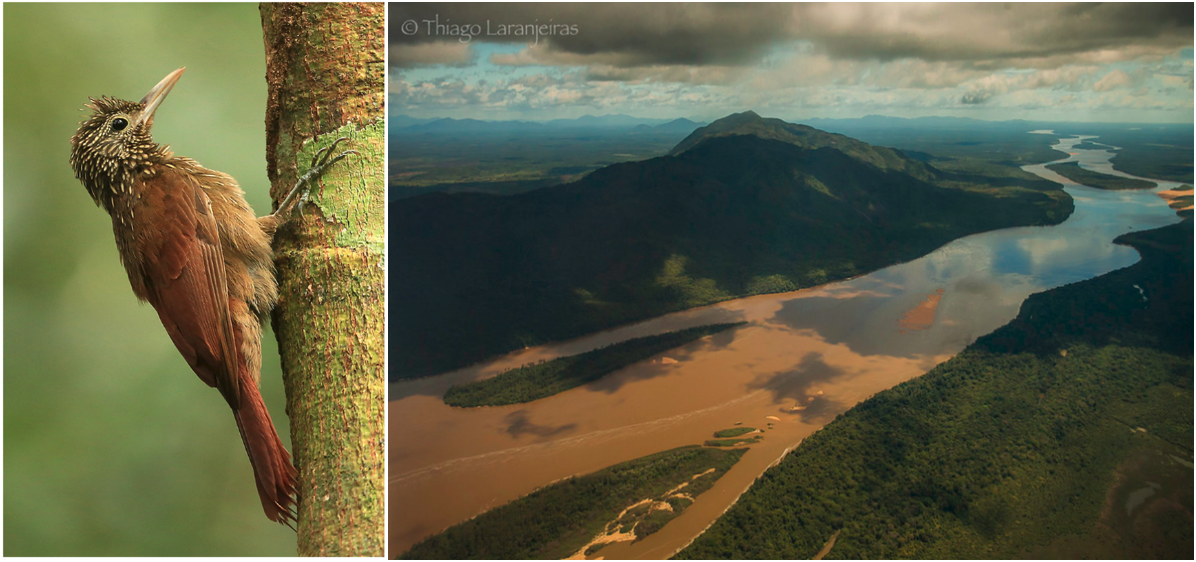
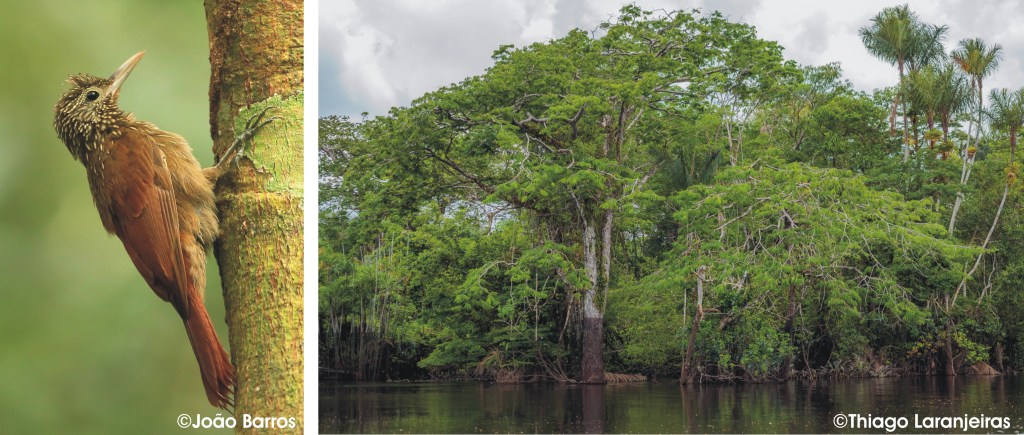
Left: The Striped Woodcreeper (Xiphorhynchus obsoletus). What can its DNA tell us about the history of the Amazon floodplains? (Credit: João Barros). Right: The igapó flooded forest of the Demini River, a tributary of the Negro River. The watermark on the tree trunk shows the height of the river during the flood (Credit: Thiago Laranjeiras).

Key methodologies. To investigate the structure and connectivity of Striped Woodcreeper populations, we sequenced a small amount of the bird’s genome. Along with genomic data, we used environmental information to test whether genetic differences between populations were associated with steep environmental gradients, specifically between igapó (habitats bordering clear- and black-water rivers) and várzeas forests (associated with white-water rivers). In addition, we tested different evolutionary scenarios based on information from geomorphological changes that occurred in central Amazonia during the Late Pleistocene. Here, the novel approach was to combine environmental and geologic information to gain insights into the drivers of genetic diversity in Amazonian floodplains.

Unexpected challenges. The main challenge was to cover the sampling of the Striped Woodcreeper in the huge area of the Amazon basin. Even with tissue database contributions from several past expeditions into the Amazonian flooded forests, there were still important gaps. Thus, in August 2017, we undertook a navigation expedition on the Solimões River, in the heart of the Amazon. Spending 30 days on a boat, waking up early in the morning to enter the jungle and search for the Striped Woodcreeper and other floodplain birds, was a thrilling and frightening experience. The apprehension of not getting the samples was a constant companion. However, with the help of an extraordinary team of ornithologists from the National Institute for Amazon Research (INPA) and the Emilio Goeldi Museum (MPEG), led by Dr. Camila Ribas, we were able to succeed.

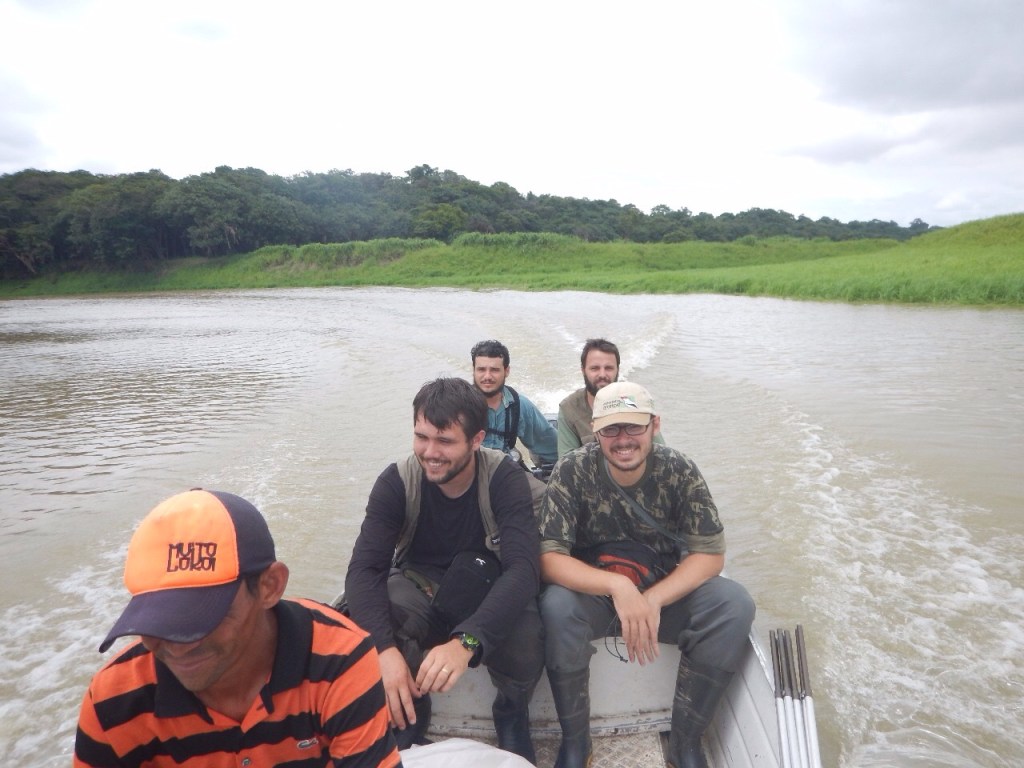
Part of the team of ornithologists (also biogeographers) from INPA and Museum Emilio Goeldi navigating between Amazonian riverine islands during an expedition on the Solimões River in August 2017.

Major results. We found that genetic variability in a bird endemic to the Amazonian floodplains is more related to the history of changing riverine connections associated with Late Pleistocene climate change, rather than strong contemporary environmental gradients. Also, by comparing our results with others previously published, we found that the type of habitat a species uses can possibly determine the levels of genetic differentiation between populations. These findings add a new layer of information about the formation of the Amazonian biodiversity, which involves complex interactions between species’ ecological traits and the dynamic history of their environments.

Next steps for this research. The next step is to investigate the genetic diversity of more floodplain birds! This time, the idea is to gather a collection of bird species with different habitat specializations and test whether habitat use determines the structure and levels of genetic differentiation across species. Understanding these interactions is critical for highlighting the uniqueness of Amazonian floodplains, since many of these habitats are intensively destroyed in parts of the Amazon basin by logging and hydroelectric dam construction. These human activities are already affecting the occupancy of floodplain birds, but little is known about the effects on genetic diversity and connectivity at both population and community scales.

If you could study any organism on Earth, what would it be? Rather than an organism, I would like to study an interaction between organisms. I find it fascinating how species that compete for the same resources can adapt and evolve to this competition. Or even how two species find a way to coexist in intimate dependence, “cooperating mutualistically” throughout their evolutionary history. What could be the genetic basis behind the adaptation of such interactions? In this case, I would continue to study birds, which exhibit several interesting interactions with other groups of organisms. Be it hummingbirds selecting their favorited flowers by smell, or birds parasitizing the nest of other birds so that their offspring can survive (even at the expense of their foster siblings).

Anything else to add? As someone born in Amazonia, it is impossible not to be impressed by the number of species – especially bird species. A casual walk on the edge of a forest, or even in city parks, is enough to realize that there is something special about this region. Therefore, having the opportunity to study the Amazonian biodiversity is something rewarding. A lifetime is not enough to understand the evolutionary, ecological, and ecosystem complexity of this green wonderland. But unfortunately, that clock is ticking against this biodiversity, as levels of destruction, habitat conversion, and climate change are driving the Amazon rainforest to its tipping point. But despite this grim prospect, I still see that there is much to be done, both in science and in international conservation policies, to keep this huge forest, the number of species, and the native peoples who live in it standing.

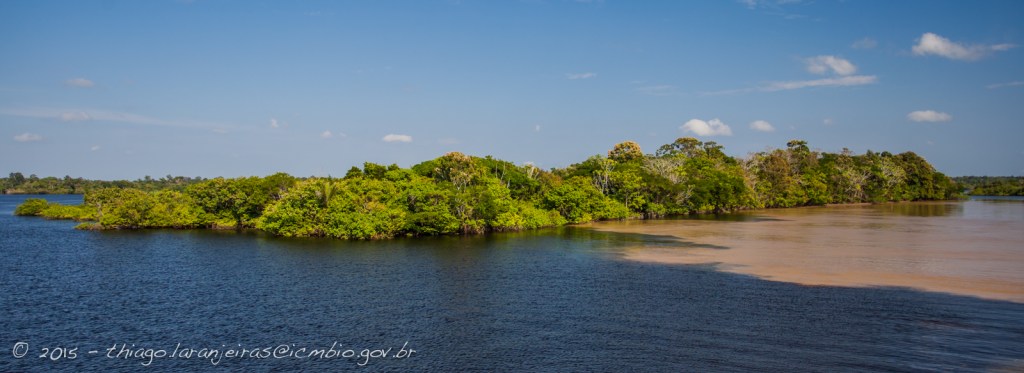
The flooded Amazonian forests differ according to the “color” of the river. Meeting of the waters between the Negro River (igapó black-water) and the Solimões River (várzea white-water) (Credit: Thiago Laranjeiras).

ECR feature: Emily Booth on the evolution of Australian freshwater fishes

Emily Booth is a PhD student at the Flinders University in Australia. She is a molecular ecologist interested in understanding the effects of climate changes on the evolution of species. Here, Emily shares her recent work on the ‘genomic vulnerability’ of Australian freshwater fishes to climate change.

Emily Booth during fieldwork in Australia.

Personal links. Twitter

Institute. Flinders University, Australia

Academic life stage. PhD candidate

Major research themes. I am interested in understanding the effects of climate change (both historical and contemporary) on the evolution of species, particularly freshwater fishes.

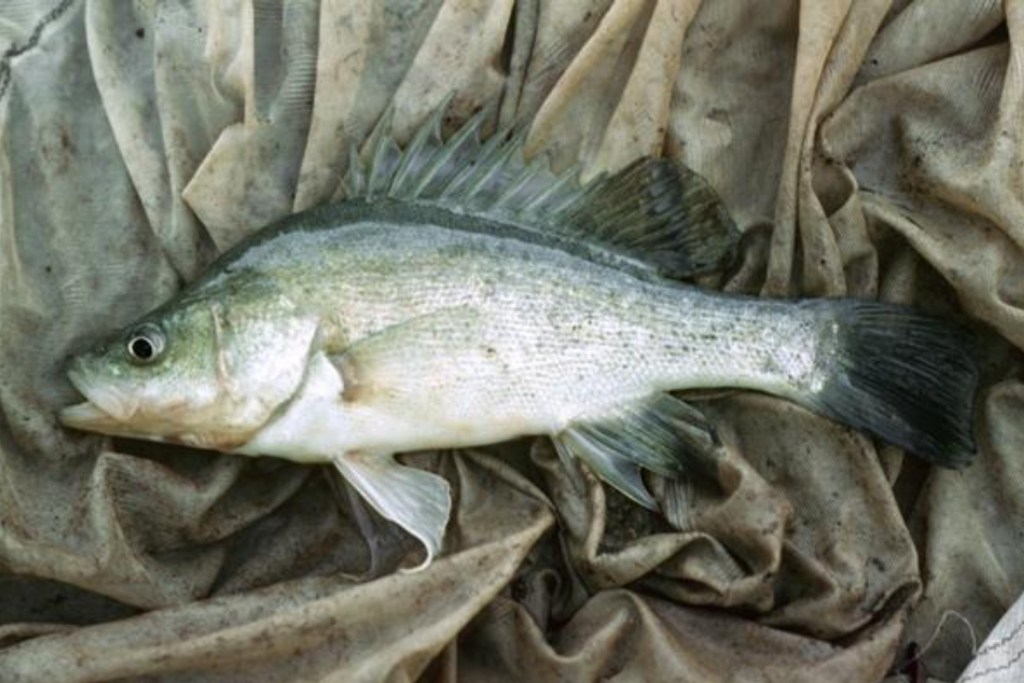
Current study system. I am currently working with four species of Australian freshwater fish: golden perch (Macquaria ambigua), Murray cod (Maccullochella peelii), Murray River rainbowfish (Melanotaenia fluviatilis), and southern pygmy perch (Nannoperca australis). These species exhibit a variety of different life history and ecological traits; I am incredibly fascinated by the amount of biodiversity hidden away in our river systems! My PhD aims to assess the ‘genomic vulnerability’ of these species to anthropogenic climate change — that is, to predict how much adaptive genetic change is needed for populations to keep up with climate change. My recent JBI paper focussed on golden perch, which is a large-bodied, socioeconomically important species. Golden perch have evolved to tolerate a broad range of hydroclimatic conditions, including the Australian arid zone where river flow is highly variable. Golden perch undergo seasonal migration and have an amazing dispersal capacity, making them ideal for studying the effects of environmental change on highly vagile freshwater species.

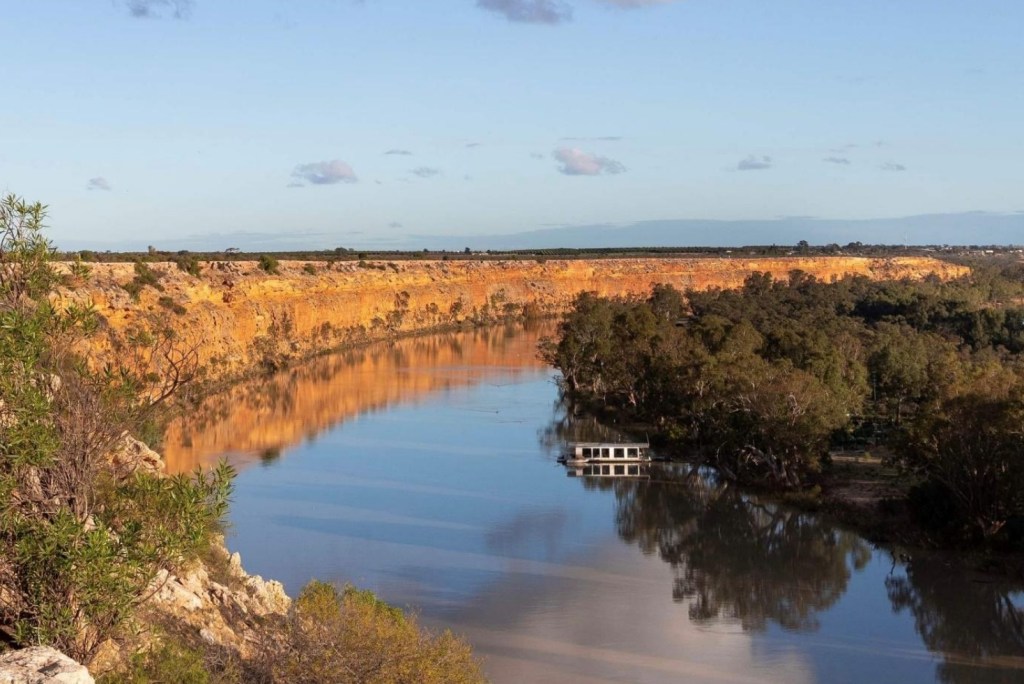
The Murray River, Australia, is home to a variety of freshwater fishes (Photo credit: Kade Storey-Byrnes).

Recent JBI paper. Booth, E. J., Sandoval-Castillo, J., Attard, C. R., Gilligan, D. M., Unmack, P. J. & Beheregaray, L. B. (2022). Aridification-driven evolution of a migratory fish revealed by niche modelling and coalescence simulations. Journal of Biogeography, 49, 1726– 1738. https://doi.org/10.1111/jbi.14337

Motivation behind this paper. This paper is derived from my Honours thesis (equivalent to a MSc thesis in several other countries). My co-authors and I wanted to understand the processes that have led to the divergence of three golden perch lineages from three different river basins. Previous research had found these lineages to be so genetically distinct that they could be considered as separate species, but further investigation was needed. Since golden perch are extensively stocked from hatcheries into rivers to support the recreational fishing industry, it is important that we clarify how many species we are dealing with! We tested the hypothesis that historical aridification of Australia during the Pleistocene caused reduced habitat connectivity between river basins and facilitated the divergence of the three lineages.

Key methodologies. A cool thing about this study is that we used two independent data sets (genomic and environmental) to investigate the biogeographic and demographic history of golden perch. We began by using genome-wide SNP data to reconstruct the phylogenetic relationship between the three major golden perch lineages. Next, we built species distribution models (SDMs) based on environmental data to estimate the contemporary and historical ranges of those lineages. The SDMs allowed us to develop hypotheses (for example, about the historical size and connectivity of populations), which we then tested using genomic-based coalescent modelling.

Unexpected challenges. The most challenging part of this research was definitely the coalescent modelling. As somebody who was brand-new to coding, it certainly took some time to get my head around how to use the program fastsimcoal. But once I got the hang of it, it was difficult to know when to stop! In the end, I tested somewhere around >30 different models. It was a good thing I had hypotheses from the SDMs to keep me on track about which scenarios to test…otherwise I would have been there forever.

Major results. Our research found phylogenetic support for the delimitation of three golden perch cryptic species, each endemic to one of three major drainage basins. We discovered that aridification of Australia during the late Pleistocene likely played a role in facilitating the divergence of these lineages. Our SDMs found that during the Last Glacial Maximum (~21 thousand years ago) the amount of suitable habitat for golden perch was extremely reduced and there was far less connectivity between drainage basins. This theory was also supported by our coalescent models, which found that population sizes were much smaller during the Last Glacial Maximum compared to the current day. It was remarkable to find such a similar signal from two independent data sets. This work strongly highlights the benefit of integrating multiple types of data and analyses to develop and test biogeographic hypotheses.

Golden perch, Macquaria ambigua (Photo credit: Peter Unmack).

Next steps for this research. The evolution of arid zone species, especially obligate freshwater organisms, is a poorly studied topic in the literature. Many Australian freshwater species exhibit cryptic diversity between drainage basins, yet little research has been done to understand how this has arisen. I would be interested to use a similar analytical framework for other taxa to determine some broader scale patterns regarding the influence of historical aridification on the evolution of Australian freshwater diversity.

If you could study any organism on Earth, what would it be? I think it isn’t so much a question of what I want to study, but where. During undergrad I fell in love with island biogeography after reading David Quammen’s book The song of the dodo. Islands provide amazing natural experiments for testing evolutionary theories, and I am fascinated by processes like adaptive radiation and body size change that frequently occur on them. It might sound cliché for a biogeographer, but I would love to study species from the Galapagos Islands. Maybe marine iguanas (Amblyrhynchus cristatus) to start with, they’re pretty cool!

ECR Feature: Raphael S. von Büren on range limits in alpine plants

Raphael S. von Büren recently completed his Masters at the University of Basel, Switzerland. He is an alpine ecologist with particular interests in the ecophysiology of plants. Raphael shares his recent work on the environmental factors influencing the range distribution of alpine plants.

(left) Portrait Raphael von Büren. Photo credit: Raphael von Büren. (right) Research in alpine environments: Raphael von Büren in his preferred habitat during field work for his master’s thesis. Background: Rhone glacier, Switzerland. (Photo credit: Raphael von Büren)

Personal links. ResearchGate

Institute. Department of Environmental Sciences, University of Basel, Basel, Switzerland; Department of Research and Monitoring, Swiss National Park, Zernez, Switzerland

Academic life stage. Masters (completed 2021).

Major research interests. Alpine plant ecology and ecophysiology, field botany, plant identification.

Current study system. Currently, I am working on several plant ecology projects in alpine ecosystems: (1) Under review is a paper where we studied the influence of earlier snowmelt on above- and belowground growth and senescence of alpine grassland. (2) I am part of the current GLORIA (GLobal Observation Research Initiative in Alpine environments) field survey campaign, a worldwide project exploring vegetation changes on mountain summits. (3) In our latest project, we examine non-native species in the Swiss National Park, a protected area in the Central Alps, to set the basis for long-term monitoring, to anticipate potential future invasions and to discuss the implications for management in an alpine wilderness area.

I am fascinated by working in remote, pristine, alpine areas with harsh environmental conditions. High topographic heterogeneity leads to a mosaic of micro-habitats on small scales, resulting in high biodiversity and a variety of adaptations to the local micro-environment.

Recent paper in JBI. von Büren, R.S. & Hiltbrunner, E. (2022) Low winter temperatures and divergent freezing resistance set the cold range limit of widespread alpine graminoids. Journal of Biogeography, 49, 1562–1575. https:// doi.org/10.1111/jbi.14455

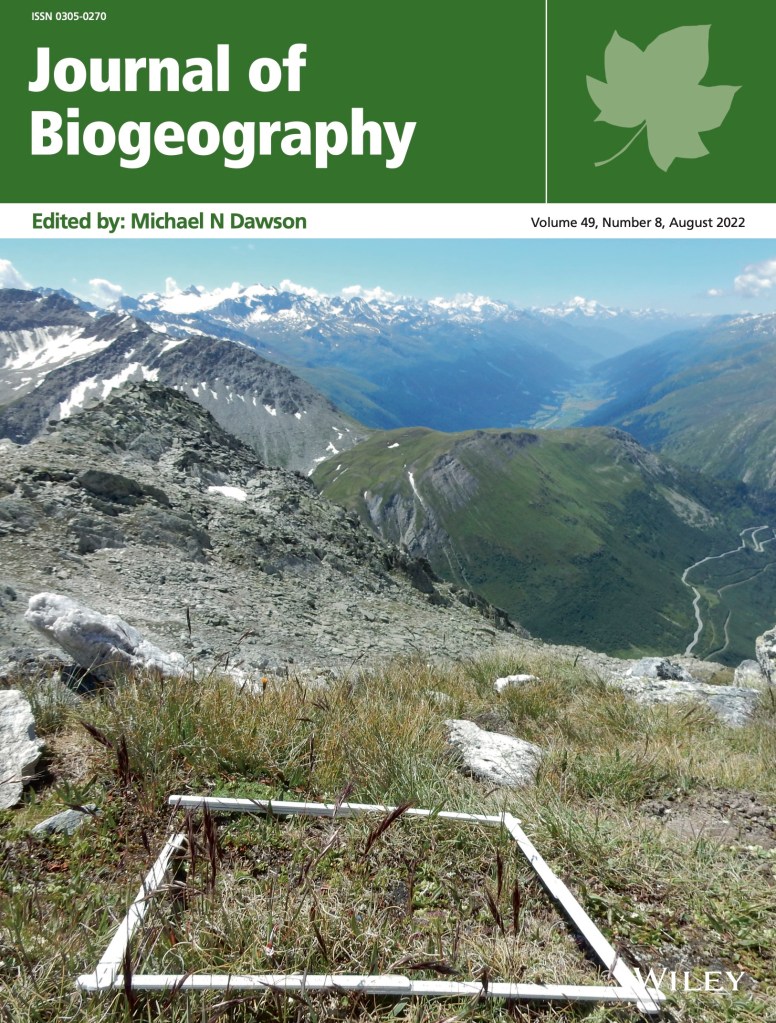
Field work. Cover Journal of Biogeography Volume 49, Issue 8. (Photo credit: Raphael von Büren)

Motivation behind this paper. Range limits of alpine plants are largely unexplored and unexplained. Studying the range limits mechanistically helps resolve the very basic ecological questions of why a certain species exists where it does, and why it is absent elsewhere. Understanding where the edges of an organism’s fundamental niche lie is essential for extrapolating its future distribution under changing conditions. Multidisciplinary approaches are needed that combine micro-climatology with plant ecophysiology at a high spatio-temporal resolution, focusing on the actual life conditions of alpine plants in situ.

Key methodologies. In an alpine grassland in the Swiss Alps, we selected 115 microsites (40×40 cm) within a 2 km radius that spanned a diversity of micro-climatic conditions. At each microsite, we assessed soil temperature 3 cm below ground, closest to the plant meristems, year-round with small temperature loggers and derived snow cover duration and thermal conditions from these data. Additionally, we determined soil chemistry and moisture, as well as vegetation characteristics (species composition, Landolt indicator values). Field data were combined with various freezing resistance analyses (electrolyte leakage, tetrazolium vital staining, regrowth capability) in individuals of the two most abundant alpine graminoids on acidic soils in the European Alps (Carex curvula, Nardus stricta) at 38 microsites by employing mixed regression models. Our approach allowed us to address where (field data) and why (freezing analyses) these graminoids occur or are absent. To our best knowledge, our study is the first to provide a mechanistic explanation of the cold range limit of alpine plant species.

Major results. The study demonstrates that low soil temperature extremes (freezing stress) during winter set the range limit of widespread alpine graminoids, and not the gradual action of temperature on growth and development (like it is the case for the treeline). This contrasts the common assumption that freezing resistance during the growing season is critical for plant species distribution. As clonal alpine plant species are very long-lived, a single clear, cold night without snow may set the scene for centuries. Understanding the edges of the fundamental niche is essential to extrapolate the current occurrence of a species to novel situations under climate change.

High micro-habitat diversity due to topography driven snowmelt pattern in the study area. Timelapse movie 2018. (Photo credit: Raphael von Büren, Erika Hiltbrunner)

Unexpected outcomes and challenges. Air temperatures extrapolated from weather stations do not accurately reflect the micro-climatic conditions alpine plant species are embedded in. Therefore, we measured soil temperature at high spatio-temporal resolution in situ to base our findings on ground-truth thermal conditions.

A common challenge in alpine environments is the limited accessibility of the study region in winter due to high avalanche risk. Hence, the freezing resistance was assessed throughout the growing season but not in winter. Taking away the insulating snowpack to access plant material in winter may also induce unwarranted plant responses.

Evaluating foliar freezing resistance in alpine graminoid species is demanding, because the leaves are often very narrow, and cell damages induced by frost injury are not clearly visible as tissue discolouration and necrosis. We employed an electrolyte leakage method with a miniaturized conductivity cell, which enabled us to reduce the water volume for leaking in order to gain high precision for detecting cell damages.

Next steps. As a next step, I propose to explore cold range limits of other alpine graminoid species, using the same methodology we used in our recent paper. Not only to resolve the very fundamental ecological question, why species occur where they do and why they are absent at other places; but also to explore my hypothesis that only some graminoid species reach the upper alpine grassline (restricted by the gradual action of temperature, in analogy to the treeline) and other graminoid species (which do not reach the grassline, e.g., Nardus stricta) are restricted by temperature extremes and freezing resistance (see Bürli et al. 2021, Alpine Botany; Körner 2021, Trends in Ecology & Evolution).

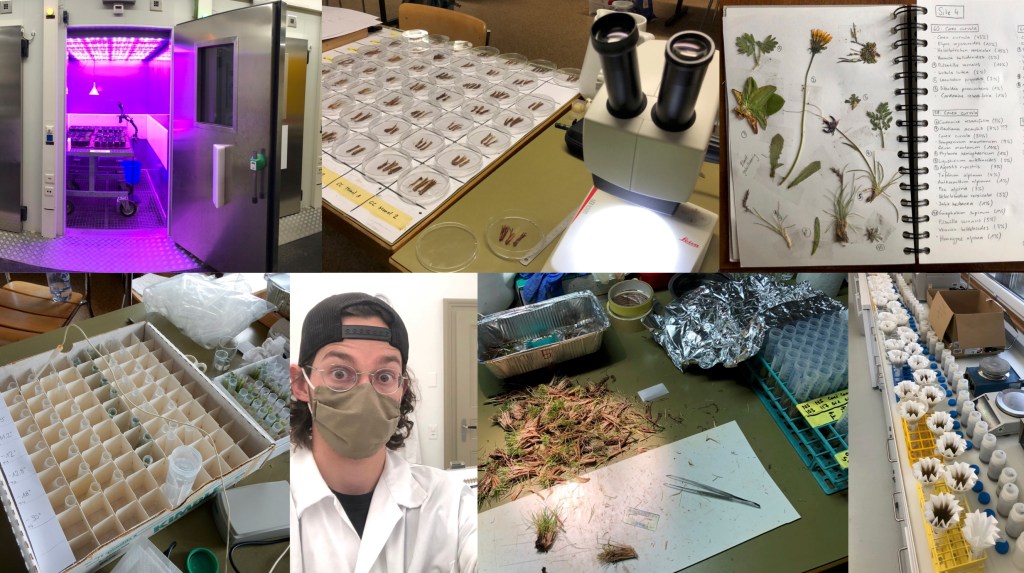
Lab work. (Photo credit: Raphael von Büren)

If you could study any organism on Earth, what would it be? I am interested in general ecological patterns. Therefore, I prefer studies with multiple species. My favourite taxa are vascular plants, or more generally, sessile organisms. It is fascinating to explore the various adaptations that these species have evolved to cope with diverse environments, given their sedentary lifestyle. Expertise in field botany and vegetation ecology enables the “reading” of landscapes. That is, by simply looking at the species composition, one can infer the environmental conditions at a location. In topographically rich alpine environments, steep micro-habitat gradients lead to different plant communities within a few meters only.

Anything else to share? The recent study in Journal of Biogeography represents a condensed piece of my master’s thesis. I conducted most of the fieldwork in summer 2020 close to the Furka pass in the Swiss Central Alps at 2200-2800 m asl. Fieldwork in remote alpine regions requires quite a bit of planning and the cooperation of people with good team spirit is of great importance. I was part of a research team that was working on various ecological projects. We spent 4 months at the Alpine Research Station Furka (ALPFOR, http://www.alpfor.ch), giving up the comforts of home for the sake of science. After this intense time of sharing almost everything, helping each other with field and lab work, surviving harsh weather conditions and being snowed in, cooking together, and having inspiring discussions, it only remains for me to express my appreciation to the entire team, and in particular to Erika Hiltbrunner, Christian Körner and Patrick Möhl. Thank you, folks!

Danish island biogeography

Danish islands help to disentangle how plant dispersal characteristics shape species richness patterns.

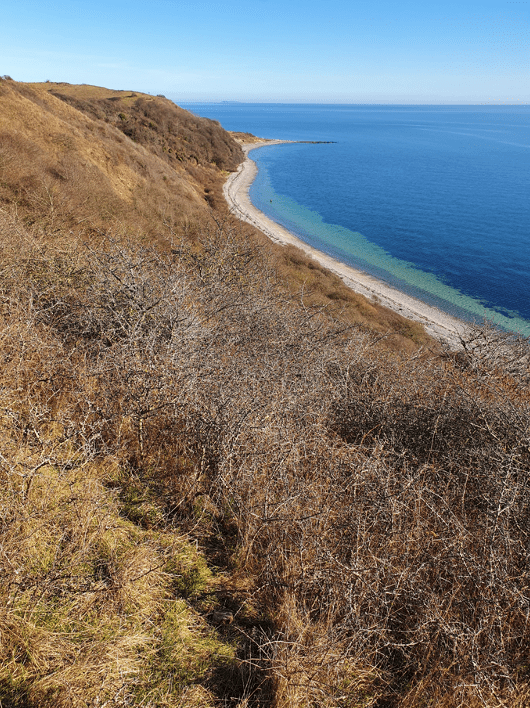
Above: The Danish coastline with the island Hjelm in the background. © Anders Sanchez Barfod.

Suppose you hear the names Galapagos, Hawaiian or Canary Islands. In that case, I am sure you have a picture in mind right away. These islands are well known in general and very popular in island biogeography. We have seen pictures and documentaries or read evolutionary and ecological studies about these islands. But have you every head of islands like Anholt, Egholm, Fur or Hjelm? These are islands scattered along the Danish coast, and I would like to convince you that such islands have great potential to help us solve pending questions in island biogeography.

Editors’ Choice article: (Free to read online for two years.)
Walentowitz, A., Troiano, C., Christiansen, J. B., Steinbauer, M. J., & Barfod, A. S. (2022). Plant dispersal characteristics shape the relationship of diversity with area and isolation. Journal of Biogeography, 49, 1599–1608. https://doi.org/10.1111/jbi.14454

Denmark has more than 1400 immensely diverse islands. Some are home to Danes while others are uninhabited; they are located in the North Sea, Baltic Sea or in bights and fjords and differ in size. My co-authors Prof. Dr Manuel Steinbauer (University of Bayreuth) and Assoc. Prof. Dr Anders Sanchez Barfod (Aarhus University) were intrigued by these islands and their flora. They raised the question: can the way plants disperse to islands help explain the species richness patterns on these islands?

Indeed, they can. For example, a plant like the common oak tree (Quercus robur) has heavy acorns dispersed by mammals or birds (zoochore dispersal). The chances are high for an acorn to reach and get established on a larger island. The transporting animal was looking for a spot with enough resources for survival and therefore decided to head for a larger island. For plants dispersed by water (hydrochore dispersal) like the common cordgrass (Spartina anglica), chances are high that these are adapted to habitats associated with coastal areas. Now simple mathematics can help to explain why larger islands have proportionally fewer hydrochore plant species than smaller islands: If the coastline doubles, island area roughly quadruples.

It was most astonishing to unveil such relationships between plant dispersal and island characteristics despite the human impact on plant communities on Danish islands for centuries. These patterns seem so fundamental and robust that anthropogenic encroachment could not overwrite them. However, if we additionally include human impact in our models, we can explain plant species diversity on islands even better.

While working with Danish Islands, I was highly impressed by two former botanists and scientists, who massively shaped this study, although I never had the chance to meet them. Eric Wessberg was a Danish botanist who inventoried numerous islands jointly with his team. His plant records built the baseline of our study. Such data are essential for the studies we conduct as island biogeographers. I was also profoundly impressed by the theories and thoughts developed by Alvar Palmgren, a Finnish botanist who lived from the late 19th until the mid-20th century. Back in his day, he developed first thoughts on how plant dispersal characteristics shape richness patterns on islands long before the discipline of island biogeography was established. Alvar Palmgren seems to suffer a bit from what I call the “Alfred Russel Wallace syndrome”, as his genius work is little remembered. Alfred Russel Wallace developed theories about evolution at the same time as Charles Darwin. Still, his counterpart is better known to be the founder of evolutionary biology. With our study, we hope to not only put Danish islands onto the map of island biogeographical research but also value the work of Eric Wessberg and Alvar Palmgren.

I learned from this study that numerous islands are out there whose potential for island biogeography has not been explored yet. We should continue to be on the lookout for such islands that help answer questions on how island biodiversity is being shaped by natural and anthropogenic forces.

Written by:
Anna Walentowitz, M.Sc., PhD candidate
University of Bayreuth
Department of Biogeography
Universitaetsstrasse 30 95447 Bayreuth

Additional information:
Twitter: https://twitter.com/ArchipelagoAnna

ECR Feature: Nicky Lustenhouwer on niche shifts in invasive plants

Nicky Lustenhouwer is a postdoc at the University of Aberdeen. She is an evolutionary ecologist interested in range expansions and invasive organisms. Nicky shares her recent work on the relative roles of climate change tracking versus niche evolution in the spread of an invasive weed.

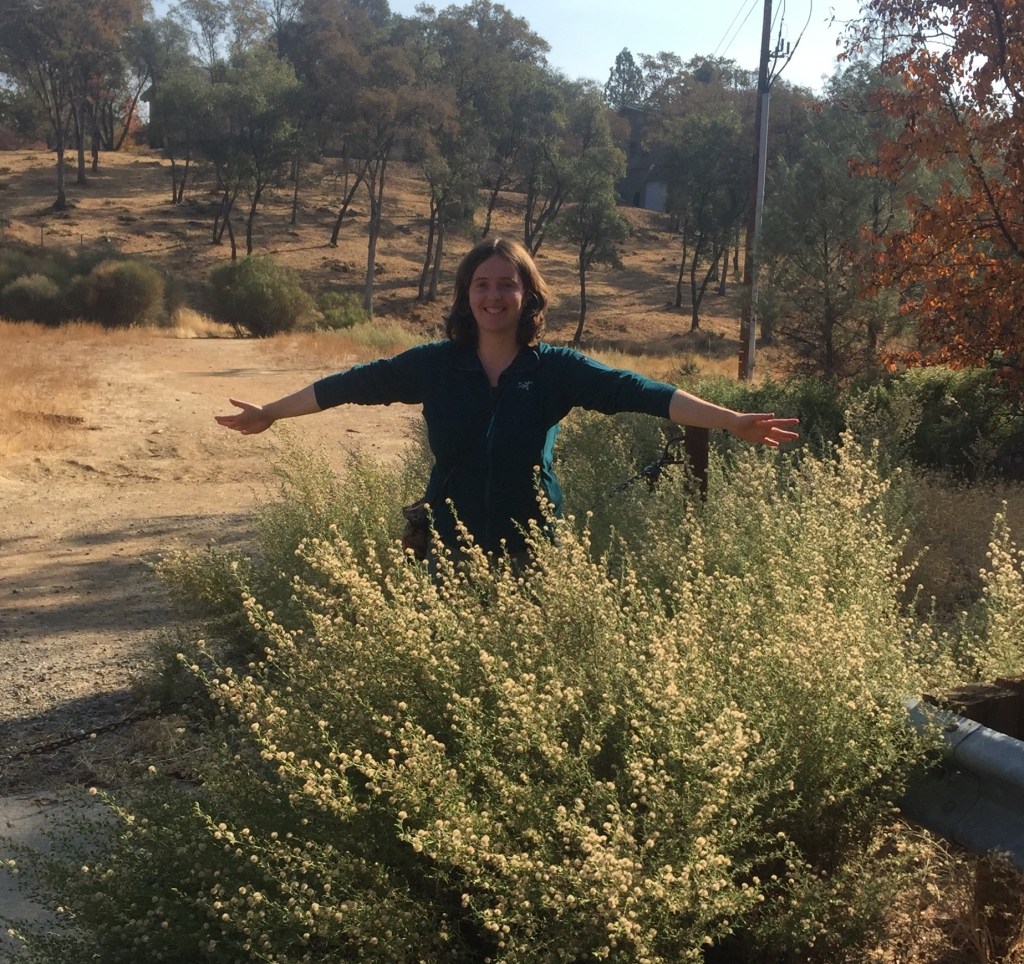
Nicky Lustenhouwer with a particularly large individual of Dittrichia graveolens during fieldwork collecting seeds in California. (photo credit: Nicky Lustenhouwer)

Personal links. Scholar | Twitter | Github

Institute. School of Biological Sciences, University of Aberdeen, UK

Academic life stage. Postdoc

Research themes. Evolutionary ecology, range shifts, invasions, population spread

Current study system. I am currently studying the blue-tailed damselfly, Ischnura elegans, which is rapidly shifting its native range northward with climate change. A decade of previous work has shown all kinds of interesting evolutionary changes that have happened during this range shift in Sweden and Scotland, including changes in thermal tolerance, dispersal, and female morph frequencies. The aim of my current postdoc is to expand on this work with two new transects in Norway and Finland, so we can study how evolution varies along four parallel transects. I just returned from 7 weeks of exciting fieldwork travelling from pond to pond in Scandinavia.

Recent paper in JBI. Lustenhouwer, N. & Parker, I.M. 2022. Beyond tracking climate: Niche shifts during native range expansion and their implications for novel invasions. Journal of Biogeography. 10.1111/jbi.14395

Motivation behind this paper. This paper was part of my previous postdoc at the University of California, Santa Cruz, where I was studying the Mediterranean annual plant Dittrichia graveolens. This is a fascinating species because it is currently both expanding its European native range very rapidly, and invading several other continents, including California where it is considered a noxious weed. I had previously found that the native range shift of D. graveolens was promoted by rapid evolution of earlier flowering time (the species produces seeds in autumn and is constrained by the end of the growing season in the north). I was therefore really interested to ask whether this range shift was simply tracking climate change, or if the climate niche had shifted along the way, allowing for further range expansion. And if that was the case, how would this change our risk assessment of climatic areas that may be invaded elsewhere?

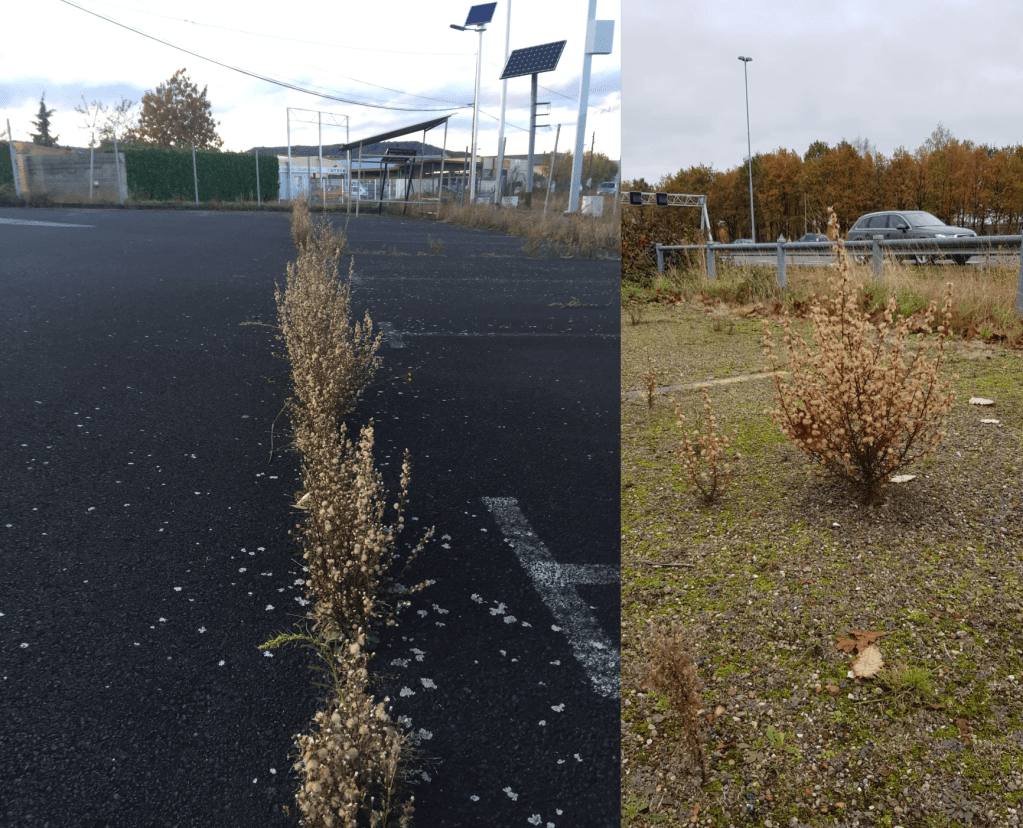
[left] Dittrichia graveolens is a typical ruderal plant and can be found in any kind of disturbed environment, like this crack in the pavement in its native range in southern France. [right] Highways are key range expansion corridors for Dittrichia graveolens, as shown here at the northern range limit in the Netherlands. (photo credit: Nicky Lustenhouwer)

Key methods. We collected occurrence data for Dittrichia graveolens across its native range in Eurasia and in two invaded ranges in California and Australia. We used these data to quantify the climate niche in both environmental space (using the COUE framework of niche centroid shift, overlap, unfilling and expansion) and in geographic space (using MaxEnt). A key step was to reconstruct the historic native range limit pre-expansion (1901-1930) using old maps and records. This allowed us to model the climate niche based on the historic range and climate, and then project it forward to the present (1990-2019) to see what the expected range shift would be when tracking climate change, and how this matched the observed current distribution of the species. We also modelled how D. graveolens’ climate niche changed over the course of the native range expansion. Finally, we used this information to ask which areas of California and Australia may be at risk of invasion if similar niche shifts were to occur in the exotic range.

Major results. We found that the native range expansion of D. graveolens in Europe went well beyond expectations based on tracking climate change alone, accompanied by a 5% niche expansion into more temperate climates over the course of this range shift. In contrast, the two invasions were still confined to climatic areas predicted by the historic native niche only, showing niche conservatism. This was especially surprising in Australia, where D. graveolens has been present for nearly 150 years. Our results highlight that niche shifts are not necessarily most common during invasions, which is where they have historically received most attention in the literature. They can also play an important role during native range shifts induced by climate change, with important consequences for the location of the new range limit.

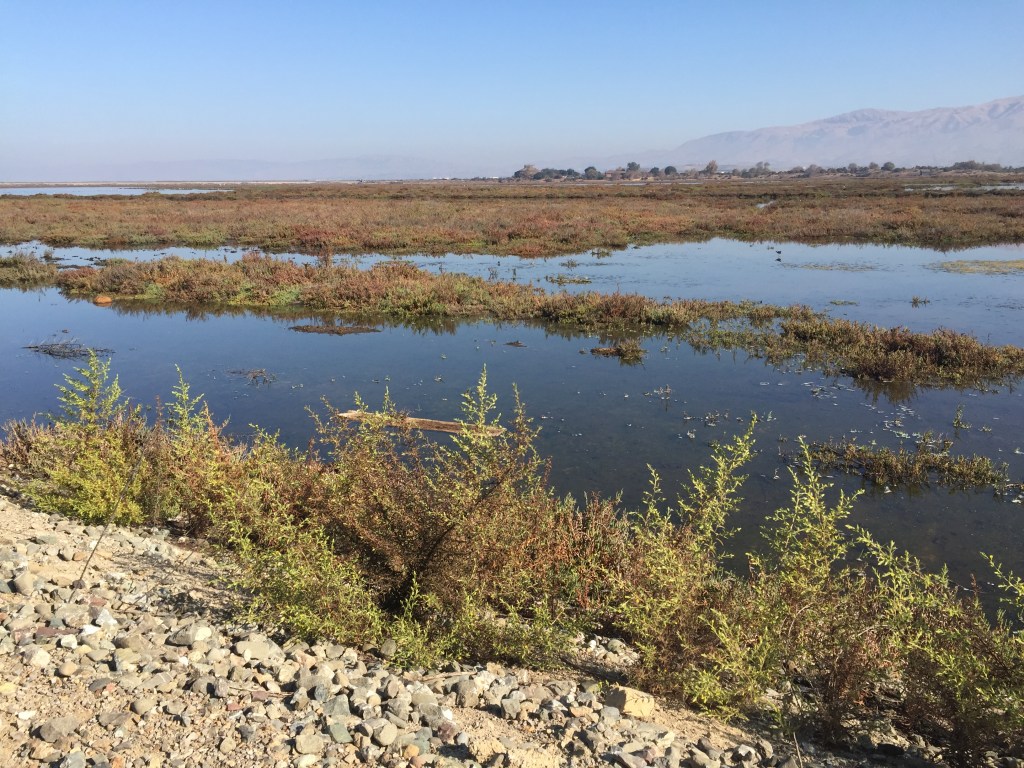
Dittrichia graveolens growing at the edge of a salt marsh where the species was first observed in California (Alviso). (photo credit: Nicky Lustenhouwer)

Unexpected challenges. Our biggest challenge was dealing with the geographic bias in species occurrence records that are readily available, a very familiar problem in niche modelling. One way we mitigated this issue (apart from accounting for it in our models as much as possible) was by investing a lot of time in collecting extra occurrence records in under-sampled areas, from all kinds of data sources such as small botanical journals in local languages, old floras that the library had shipped over for me, and local databases. In the end about a quarter of our data points came from outside the Global Biodiversity Information Facility (GBIF – the major database for open biodiversity data). What I enjoyed most was directly contacting local experts in countries where we had minimal data, and these local experts provided a wealth of interesting anecdotes about their experience with this species in its recently expanded range.

Next steps. I will continue to collaborate with my colleagues in Santa Cruz, as we are writing up a series of greenhouse experiments and genomics work to investigate evolutionary changes during both the native range expansion of D. graveolens and the invasion in California. I am very excited to be able to compare a native and exotic range expansion scenario in the same species but against different backgrounds of genetic diversity, gene flow from the historic native range, and environmental gradients. We are for example studying how plant height, seed traits, and phenology shift from core to edge in each range.

If you could study any organism on Earth, what would it be? A plant that grows somewhere beautiful, like an arctic species – everyone always makes fun of me for picking study organisms that thrive in the most human-disturbed environments (both Dittrichia and Ischnura elegans do). During my PhD in Switzerland, I spent all my time on highway parking lots instead of in alpine meadows!

A freshwater wall in the Atlantic

The central role of the Amazon River in the evolution of Western Atlantic reef fishes.

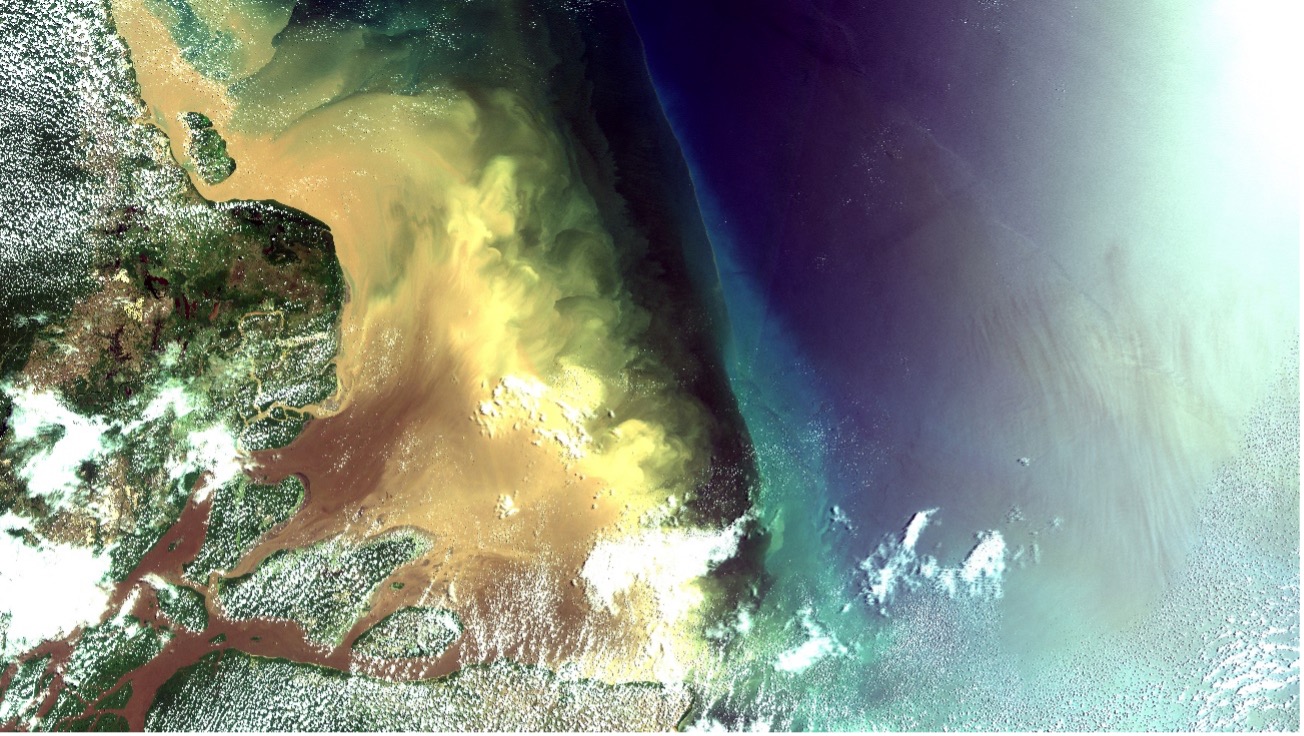
Above: Amazon River mouth, where the plume of freshwater and sediment reaches the Atlantic Ocean. Photo by Coordenação-Geral de Observação da Terra/INPE.

The magnitude of the Amazon River, by far the largest river of the world, can be illustrated by its mean annual water discharge – 2.5 times greater than the combined discharges of the world’s second and third largest rivers (Congo and Orinoco rivers, respectively). Actually, the 300 million liters released by the Amazon River every second in the northern portion of South America represent about 20% of the freshwater input of all rivers of the world into the ocean. The amount of freshwater and sediments is so impressive that the physicochemical properties of a huge area of the Atlantic are modified, forming the most important biogeographic filter responsible for the faunal discontinuity between the Caribbean and Brazilian Provinces – the Amazon-Orinoco plume, which is an extensive layer of fresh muddy water about 30 meters deep that extends for about 200 km into the sea.

Editors’ choice article: (Free to read online for two years.)
Araujo, G. S., Rocha, L. A., Lastrucci, N. S., Luiz, O. J., Di Dario, F., & Floeter, S. R. (2022). The Amazon-Orinoco Barrier as a driver of reef-fish speciation in the Western Atlantic through time. Journal of Biogeography, 49, 1407-1419. https://doi.org/10.1111/jbi.14398 

The effectiveness of the Amazon-Orinoco plume as a biogeographic barrier varied over time according to sea-level height: during high sea-level stands, like in modern times, the less dense freshwater plume floats high above salt water on the continental shelf, allowing marine organisms to use the relatively extensive “normal” marine layer below the plume as a corridor between the Caribbean and Brazilian provinces. However, during low sea-level periods in geological time, the continental shelf is shallower, and as a consequence this corridor is practically closed by the huge freshwater plume. It has been proposed that adult body size of fishes is important for the ability to cross the Amazon-Orinoco barrier today. However, the Amazon River has a very long and complex history, and just about 9.4 million years ago the amount of freshwater and sediment discharge in the Atlantic was much lower (about 24 times) than what we see today.

With that in mind, the question we addressed in this paper is: considering the evolution of the Amazon River itself and the dramatic increase in freshwater and sediment discharge throughout its history, what is the influence of the Amazon-Orinoco Barrier on the diversification of the Western Atlantic reef fish fauna over time?

Our results revealed a complex and dynamic barrier with temporally variable permeability. Almost all the cladogenetic events addressed in our meta-analysis that resulted in sister species or populations of reef fishes in the Caribbean and Brazilian Provinces can be associated with the emergence and development of the Amazon-Orinoco barrier. This panorama suggests that the Amazon River was likely the main promoter of diversification between the reef fish fauna of the Caribbean and Brazil. In other words, the main possible driver of speciation of marine species in the Western Atlantic was a river.

The results indicate that the maximum total length of ancestral populations of reef fishes was also a decisive feature in the ability to overcome the Amazon-Orinoco Barrier in the past, as it is nowadays. We observed a strong correlation between body size and dates of cladogenesis, with smaller body sizes primarily associated with older cladogenetic events. Older speciation events appear to be probably more associated with the onset and early development of the plume itself rather than with fluctuations in sea level, since only milder variations of sea level occurred between the Middle Miocene and early Pleistocene.


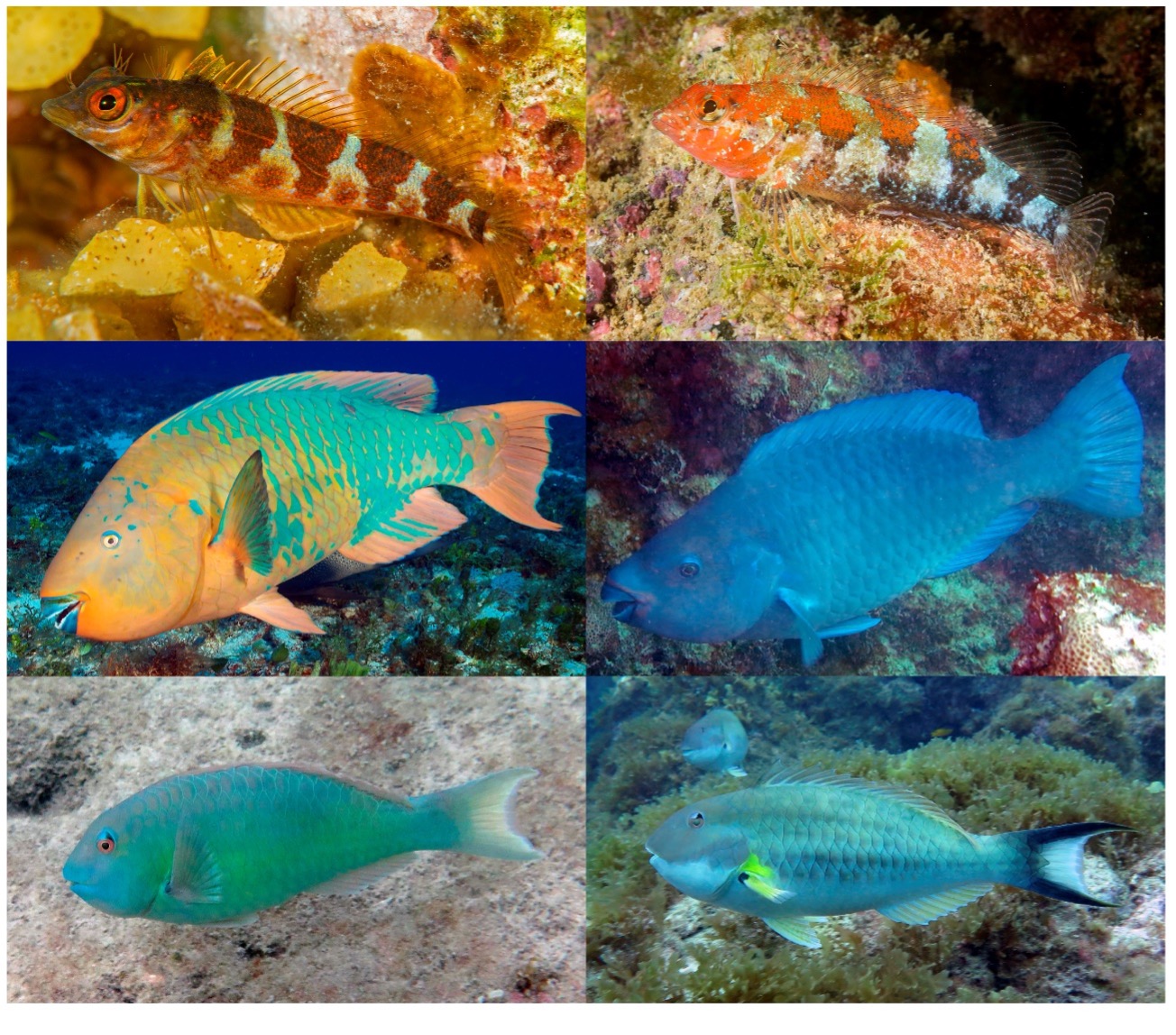
Examples of sister fish species found in Caribbean reefs (left bar) and Brazilian (right bar): first line: saddled blenny Malacoctenus triangulatus and rusty scaly blenny Malacoctenus zaluari, second: rainbow parrotfish Scarus guacamaia and greenbeak parrotfish Scarus trispinosus, third: redfin parrotfish Sparisoma rubripinne and gray parrotfish Sparisoma axillare. Photos by F. Krasovec, J.P. Krajewski, J. Lyle, C. Sampaio, and S.R. Floeter.

In the last 2.4 million years, the plume has become a more formidable barrier. More than half of the cladogenetic events detected in our study occurred only in this time-period, which is characterized by higher sedimentation rates and greater sea-level fluctuations. Of the 31 cladogenetic events recorded in the last 2.4 million years, 13 involved species larger than 50 cm, in contrast to only two events with species of similar sizes in the previous 7 million years. It seems therefore that these two factors together, higher sedimentation rates and greater sea-level fluctuations, fostered the isolation capacity of the Amazon-Orinoco plume, to the point that now if affects populations of larger fishes by restricting their dispersal ability, and therefore contributing to the differentiation of populations on both sides of the barrier.

Our data also revealed a substantial number of possible cryptic species still nor formally recognized as such. Surprisingly, 20% of the species addressed in the study that are reported to occur on both sides of the Amazon-Orinoco barrier have populations that are genetically distinct at the species level. We can therefore conjecture that there is still a surprisingly large hidden diversity of reef fishes awaiting formal recognition in the Caribbean and Brazilian provinces, despite recent advances in the taxonomy of western Atlantic fishes in general.

The importance of the Amazon-Orinoco plume as a biogeographic barrier began to be noticed in the 1970’s. Nearly half a century of research has shed light on the significant influence of the Amazon River on the marine environment. Despite recent advances, there is still a considerable lack of data on the distribution, taxonomy, and other basic aspects of the biology of Western Atlantic reef fish communities, especially in the Brazilian Province. The uniqueness of the Amazon plume region goes far beyond its role as a biogeographic barrier and main driver of diversity in the Western Atlantic over the last 9.4 million years. This region has a magnificent mesophotic reef system adapted to life under the influence of the plume, the Great Amazon Reef System. Today, we know only about 5% of this outstanding ecosystem, which is seriously threatened by the prospection and eventual exploitation of oil. Therefore, we draw attention to the urgent need for broad baseline studies to better know and preserve this fascinating and unique region of the world’s ocean.

Written by:
Gabriel Soares Araujo (1) & Fabio Di Dario (2)
1. PhD candidate, Programa de Pós-Graduação em Ciências Ambientais e Conservação, Universidade Federal do Rio de Janeiro, Instituto de Biodiversidade e Sustentabilidade – NUPEM/UFRJ, Macaé, Rio de Janeiro, Brazil.
2. Associate Professor, Universidade Federal do Rio de Janeiro, Instituto de Biodiversidade e Sustentabilidade – NUPEM/UFRJ, Macaé, Rio de Janeiro, Brazil

Additional information:
@SergioFloeter
@CoralReefFish

ECR Feature: Tom Radomski on the Rapoport Effect in North American salamanders

Tom Radomski is a PhD candidate at the University of Minnesota. He is a biogeographer with an interest in the range size and limits of salamanders. Tom shares his recent work on the “Rapoport Effect” in North American salamanders.

Tom Radomski

Personal links. Twitter.

Institute. University of Minnesota.

Academic life stage. PhD candidate.

Major research themes. Geographic Range Size, Geographic Range Limits, Salamanders.

Current study system. I work on salamanders in eastern North America. I don’t have a deep reason for why – as Marge Simpson once said, “I just think they’re neat.” That said, two things that make many salamanders interesting for biogeography is that they have weird ecophysiological properties and they are very dispersal limited. For the former, they exclusively breathe through their skin while simultaneously maintaining water balance through the skin, which creates a complicated problem with interesting solutions. For the latter, dispersal-limitation leads to interesting patterns where suitable habitat is inaccessible, even when it’s relatively close in geographic space.

Recent paper in JBI. Radomski, T., Kuchta, S. R., & Kozak, K. H. (2022). Post‐Pleistocene dispersal explains the Rapoport effect in North American salamanders. Journal of Biogeography49(6), 1048-1060. https://doi.org/10.1111/jbi.14361

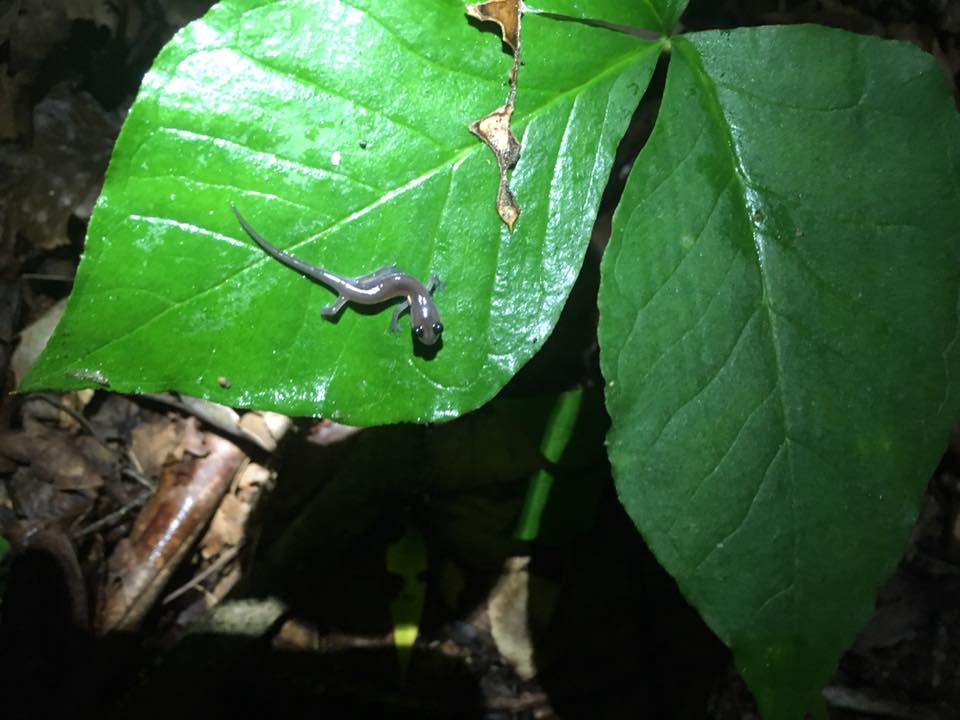
A baby South Mountains Gray-cheeked Salamander (Plethodon meridianus).

Motivation behind this work. During my master’s work with Shawn Kuchta at Ohio University, we found that two northern mitochondrial clades within the Eastern Red-backed Salamander (Plethodon cinereus) had huge geographic distributions, while further south, mitochondrial clades within the same species had much smaller distributions. We interpreted this as recent post-glacial range expansion in the two northern clades. When I looked up other published phylogeographic studies on salamanders of North America, the same thing appeared. This was reminiscent of a pattern called a ‘Rapoport effect’, in which species further from the equator tend to have larger geographic distributions. It seemed intuitive that if post-glacial range expansion could result in intraspecific mitochondrial clades with large geographic distributions, then maybe it could explain the same pattern across entire species. I wanted to evaluate this expectation by examining the ranges of 169 temperate North American salamander species.

Key methodologies. Our test of the hypothesis that post-glacial range expansion contributes to variation in species’ range size was done in two parts.

First, we used range maps to demonstrate that there is a Rapoport effect in North American salamanders. In other words, we asked if species’ range sizes get bigger the further North they are. Then we did a few unusual things. We removed parts of species’ ranges that are in post-glacial areas and found that this weakened the Rapoport effect (i.e., weaker correlation between range size and latitude). This supported our hypothesis that post-glacial colonization was important for forming a Rapoport effect in North American salamanders.

Second, we built ecological niche models for species that live far south of glacial areas and projected the models to northern post-glacial areas. Ecological niche models take data about the locations in which a species occurs and the environment at those locations, and then produces an estimate of where suitable habitat for the species is located. Basically, we asked if species with small distributions could be distributed more broadly than we observe in nature. This fit our hypothesis that species’ range sizes are constrained by the ability of species to access suitable habitat, which in our case was the availability of post-glacial areas.

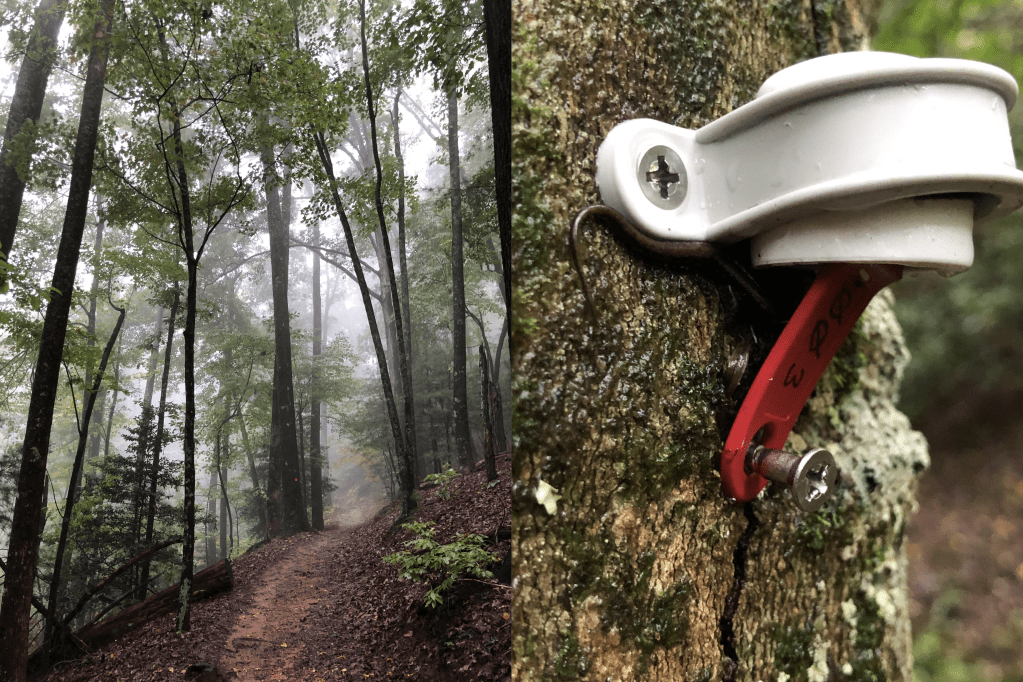
Photos from the field. (Left) “While checking temperature sensors in South Mountains State Park, North Carolina, some low clouds rolled into forest”. (Right) “While I was getting data from a temperature sensor, I found a Dusky salamander taking refuge. I like to think it was my field assistant that day.” – Tom Radomski.

Major results. There are many studies on Rapoport effects that (1) test for the correlation of range size and latitude or (2) try to understand range size as a function of climate. However, our angle was different in that we focused on postglacial range expansion. A few previous researchers have found evidence for post-glacial range expansion being an important contributor to Rapoport effects. However, that body of research was smaller than I had expected. Our work therefore highlighted the potential importance of post-glacial range expansion and available habitat in determining current range sizes.

Unexpected outcomes. We found that post-glacial colonization was a much bigger factor in shaping range size for salamanders in eastern North America than in western North America. We think this has to do with the more complex topography of western North America and the steep aridity gradients as one goes further inland.

Next steps? There is a great review in which the authors claimed that research on Rapoport effects was over (Gaston et al. 1998). Despite that review, work on Rapoport effects has increased tremendously over time. I’d like to synthesize some ideas about Rapoport effects – particularly what they do and do not mean. Rapoport effects are typically ascribed to be the result of climatic tolerance (i.e., poleward species are climatic generalists so they should have large ranges). But there are a lot of other reasons they could appear. I’ve argued post-glacial range dispersal, but also the relative amount of different habitat types is probably important, as well as legacies of speciation and extinction.

If you could study any organism on Earth, what would it be? That’s an easy one: salamanders.

ECR feature: Marco Camaiti on the morphology and ecology of skink lizards

Marco Camaiti is a PhD student at the Monash University in Australia. He is a herpetologist interested in the evolution of vertebrate diversity. Here, Marco shares his recent work on limb reduction and loss in skink lizards.

Marco Camaiti during fieldwork in Australia.

Personal links. Twitter

Institute. School of Biological Sciences, Monash University, Australia

Academic life stage. PhD

Major research themes. Herpetology; Vertebrate morphology; Ecomorphology; Osteology; CT-scanning

Current study system. I work with one of the largest groups of lizards: skinks. They are exceptional among tetrapods as they evolved short-limbed and elongated forms several times independently. Understanding how they underwent such dramatic shifts in body shapes, and what caused them to happen so often may provide interesting insights into the inner mechanisms of evolution. What makes them a compelling model system is also the significant variability in these forms in terms of body shapes, from fully limbed to limbless, with intermediate forms in between, plus the wide range of environments they inhabit, from the forest floor to desert sands.

Recent JBI paper. Camaiti, M., Evans, A. R., Hipsley, C. A., Hutchinson, M. N., Meiri, S., Anderson, R. O., Slavenko, A., & Chapple, D. G. (2022). A database of the morphology, ecology and literature of the world’s limb‐reduced skinks. Journal of Biogeography, 49(7), 1397-1406. https://doi.org/10.1111/jbi.14392

Motivation behind this paper. More and more, researchers rely on large datasets to analyse evolutionary trends in biodiversity. Thus, as a part of our investigation on limb reduction in skinks (our model system), we constructed a database on the body shapes of these lizards including data for all worldwide species that could be identified as limb-reduced, as well as their close relatives. Another motivation behind this work was to conduct the first comprehensive census of Scincidae – the skink family – to understand how many species and genera had undergone limb reduction, as well as how they are geographically distributed compared with fully-limbed species.

Key methodologies. We collected data on body shape and ecology for 606 species of limb-reduced skinks and their congeners (those belonging to the same genera) based on the existing literature (around 800 published works), spanning over 150 years. To process species’ body shapes, we averaged data on linear body measurements as a function of body size, as well as including digit counts and numbers of presacral vertebrae. As limb-reduced species, we considered those with forelimbs ≤15% of their body length and/or hind-limbs ≤20% of their body length; as limbless, those with lacking limbs; and fully limbed, those with higher limb proportions. To process species’ ecology, we included a broad habitat categorisation based on species’ preferred soil type. Finally, to validate the utility of the dataset, we reconstructed the number of independent events of limb reduction and loss in skinks by mapping them on a phylogeny.

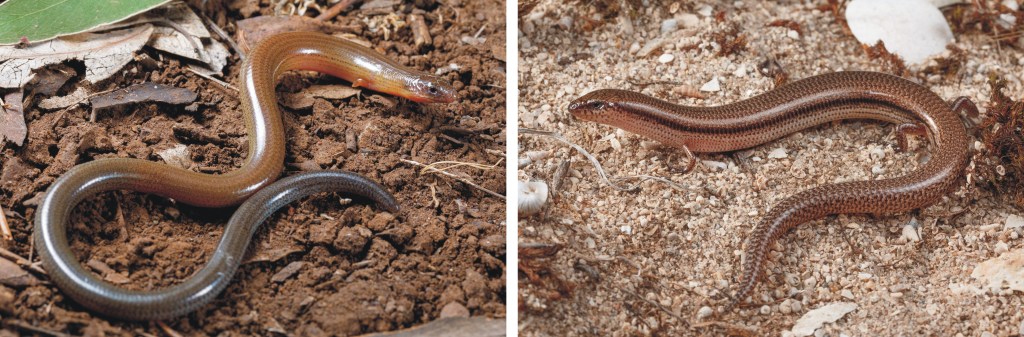
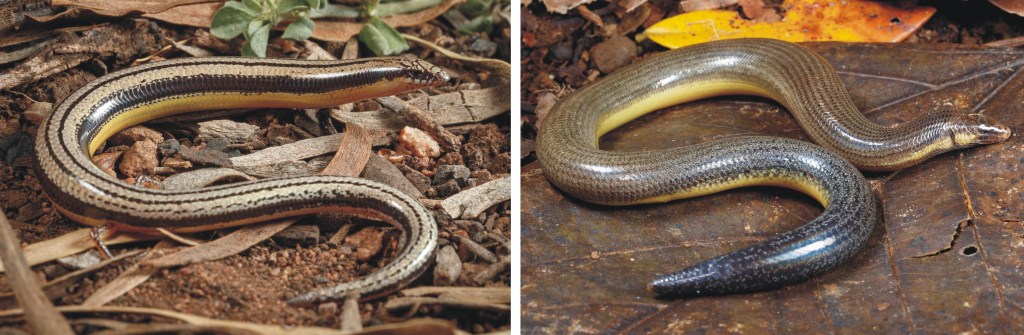
Anomalopus leuckartii (left) and Lerista terdigitata (right), two limb-reduced skinks from Australia (Credits: Jules Farquhar).

Unexpected challenges. A first major challenge was sourcing and obtaining our data. This process was a massive endeavour that took more than two years to complete, given the large number and variety of sources. For example, many head length measurements were obtained directly from scaled figures in species description papers, as they were not mentioned in the text. Another obstacle we faced was compounding data from very different sources, languages, times, and units of measurement. For instance, some papers were in German, French, Italian, or even Latin. Due to how old some sources were, the units of measurement could be quite antiquated, and we had to convert quite a few measurements from the Prussian zoll or the French ligne into centimeters.

Major results. We provide a readily-available collection of data on the body shapes of skink lizards, which has a massive potential to contribute to the study of evolutionary processes based on dramatic shifts in morphology. Our data evidences an unequivocal quantification of the sheer abundance and variety of limb reduction in skinks. Based on our new definition of limb reduction (based on limb proportions instead of digit numbers), we establish that more than 20% of all skink species are limb-reduced or limbless. Our analyses demonstrate that limb reduction evolved independently an astounding number of times in skinks (53 or more), and that loss of both pairs of limbs was also recurrent (at least 24 times). These findings bring skinks into the pole-position among lizards in terms of the number of independent transitions to limb reduction.

Lerista edwardsae, a limb-reduced skink with hindlimbs only (left), and Coeranoscincus frontalis, a limbless skink (right), from Australia (Credits: Jules Farquhar).

Next steps for this research. We are investigating the patterns of limb reduction in skinks, as well as their environmental drivers, using the previously compiled dataset. As most of these skinks are fossorial (they burrow in the soil), we will examine the relationships between body shapes and their main environment, the substrate. We are also working on the relationships between the external body shapes of skinks, and their internal morphology (bones), to gather finer details of morphological transformations based on differential degrees of reduction in the bones of girdles and limbs.

If you could study any organism on Earth, what would it be? I am very partial to squamates, so I would say a lizard. They are the ultimate, and ultimately versatile study system: distributed almost everywhere on the planet, with a stunning variety of forms, and an even more stunning evolutionary history that has gone in several interesting directions through time.

Anything else to add? As I hope it has come across in my responses, limb reduction is a fascinating topic that deserves more attention. I’d like to share one last interesting and surprising fact about limb reduction: it can happen asymmetrically. That is, usually, the forelimbs end up being reduced or lost faster than the hindlimbs, but sometimes this happens to the hindlimbs instead! Interestingly, in skinks the former (forelimbs reduced first) is much more common than the latter (hind-limbs first), but in other groups, such as the South American gymnophthalmids, the general pattern is the opposite. We suspect that this difference might have to do with the type of environment the animals live in, but we are still investigating it.

ECR feature: Rodolfo Anderson on lizard reponses to global warming

Rodolfo Anderson has just finished his PhD at the Monash University in Australia. He is an ecophysiologist interested in understanding the factors underlying the distribution of ectotherms. Here, Rodolfo shares his recent work on geographical correlates of the vulnerability of lizards to climate change.

Rodolfo at the Itatiaia National Park, Minas Gerais, Brazil.

Personal links. Twitter

Institute. School of Biological Sciences, Monash University, Australia

Academic life stage. PhD (just finished)

Major research themes. Ecophysiology; herpetology; biogeography

Current study system. Lizards! I have been studying these amazing animals since I graduated from the University of Michigan. First of all, they are super cool; because of their appearance, reptiles, in general, have a fascinating morphology. Second, lizards are dependent on environmental temperatures to regulate their own body temperatures, affecting virtually all aspects of their physiology. Lizards are an excellent model for investigating the underlying mechanisms shaping their distribution, as they have strict physiological associations with physical aspects of their environment. In other words, the way they survive in contrasting environments makes them a very interesting model for biogeographical research.

Lizards are threatened by climate change due to risk of rising global temperatures exceeding their upper thermal limits. The photo shows a Sand Monitor (Varanus gouldii) at Mutawintji National Park, New South Wales, Australia (Credit: Jules Faquhar).

Recent JBI paper. Anderson, R. O., Meiri, S., & Chapple, D. G. (2022). The biogeography of warming tolerance in lizards. Journal of Biogeography, 49(7), 1274-1285 https://doi.org/10.1111/jbi.14380

Motivation behind this paper. Lizards are ectotherms and, as such, are particularly impacted by climate change because hot temperatures can exceed their upper thermal limits, decreasing survival and leading to population collapses. Understanding where lizards will be most impacted by climate change is therefore imperative. However, previous approaches that investigated geographical trends in lizard vulnerability to climate change have relied on coarse-resolution environmental data (e.g., data from weather stations), which does not represent very well the actual body temperatures of the lizards. These animals can behaviourally thermoregulate and avoid heat stress. Besides, they have plenty of microhabitats to find shelter and cool off. In our paper, we incorporated these local processes (e.g., behaviour and microclimates) into global analyses of lizards’ vulnerability to climate change, hence producing more nuanced predictions about their vulnerability to climate change.

Key methodologies. We built a database including information on species’ thermal physiology, behaviour, and life-history traits (activity time, substrate affinity) to parametrise biophysical models to simulate body temperatures. Such models can predict the body temperature of lizards at high temporal and spatial resolution, being more accurate than traditional methods that account only for coarse environmental temperatures. From the simulated body temperatures, we then calculated two key vulnerability metrics to climate change: warming tolerance and hours of activity. The former tells us the difference between body temperatures and the critical thermal maximum of ectotherms; the latter indicates the length of activity, which is related with foraging and reproductive success. Finally, we sought out geographical trends (latitude, altitude, and biomes) in warming tolerance and hours of activity.

Incorporating microclimatic aspects and behaviour of lizards is key for accurately predicting their vulnerability to climate change, as these animals can avoid heat stress by selecting cool microclimates.

Unexpected challenges. We found divergent results when comparing the vulnerability metrics (warming tolerance and hours of activity) estimated from modelled body temperatures vs. macro climatic data. While warming tolerance estimated from modelled body temperatures exhibited no latitudinal trends and a weak relationship with altitude, warming tolerance estimated from macroclimate showed strong positive associations with latitude and altitude. Overall, warming tolerance was generally higher when calculated from macroclimatic data than body temperatures. These results reveal that vulnerability assessments derived from coarse climatic data can produce misleading predictions regarding lizard exposure (and ectotherms in general) to heat stresses.

Major results. By integrating ecological, behavioural, and physiological information into biophysical models, we could identify more nuanced geographical trends in the vulnerability of lizards to climate change. We found no latitudinal trends, which contradicts previous results showing that low latitude lizards are more threatened by rising temperatures than high latitude ones. Moreover, we also observed that high latitude species have less time for activity, but in future climatic scenarios they could have increased activity due to rising temperatures. Not least, we also identified that desert species and tropical forest species have a narrower warming tolerance than species from other biomes.

Species from deserts are predicted to be highly vulnerable to climate change. Photo of the Outback, Australia.

Next steps for this research. One is to examine whether warming tolerance and hours of activity will change in future climatic scenarios. Including other taxonomic groups would also be great to expand our range of inferences, although more data on behaviour, physiology, and ecology of species are necessary.

If you could study any organism on Earth, what would it be? I would study the King Vulture, or Urubu-Rei (Sarcoramphus papa), from Brazil. This species is, in my opinion, the nicest bird in the world! Its flight is magnificent! It would be great to do fieldwork in the mountain ranges of the State of Minas Gerais in Brazil, where this bird can be found. Observing the King Vulture flying while drinking the best coffee in the world and eating a delicious cheese-bread (pão de queijo) would be priceless.