Evolution of solitary bees suggests a biogeographic history connecting open habitats in South and North America

More than 1,000 species of eucerine bees exist mainly in savannas, deserts, and other open vegetation habitats on multiple continents, but they are uncommon near the equator and very high latitudes. The historical processes that generated this modern pattern for Eucerinae (and other taxa) are still surrounded by uncertainties.

Above: Representatives of each one of the six tribes of Eucerinae: (a) Ancyloscelis sp.,♀ [Ancyloscelidini] on a flower of Convolvulaceae; (b) Exomalopsis auropilosa, ♀ [Exomalopsini] at nest entrance; (c) Lanthanella goeldianus,♀ [Tapinotaspidini] on a flower of Cuphea sp. [Lythraceae]; (d) Thygater analis, ♀ [Eucerini] on a flower of Cuphea sp. [Lythraceae]; (e)Tarsalia ancyliformis, ♀ [Ancylaini] on a flower of Centaurea sp. [Asteraceae]; (f) Melitoma sp., ♀ [Emphorini] on a flower of Rubiaceae.

The initial motivation behind developing this research was to improve our knowledge of eucerine bees, a species-rich group of solitary bees. Different eucerine taxa had previously been investigated for their systematics and association with habitats and host plants. Still, a comprehensive analysis of their evolution in time and space was lacking. Eucerine bees are deeply associated with open vegetation habitats in mid-latitudes, such as the Brazilian Cerrado and deserts of southwestern North America. In contrast, they almost never occur in forested habitats, and very few species are distributed near the equator. This pattern of distribution, in which closely related species are disjunctly distributed in mid-latitudes (i.e., absent or uncommon in low latitudes), is known as antitropical or amphitropical. Most life has its diversity increasing toward lower latitudes, where the forests are abundant, in contrast to exceptional cases of antitropical distribution detected in bees such as Eucerinae and selected plant and animal taxa. This general pattern and how and when it was formed is underexplored, so we saw an excellent opportunity to understand it better while studying eucerine bees.

Cover image article: (Free to read online for two years.)
Freitas, F. V., Branstetter, M. G., Casali, D. M., Aguiar, A. J., Griswold, T. & Almeida, E. A. B. (2022). Phylogenomic dating and Bayesian biogeography illuminate an antitropical pattern for eucerine bees. Journal of Biogeography, 49:6, 1034–1047. https://doi.org/10.1111/jbi.14359 

The project’s first step was to produce the phylogenetic hypothesis using an extensive data set of UCE genomic markers. Phylogenomic analyses offer a wealth of opportunities to investigate the level of support of a given hypothesis. The resulting phylogenomic hypothesis was recently published (https://doi.org/10.1093/molbev/msaa277) and was instrumental in further exploring the history of Eucerinae. The following step used the new tree to investigate the timing of evolutionary divergences of these bees and their historical biogeography. After dealing with new analytical challenges to infer a comprehensive time tree for Eucerinae, we were able to reconstruct their biogeographical history. The first thing that caught our attention was that the early evolution of eucerine bees occurred in southern South America (i.e., almost all major groups recognized in the classification as tribes originated there).


Phylogenetic tree showing biogeographic reconstructions and its correlation to environmental variables.

When we analyzed the biogeographical reconstructions in light of some paleoenvironmental variables (e.g., curves of mean temperatures of the planet and sea level throughout the Cenozoic), we detected that the divergences between South American lineages and their North American relatives occurred in the same period, between the late Oligocene and mid-Miocene (~25 and 15Mya). This was a period when the planet underwent some relevant environmental changes. During this “interoptimal” period, a drop in mean temperatures occurred between two short periods of climatic optima (the Late Oligocene Warming Event and the Mid-Miocene Climatic Optima). We argued that this combination of lower temperatures and a dryer planet probably contributed to the expansion of open vegetation habitats in both South and North Americas, favoring range expansions of eucerine bees. As a result, different taxa expanded their distribution northward, reaching North America during the same period. However, there was no land bridge connecting the Americas in that period, given that the Isthmus of Panama was completely formed only during the Pliocene (~5 Mya). Interestingly, there is evidence that the sea level oscillated during this period, being in some periods lower than the levels in the present.


A female of Gaesischia [Eucerini] on a flower of Asteraceae.

Despite the expected result that eucerine bees originated and diversified first in southern South America, our findings on possible connections between the open habitats and concomitant range expansion of different inner groups of eucerine bees to North America were surprising. Although explanations for the origin of antitropical distributions vary, long-distance dispersal is often invoked as the historical mechanism to form geographic disjunctions between related taxa found in the southern and northern hemispheres. We were able to bring new elements to the broad understanding of how the antitropical pattern of species richness can be formed by connecting phylogenomic evidence with paleoclimatic and vegetational conditions related to periods of cooling and aridification. More taxa that show an antitropical pattern should be phylogenetically investigated through dense taxon sampling coupled with divergence time estimation, as we were able to do, to investigate if other mechanisms were forming this kind of pattern and if different periods were also propitious for dispersal and subsequent isolation of populations between southern and northern hemispheres.

Written by:
Felipe V. Freitas1, Eduardo A. B. Almeida2
(1) Departamento de Biologia, FFCLRP-USP, Ribeirão Preto, Brazil; Departamento de Ciências Biológicas, IBILCE-UNESP, São José do Rio Preto, Brazil
(2) Departamento de Biologia, FFCLRP-USP, Ribeirão Preto, Brazil.

Additional information:
https://www.twitter.com/FelipeVFreitas1
https://www.researchgate.net/profile/Felipe-Freitas
https://www.researchgate.net/profile/Eduardo-Almeida-18
https://scholar.google.com/citations?user=AanCaEMAAAAJ&hl=pt-BR&oi=ao

Diversity of the Deep

Previous work has characterized diversity gradients in terrestrial and shallow-water system. Are these previously described diversity gradients also applicable to hard-substrate features in the deep sea?

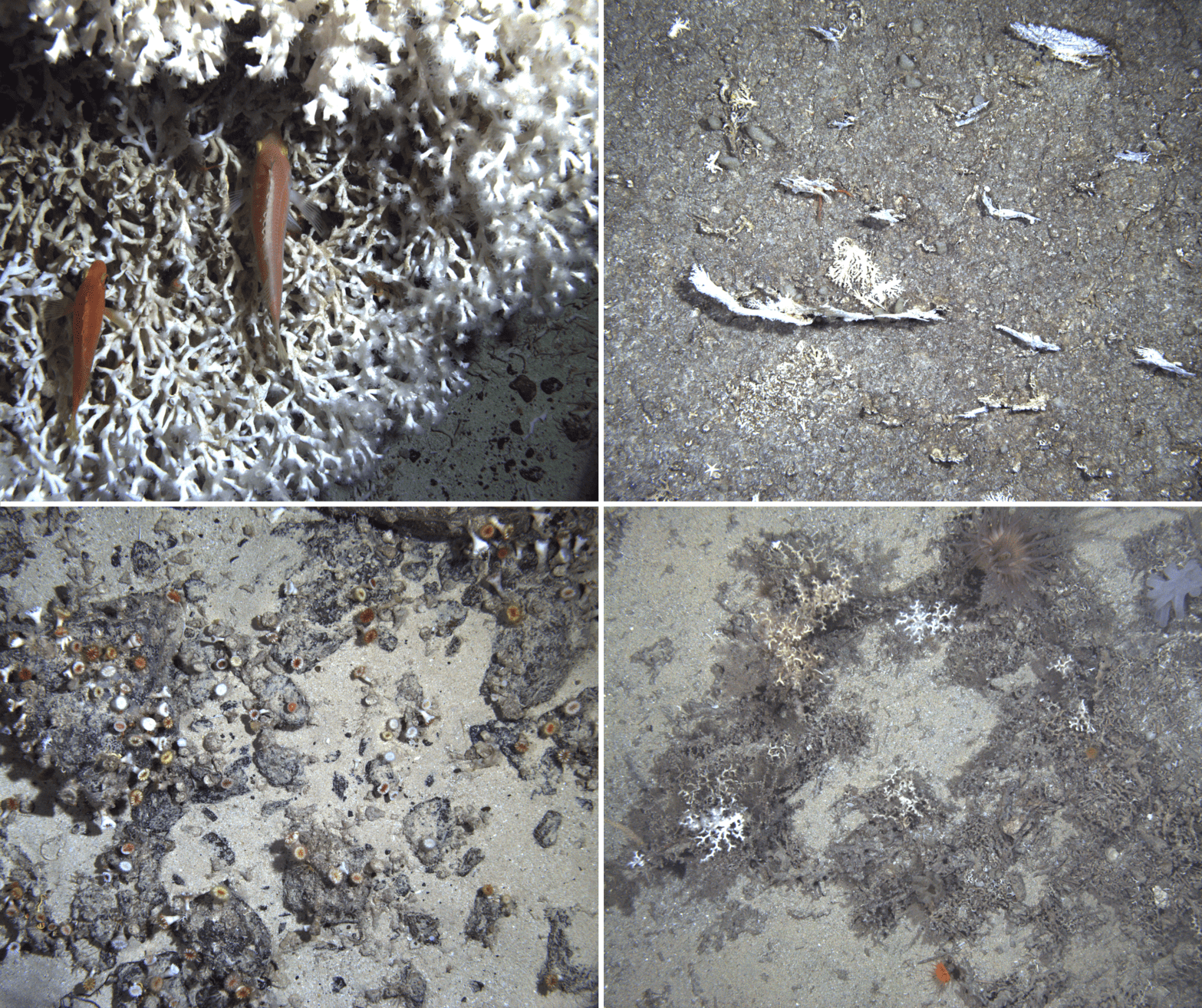
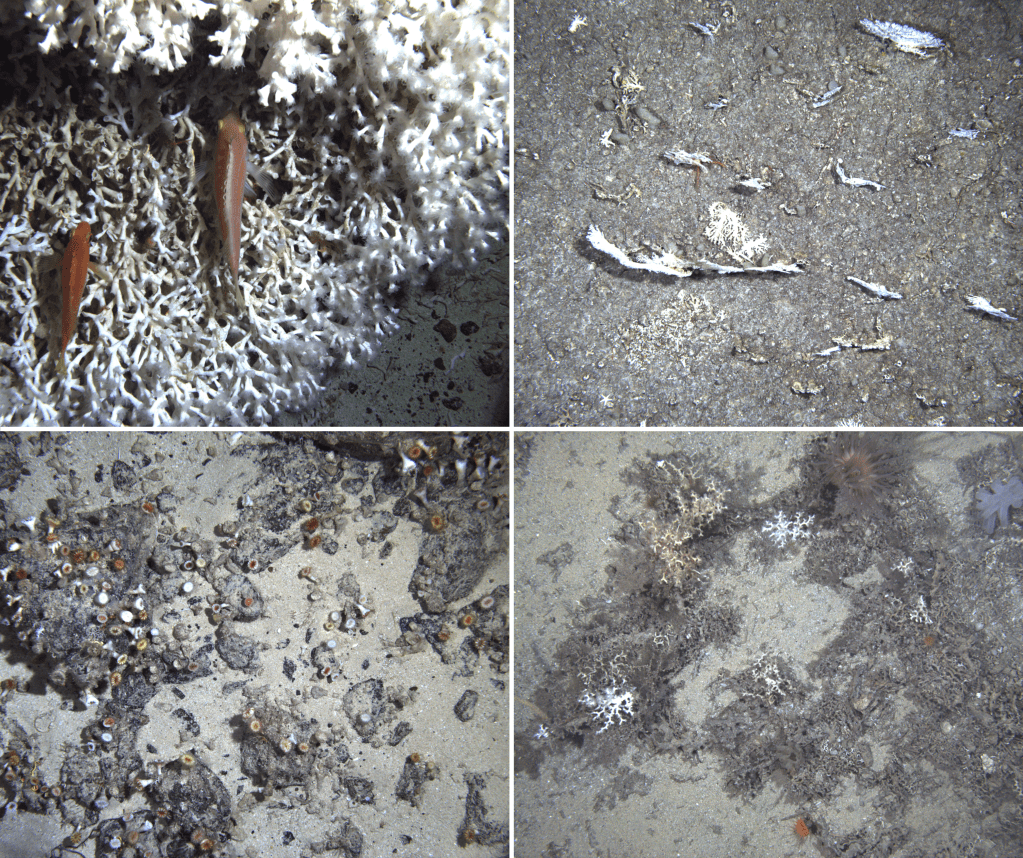
Above: Some example seabed images from the cruises around St Helena, Ascension and Tristan da Cunha (Credit: British Antarctic Survey/Centre for Environment, Fisheries and Aquaculture Science).

Investigation into the distribution of life on our planet and the co-existence of different species has fascinated naturalists for centuries. Early work in the 19th and 20th centuries began characterising patterns of where life is found, focusing on terrestrial flora and fauna. This was followed in more recent times by the characterisation of diversity gradients of shallow water marine ecosystems. However, the deep sea, that’s waters with depths of 200 m and below, remains understudied in this field, largely due to the extreme technological, logistical, and financial challenges associated with studying such a remote area.

Cover image article: (Free to read online for two years.)
Bridges, A. E., Barnes, D. K., Bell, J. B., Ross, R. E. & Howell, K. L. (2022). Depth and latitudinal gradients of diversity in seamount benthic communities. Journal of Biogeography, 49(5), 904-915 https://doi.org/10.1111/jbi.14355.

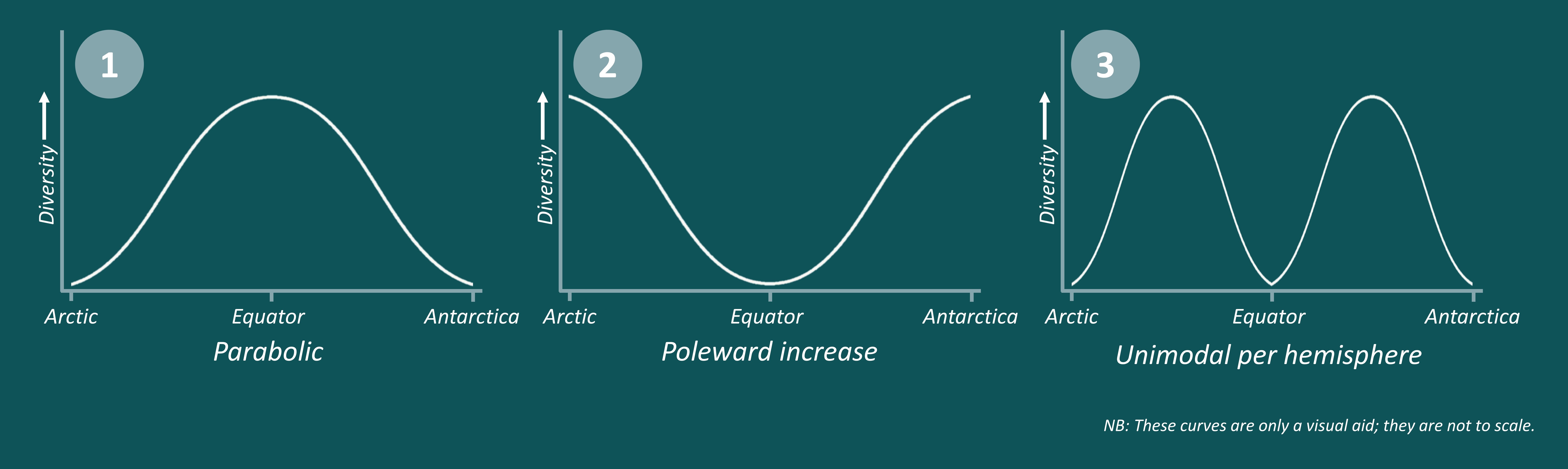
In the 1960s and 70s, several studies investigated the latitudinal and bathymetric (depth) diversity gradients of various groups of deep-sea taxa. Results were extremely variable, with some groups displaying increases in diversity polewards and with depth, others a decline in diversity polewards and with depth, and some simply displayed no significant diversity gradients. This said, when considering all the studies, ‘traditional’ diversity gradients in the deep sea may be described as a bathymetric gradient that sees diversity increase from the surface to the mid-bathyal depths between 1,000 and 3,000 m, after which it decreases; and a latitudinal gradient that sees highest diversity in the temperate latitudes of each hemisphere, with lowest diversity levels at the equator and poles. Whilst these broad generalisations are useful to describe the distribution of life in the deep sea, there is one crucial flaw – most of the samples used to characterise these gradients come from soft-sediment ecosystems on continental shelves and slopes. Therefore the key question is, are previously described diversity gradients applicable to hard-substrate features in the deep sea?

Seamounts and other features provide hard substrate in an otherwise soft-substrate deep sea, and thanks to their complex hydrodynamic and productivity regimes, they often host diverse, important, and protected ecosystems. These may include cold-water coral reefs stretching for kilometres and hosting commercially important fish species, or sponge aggregations home to undiscovered novel molecules that may significantly benefit humankind. Whilst some seamounts are reasonably well-studied, others remain entirely unsampled. In order to support effective science-based decision making and ensure their sustainable management, we need a broad-scale understanding of how diversity is distributed across seamounts and other hard-substrate features, as drivers of the ‘traditional’ gradients may not apply to these unique features.


Example gradients reported for terrestrial and shallow-water marine systems: do they also characterize the fauna of hard substrate habitats in the deep sea?

In this study, we compiled image datasets from nine different seamounts and oceanic islands, collected during four research cruises to the UK Overseas Territory of Saint Helena, Ascension and Tristan da Cunha in the South Atlantic. These features span 32 degrees of latitude, with data points spanning 700 m along the flanks and therefore this study represents the most comprehensive, broad-scale analysis of diversity gradients of hard-substrate ecosystems in the deep sea. We used regression modelling approaches to investigate the presence and trends in both α- and β-diversity.

We found that the ‘traditional’ latitudinal gradient (parabolic per hemisphere) was detectable across these features in the South Atlantic, a key driver of which was the increased productivity seen in temperate regions thanks to nutrient-rich frontal zones. But, when it came to bathymetric diversity gradients, we found no reliable relationship between depth and α-diversity (i.e. no peak in diversity at any point). However, having decided to investigate bathymetric β-diversity, we discovered a significant gradient in the form of turnover with depth, with this also being most pronounced (i.e. most rapid change) in temperate latitudes. This effectively means that although the number of species at each depth is not significantly changing, the identities of those species are, and this is likely one of the reasons that seamounts have previously been described as ‘oases of biodiversity’.

The application of ecological ‘rules’ from one type of ecosystem to another is something that should not be undertaken lightly. We evidence this by demonstrating that although the ‘traditional’ latitudinal diversity gradient appears to hold true for hard-substrate ecosystems, the bathymetric gradient does not. Should management decisions be made when an incorrect assumption has been made, it opens the door to potentially devastating damage to many of these fragile ecosystems. Additionally, the difference in the α- and β-diversity gradients with depth demonstrate the importance of considering multiple metrics when investigating diversity.

Written by:
Amelia Bridges
School of Biological and Marine Sciences, University of Plymouth, Plymouth, UK

Additional information:
Twitter: http://www.twitter.com/Amelia_Bridges
Webpage: http://www.plymouth.ac.uk/staff/amelia-bridges
ResearchGate: http://www.researchgate.net/profile/Amelia-Bridges
LinkedIn: http://www.linkedin.com/in/amelia-bridges-694391108/

Further reading:
Rex, M.A., Etter, R.J. and Stuart, C.T., 1997. Large-scale patterns of species diversity in the deep-sea benthos. In: Marine biodiversity.
McClain, C.R., Lundsten, L., Barry, J. and DeVogelaere, A., 2010. Assemblage structure, but not diversity or density, change with depth on a northeast Pacific seamount. Marine Ecology, 31, pp.14-25.

Flowers, biomes, and a mountain of data

Describing patterns of flowering time in plant communities across six biomes, and showing how they relate to climate means and climate predictability – all using open access data and a reproducible analysis in R.

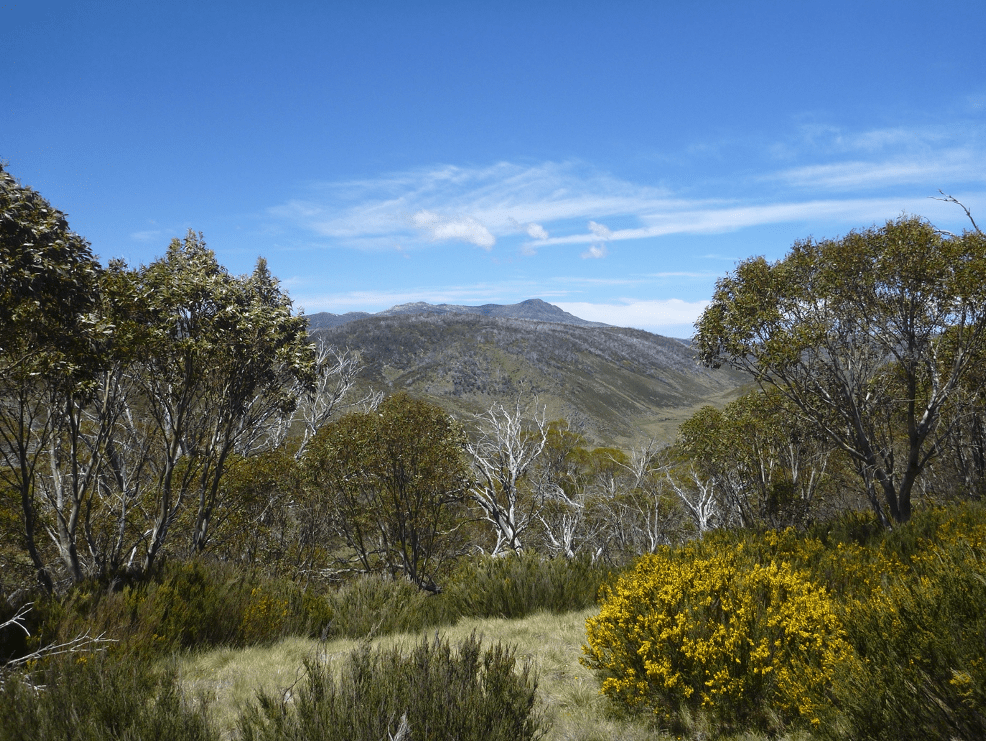
Above: Bossiaea foliosa (Leafy Bossiaea) flowering in the Snowy Mountains in southeast Australia. Alpine flowering is often highly concentrated, as everything must flower, pollinate and set seed in the few months of summer when it isn’t under snow.

When you travel from the desert to alpine areas, from the tropics down to temperate forests, different patterns of flowering in the plant communities you encounter may be obvious. Some plant communities seem to flower at the same time every year, exploding into flower in spring or early summer. In other plant communities flowering is much more dependent on conditions, as plants wait for rainfall or even the flush of nutrients after a fire to start their flowering.

Editors’ Choice: (Free to read online for two years.)
Stephens, R. E., Sauquet, H., Guerin, G. R., Jiang, M., Falster, D. & Gallagher, R. V. (2022). Climate shapes community flowering periods across biomes. Journal of Biogeography, 49 (7), xxxx–xxxx. https://doi.org/10.1111/jbi.14375

In this study we wanted to use data to describe these patterns of community flowering across the Australian landscape. We asked how community flowering patterns related to climate, and especially climate predictability — a measure of how stable or predictable climate is from month to month and year to year — which is a much more comprehensive measure of environmental variability in aseasonal landscapes.

Luckily for us there were two existing sources of high-quality data to look at these questions: (1) the Terrestrial Ecosystem Research Network’s AusPlots network (tern.org.au), which has plant abundance data from more than 800 consistently measured vegetation plots across Australia, and (2) the AusTraits database (austraits.org), which collates over 1 million records of plant traits for Australian taxa.

With a fair bit of wrangling – this was my first project using R for data analysis – we combined AusPlots plant community abundance data with AusTraits data on species’ flowering periods. From this we calculated the mean length of flowering period (in months, so 1-12) for 629 plant communities across six biomes in Australia, weighted by species abundance in plots.


Some of the Git commits which tracked each step of our analysis along the way. Learning to use R and Git for this project was a steep learning curve, but the ability to keep track of each step of the analysis and share our final data and analysis code was more than worth it.

This was a lot of data and analysis to keep track of! Despite the steep learning curve and many points of frustration learning to use R and version control with Git, I can’t recommend a programmatic approach to data analysis highly enough. Running this project meant learning R by doing R, with a lot of troubleshooting via Google and Stack Exchange along the way. I structured my data processing and analysis as a series of R scripts, commented each step so I would know what I’d done and why, and tracked every change using Git (git-scm.com). Being able to add to and re-run sections of the analysis like this made it possible to break a big data task down into manageable chunks, and come back after a break and remember what I’d done. Using R with Git also helped our analysis and data to be as open access and reproducible as possible – you can check out our analysis (and even download and re-run it if you like!) at github.com/rubysaltbush/flowering-period-climate.

Once we’d calculated community weighted mean flowering periods, we found some clear differences between community flowering periods in different biomes, a fair portion of which was explained by climate. The patterns reflected observed patterns in these biomes: alpine flowering is highly concentrated, as everything must flower, pollinate and set seed in the few months of summer when it isn’t under snow. At the other extreme, desert flowering tends to be very aseasonal, as desert species mostly flower in response to sporadic rainfall.


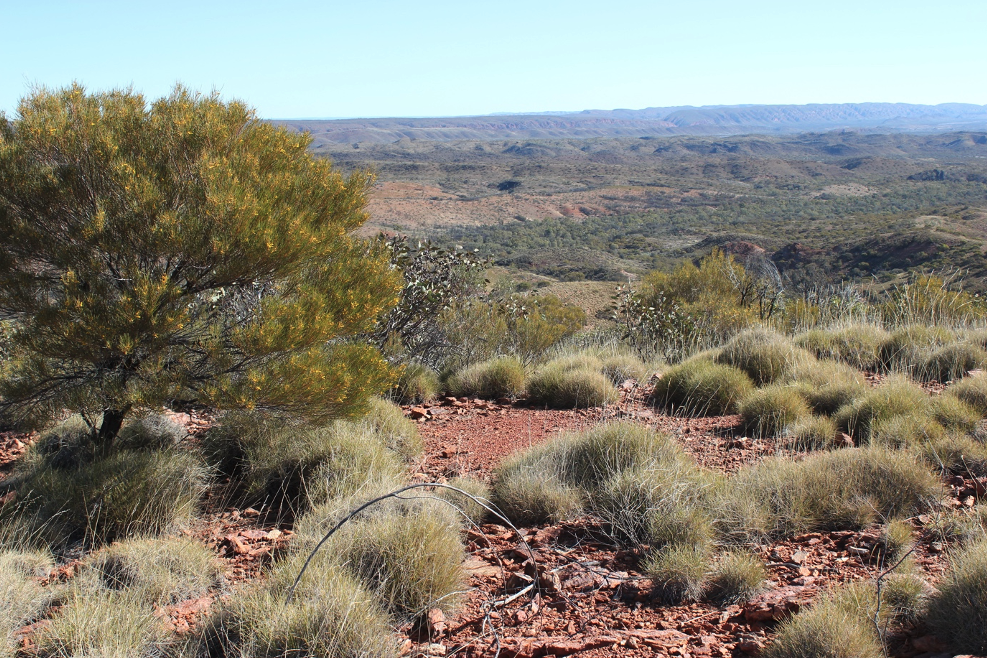
Acacia macdonnellensis (MacDonnell mulga) and Triodia spp. spinifex flowering in Tjoritja/West MacDonnell National Park in central Australia. Under current and future climate warming plant community flowering might shift towards longer, more responsive flowering periods, as are currently found in desert biomes.

When we were writing up this study an inevitable question was raised: if plant community flowering is tied to climate, how might it respond to climate change? We can only speculate, but species extinctions and range shifts as well as changes in the patterns of plant species’ flowering may lead to longer, more responsive flowering periods in a warming world. Future work might be able to document climate change induced flowering shifts at the landscape scale, though it will take a mountain and a half of data!

Written by:
Ruby E. Stephens, PhD candidate, Macquarie University, Sydney, Australia

Additional information:
rubyestephens.com
twitter.com/rubyecology

The Paleotropical Biome Rode the Ark of the Indian Plate from Africa to Asia

Tropical biomes today occupy a disjunct distribution around the equator covering about 7% of land surface, but harbouring more than 40% of plant species. This mystery is a fascinating topic yet to be fully addressed. We attempt to solve this mystery using our knowledge on the origin and migration of tropical gingers across these global biomes.

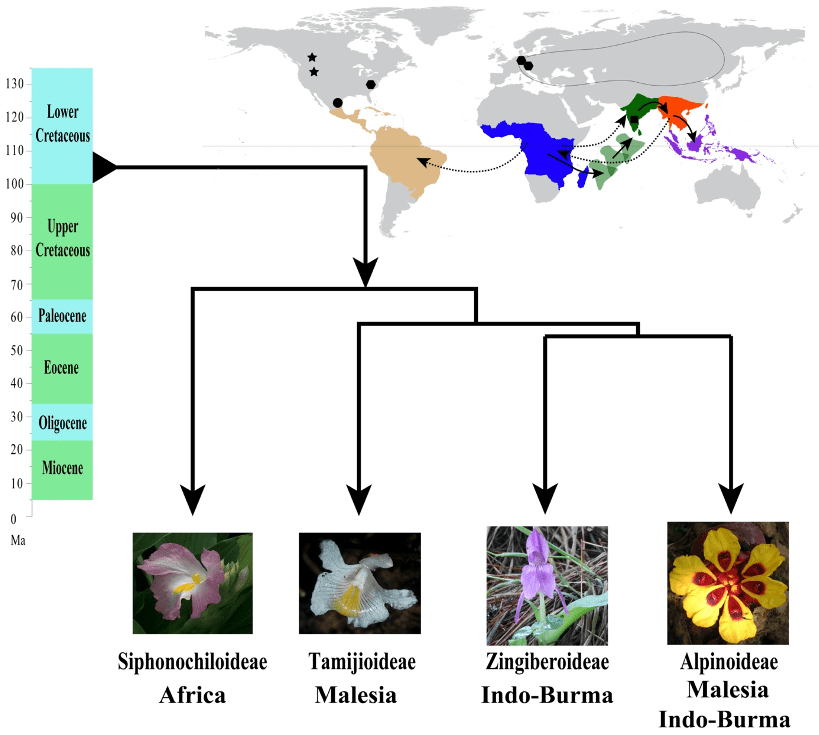
Above: Upper: Fossil records from Cretaceous (star, dot, polygon and square) to Pliocene (cycle) and pantropical distribution of Zingiberaceae. solid arrows indicate ancient dispersal and dotted arrows represent dispersal of young clades. Lower: Divergence and representatives of four subfamilies in Zingiberaceae. From left to right are Siphonochilus kirkii of Siphonochiloideae (photo credit: Smithsonian Botany Research Greenhouses), Tamijia flagellaris of Tamijioideae (photo credit: Axel Poulsen), Roscoea tibetica (Zingiberoideae) (photo credit: Jian-Li Zhao) and Etlingera yunnanensis of Alpinioideae (photo credit: Qing-Jun Li).

The position of continents and environments on Earth are ever-changing. The changes are most conspicuous on a million-year time scale, such as the shifts of the Indian Plate and tropical biomes. In many cases niche conservatism promotes species to track environmental changes. With the development of new statistical models and methods, the integration of phylogenetic reconstructions based on DNA sequence data with accurate fossil records provide a logical and repeatable way to reveal biogeographical history. The thousands of records from fossils and rock strata now provide a clear framework for understanding shifts of climatic zones, continental plates, and global climate patterns, and have facilitated our research on the associations of biome shift with plant evolution.

Cover image article: (Free to read online for two years.)
Zhao, J-L, Yu, X-Q, Kress, W. J., Wang, Y-L, Xia, Y-M & Li, Q-J (2022). Historical biogeography of the gingers and its implications for shifts in tropical rain forest habitats. Journal of Biogeography, 49, 1339-1351. https://doi.org/10.1111/jbi.14386

Tropical herbs are an indispensable and prominent component of tropical rain forests. However, fossil records of tropical herbs are far less common than the records of woody plants. The discovery of a few herbaceous fossils have provided powerful support to understanding the origin of tropical biomes in space and time. The Zingiberaceae (gingers and close relatives) is a pantropical monocot family of herbs. Its current distribution overlaps quite closely with the distribution of tropical biomes around the world. Our team and colleagues, who have been engaged in the study of gingers for some time, have found that the geographic distribution of fossils in this family is very different from the distribution of extant members. It is not surprising that the positions of fossils are only found in past tropical zones. This evidence suggested to us that the origin and dispersal of tropical biomes could be better understood by tracking the evolution of the ginger family.

We found that gingers originated in the north of Africa and then dispersed to paleotropical Asia by the Ark of the Indian Plate. Gingers in Malesia were derived from Indo-Burma rather than the opposite from Malesia to Indo-Burma. Also, some young clades of gingers in Africa and India came from the paleotropics. Our study provides an exciting story in understanding the origin and dispersal of tropical biomes and extends our knowledge on the source of paleotropical biomes in Malesia.

Interestingly, the out of Indo-Burma dispersal has several routes. Besides the southern migration to Malesia, another route is the migration north into the Himalayas and the Hengduan Mountains, and then diversification with the orogeny caused by the collision between the Indian and Eurasian Plates. These mountainous taxa, such as Roscoea, provide good models to explore the origin of hyperdiversity in many biodiversity hotspots.

Written by:
Jian-Li Zhao, Associated Professor, Yunnan Key Laboratory of Plant Reproductive Adaptation and Evolutionary Ecology and Institute of Biodiversity, School of Ecology and Environmental Science, Yunnan University, Kunming, China
Qing-Jun Li, Professor, Yunnan Key Laboratory of Plant Reproductive Adaptation and Evolutionary Ecology and Institute of Biodiversity, School of Ecology and Environmental Science, Yunnan University, Kunming, China
W. Kress John, Curator Emeritus, Department of Botany, National Museum of Natural History, Smithsonian Institution, Washington, DC, USA

Additional information:
@Jian-Li Zhao / http://www.sees.ynu.edu.cn/info/1015/1879.htm
@ Qing-Jun Li / http://www.sees.ynu.edu.cn/info/1014/1100.htm
@ John Kress / https://naturalhistory.si.edu/staff/john-kress

ECR feature: Emily Schumacher on temporal climatic responses of the butternut tree.

Emily Schumacher is a research assistant at the Morton Arboretum in the USA. She is a conservation biologist interested in using genetic tools to infer tree restoration measures. Here, Emily shares her recent work on temporal climatic effects on the butternuts.

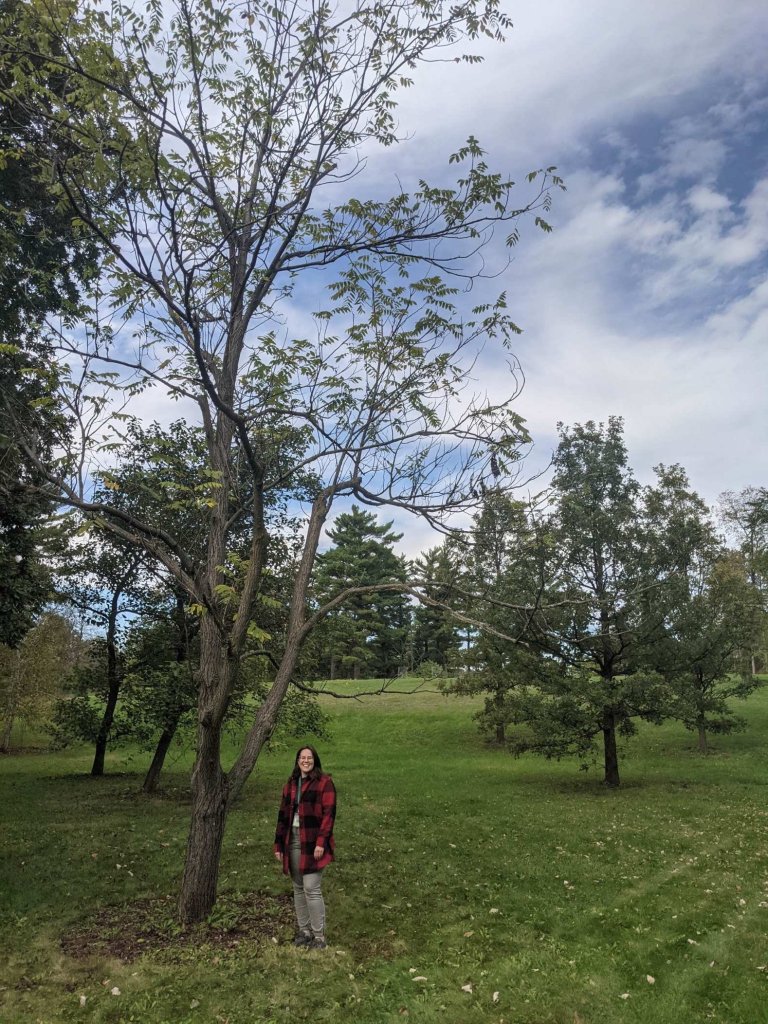
Emily Schumacher with butternut tree at the Morton Arboretum, Lisle, IL.

Personal links. Twitter | GitHub | Google Scholar

Institute. The Morton Arboretum

Academic life stage. Research Assistant

Major research themes. Conservation genetics; improving conservation collections; modeling rare species’ distributions; species range shifts after the last glacial period.

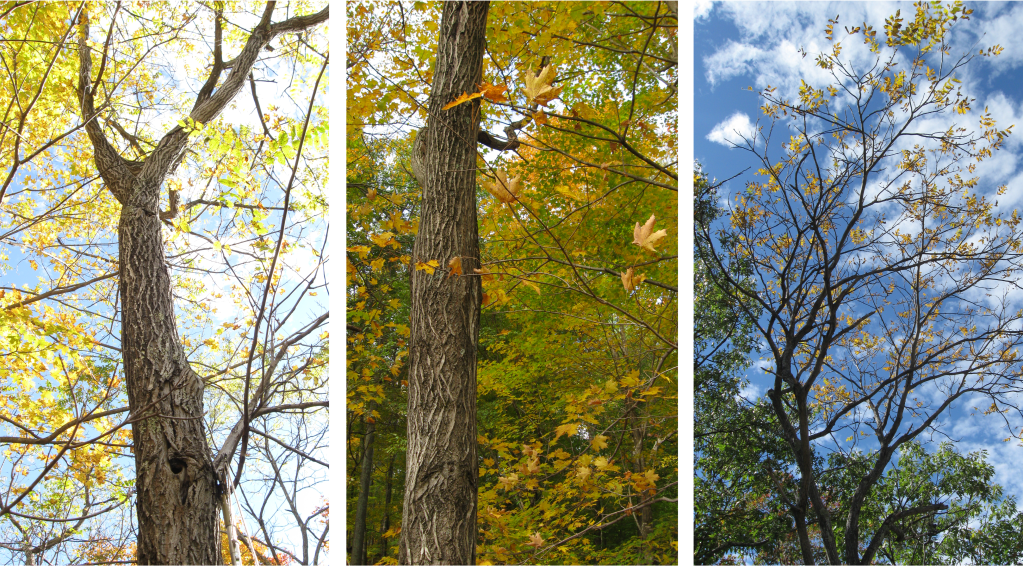
Butternut trees from West Virginia.

Current study system. Butternut (Juglans cinerea) is a tree with a sweet-sounding name but a troubled present. Already a rare tree in eastern North American forests, butternut has significantly declined in abundance in the last 50 years due to disease, habitat loss, and habitat change. All of its current populations are infected with a fungus (Oc-j) that kills butternut trees, limiting natural regeneration. Additionally, suitable habitat for butternut is dwindling as it is a cold-tolerant mesic habitat species, which are areas predicted to be heavily threatened due to climate change.

Recent JBI paper. Schumacher, E., Brown, A., Williams, M., Romero‐Severson, J., Beardmore, T., and Hoban, S. (2022). Range shifts in butternut, a rare, endangered tree, in response to past climate and modern conditions. Journal of Biogeography 49(5), 866-878 https://doi.org/10.1111/jbi.14350

Motivation behind this paper. We can work to prevent butternut from going extinct, but we need to know more about its modern diversity and past biogeography. There are plans to make ex-situ collections to create breeding programs for butternut, but for that, we need to understand its current genetic patterns and the past range movements that shaped these patterns. Our work built on Hoban et al. (2010) which found that Quaternary glaciations largely shaped butternut’s genetic diversity. However, that study may have under-sampled butternut’s northern range. With additional northern population sampling of modern trees and fossils, along with distribution modeling, we examined if glaciations were the main driver of genetic diversity in butternut or if diversity was shaped more by the central-marginal hypothesis. Glaciations are predicted to leave populations at a species’ northern latitudes lower in genetic diversity due to successive bottlenecks as organisms migrate northward. Alternatively, the central marginal hypothesis predicts that genetic diversity will decrease at modern range edges, where habitat quality is lower and fewer individuals can tolerate marginal conditions, leading to bottlenecks and reduced diversity in range margins. We also aimed to better document the speed of butternut’s range shifted following glacial periods and how this shaped the genetic structure of a disjunct set of populations.

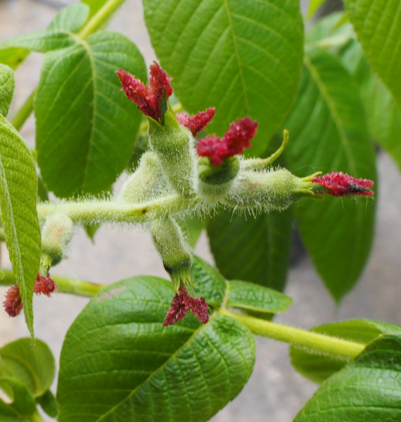
Mature butternut flowers.

Key methodologies. Our methodologies focused on expanding the examinations performed in Hoban et al. (2010) to provide a detailed picture of how influential glaciations were on butternut’s genetic patterns and the extent of butternut’s range during and following the last glacial period. We added 757 butternut individuals sampled mostly from butternut’s northern range to the 1,004 individuals used in Hoban et al. (2010). We then tested for statistical relationships between genetic diversity metrics and geography to evaluate for support for the central marginal hypothesis or postglacial migration. Also, to predict how butternut shifted in response to glacial movements and hindcast butternut’s suitability, we mapped fossil pollen records in 1,000-year increments. We then used these datasets to assess how butternut shifted its range in response to the last glaciation, which could also help predict its response to modern climate change.

Unexpected challenges. Combining data collected at different times and by various researchers was the main challenge in generating this research. Samples were collected during many trips spanning a decade and under different spatial considerations. Similarly, genetic data was generated at different times by different people, but gladly used the same markers. We performed analyses to ensure consistency in the data. Although incorporating data collected with multiple aims in mind and by different people posed difficulties, it also allowed our study to be of a much larger scale – and, therefore, more interesting and exciting!

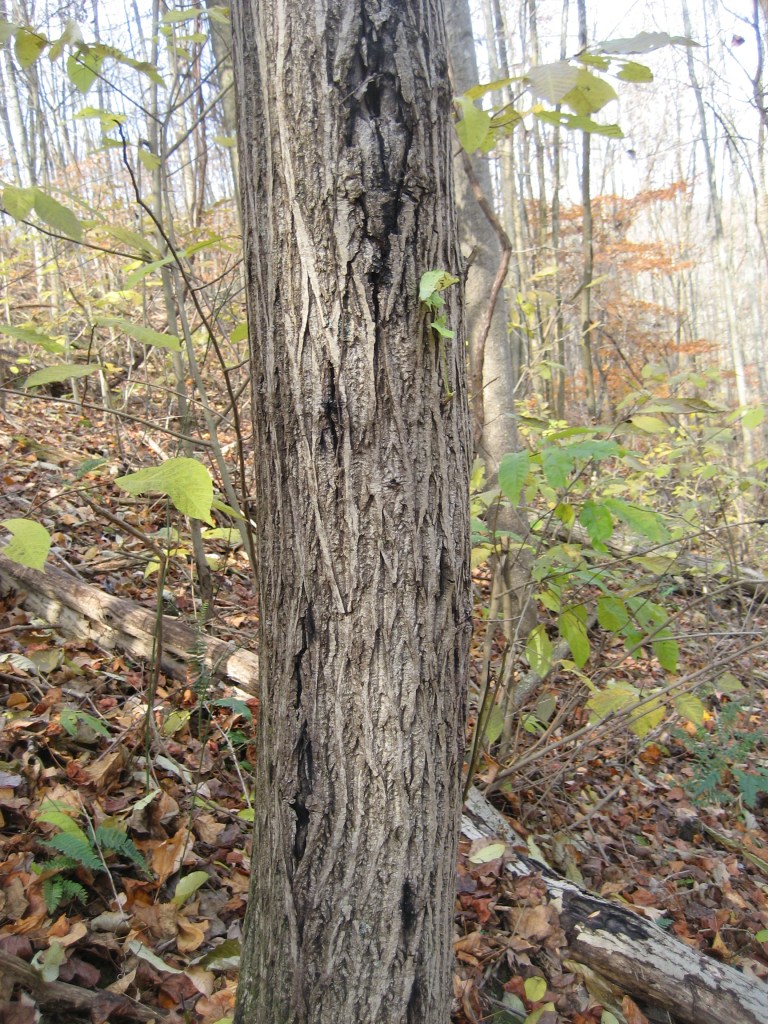
Butternut tree from Hoosier National Forest with large, visible butternut canker.

Major results. We found that while the last glaciation had a large impact on the past range shifts of butternut, it was not the only process affecting butternut’s modern genetic patterns. Unlike Hoban et al. (2010), we found that genetic diversity was more similar to patterns predicted by the central marginal hypothesis rather than postglacial migration, because we found that genetic diversity was highest closer to the center of butternut’s range and lowest at its range edges. However, glaciation was still shown to have had a large impact: fossil pollen was found near glacial margins and hindcast suitable habitat maps predicted suitable habitat near glaciers. We also observed two distinct areas of butternut’s suitable habitat throughout the past 20,000 years, suggesting butternut may have persisted in two distinct refugia (one in southern North America and one in Canada, near Nova Scotia and New Brunswick). Our findings add to a growing body of studies suggesting that eastern North American tree species have relatively complex genetic patterns.

Next steps for this research. Our insights will help improve ex-situ collections for generating seeds and restoring butternut. Our findings that the New Brunswick population is a distinct evolutionary lineage with specialized climate requirements due to glacial movements suggest these individuals may also require special protection as an independent taxonomic unit. A full determination will require more in-depth phylogenetic analysis to support this differentiation, but this area is currently under protection interest. We would also like to examine more North American tree species to determine if they are similarly shaped by multiple ecogeographic hypotheses, facilitating genetic diversity conservation.

Butternut tree fully leafed out, Shenandoah National Forest, VA.

If you could study any organism on Earth, what would it be? I love studying organisms that are foundational species for ecosystems, hence my obsession with trees and plants. In particular, I am fascinated by rare trees. But it would also be incredible if I could study coral reefs as they are foundations for ocean ecosystems. Plus, because I live in Chicago, I miss the ocean!

Anything else to add? This project was highly collaborative, and I feel really lucky to have such encouraging and supportive senior scientists that led me through this process. My coauthors, the journal editor, and reviewers were so helpful and kind as I worked through my first first-author manuscript. A huge thank to all of them because the study was such a team effort! It was also fun for my supervisor, Dr. Hoban, to revisit his PhD study system and test and refine his findings from that time, which shows that science is constantly generating new knowledge!

ECR Feature: Purabi Deshpande on habitat use by over-wintering birds

Purabi Deshpande is undertaking her PhD at the University of Helinksi. She is an urban ecologist, with an interest in understanding how climate change and anthropogenic disturbance affect bird communities. Purabi shares her recent work on the interaction between climate and habitat on over-wintering bird abundance in Finland.

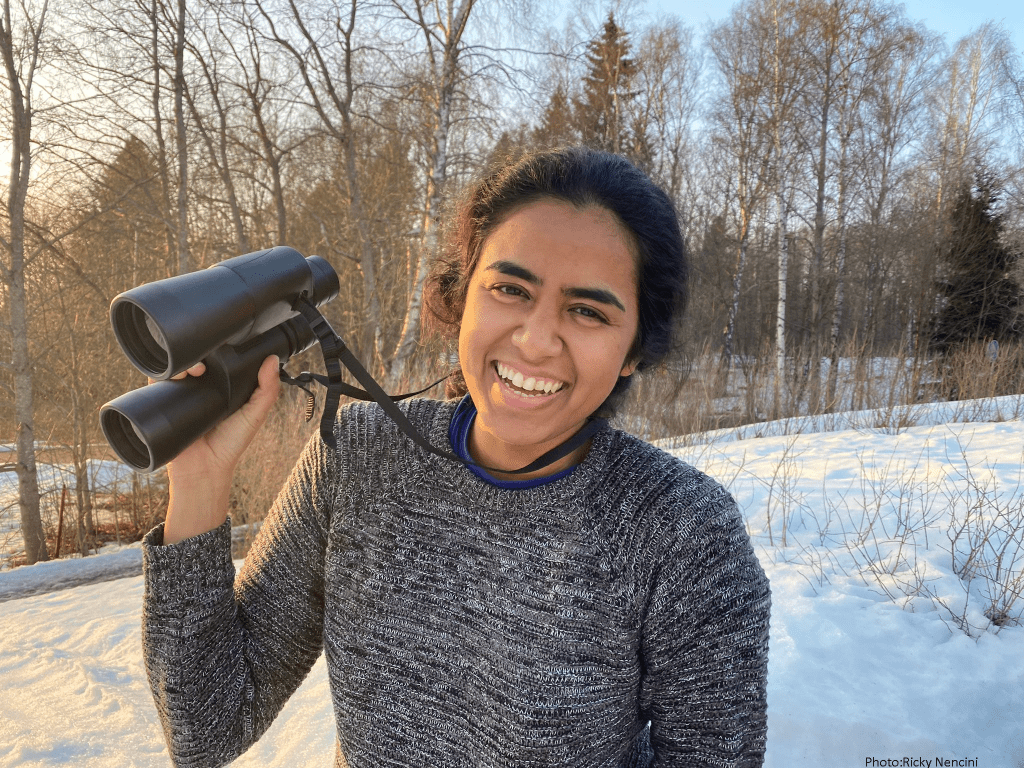
Purabi, watching early spring migrants in winter whilst surrounded by tens of centimeters of snow on the ground. (Photo credit: Ricky Nencini)

Personal links. Twitter

Institute. University of Helinski

Academic life stage. PhD

Major research interests. Urban ecology, ornithology

Current study system. I study the response of birds to changing environments at the intersection of urbanisation and climate change. Human impacts on ecosystems are often studied at a local scale (e.g. habitat destruction due to a city’s growth) or at the global scale (e.g warming temperatures due to anthropogenic climate change). I am interested in understanding how birds respond to both these local- and large-scale changes caused by humans. Part of my research is carried out in Bangalore, a megacity in India, and the other part in Finland, which at 60 to 70 degrees north faces the brunt of climate change.

Recent paper in JBI. Deshpande, P., Lehikoinen, P., Thorogood, R., & Lehikoinen, A. (2022). Snow depth drives habitat selection by overwintering birds in built‐up areas, farmlands and forests. Journal of Biogeography. 10.1111/jbi.14326

Motivation for this paper. Snow cover in Finland, especially in the south of the country, is decreasing drastically as a result of warming climates. At the same time in human inhabited areas across the country, there is a lot of supplementary feeding, either directly, indirectly (think garbage), or in the form of introduced plant species. Species that would typically be classified as “migrants”, which would leave Finland during the winter, are now seen overwintering in Finland. This change in migratory behaviour is possibly due to milder climates and/or constant food supply. We therefore wanted to explore how different environmental variables and their interaction with different habitats affected the abundance of overwintering birds in Finland.

A brambling, seen in a snowy winter (Photo: Petteri Lehikoinen)

Key methods. We explored if abundances of birds in three different habitats (built-up, farmland and forest) changed with snow depths and temperature across 32 winters and whether species traits could explain the observed changes. We expected most variation in abundance to occur in built-up habitats as snow depths were likely to be lower and food availability higher, which would allow more birds to overwinter here. This work would not have been possible without brilliant long-term climatic monitoring datasets that are maintained in Finland. The Finnish Meteorological Institute maintains mean daily snow depth data for 10 by 10 km grids across the country (among other climatic variables). More importantly, the Finnish winter birds census which is an effort undertaken by citizen scientists every winter for more than half a century is a mind-blowing effort. This is especially true when you consider that some of the data collection is done at temperatures as low as minus 30 degrees centigrade!

Major results. There are two major results from this recent paper. First, there is an interaction between habitat and climatic conditions. As expected, decreasing snow depth led to increased bird abundance in farmlands and forests. However, as snow depth increased, there was increasing abundance in built-up areas. These results indicate that built-up areas could provide refuges for birds to over-winter when climatic conditions become less favourable. With climate change there are expected to be more extreme weather events. Overwintering species that can occupy urban areas might benefit, compared to those species that avoid built-up areas. Secondly, we found that snow depth is a better predictor of bird abundance than temperature. Even though there is a correlation between temperature and snow depth, snow depth may better reflect climatic harshness because food or roosting sites will be covered at high snow depths. However, collecting snow depth data is more difficult than temperature, so it is often overlooked while studying the effect of climatic factors on species.

Unexpected outcomes. As I was interested in seeing how urban environments are affecting birds, I had expected that the largest changes in abundances of overwintering birds would be observed in built-up areas, due to low snow depths and easy access to food. On conducting the analyses, we discovered that this was not the case and most of the changes were driven by farmland areas! The most exciting finding of this work is that the variation in bird abundances is explained better by snow depths rather than temperature. Data pertaining to snow depth is often difficult to collect at a level that is relevant to study animal ecology. So, most research uses temperature instead. Few studies investigate how habitat preferences of animals change with changing snow depths.  Here we show that even though temperature and snow depth are often correlated they might be affecting animals differently and warrant separate investigation.

Barnacle geese foraging on a thawing farmland.

Next steps. As a result of warming climates we know that many species are moving their ranges along latitudinal and altitudinal gradients. Most of this work is focused on movements in the spring, However, weather is more variable in the winter. We are currently working on a manuscript which explores not only the poleward shifts in wintering bird communities in Finland, but also whether birds are moving poleward faster in certain habitats, and how changing snow depths are affecting these shifts.

If you could study any organism on Earth, what would it be? I have always been excited about birds and I am quite happy sticking with them! More than particular organisms I would like to get my hands on some long-term monitoring datasets of different taxa and explore similar questions with all of them.

Anything else to share? My PhD journey so far has been a real adventure. Before I moved to Finland (from India), I had only seen snow once before. Carrying out fieldwork in sub-zero temperatures, thinking about winter ecology and shifting my “home-range” has been an excellent experience!

Climate and environment shape jackal diet

Dietary flexibility promotes range expansion: The case of golden jackals in Eurasia.

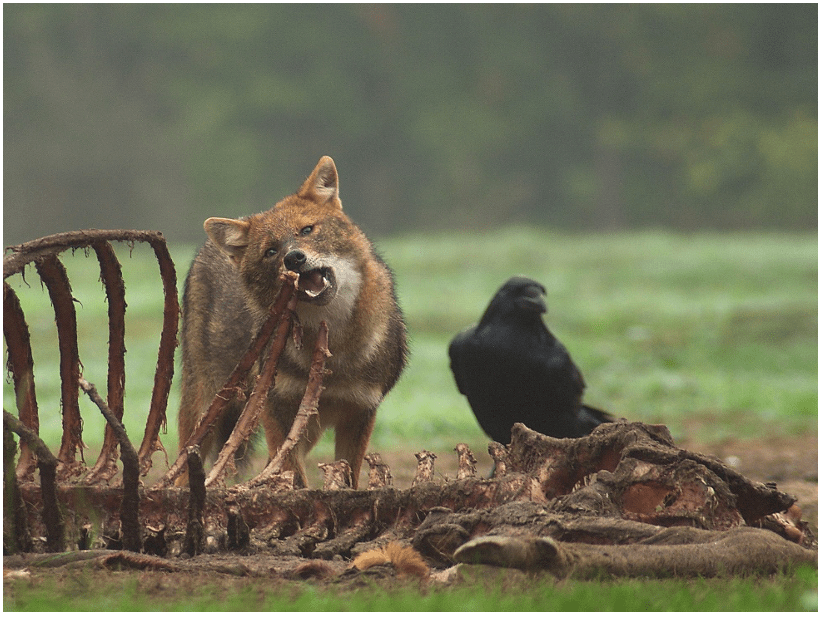
Above: Golden jackal in carcass cleaning role (with raven Corvus corax). According to the literature, the consumption of wild ungulates and domestic animals are mainly due to scavenging. Photo: Zoltán Horváth.

Global changes can lead to the expansion of a species geographical range. Exploring the causes and potential effects of predatory mammalian expansion is also relevant from a scientific, wildlife management, animal husbandry and conservation perspective

The golden jackal (Canis aureus) is a 10-15 kg canid that is one of the most successful carnivore species in Europe. Its original range included Central and Southeast Asia, the Arabian Peninsula, the Middle East and Eastern Central Europe. Isolated populations lived along the Mediterranean and Black Sea coastal regions until the middle of the 20th century. The species range then rapidly expanded to encompass the entire Balkans in the 1970s-1980s, and further to the north and west such that it is now found across Europe. Within this wide geographic range, the golden jackal also occurs in temperate, sub-Mediterranean, Mediterranean and subtropical climates. It occurs in habitats from grasslands to wetlands to deciduous forests to near-natural and highly artificial anthropogenic habitats, and even in the vicinity of large cities.

Cover image article: (open access)
Lanszki, J., Hayward, M. W., Ranc, N. & Zalewski, A. (2022). Dietary flexibility promotes range expansion: The case of golden jackals in Eurasia. Journal of Biogeography, 49, 993– 1005. https://doi.org/10.1111/jbi.14372 

The limiting and facilitating factors driving this range increase are of particular interest given the present rapid population expansion in Europe. The occupation of the jackal, previously considered to prefer a warm climate and it has recently been observed beyond the Arctic Circle. The species expansion may have been triggered by various factors, such as changes in land use or climate change, the abundance of anthropogenic food sources or a historic decline of the grey wolf (Canis lupus) as apex predator and competitor. The jackal’s population growth and range expansion are likely facilitated by the species’ dispersal potential, its ability to live in human-dominated environments and flexible social behaviours.

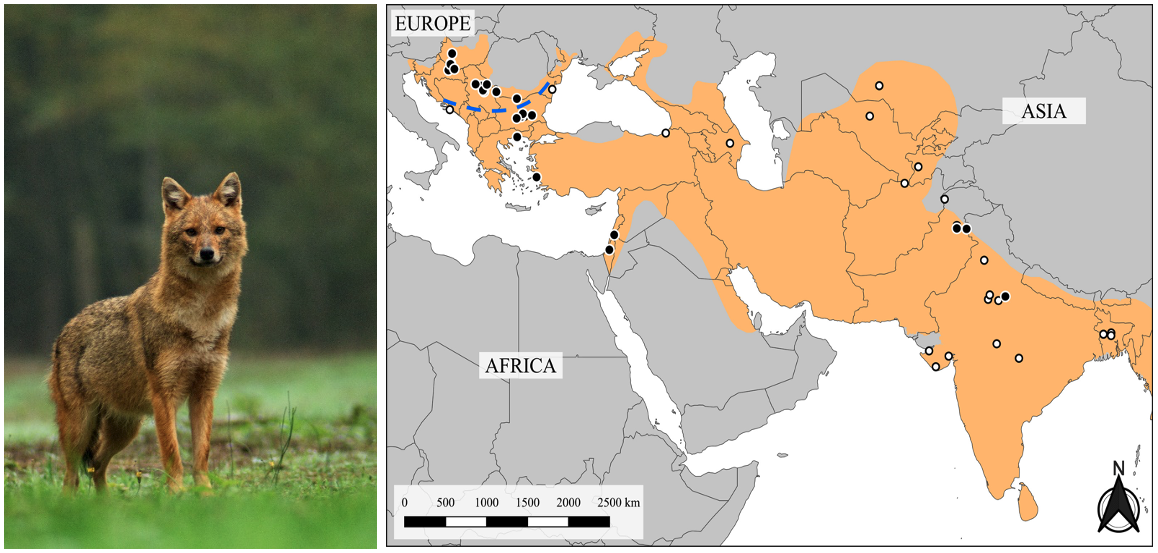
During range expansion, wildlife must adapt their foraging and trophic niche to the new biotic and abiotic conditions. In this study, based on 40 published datasets, we analysed which climatic and environmental factors affected/shaped the dietary composition of golden jackals. Furthermore, we compared these drivers in the species’ historic and recently colonized distribution ranges.


Golden jackal dietary study sites have occurred across Eurasia. White circles – Reviewed studies, black circles – studies of sufficient quality to be included in our analyses. Orange colour indicates the current geographical range with established, reproducing jackal populations. A blue dashed line separates the study sites of the recently colonized and historic ranges. Golden jackal photo by Zoltán Horváth.

Our analyses revealed that three main food groups dominate the golden jackal’s diet – small mammals, domestic animals and plants – but the proportions of each vary greatly. Other food types (for example birds, wild ungulates, reptiles, waste) may only be significant locally. We found that the jackal diet composition is shaped by climate, habitat productivity and habitat composition in similar way in both historic and recently colonized range. The proportion of small mammals in the golden jackal diet decreased with annual mean temperature, whereas the consumption of wild ungulates increased with environmental productivity (NDVI).


The jackal diet composition and trophic niche are shaped by climate and habitat productivity

The recently colonized distribution range of golden jackals in Europe had a lower mean temperature but higher environmental productivity compared to the species’ historic range in Eurasia. In the recently colonized range, jackals consumed small mammals and/or wild ungulates (mostly from scavenging or viscera eating) more frequently, and fewer plants and/or domestic animals (again, mostly from scavenging or feeding on the remnants of domestic animal slaughter).

That is, climatic and environmental factors shape the golden jackals’ diet composition and trophic niche breadth, which, in a changing environment, greatly enhances the opportunities for jackals to colonize new areas successfully.

Written by:
József Lanszki (1), Matt W. Hayward (2), Nathan Ranc (3) & Andrzej Zalewski (4)
(1) Full professor, Department of Nature Conservation, Hungarian University of Agriculture and Life Sciences, Kaposvár Campus, Hungary
(2) Professor of Conservation Science, School of Environmental and Life Sciences, The University of Newcastle, Callaghan, Australia
(3) Research Engineer, Université de Toulouse, INRAE, CEFS, Castanet‑Tolosan, France
(4) Full professor, Mammal Research Institute, Polish Academy of Sciences, Białowieża, Poland

Additional information:
https://sites.google.com/view/2ndjackalsymposium/home

ECR feature: Amelia Bridges on deep-sea ecological gradients

Amelia Bridges is a postdoc at the University of Plymouth in the UK. She is a marine biologist interested in deep-sea ecology. Here, Amelia shares her recent work on seamount benthic community gradients.

Dr Amelia Bridges presenting her research at the National Marine Aquarium.

Personal links. Twitter | Website | Research Gate | Linkedln

Institute. University of Plymouth

Academic life stage. Postdoc

Major research themes. Benthic ecology, marine spatial planning, fundamental ecology of the deep sea, habitat mapping.

Current study system. The deep sea represents an immensely vast area of our planet, and yet comparatively little is known about ecosystems within it. Throughout my career I’ve been lucky enough to work on a number of deep-sea ecosystems including the Pheronema carpenteri sponge aggregations of the North Atlantic, and the cold-water coral reefs and gardens in the South Atlantic. What I find so interesting and engaging is that we’re still learning about the fundamental ecology of these ecosystems. For example, what functional roles do they have? How do these fit in with the wider biosphere, global cycles and ecosystem services?

Recent JBI paper. Bridges, A. E., Barnes, D. K., Bell, J. B., Ross, R. E. & Howell, K. L. (2022). Depth and latitudinal gradients of diversity in seamount benthic communities. Journal of Biogeography, 49(5), 904-915 https://doi.org/10.1111/jbi.14355.

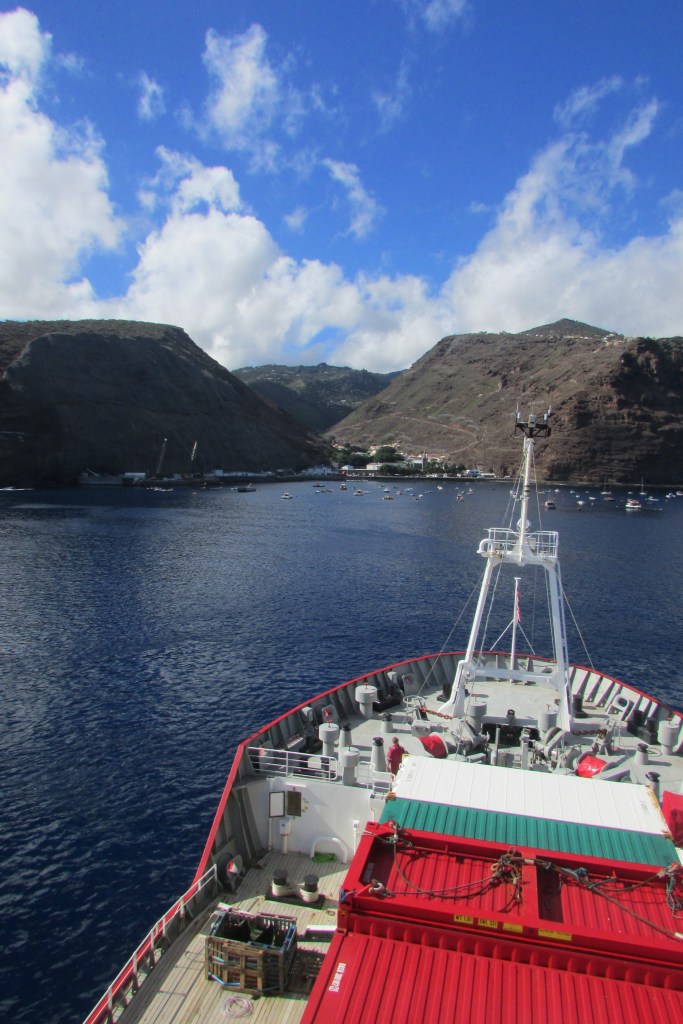
The RRS James Clark Ross coming into Jamestown, St Helena (Credit: Nils Piechaud).

Motivation behind this paper. Shifts in diversity over environmental gradients represent one of the most fundamental ecological fields of study, with research dating back centuries. Investigation of diversity gradients in the deep sea began in the 1900s, but samples were only available from soft-substrate ecosystems due to the technologically challenging nature of data collection. Just like in terrestrial and shallow marine ecosystems, we know that different substrate types support different communities in the deep sea. Additionally, certain features that provide hard substrates, such as seamounts, are also exposed to different hydrodynamic regimes that alter key environmental drivers of diversity such as food availability. Here, we wanted to investigate whether diversity gradients described for the deep sea, but hypothesized from soft-substrate data, applied to hard-substrate ecosystems also. Understanding diversity gradients of communities living on hard-substrate is important as seamounts and oceanic islands often serve key ecological roles such as stepping stones for dispersal and providing nursery habitat and refugia.

Key methodologies. We used regression modelling to investigate the relationship between α- and β-diversity, depth and latitude, and other ecologically/biologically relevant parameters correlated with them. Whilst some previous studies have characterised these relationships over individual or small chains of seamounts in close proximity, our data comes from nine different features across a 32-degree latitudinal range, and therefore represents the most broadscale study of such relationships. These data were collected aboard large, ocean-going research vessels equipped with high-resolution camera equipment and sensors collecting environmental data. This approach has allowed us to provide insight on gradients and drivers that are relevant at broad ocean-basin-scales as opposed to regionally, finer-scale relationships. Additionally, the investigation of α- and β-diversity within a single dataset is not often undertaken, but our results show that differences in the two indices are important to consider, particularly through the lens of sustainable management.

Some example seabed images from the cruises around St Helena, Ascension and Tristan da Cunha (Credit: British Antarctic Survey/Centre for Environment, Fisheries and Aquaculture Science).

Unexpected challenges. As many who work in deep-sea science will attest, characterising the diversity of ecosystems from imagery can be particularly challenging. Not only is the initial annotation process manual and slow, but the taxonomic resolution achieved is often below what could be reached if physical specimens were examined using traditional taxonomic approaches like dissection. However, when working with fragile ecosystems like cold-water coral gardens, there is an important balance to strike between non-invasive scientific sampling and taxonomic resolution. This is why we used an Operational Taxonomic Unit (OTU) approach in our study, given that we can rarely identify an individual to species level. Still, we can say that this group of individuals is very similar morphologically. Therefore, an OTU is treated as a species (or morphospecies) in diversity analyses.

Major results. Whilst patterns in the data we collected aligned with previously described parabolic latitudinal diversity gradients per hemisphere in the deep sea, likely driven by productivity regimes, we did not detect shifts in α-diversity gradient caused by depth that are commonly reported from soft-substrate ecosystems. This demonstrates that ecological ‘rules’ based on data from one ecosystem may not be transferable to other ecosystems, particularly where key characteristics such as substrate type are different. Although the number of ‘species’ (OTUs) didn’t change with depth, upon further data exploration, we found that the ‘species’ present across the depth range did vary significantly, aligning with a small number of studies that have hypothesised the high species richness of seamount features in the deep sea derives from a turnover, or change in, species as you progress down the slope into deeper water (β-diversity gradient). The difference in α- and β-diversity gradients observed here shows the importance of considering both metrics when characterising seamounts and determining sustainable management strategies in the future.

Sunrise at sea near Tristan da Cunha (Credit: Nils Piechaud).

Next steps for this research. The next steps would be to conduct similar studies on other seamounts/oceanic island features within the South Atlantic to determine if the identification of key drivers holds true, but also in other ocean basins for the same reason. The global south is extremely understudied compared to the northern hemisphere, and as we have shown, caution needs to be taken when applying ecological ‘rules’ to less studied ecosystems/areas. Through equitable scientific exploration of the global south, I hope we will further understand the fundamental ecology of deep-sea ecosystems, their distribution, and how we can best ensure their sustainable management going forward.

If you could study any organism on Earth, what would it be? I know I’m biased, but I really do love deep-sea ecosystems! I think the fact that we still have so much to learn about them is the most exciting aspect – the only comparison I can think of would be turning the clock back and being a terrestrial ecologist centuries ago. Also, from a management perspective, we still have the chance to ensure robust environmental regulations are in place in the deep sea before mass exploitation happens.

Anything else to add? Although I wasn’t present, during one of the cruises the fibreoptic cable connecting the camera system to the ship snapped (possibly due to a shark bite!) leaving the camera system totally unconnected on the seafloor, hundreds of metres below the surface. Luckily, thanks to the clever work of Captain and crew, it was retrieved… on the first attempt!

ECR feature: Pieter Sanczuk on plant range shifts under climate change.

Pieter Sanczuk is a PhD student at the Ghent University in Belgium. He is a botanist interested in forest microclimates. Here, Pieter shares his recent findings on the understorey plant species range dynamics under climate change.

Pieter searching for bluebells transplanted 60 years ago (and 35 years before he was born). Although GPS coordinates were available, small bluebell populations can be hard to find in a 1,500 ha sized forest.

Personal links. Google Scholar

Institute. Forest & Nature Lab, Bioscience, Ghent University, Belgium

Academic life stage. PhD student.

Major research themes. The effects of forest microclimates and biotic interactions on understorey plant species range dynamics under climate change.

Current study system. In my PhD, I study the effects of small-scale environmental variation and biotic factors (e.g., competition or herbivory) on understorey species range shifts due to climate change in temperate forests of Europe. Many species are shifting their distributions towards higher latitudes and elevations. However, such a trend remains somehow elusive for forest understorey species, mostly due to the importance of processes operating at small spatial scales. For example, trees are ecosystem engineers, buffering the climatic extremes for species living within and below tree canopies. By including environmental variation related to small spatial scales into predictive models, I aim to obtain more accurate projections of future species ranges.

Recent JBI paper. Sanczuk, P., De Lombaerde, E., Haesen, S., Van Meerbeek, K., Van der Veken, B., Hermy, M., Verheyen, K., Vangansbeke, P. & De Frenne, P. (2022). Species distribution models and a 60-year-old transplant experiment reveal inhibited forest plant range shifts under climate change. Journal of Biogeography, 49(3), 537–550 https://doi.org/10.1111/jbi.14325

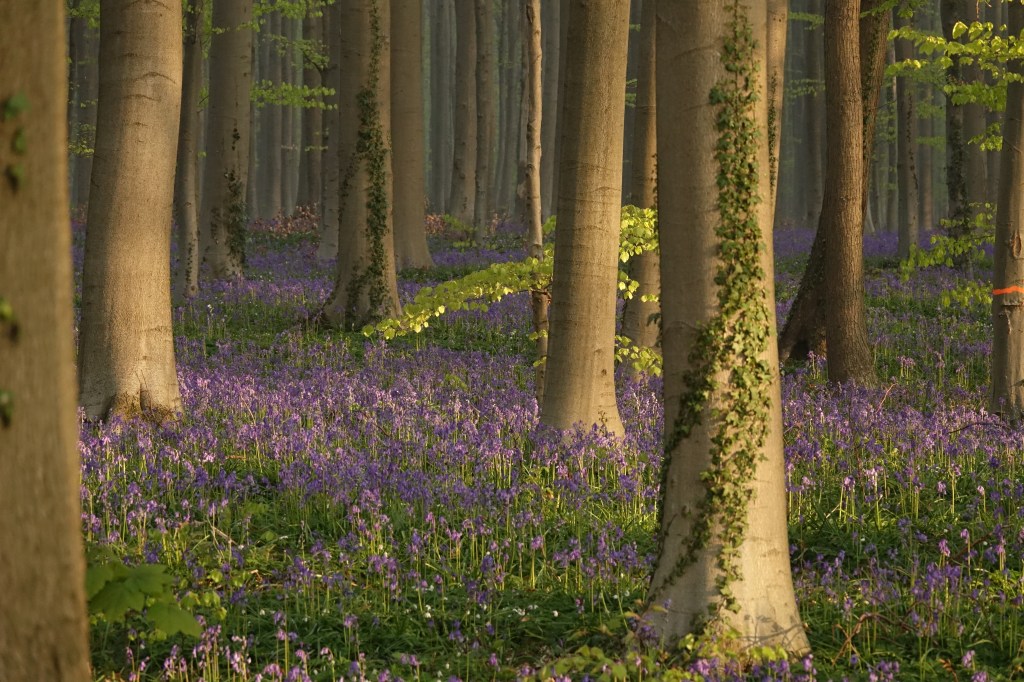
The Hallerbos in Belgium is nicknamed ‘the blue forest’ because of the carpets of spring-flowering bluebells, which attract yearly more than 100,000 visitors (Photo by Sanne Govaert).

Motivation behind this paper. Bluebell (Hyacinthoides non-scripta) is one of the most well-known species in the European forest understorey. During spring, this species can form a blue carpet that covers the understorey layer. For this reason, tourists worldwide are attracted to large flowering populations in France, Belgium and the UK. However, reports indicate that the colonization rates (i.e., the speed a plant population can move) in this species can be five orders of magnitude slower than the velocity of contemporary climate change. If climate change negatively impacts bluebells’ performance, this species is potentially vulnerable to local extinction, and range shifts that are fast enough to track the shifting isotherms are highly questionable. In our paper, we aimed to find out how climate change will affect range dynamics in bluebell and whether this species will be able to track the projected distribution shifts.

Key methodologies. The most emblematic part of our methodology was the experiment. That is, as far as I know, our experiment is among the longest running transplant experiments in the world. In 1960 (more than 60 years ago!), bluebells were transplanted from three natural source populations to several forest sites beyond its natural distribution in Belgium. Both the source and transplanted populations were resurveyed 45 and 60 years after the installation of the experiment, which allowed us to analyse temporal trends in the population performance and estimate colonization rates. Because long-term experimental research is typically done at smaller scales, we combined the results from the experiment with species distribution models to assess potential range dynamics across a broader spatial extent. The combination of experimental research with predictive modelling is highly powerful and often provides complementary insights not possible to obtain when using only one of the methods.

Two of the transplanted populations in 2020. Several traits were measured on ten flowering individuals within each population.

Unexpected challenges. One of the largest challenges was relocating the transplanted populations. Although GPS coordinates, maps, and descriptions of the overstorey structure were available for each population, relocating ~1 – 10 m² patches of bluebells in a 1,500 ha forest is difficult. Our first attempt was actually in 2019. However, this field campaign failed because we were too late in the growing season. We could only relocate one population, from which the flowers and leaves were in a senescent phase. Timing really matters! So, in 2020, we returned just right within the flowering period. This was a good decision, as we relocated all populations that were also found in the first resurvey of the experiment (except for one, where the forest was clear-cut). Finding the populations is really satisfying if you think that someone (actually, not just someone, but the pioneer of Belgian forest ecology) planted the individuals 60 years ago – that is, 35 years before I was born!

Major results. Unfortunately, we found clear signals that the populations in the source and transplanted areas have decreased. The species distribution models also predicted a similar decreasing trend in habitat suitability due to climate change. Hence, the decrease predicted by the models has already started in the study populations. Moreover, based on the colonized distance from the transplanted populations since 1960, we estimated that the average colonization rate was only 2 cm per year. Currently, this is 17,500 times slower than the velocity of climate change (the temperate isotherms for broadleaf and mixed forests are shifting at a rate of 350 m per year). Given the slow colonization rate presented by the plant, range shifts that are fast enough to track the shifting climate are virtually impossible. In essence, bluebell’s climatic envelope is currently running away from its natural distribution.

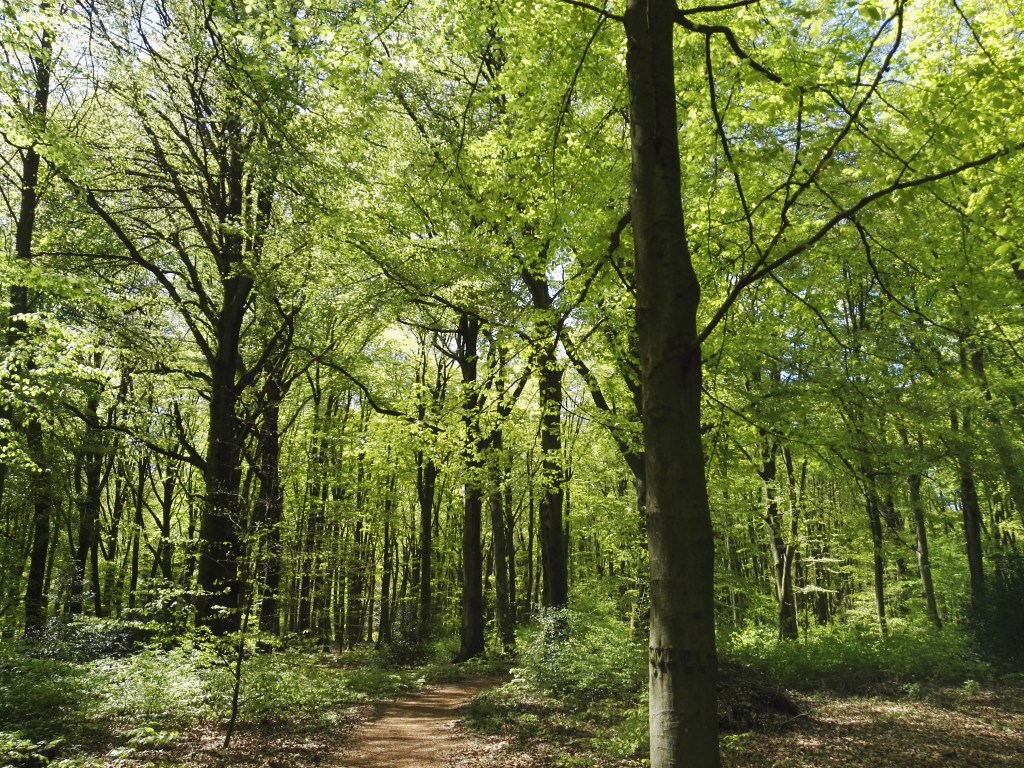
Bluebell is adapted to grow in deep shade below closed tree canopies of Beech (Fagus sylvatica), and therefore successfully occupies forest patches that are too stressful for many other plant species to grow. Picture from the Vecquée forest wherein the transplanted populations are located.

Next steps for this research. Luckily, forests are natural climate regulators. Depending on the forest structure, overstorey temperature can be buffered up to 8 °C, resulting in cooler microclimates. This buffering can attenuate climate change impacts on forest understorey species. If we want to predict understorey range dynamics under climate change accurately, we need to integrate the variation in understorey temperature conditions. Currently, we are running predictive models on a suite of common forest understorey plant species to investigate the effect of forest microclimates on their range dynamics under climate change. We aim to generate guidelines for forest managers to help mitigate climate change effects on forests.

If you could study any organism on Earth, what would it be? Herbs are great study organisms: they are easy to measure and perform experiments with and often show fast responses to experimental treatments under changing environmental conditions.

Anything else to add? In short: combining multiple methodological approaches is really cool! It can take a bit longer to familiarize yourself with the analyses, but you learn a lot from them, and it often provides novel insight into your study system. If you doubt it, go for it!

Historical biogeography in recent evolving Neotropical mammals

Oligoryzomys is an intriguing genus of sigmodontines that is distributed in almost all ecoregions of South America and continental Middle America. How did it get to be so diverse and distributed so broadly?

Above: A Patagonian specimen of Oligoryzomys longicaudatus, a species representative of one the fastest and geographically wide radiation of Neotropical mammals (photo credit: Dario Podesta).

Recent studies about the diversity of New World rodents, especially the mice and rats of the subfamily Sigmodontinae, show that their diversification started at the end of the Middle Miocene (ca. 12 Mya; Parada et al. 2021), reaching an impressive diversity of more than 400 living species in this period of time. Sigmodontine species richness is far from being completely characterized as shown by the frequent descriptions of new living species and even genera. Among sigmodontines, there is an intriguing genus that can be found in almost all ecoregions of South America and continental Middle America, the genus Oligoryzomys. This large distribution is only compared among mammals with that of the medium- and large-sized genera Conepatus (skunks), Didelphis (opossums), Procyon (raccoons) and Puma (cougar). Oligoryzomys encompasses 32 living species of long tailed mice; this species richness is among the largest among sigmodontine genera but is far below those of the genera Thomasomys, mainly distributed in the Tropical Andes and formed by 47 species, and Akodon, distributed in most of South America except Amazonia and most of Patagonia and formed by 31 species. Remarkably, Oligoryzomys is a much younger lineage (ca. 2.6 Mya old) than Thomasomys (ca. 4.22 Mya) and Akodon (ca. 3.8 Mya old). Another issue of interest is that several species of long tailed mice are the primary reservoir of distinct strains of hantaviruses that in humas cause Hantavirus Pulmonary Syndrome.

Cover image article: (Free to read online for two years.)
Hurtado, N. & D’Elía, G.(2022). Historical biogeography of a rapid and geographically wide diversification in Neotropical mammals. Journal of Biogeography, 49, 781–793.https://doi.org/10.1111/jbi.14352 

Amazed by the large diversity and geographic distribution of Oligoryzomys and their epidemiological relevance, which we collaborate to uncover and characterize the genus in previous studies, and here we designed a new study aimed to explain how this genus reached its enormous distribution and diversity in such a short period of time. After gathering samples from our own fieldwork, loans from museum collections and colleagues, we collected sequences of five genes. Then, we reconstructed the phylogenetic relationships among long-tailed mouse species using coalescence methods and dated their divergence times and found the biogeographic model that best describe the type and sequence of biogeographic events to explain the genus’ diversification.


Historical biogeography of the genus Oligoryzomys.

We corroborated that Oligoryzomys has a higher diversification rate than that of the Thomasomys and Akodon, the most species rich genera of the subfamily. We found that the most recent common ancestor of the genus, which lived ca. 2.6 Mya, was distributed in a large area in the lowlands of northern South America. Then, this ancestor, after a series of vicariant and dispersal events, colonized southern South America, the Andes and part of Middle America. This fast and geographically wide Pleistocene radiation is complex and involves events previously suggested for other groups of rodents (e.g., Andean diversification) and Neotropical fauna (e.g., connection between Amazonia and Atlantic forests), and others that are novel for rodents and for the most part for the South American mammals (e.g., the identification of the Chaco as a center of diversification).

However, much remains to be learned about the diversification of Oligoryzomys. One key fact that keeps us motivated and curious to understand why long-tailed mice constitute such a marvelous radiation is which trait or set of traits, either physiological, life history or morphological, has/have prompted this fast and geographically broad radiation? We hope that in the near future, with the analysis of additional data (hopefully at a genomic scale, conducted by us and several other colleagues, we will gain a deeper understanding of the radiation of Oligoryzomys. And then, we hope to explain how this radiation is related with the diversification and presence of strains of hantaviruses in several species of Oligoryzomys.

Written by:
Natali Hurtado (1) and Guillermo D’Elía (2)
(1) Research Associate, Centro de Investigación Biodiversidad Sostenible – BioS. Lima, Perú.
(2) Professor, Instituto de Ciencias Ambientales y Evolutivas, Facultad de Ciencias, Universidad Austral de Chile, Valdivia, Chile; and Curator, Mammal Collection at the Universidad Austral de Chile, Valdivia, Chile

References:
Hurtado, N. & D’Elía, G.(2022). Historical biogeography of a rapid and geographically wide diversification in Neotropical mammals. Journal of Biogeography, 49, 781–793.https://doi.org/10.1111/jbi.14352
Parada, A., Hanson, J., & D’Elía, G. (2021). Ultraconserved elements im- prove the resolution of difficult nodes within the rapid radiation of Neotropical Sigmodontine rodents (Cricetidae: Sigmodontinae). Systematic Biology, 70(6), 1090–1100. https://doi.org/10.1093/sysbio/syab023

Additional information:
@NataliHurtadoMi; @GuillermoDElia, https://sistematica.cl