Julián is a PhD student at the University of Caldas. He is a biologist with special focus on the biogeography and tropical ecology. Here, Julián shares his recent work on the distribution of snake species in Colombia’s trans-Andean region.
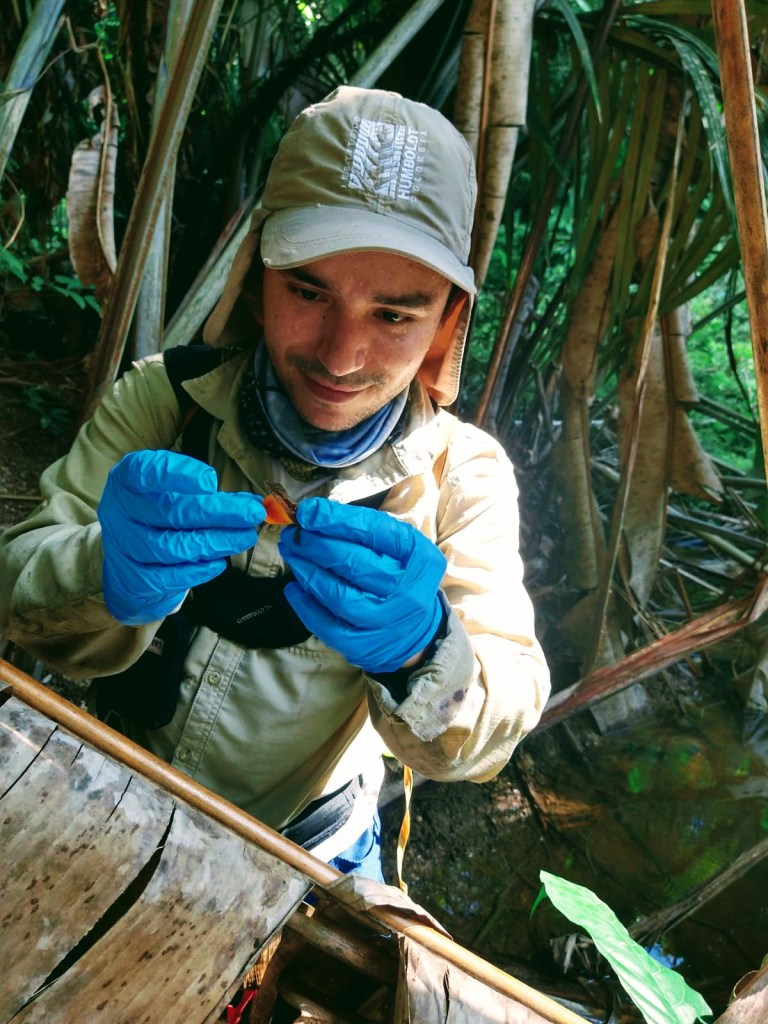
Julián A. Rojas is a PhD candidate at the Universidad de Caldas, in Colombia. He is biologist with a MSc. in Tropical Ecology. Currently, he studies the diversity and zoogeography of the Colombian trans-Andean snakes at the Cauca-Magdalena basin.
Personal links. ResearchGate
Institute. Departamento de Ciencias Biológicas, Facultad de Ciencias Exactas y Naturales, Universidad de Caldas
Academic life stage. PhD Student
Major research themes. Biogeography; Conservation biology; Natural history; Tropical ecology
Recent paper. Rojas-Morales, J. A., Galvis-Cardona, E. A., Henao-Osorio, J. J., Caicedo-Martínez, L. S., Arias-Monsalve, H. F., & Ramírez-Chaves, H. E. (2026). On the distribution of the rare Andean snakes, Saphenophis tristriatus (Rendahl & Vestergreen, 1940), and Saphenophis sneiderni Myers, 1973, with an analysis on the snake endemism in the Cauca River basin, Colombia. Biogeographia – The Journal of Integrative Biogeography, 41(1). https://doi.org/10.21426/b6.61410
Current study system. Snakes are fascinating creatures. Despite retaining a relatively uniform morphology (i.e. an elongated, limbless body), their evolution has given rise to an incredible variety of sizes, habits, and functions. South America remained isolated over a great part of the Cenozoic until relatively recent connection with Central America. It is believed that, at the time of this event, the northern Andes were about 50% of their current altitude. The speciation and extinction of snakes occurring during the formation of tropical mountain ranges are fascinating topics. The Andes are a good example of how topographic complexity resulting from geological history has influenced the diversification of fauna, including snakes.
Motivation behind this paper. While birds and mammals have primarily been studied in the northern Andes, non-avian reptiles and snakes in particular have not yet been included in quantitative biogeographic studies. This research is part of a doctoral thesis which aims to analyze the distribution patterns, endemism and conservation status of snakes in Colombia’s trans-Andean region. This study was prompted by the lack of research on the composition, diversity and distribution of the trans-Andean snakes. Many Andean snake species are poorly known, such as the genus Saphenophis (Myers, 1973). In recent decades, the number of snake records in databases and biological collections has increased, enabling the exploration of snake diversity and zoogeography across this biodiversity hotspot.
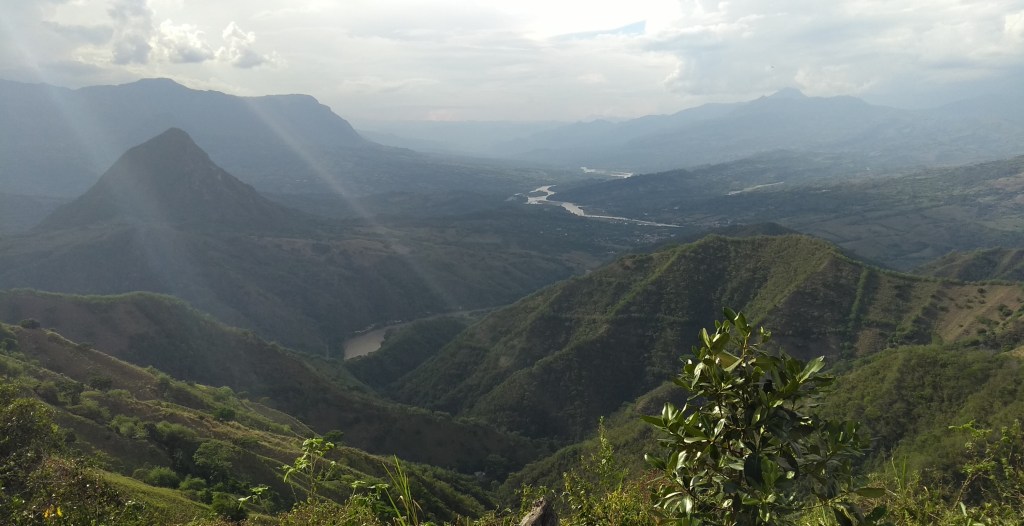
Our recent research highlights the snake endemism in the Cauca River basin, at the Colombia trans-Andean region.
Key methodologies. For this study, we analyzed first-hand data, including snake records obtained during field expeditions and specimens revised in biological collections. In areas of high topographic complexity where mountains and inter-Andean valleys converge across broad elevation gradients, exhaustive fieldwork is essential for snake recording. Using validated and georeferenced records, we expanded the known geographic distribution of the poorly-known species Saphenophis tristriatus and S. sneiderni. In addition, we identified 20 species whose distribution is restricted to the Cauca River basin, and then categorised them according to the main vegetation types found in this portion of the Andean mountain range (i.e., Cauca Valley Dry Forest, the Sub-Andean Forest and the Andean-High Andean Forest). To the best of our knowledge, this is the first study to analyze snake distribution patterns in the Cauca biogeographic province, identifying the restricted species that define it.
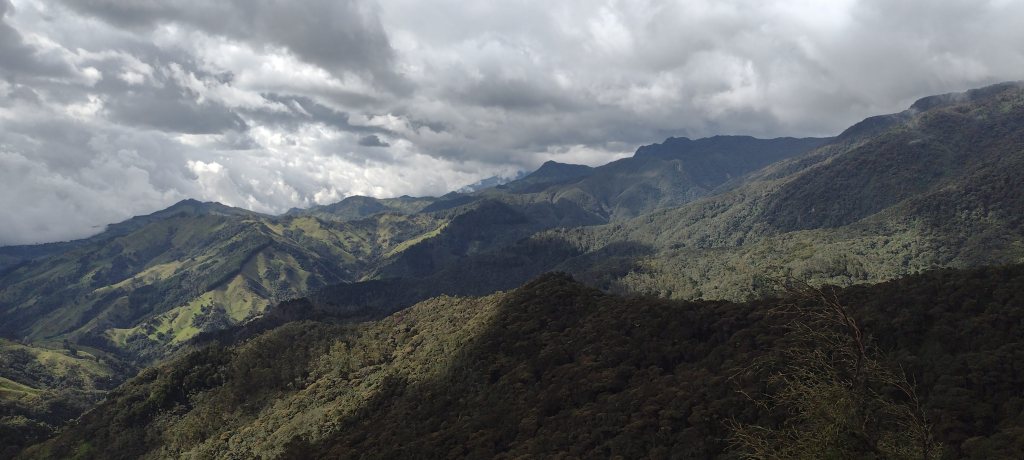
Andean Cloud Forest where Saphenophis tristriatus (Rendahl & Vestergreen, 1940) inhabit at the Central Cordillera of Colombia. Note how the human boundary encroaches on the cloud forest to make way for cattle grazing.
Unexpected challenges. One of the main challenges when working with tropical snakes is obtaining records themselves. Despite the high richness, finding snakes in Andean ecosystems is no easy task and usually requires considerable field sampling effort to obtain just a few records. In the ‘tierra fría’ of the northern Andes, at elevations above 2,500–3,000 m, snakes are extremely elusive. Additionally, Colombia’s internal conflict limits our field activities, as we cannot freely access remote, unstudied areas.
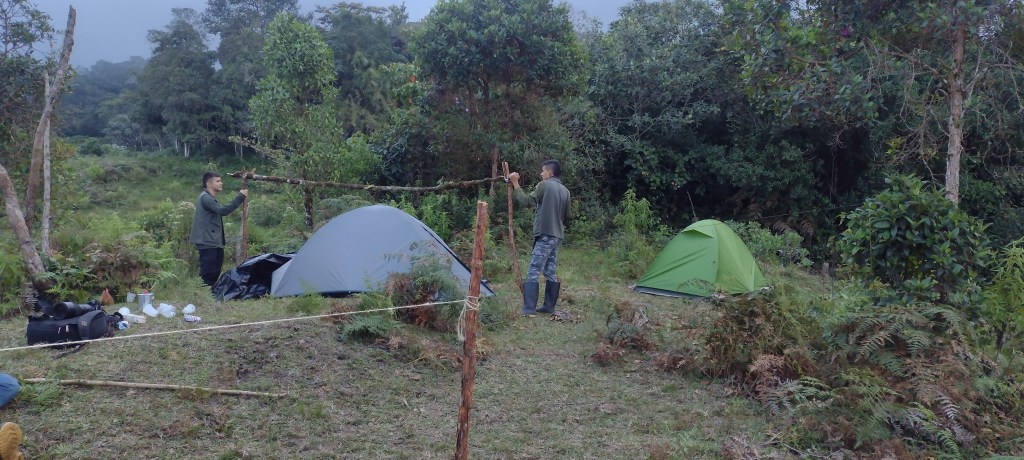
Some of the locations are in remote areas where you will need to camp for several days while searching for snakes and other wildlife.
Major results. The main findings of this study are the presentation of new evidence demonstrating the broader geographic distribution of the Saphenophis sneiderni and S. tristriatus species. The former is an endangered species (EN), and our record from the Bosque de Yotoco Forest Reserve makes a small contribution to its conservation. Furthermore, to the best of our knowledge, this is the first list of snakes endemic to the Cauca biogeographic province, identifying areas with a high concentration of endemic species.
Next steps for this research. I am currently working on the next phase of this research project, which focuses on the Magdalena River basin. This basin is located between Colombia’s Central and Eastern mountain ranges. As this is a larger geographical area with a more diverse and heterogeneous snake community, I will apply optimization methods to identify areas of endemism. Also, using niche modelling and phylogeographical approaches, I intend to identify paleo and neo-endemism elements to explore temporal changes along this basin. This will give us a better understanding of snake endemism patterns in Colombia’s trans-Andean region, helping us to identify areas important for conserving this neglected biological group.
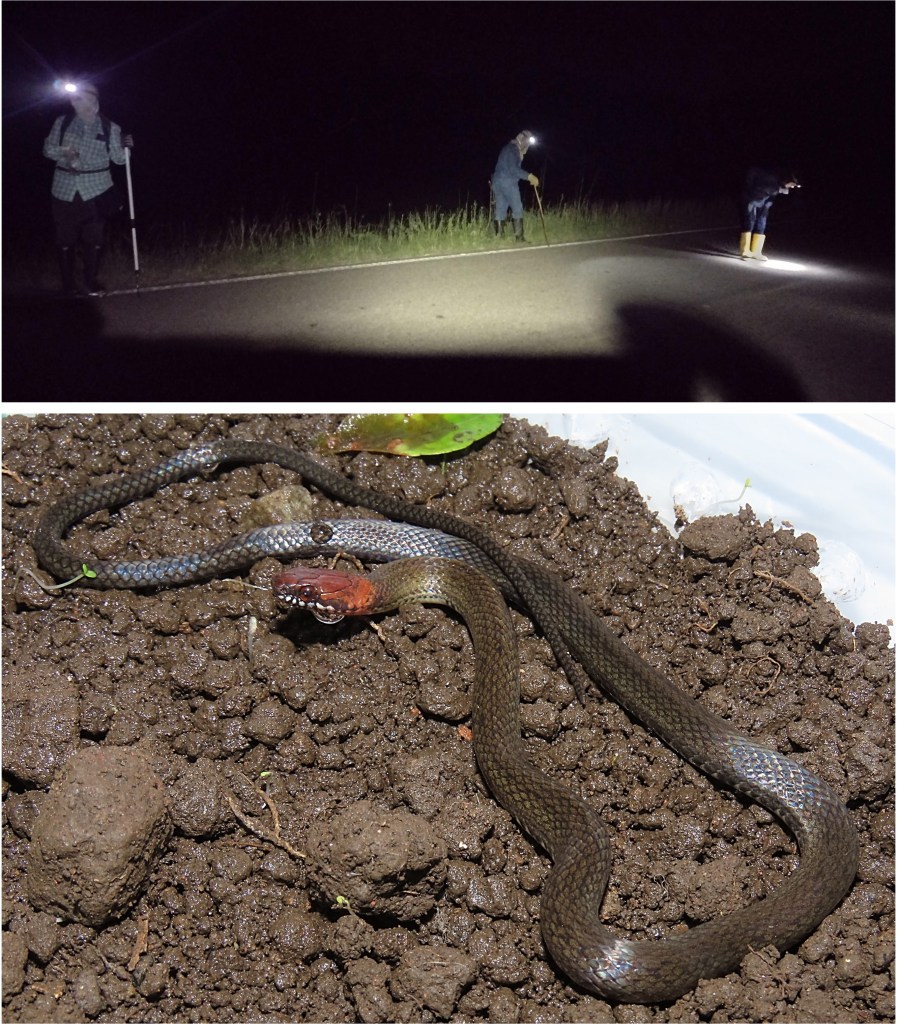
We also collect data on snake mortality on roads. Many valuable records of snakes have been obtained from specimens that were run over. During fieldwork we have found some poorly known taxa, such as this amazing Urotheca sp.!
If you could study any organism on Earth, what would it be? I would love to study the ecology and biogeography of the rare Pseudocerastes urarachnoides (Bostanchi, Anderson, Gholi & Papenfuss, 2006). I would search for it in the remote mountainous regions of the southwestern Caspian Sea and the Mesopotamian area. The reason I am interested in studying this species is its biological rarity and the rich cultural and historical background of the region in which it lives.
Is there anything else you would like to tell us about yourself or your featured research? Studying biodiversity for conservation purposes is a wonderful endeavor and can be deeply rewarding on a personal level. However, obtaining new scientific-quality data can also be very costly in some cases. I would like to thank the Ernst Mayr Grant, Museum of Comparative Zoology at Harvard University, the Mohamed Bin Zayed Species Conservation Fund, Save the Snakes and Idea Wild, for their financial support of this research. I would also like to thank the Colombian Ministry of Science and Technology for the doctoral fellowship awarded (BPIN 2022000100055 – BecasV).
 Biogeography.News