ECR feature: Brooks Kohli on the role of abiotic filters and competition assembling small mammals communities

Brooks Kohli is a postdoc at Ohio State University in the USA. He is an ecologist interested in understanding small mammal diversity and distribution. Here, Brooks shares his recent work on small mammal trait-base tests to reveal the importance of abiotic filters.

Brooks Kohli, from the summit of Bald Mountain (in Great Basin National Park, Snake Range, Nevada, USA), with Wheeler Peak, the highest peak of the interior Great Basin, in the background (Photo by Brooks Kohli).

Personal links. Twitter | Personal Website

Institute. Ohio State University

Academic life stage. Postdoc

Major research themes. Community assembly, biogeography, functional diversity, especially of small mammals 🐀🐿

Current study system. Rather than focusing on individual species, I study entire assemblages of small mammals (roughly rabbit- or squirrel-sized and smaller) and how their diversity and community composition change along environmental gradients. The best part about it is I get to work with all the amazing diversity of small mammals in a region, everything from kangaroo rats to water shrews to bushy-tailed woodrats!  I currently use mountains as study systems because of the rapid turnover in temperature, precipitation, and habitats tied to elevation that occurs over relatively short distances, making it easier to span a wide gradient that is essentially replicated across independent mountains. 

A water shrew (Sorex navigator), one of the 34 species studied in this paper, captured during small mammal surveys in the mountains across the Great Basin, Nevada, USA.  The large hind feet have stiff, bristly hairs on the outer margin that help this small semi-aquatic mammal swim in fast-slowing mountain streams to catch insects to eat (Photo by Brooks Kohli).

Recent JBI paper. Kohli, B. A., Stevens, R. D., Rickart, E. A., & Rowe, R. J. (2021). Mammals on mountainsides revisited: Trait‐based tests of assembly reveal the importance of abiotic filters. Journal of Biogeography, 48(7), 1606-1621 https://doi.org/10.1111/jbi.14099

Motivation behind this paper. For decades, small mammals have been an important group for studying how species richness patterns change with elevation, as well as for developing and testing community assembly theory, which seeks to explain why certain species coexist where they do and why others do not, due to factors such as abiotic conditions or competition for resources. Still, these perspectives have rarely been combined, despite the recent development of functional and phylogenetic diversity methods that make it possible. For my dissertation, I wanted to take advantage of the excellent study system mammals on mountainsides provide and harness the power of the trait-based approach to infer assembly processes. Specifically, we wanted to test classic community assembly hypotheses about the relative importance of competition versus environmental filtering in structuring small mammal assemblages. We were also curious about whether functional and phylogenetic diversity patterns would differ from the typical mid-elevational peak in species richness observed for small mammals, as a growing body of evidence suggests that species richness is not a good proxy for other aspects of diversity.

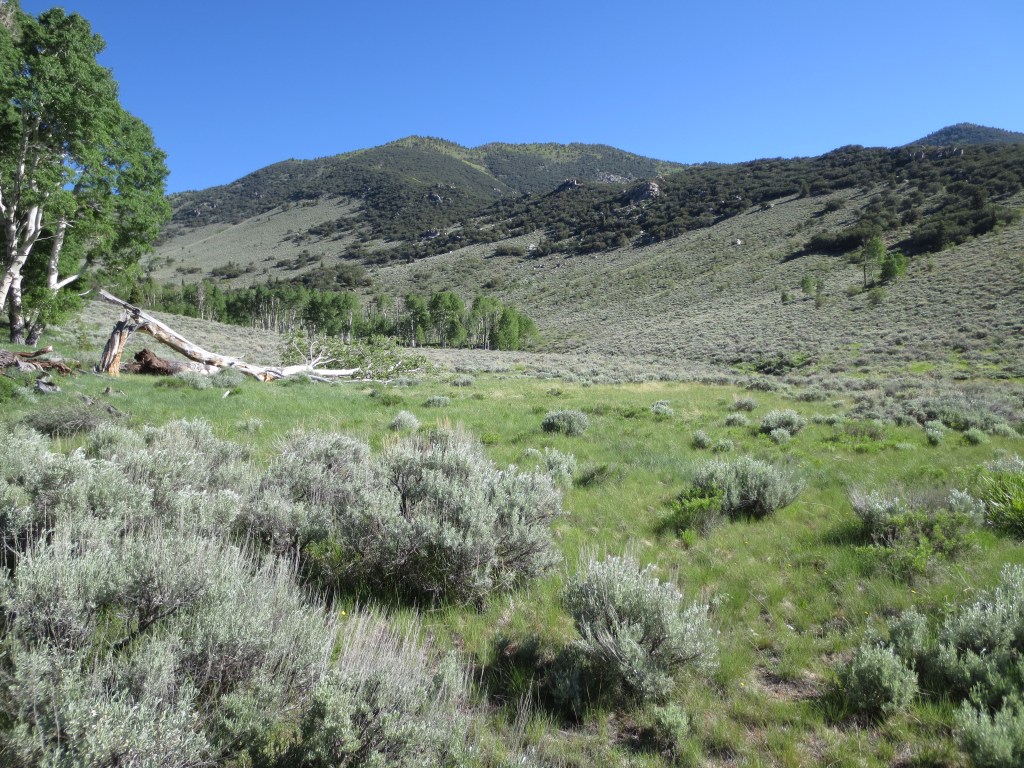
Variety of habitat types typical of the mid-high elevations in Great Basin mountain ranges (Photo by Brooks Kohli).

Key methodologies. With the objective to quantify multiple dimensions of small mammal diversity across elevations, this work combined data from many years of intensive field surveys (led by myself, some of my co-authors, and involving many other colleagues, students, and volunteers), trait data collection directly from museum specimens, and compilation of other trait data and phylogenetic relationships from existing resources. The key to our analysis was identifying alternative hypotheses and using only those functional traits most tightly linked to the process of interest to test each of them separately. For example, testing abiotic filtering hypotheses only based on traits that most directly reflect environmental tolerances and limits of species. Parsing the data is critical because multiple processes likely act on different traits simultaneously to structure assemblages and may produce opposing patterns that cannot be detected when all are analysed together.

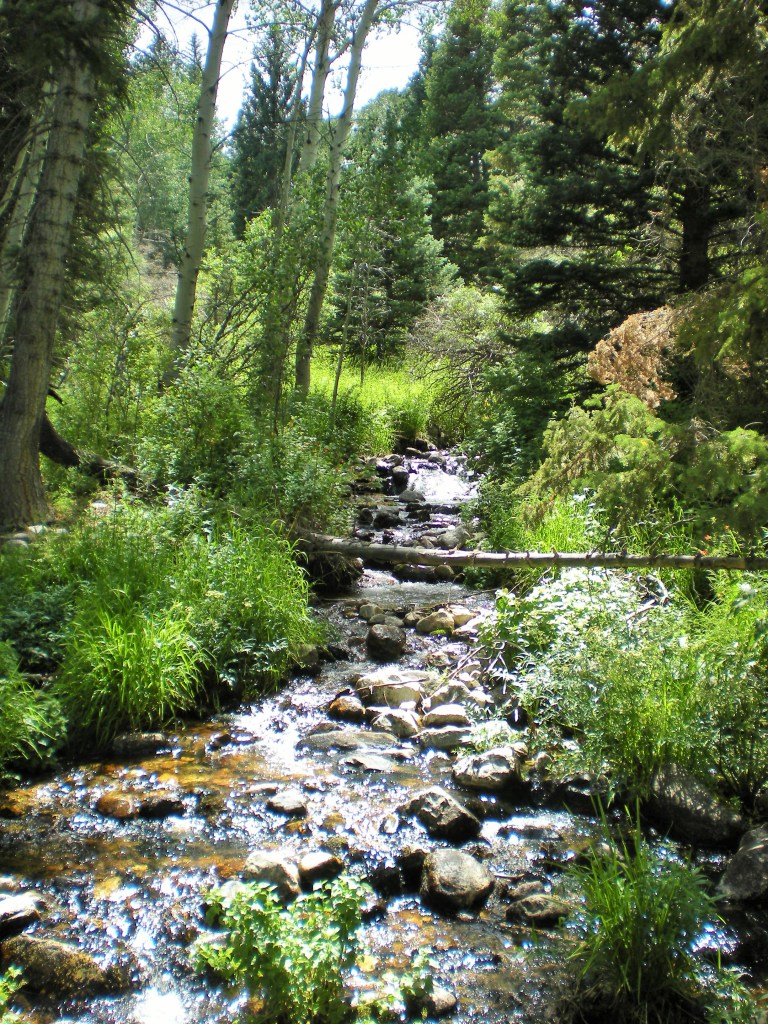
Creekside riparian habitat in upper elevations of the Snake Range (Photo: Brooks Kohli).

Unexpected challenges. One of the biggest challenges was a seemingly simple task: choosing which functional traits to include and determining which ones should be used to test abiotic filtering or competition. This is a persistent challenge in trait-based ecology, and a critical one to grapple with to ensure the most meaningful interpretation of results from a study such as this. We weren’t satisfied with just using traits readily available in existing global mammal trait databases because they provide few continuous traits with strong ties to environmental tolerances. To remedy this shortcoming, we used several continuous traits that I had previously identified as reliable indicators of water and temperature requirements (e.g. relative medullary thickness of the kidney, fur density), and combined our knowledge of the species’ natural history with literature searches to construct additional finer resolution traits such as detailed habitat use and nest location.

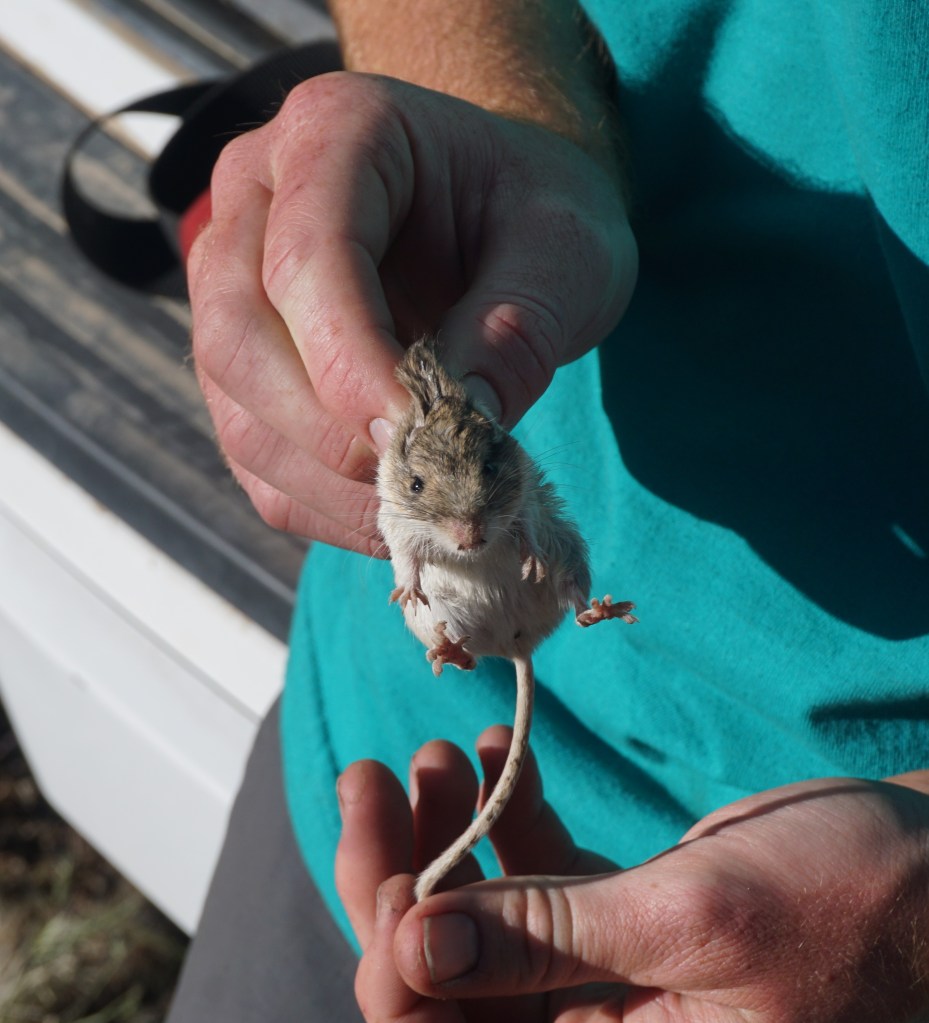
A Great Basin pocket mouse (Perognathus mollipilosus), these mice have fur-lined cheek pouches that they gather seeds and other food in to store in their underground burrows (Photo: Jessica Taylor).

Major results. Our paper has two major results. The first is that abiotic filtering seems to be the most important thing driving community assembly for small mammal assemblages. In the three dry mountains we studied in the Great Basin of the Western US, this is especially true in the desert lowlands but also towards mountaintops, to a lesser degree. Second, even though species richness decreased substantially at high elevations, overall functional and phylogenetic diversity generally increased in all three mountains. This finding contradicts the general paradigm of community assembly patterns along elevational gradients, in which functional and phylogenetic diversity is expected to decrease as conditions become harsher at higher elevations. However, little previous work was done in dry regions, where the harshest conditions may not be on the mountaintops. Thus, our work emphasizes that more comparative work is needed on functional and phylogenetic diversity patterns on mountainsides.

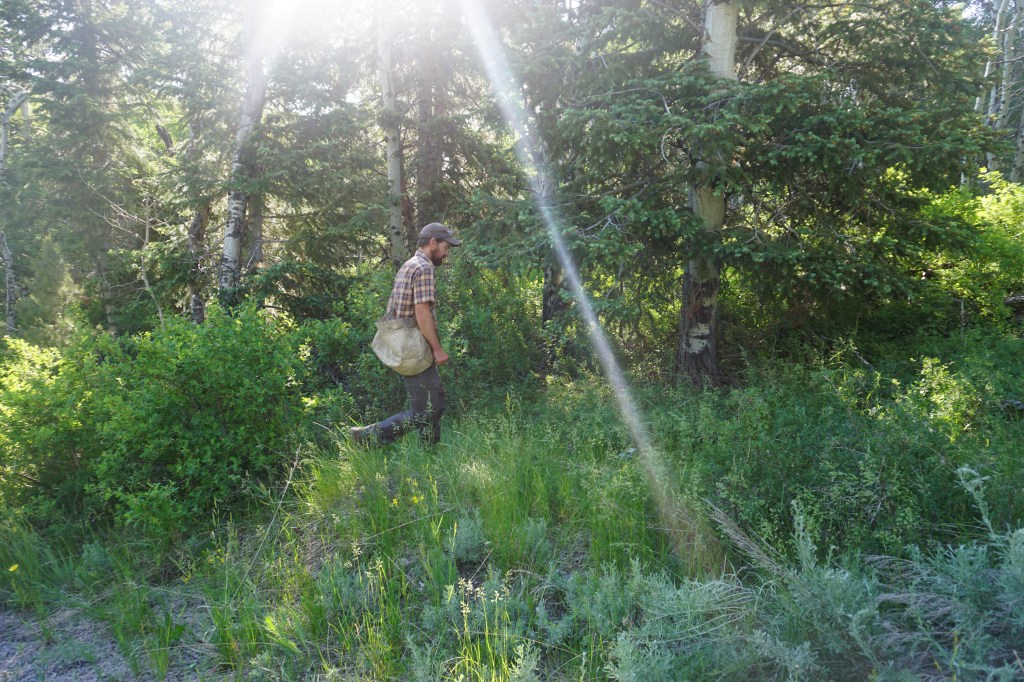
Brooks Kohli, checking small mammal traps during field surveys (Photo: Jessica Taylor).

Next steps for this research. The next step is to jump to a macroecological scale to determine whether there are, in fact, consistent differences between wet versus dry mountains or tropical versus temperate mountains, or if the patterns we see in the Great Basin are an exception to a global rule. I am currently looking at this question during my postdoc along with my advisor, Marta Jarzyna. I’m very excited about this work because there have been no large-scale comparative analyses of mammal functional or phylogenetic diversity along elevational gradients to date.

If you could study any organism on Earth, what would it be? If I had to pick one, it would probably be the Inyo shrew (Sorex tenellus). This tiny insectivore only weighs 2-4g and was thought to be rare throughout its limited distribution in the western US until recently. Our recent surveys of mountains across the Great Basin and earlier ones led by my colleague, Eric Rickart, substantially increased the number of voucher specimens of the species and greatly expanded its known range. We encountered these shrews primarily on rocky talus slopes at high elevations, where they coexist with pikas and some other, more “charismatic” montane mammals.  It’s really exciting to contribute new knowledge about the distribution and natural history of a mammal species in such a well-studied region!

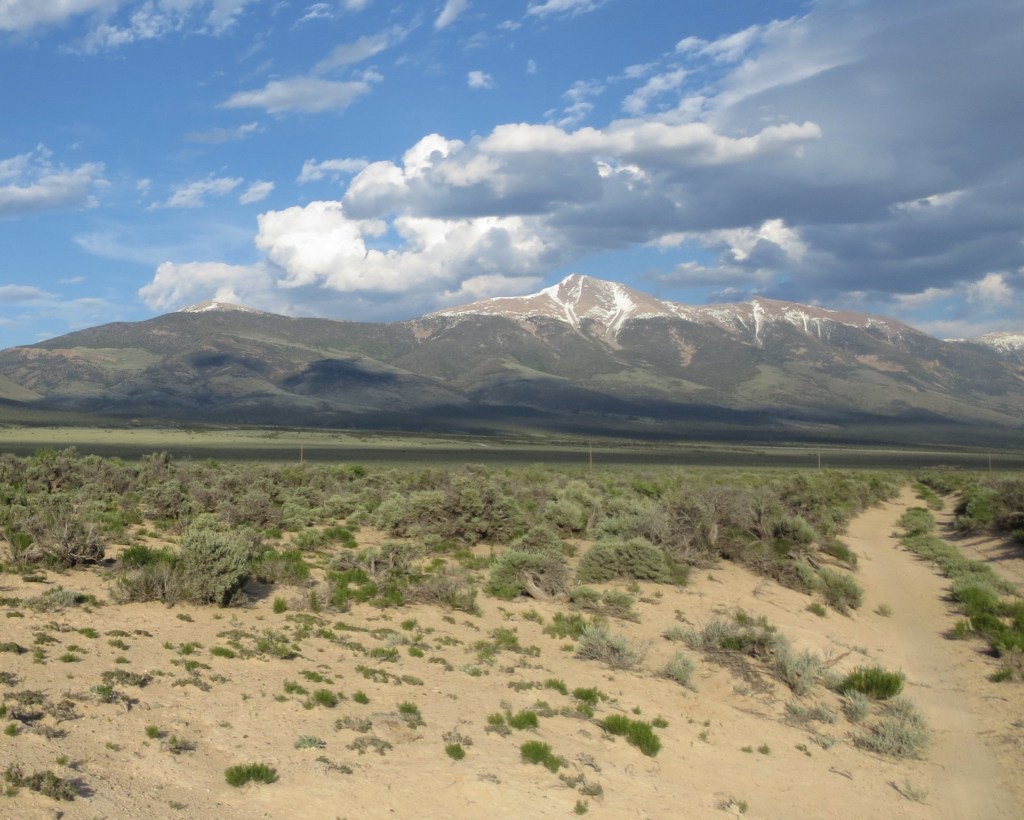
Profile of the Snake Range, Nevada, USA, from desert valley to mountain peaks (Photo: Brooks Kohli).

Anything else to add? One final note is that many people cringe at the thought of small mammals, especially rodents, which have been cast as vermin.  And while I understand not wanting a rat living in my walls, the diversity of wild rodents (mice, rats, squirrels, etc.) is astounding and there are more species than in any other group of mammals!  They are found all over the world in virtually all types of habitats and environments, and are key components of many ecological processes, including food webs, soil perturbation, pathogen transmission dynamics, seed and spore dispersal, and more! We have so much to learn from studying them!

Biogeography Letters & re-using decisions and reviews

A new article type — Letters — and a new policy — adopting and permitting re-use of decisions and reviews — aim to simplify publication pathways and reduce author, editor, and reviewer burden.

Three important changes at Journal of Biogeography, in a nutshell:
– New short-form “Letters” for high impact & time-sensitive research
– Option to include prior decisions+reviews to fast-track manuscripts at JBI
– JBI proactively permits re-use of our decisions+reviews for fast-tracking rejected articles at subsequent journals


As authors, we’re all familiar with the pain of revising rejected manuscripts, submitting them to another journal with different formats, and waiting for another round of new reviews. As editors and reviewers, we’re all familiar with the burden of handling manuscripts as if they’re brand new when we know from personal experience that it’s not true a good chunk of the time. The burden on us all to deliver the best in biogeography has soared in recent years. As such, the Journal of Biogeography (JBI) is taking three important steps to simplify and fast-track manuscript submission.

First, we are introducing a new article type: Biogeography Letters. Letters are more compact than our standard Research Article but still will communicate the same high quality, novel, and impactful research that characterize our classic article type. The abstract will be slightly shorter, so the article can incorporate a Significance Statement, reflecting the expected import of the research. The article format will also be more flexible, allowing either separate Results and Discussion sections, or a combined Results & Discussion section. Given this greater flexibility in the format of Letters, we also will welcome format-free submission to minimize the author burden of revisions before resubmission. We will first provide a rapid initial review and decision on Letter manuscripts before requiring reformatting and revision in accordance with JBI style for those manuscripts that are on a positive track.

Second, also to reduce author and reviewer burden, we will fast-track manuscripts submitted with prior decisions and reviews. The review process is imperfect, and sometimes outstanding manuscripts are rejected from high ranking journals by mistake. We now encourage authors whose manuscripts have previously been considered by another journal to include any reviews and decision letters alongside your submissions to JBI. This applies not only to Letters, but to all article types. In accordance with guidance from COPE, permission to share previous reviews and decision letters must be granted by the prior journal and reviewers. Confirming this permission is the author’s responsibility. During submission, you’ll be asked to upload previous reviews, decision letters and any other supporting documentation along with your submission, using the file type “Additional File for Review but Not for Publication.” JBI editors may contact the previous journal or reviewer to validate the documents provided and may also choose to supplement these with new reviews.

Third, because requesting permissions from reviewers and editors to satisfy COPE guidelines may add time and work for all involved, JBI proactively permits re-use of our editorial decisions and reviews if we reject your manuscript. JBI encourages our reviewers to provide permission for their reviews to be re-used by authors whose manuscripts are rejected by the journal, to abet, ease, and speed the process at a subsequent journal. You need not write to us to ask: by default, JBI editors now provide permission to re-use our decisions, and your decision letter will indicate whether reviewers have given permission for re-use during revision and resubmission at an alternate journal.

JBI is not the first to take these important steps; we join an already established group of forward-thinking journals and initiatives that are re-imagining science publishing for the benefit of our author communities. But as a leading journal in the broad integrative discipline of biogeography, we hope our example to pro-actively release our decisions and reviews for re-use, and to accept decisions and reviews from other journals to fast-track decisions on manuscripts submitted to JBI, will accelerate change across all related disciplines for the benefit of all involved.

.


.

Description of the new article type from the journal’s Author Guidelines: Letters present novel and impactful findings in a shorter format, typically not more than 8 pages when printed at final journal sizing. The main headers for Letters will be Introduction, Materials and Methods, Results, Discussion (alternatively a combined “Results and Discussion”), Acknowledgements, and References. Letters should not exceed 8 pages when printed at final journal sizing. Therefore, a typical Letter is likely to be composed of the title page (title, short structured abstract [≤250 words], significance statement, and other frontice material), 4–5 pages of text (~945 words per page),  1-2 pages of illustrative material (up to ~4 tables and figures, including captions), and 1-2 pages of references (~35 references per page) and other required statements (Conflict of Interest, Data Availability, Biosketch, Author Contributions). The proportions of different sections may vary, but in sum they should not exceed the specified length for Letters. Methods need to be described in a manner that allows a competent practitioner in the field to assess the rigor of the study; additional details enabling repeatability may make substantial use of Supplementary Documentation. Authors must allow repeatability by either providing a thorough description of the methods or by providing relevant computer code.

Two examples of biogeography Letters that inspired and prototyped the new process:

Huntley, B., Allen, J. R. M., Forrest, M. et al. (2021). Projected climatic changes lead to biome changes in areas of previously constant biome. Journal of Biogeography. https://doi.org/10.1111/jbi.14213
SIGNIFICANCE STATEMENT: Using global biome patterns inferred from simulations made using the LPJ-GUESS dynamic global vegetation model, we show that a substantial fraction of areas that are simulated to have supported the same biome throughout the last glacial-interglacial cycle are projected to experience biome change as a consequence of 21st century climatic changes. We further show that, with the exception of some desert areas, areas of the highest past biome constancy correspond to areas of the highest terrestrial vertebrate diversity. As a result, the projected biome changes are likely to have disproportionately large negative impacts upon global biodiversity.

Fernandez, MC, Hu, FS, Gavin, DG, et al. (2021) A tale of two conifers: Migration across a dispersal barrier outpaced regional expansion from refugia. Journal of Biogeography. https://doi.org/10.1111/jbi.14209
SIGNIFICANCE STATEMENT: Species with disjunct distributions provide natural laboratories for addressing the pressing biological challenge of whether fragmentation hinders species’ ability to track a changing climate. Here we find that the expansion of two Pacific Northwest conifers since the last ice age was characterized by dispersal across a 50-to-200-km inhospitable barrier. This predominance of migration contrasts with many recent studies emphasizing the role of microrefugia in populating modern species distributions. Our work addresses longstanding questions on the development of mesic conifer forests and offers insights into broader spatiotemporal patterns of postglacial vegetation that have remained unresolved despite decades of paleoecological studies.

Invitation for applications: 2021 JBI Editorial Academy

The Journal of Biogeography is delighted to invite more Early Career Researchers to become members of the journal’s Editorial Academy.

The Editorial Academy is aimed to help early career biogeographers who are interested to learn more about the publishing process to gain experience with the guidance and support of an experienced mentor.

In 2021 we are expanding the number of positions in the academy with one goal being to increase the geographic diversity of our board membership, given the intrinsically global nature of the subject of biogeography itself.

Editorial Academy members will be partnered one-to-one with a chief editor (CE) or an associate editor (AE) of the journal.  Academy members will have the same role as a regular member of the Editorial Board, but will work closely with the relevant AE/CE throughout the process.  This partnership will illuminate decisions by the editorial team, give insight into the way a journal operation runs, and allow the academy member to explore their potential to become a full-fledged member of the editorial board.  The partnership will convey appropriate procedures and consistent standards of the journal.

Appointments to the Academy are for two years.  The workload will be for 4 manuscripts per year.  Academy members may then be invited to be a continuing member of the editorial board with at least a half-load (6 manuscripts per year) for up to 2 years.  

To be considered for appointment to the Editorial Academy, please submit the following materials as a single PDF:

1. A one page statement explaining:
   – Your interest in and qualifications for the position
               Applicants should have 
                    .. ~2–5 years postdoctoral or equivalent experience (excepting career breaks)
                    .. published ≥6 papers (≥1 should be as first/corresponding/senior author)      – Your commitment to the discipline of biogeography
     – The role that being an Academy member will play in your development as a biogeographer
     – Your experience reviewing and, if appropriate, editing
     – Your philosophy on publishing, reviewing, and editing
     – Up to 8 keywords describing your disciplinary interests
     – The name of two to three editors with whom you would prefer to be partnered.

2. Your CV

Timeline:
Submit application: 01 September 2021
Decisions announced: October 2021
Appointment begins: 01 January 2022 (negotiable)

Upload applications as a single PDF with the filename “LASTNAME_FIRSTNAME_EditorialAcademy.pdf” only to: https://forms.gle/upRzHL9vBD6S7miT9

Address enquiries (Subject line: “Enquiry: Editorial Academy”) to the Editor-in-Chief at mdawson@ucmerced.edu

JBI aims to foster inclusive science that reflects the disciplinary, human, and geographic diversity of biogeography and biogeographers. Submissions are welcomed from applicants of all ethnicities, races, colors, religions, sexes, sexual orientations, gender identities, national origins, disabilities, ages, or other individual status.

Persistence at the margins of tree life

Species niche differences shape our high-elevation forest communities.

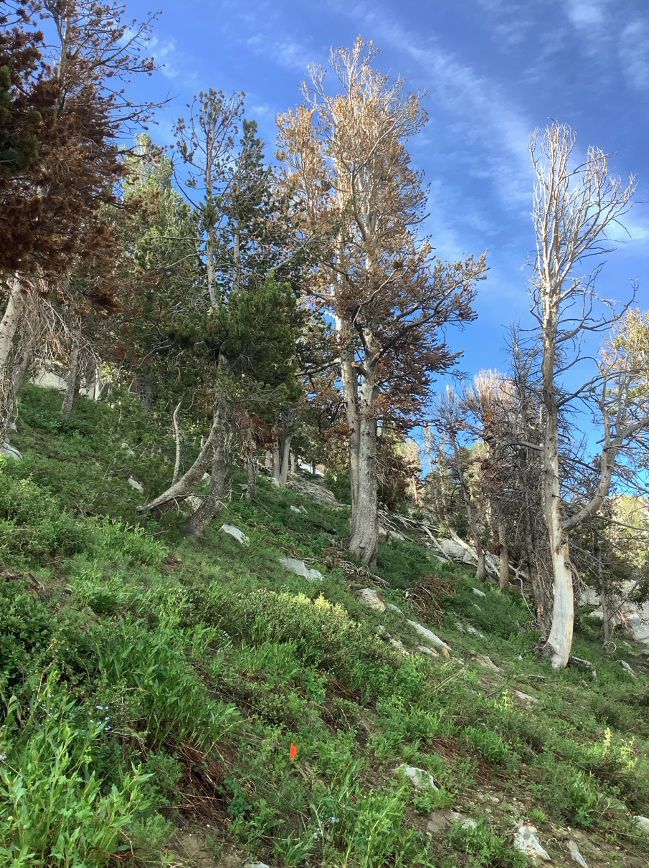
Above: Mountain pine beetle and white pine blister rust have heavily impacted this whitebark pine forest in the Mt. Rose Wilderness Area outside of Reno, Nevada, USA.

In recent decades, increasing temperatures and prolonged drought have been linked to widespread tree mortality across the western United States. High-elevation forests are especially vulnerable due to their isolation on mountaintops, where interactions among different populations and potential for migration are limited. Losses of our high-elevation forests would have dire consequences for ecological and anthropogenic communities since these forests stabilize snowpack and regulate the downstream water supply in our arid region. These ancient forests contain the longest lived trees in the world (>4000 years old!) that have survived through significant climatic changes in the past. However, we are in a period of unprecedented climate change and novel disturbance impacts that raise concerns about the future of these beloved, ancient forests.

Cover article: (Free to read online for a year.)
Hankin, L.E. and Bisbing, S.M. (2021) Let it snow? Spring snowpack and microsite characterize the regeneration niche of high-elevation pines. J Biogeogr. 48:2068-2084. https://doi.org/10.1111/jbi.14136

Disturbance impacts and associated restoration strategies have been focused in the Rocky Mountains due to the extent of forest decline there, however, we don’t know how vulnerable these same species are within the Great Basin, where isolated tree populations deal with both extreme water stress and cold-temperature stress. Under these stressful conditions, opportunities for tree regeneration are rare, therefore we wanted to better understand the conditions that favor regeneration of high-elevation five-needle pines to be able to anticipate climate change- and disturbance-induced shifts in forest extent and composition near the upper treeline.


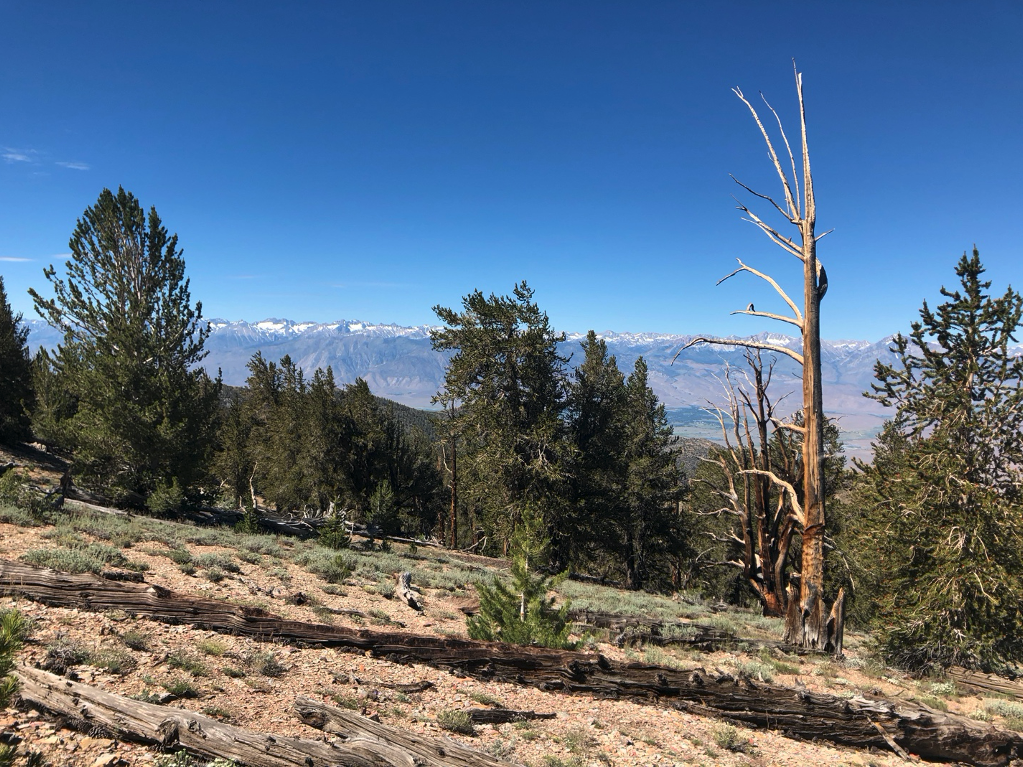
A Great Basin bristlecone pine sapling grows from under a downed tree with lightning-killed snags standing nearby in the White Mountains of California. Great Basin bristlecone pine is an edaphic specialist, preferring calcareous rock types found in only a few mountain ranges in the Great Basin.

Great Basin forests are fascinating because they exist atop mountain sky islands that rise dramatically out of the arid sagebrush-filled valleys. There is so little information about many of these remote areas that conducting data collection was filled with unknowns and adventures. Many times we had to resort to “old school” paper maps just to figure out a way to access the forests and sites within. There is no better way to get to know a place though, and we were surprised at the ecological diversity and beauty at every turn. Furthermore, the abundance of regeneration within these harsh environments was a humbling reminder of the resilience of these tree species. Given the accessibility challenges within the Great Basin, we are excited to be able to contribute forest monitoring data to the nation-wide efforts to conserve five-needle pine species, especially monitoring potential advancements in mountain pine beetle and white pine blister rust impacts.

As we now better understand divergent species’ strategies for persisting in these harsh environments, we get to dive deeper into how they deal with different climate conditions and what conditions may go beyond their capacity to survive. Ultimately, forest persistence will rely on natural tree regeneration and seedling traits has been tied to establishment success, so our next steps are characterizing the range of seedling traits in different Great Basin tree populations, and how these might link to seedling performance and survival under changing climate conditions. Our study showed divergent responses to snowpack conditions for more specialist whitebark and bristlecone pines, and a clear generalist strategy of limber pine – responses that are likely tied to adaptive traits. With this ongoing work, we hope to guide the selection of the best seed sources for restoration that promote resilience to climate extremes and support the persistence of this beloved and important forest type.


Written by:
Lacey Hankin, PhD Candidate
Program in Ecology, Evolution, and Conservation Biology, Dept. of Natural Resources & Environmental Sciences, University of Nevada – Reno

Further information:
Bisbing Lab website: https://www.sarahbisbing.com


How do the geographical distributions of species drive patterns of biodiversity?

The rate of species formation is conditional on the relatedness of co-occurring species, with packing and competition apparently driving maximum diversity in single areas.

Above: The high diversity of species in the tropics, as seen here in Costa Rica, mean that many more species are found within smaller geographic areas

I have always been fascinated by the processes driving the vast variation in species we see around us today. A rich history of research suggests that this diversity should be regulated by whether species are found in the same geographic area as those closely related to them, which both compete for shared resources, as well as preventing the processes that lead to the formation of new species. Researchers are constantly collecting new detailed information about where specific species are found and how they are related. Using these large datasets covering thousands of species I tested firstly, whether there was support for previous hypotheses and secondly, whether groups with vastly different ecologies, e.g. flying versus land-based species, would show similar or divergent patterns. Quantifying these patterns across this number of species and different groups will hopefully allow insight into whether there are any general rules driving species diversity..

Editors’ Choice article: (Free to read online for a year.)
Crouch, N.M.A. (2021), Shared patterns of spatial accumulation of lineages across terrestrial vertebrates. J Biogeogr. 48 https://doi.org/10.1111/jbi.14139

In this work I primarily use a term called “allopatry” which describes whether a population or species is geographically separated from other such groups. When I quantified allopatry using only species and their closest living relative I find, as predicted, new species form fastest when they are physically separate. This separation prevents exchange of genetic material while species adapt to different environments, causing populations to become distinct. However, when I defined allopatry for species using all other members of its family, regardless of how they are related, I find higher speciation rates when species co-occur. This suggests that for the greatest number of species to accumulate they must pack within a single area. This work therefore shows how quantifying biological patterns using different numbers of species can produce different results, and therefore further insight into evolutionary processes.


Red billed quelea (Quelea quelea) in Tsavo National Park, Kenya.

The most surprising aspect of the results for me was additional finding: a negative relationship between one definition of species co-occurrence and the number of species in a family. I had predicted a positive relationship because coexisting with fewer species should provide more opportunities for more species to form. Interpreting this result is challenging; one possibility is that, rather than new ecological opportunities determining how many species can be supported within a family, it is competition for shared resources within a single area or region that dictates species richness.

One of the most challenging aspects of this work is how to use information on species distributions to define allopatry. Although the overall distributions of species may overlap, individual species may exploit different features of the environment. For example, some species may live high in the treetops while others may spend most of their time on the ground. Integrating this information into an analysis like this is extremely challenging, but by repeating the analysis over such a large number it appears possible to identify general biological patterns.

This work certainly creates many exciting questions. For example, do these results translate to the marine environment where the barriers to species movements contrast dramatically to those on land, including long-distance dispersal of larval offspring. For land-based species, how do other aspects of their biology relate to these results? In particular, species’ morphology – which influences how they interact with the environment and resources – has long been thought to influence how species coexist, and it will be exciting to integrate those data in combination with the results of this study.


Written by:
Dr. Nicholas Crouch
Department of the Geophysical Sciences, The University of Chicago

Further information:
@NCrouch89
http://nickcrouch.github.io/


Women in Biogeography

A compilation of top-cited papers from the past decade in the Journal of Biogeography

Above: Images of the locations and taxa studied by the authors of papers featured in this virtual issue.

The Journal of Biogeography (JBI) is publishing a virtual issue this week that highlights some of the many influential contributions of women to the discipline. The breadth and depth of women’s contributions cannot be overstated, but historically they have been understated. Biogeography, like other areas of science and academia, has—despite increasing awareness of issues affecting inclusivity, equity and diversity—been slow to change and gender disparities remain significant. The under-representation of women’s contributions stem in part from current inequalities and in part from historical legacies that perpetuate and even amplify through time. Our goal through the virtual issue and this accompanying blog is to highlight (an admittedly small sample of) the influential contributions by women biogeographers as a step towards equalizing visibility across genders. Our hope also is that we will help create a greater sense of belonging for women in biogeography.

Virtual issue: (Free to read online for 3 months post publication of the virtual issue.)
Foreword: https://doi.org/10.1111/jbi.14223
Issue: https://onlinelibrary.wiley.com/doi/toc/10.1111/(ISSN)1365-2699.Women_in_Biog
eography

A foreword to the virtual issue aims to provide some context on the many challenges and disparities women face during their careers, many of which have synergistic effects and amplify seemingly small gender gaps at earlier levels to generate larger disparities in later and higher ranking career stages. This blog is dedicated to highlighting the work of the lead authors in the papers that appear in this virtual issue.

The virtual issue features 24 papers published in JBI since 2009. These papers were chosen according to their citation rates (details are provided in the foreword), enabling us to highlight older and newer work; the start-year was determined by the completeness of databases available to us for generating these data. The virtual issue provides a clear picture of the disciplinary range and importance of women’s contributions. Likewise, the brief biographies provided by the lead authors, below, illustrate the breadth of pathways travelled to, and a look toward the future from, their current varied positions of success.

We expect everyone will find much of interest among these pages, and we hope that this compilation will provoke thought and innovation as women continue to drive forward our understanding of the patterns and processes shaping life on this planet.
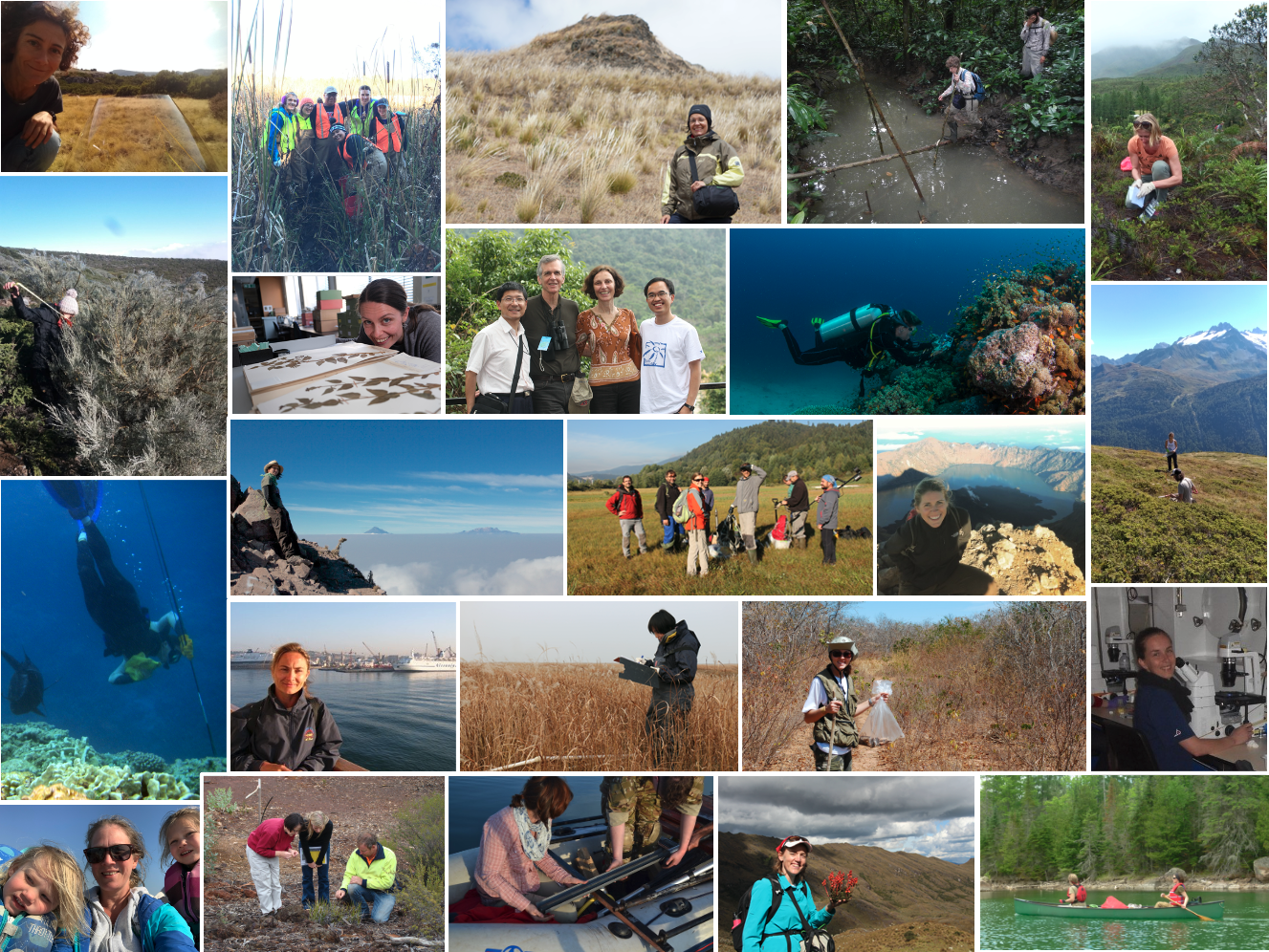

Introducing the authors of the highly cited papers featured in the virtual issue


A quantitative synthesis of the importance of variables used in MaxEnt species distribution models (doi: 10.1111/jbi.12894)
Dr. Johanna Bradie
NSERC post-doctoral fellow, Great Lakes Institute for Environmental Research, University of Windsor, Canada
Dr. Johanna Bradie is an NSERC post-doctoral fellow at the Great Lakes Institute for Environmental Research at the University of Windsor, Canada. She is a computational biologist who uses statistical and computational models to aid in environmental management, and is broadly interested in using analytics to inform problem solving and achieve best outcomes.  Johanna’s recent work has focused on supporting science policy to reduce the introduction of aquatic non-indigenous species via ballast water. More specifically, she has used predictive modelling to evaluate alternative regulatory options to inform legislation, and created a software-based decision support tool to automate the incorporation of best available science into daily monitoring decisions for Canada’s federal ballast water management programs.
http://johannabradie.weebly.com/
twitter: @johannabradie


Decline of a biome: evolution, contraction, fragmentation, extinction and invasion of the Australian mesic zone biota (doi: 10.1111/j.1365-2699.2011.02535.x)
Dr. Margaret Byrne
Executive Director, Biodiversity and Conservation Science, Western Australian Department of Biodiversity, Conservation and Attractions, Australia
Dr Margaret Byrne is Executive Director, Biodiversity and Conservation Science in the Western Australian Department of Biodiversity, Conservation and Attractions where she leads a strong science group providing an evidence based approach to conservation management and policy. She is recognized as a leading biological scientist in Australia and holds adjunct professorial positions at The University of Western Australia and Murdoch University. Margaret is a conservation scientist whose genetic research informs biodiversity conservation strategies for management of landscapes and of rare and threatened species. Her phylogeographic studies have provided a greater understanding of the evolutionary history of the Australian biota, and its influence on current distributions, patterns of genetic diversity and location of refugia.  Her current research is focused on applications of genomics in plant conservation and climate adaptation strategies. Margaret remains active in conservation genetics in conjunction with taking on a senior management role in science.
https://science.dpaw.wa.gov.au/people/?sid=12


Causes of warm-edge range limits: systematic review, proximate factors and implications for climate change (doi: 10.1111/jbi.12231)
Dr. Abigail E. Cahill
Assistant Professor of Biology, Albion College, Michigan, USA
Dr. Abigail Cahill’s research interests center around evolutionary ecology of invertebrates, especially their early life stages. This has led her to study dispersal and connectivity in several different taxa. She received her Ph.D. in Ecology and Evolution from Stony Brook University (studying larvae and genetics of the marine snail genus Crepidula), and then completed a postdoc at the Institut Méditerranéen de Biodiversité et d’Ecologie marine et continentale (IMBE; Marseille, France), working on population genetics, connectivity, and dispersal in marine systems. Since 2016, she has been an assistant professor at Albion College, a small liberal arts school in Michigan, USA. With students, she is investigating adaptation of freshwater invertebrates to a rare salt marsh habitat in the Great Lakes area – the plant community in this habitat has been described but little is known about the invertebrate fauna. They’ve identified some arthropods that can survive in the salty seep, so next is figuring out the why and how.
https://aecahill.weebly.com/    
twitter: @aecahill


From environmental DNA sequences to ecological conclusions: How strong is the influence of methodological choices? (doi: 10.1111/jbi.13681)
Irene Calderón Sanou
Ph.D. student, Laboratoire d’Ecologie Alpine, Université Grenoble Alpes, Grenoble, France
Irene Calderón Sanou is an ecologist interested in understanding the ecological processes that drive diversity patterns in terrestrial ecosystems. In 2021, she is a third-year PhD student in the Laboratory of Alpine Ecology (CNRS-Univ. Grenoble Alpes, France) under the supervision of Dr. Wilfried Thuiller and Dr. Tamara Münkemüller. Her main research focuses on the diversity of soil multi-trophic assemblages and their response to environmental gradients and major disturbances across different biomes. She is interested in contrasting the responses of different soil trophic groups and their compositional turnover. She is also studying how soil trophic groups co-vary in space as a function of their known interactions to identify the imprints of interactions on co-distributions. Her research combines soil environmental DNA metabarcoding data, network theory, statistical tools and food web ecology to decipher and study the drivers of soil multi-trophic diversity. 
https://www.researchgate.net/profile/Irene-Calderon-Sanou
twitter: @CalderonSanou


Rethinking patch size and isolation effects: the habitat amount hypothesis
Dr. Lenore Fahrig (doi: 10.1111/jbi.12130)
Chancellor’s Professor, Carleton University, Ottawa, Canada
Dr. Lenore Fahrig is Chancellor’s Professor of Biology, and co-Director of the Geomatics and Landscape Ecology Research Laboratory, at Carleton University in Ottawa, Canada. For decades, she and her students have studied the responses of wildlife, including plants, arthropods, birds, amphibians, reptiles, and mammals, to human-altered landscapes. Her research combines simulation modelling with field data to evaluate the effects of habitat loss and fragmentation, road density, and the spatial configuration of farmlands and cities, on species distribution, abundance and diversity. Her research has had a great influence in understanding fragmentation and its effects on biodiversity. Dr. Fahrig has co-authored over 250 publications, with over 50,000 citations, and she has an h-index of 93. She has been awarded the Distinguished Landscape Ecologist (NA-IALE) award, the Miroslaw Romanowski Medal, and a Guggenheim Fellowship. She is a Fellow of the Royal Society of Canada.
https://carleton.ca/fahriglab/


Origin of the forest steppe and exceptional grassland diversity in Transylvania (central-eastern Europe) (doi: 10.1111/jbi.12468)
Dr. Angelica Feurdean
Scientific Researcher at the Department of Physical Geography, Goethe University, Frankfurt am Main, Germany
Dr. Angelica Feurdean’s research focuses on the use of fossil records to explore spatial and temporal changes in land cover and use, landscape diversity, peatland development and carbon fluxes, in response to climate, disturbance by fire, and anthropogenic pressure. Through a network of academic collaborators, she has developed multidisciplinary research using multi-proxy palaeoecological records in combination with a modelling approach in temperate (Europe), boreal (Siberia) and Arctic (Alaska and Siberia) ecosystems. Evidence from her research tackles questions related to climate change and human impacts on the intensity and severity of fire, the distribution, abundance and diversity of plants, the resilience of vegetation communities, peatland hydrology and its carbon storage capacity. Overall, she is focused on understanding the complexity and challenges of environmental change, conservation and biodiversity science.
https://orcid.org/0000-0002-2497-3005
https://scholar.google.com/citations?user=JbQQ8PwAAAAJ&hl=en
https://feurdean.github.io
https://www.researchgate.net/profile/Angelica-Feurdean


The flickering connectivity system of the north Andean paramos (doi: 10.1111/jbi.13607)
Dr. Suzette G.A. Flantua
Researcher at the University of Bergen, Norway
Dr. Suzette Flantua has a strong cross-disciplinary background in biogeography, paleoecology, landscape ecology, and spatial analyses, and she especially enjoys integrating them all. By using theories, data and approaches from across these disciplines, she works at the research front in global change ecology aimed at developing insights into the drivers of biodiversity on timescales from decades to millions of years. She is particularly interested in: 1) how past climate and geology shaped present-day mountain biodiversity, 2) the ecological legacies of past human activities, 3) exploring new approaches to integrate paleoecological knowledge into the needs of modern-day challenges. In her current project, she is assessing long-term changes in biodiversity and ecosystem properties as a result of climate, humans, and megafauna, by using newly compiled global databases of fossil pollen records and updated numerical techniques.
https://www.researchgate.net/profile/Suzette-Flantua
twitter: @SuzetteFlantua


Genetic evaluation of marine biogeographical barriers: perspectives from two widespread Indo-Pacific snappers (Lutjanus kasmira and Lutjanus fulvus) (doi: 10.1111/j.1365-2699.2009.02188.x)
and
Origins of species richness in the Indo-Malay-Philippine biodiversity hotspot: evidence for the centre of overlap hypothesis (doi: 10.1111/jbi.12126)
Dr. Michelle R. Gaither
University of Central Florida, Genomics and Bioinformatics Cluster, Department of Biology, USA
Dr. Michelle Gaither has been working in evolution, ecology, and biogeography of marine fishes for nearly 15 years. Her interest is largely driven by a deep desire to understand how biodiversity is generated in the immense and species-rich oceans, which has led her to two main areas of research. The first is focused on population genomics (from genes to whole genomes) and evolutionary biology to understand how populations are connected by gene flow and the roles of selection, ecology, and behavior in meta-population dynamics. For this work she has studied dozens of taxa mostly from the coral reefs of the tropical Indo-Pacific but also a few species found in our deepest oceans. Her other major area of interest is in developing tools that exploit the DNA in environmental samples (eDNA) to help us to study patterns of biodiversity and species distributions, and ultimately to evaluate anthropogenic impacts on marine ecosystems. 
https://sciences.ucf.edu/biology/gaitherlab/
twitter: @Fish_Evolution


Functional and phylogenetic diversity of bird assemblages are filtered by different biotic factors on tropical mountains (doi: 10.1111/jbi.13489)
Dagmar M. Hanz, M.Sc.
PhD student, Biogeography and Biodiversity Lab, Institute of Physical Geography, Goethe-University Frankfurt, Frankfurt am Main, Germany
Dagmar Hanz is an ecologist focusing on functional traits and their response to (changing) environmental conditions, especially on islands and/or montane systems. She received a Master’s degree in “Ecology and Evolution” at the Goethe-University in Frankfurt am Main, Germany. For her Master’s thesis, she studied patterns in functional and phylogenetic diversity of bird assemblages along tropical mountain gradients. Currently, she is a PhD student working on functional island biogeography and ecology. She is investigating functional diversity patterns in isolated island systems with particular focus on species with differing degrees in endemism. Specifically, she is interested in how environment and evolutionary history have shaped traits of extant island floras. Besides plant research, she enjoys teaching on various topics in biogeography and ecology.
https://www.researchgate.net/profile/Dagmar-Hanz
twitter: @HanzDagmar


Pollen-inferred millennial changes in landscape patterns at a major biogeographical interface within Europe (doi: 10.1111/jbi.13038)
Dr. Eva Jamrichová
Researcher, Department of Paleoecolology, Institute of Botany of the Czech Academy of Sciences, Czech Republic
Dr. Eva Jamrichová is a paleo-palynologist using pollen indicators as one of the proxies creating the complete picture of nature formation and the role of human kind during prehistoric period. In particular, she is interested in long-term dynamics of Central European vegetation within last 15 000 years. Since 2009 she has been employed as a researcher at the Institute of Botany of the CAS and Masaryk University in Brno. During the past decade she collaborated on several grant projects using modern methods and multi-proxy approaches with the aim to capture whole Holocene vegetation and landscape dynamics of the studied regions – the Western Carpathians and Carpathian/Pannonian borderland. She investigated the reflection and influence of human impacts on vegetation dynamics in order to determine whether natural factors (e.g., climatic fluctuations) or anthropogenic disturbances represent key factors in postglacial vegetation dynamics. In her research, she tries to integrate her results with existing information on climate, geology, and geomorphology, which requires detailed knowledge on the summarization and correct synchronization of all obtained paleoecological data from different regions.


Rising environmental temperatures and biogeography: poleward range contraction of the blue mussel, Mytilus edulis L., in the western Atlantic (doi: 10.1111/j.1365-2699.2010.02386.x)
Dr. Sierra J. Jones
Chief, Weather, Satellites and Research Programs (Acting), Budget Formulation and Communications Division, NOAA Budget Office, USA
Following completion of her doctorate at the University of South Carolina under the tutelage of the esteemed Dr. David Wethey, where she studied marine benthic ecology and biogeography, Dr. Sierra Jones was accepted into the Knauss Sea Grant Fellowship (class of 2011). She served as a Congressional Affairs Specialist in NOAA’s Office of Legislative and Intergovernmental Affairs, and continued to work in that office until 2020. Since then, she has been doing budget formulation and communications for NOAA, with oversight of the “dry side” of NOAA (weather, climate, satellites, research, etc). While she misses field work and research, she learns something new every day and loves supporting the NOAA mission. In her spare time, Sierra enjoys being outside gardening, hiking, and fishing; having time with her family (fur and feathered friends included – there’s been lots of it lately!), reading, puzzles, and baking/canning/cooking.


Biodiversity in the Mexican highlands and the interaction of geology, geography and climate within the Trans-Mexican Volcanic Belt (doi: 10.1111/jbi.12546)
Dr. Alicia Mastretta-Yanes
CONACYT Research Fellow at CONABIO, Mexico
Dr. Alicia Mastretta-Yanes was born at the foothills of the volcanoes of the Trans-Mexican Volcanic Belt. She studied Biology at the National Autonomous University of Mexico and undertook her PhD at the University of East Anglia, UK, focusing on the mountains of her homeland. Today the broad aim of her research is incorporating evolutionary processes into the conservation and management of Mexican biodiversity. To accomplish this, her research is divided in three lines. First, basic science, which ranges from the effects of topography and climate fluctuations in shaping genetic structure, to the genetic implications of domestication and human management. Second, evolutionary applications, which is done in collaboration with local communities to apply the results of basic science into maize breeding and forest management. And third, developing computational tools, so that genetic data and evolutionary information can be integrated to biodiversity information systems and used by a wider audience.
mastrettayanes-lab.org/
twitter: @AliciaMstt


Alien plants associate with widespread generalist arbuscular mycorrhizal fungal taxa: evidence from a continental-scale study using massively parallel 454 sequencing (doi: 10.1111/j.1365-2699.2011.02478.x)
Dr. Mari Moora
Professor of Community Ecology, Institute of Ecology and Earth Sciences, University of Tartu, Estonia
Dr. Mari Moora graduated university as a geneticist and did her PhD in plant ecology at the University of Tartu, Estonia. After a postdoc in the University of Helsinki, Finland she returned to the University of Tartu. Her main research interests since the very beginning concern biotic interactions (e.g. plant-plant interactions, mycorrhizal symbiosis, pollination) underlying the distribution of plant species, structure and diversity of plant communities, and vegetation patterns under a changing world, from local to global scales. Currently she intends to understand whether plant mutualistic microbes play roles as agents of perturbation and co-drivers of ecosystem transition between alternative stable states. Many ecosystems worldwide exhibit alternative steady states, dominated either by woody or open vegetation. Perturbations, including herbivory and fire, have been proposed as determinants of vegetation structure, but she would like to reveal to what extent microbial organisms contribute to the dynamics of such ecosystems.
https://www.botany.ut.ee/planteco/en/staff/mari_moora.html


Origins of global mountain plant biodiversity: Testing the ‘mountain-geobiodiversity hypothesis’ (doi: 10.1111/jbi.13715)
Dr. Alexandra Muellner-Riehl
University Professor and Head of Working Group “Molecular  Evolution and Plant Systematics” at Leipzig University, Director of  Herbarium Universitatis Lipsiensis (LZ), Elected full member of the  German Centre for Integrative Biodiversity Research (iDiv), Germany
Dr. Alexandra Muellner-Riehl is a Professor at Leipzig University,  Director of the Herbarium, and a member of the German Centre for Integrative Biodiversity Research. She is a plant systematist with a  focus on historical biogeography. The mission of her work is to  describe biodiversity in species-rich areas of the world (such as the  tropics, subtropics, and in mountain systems) and to elucidate the  processes giving rise to this biodiversity. She is concentrating on widely distributed and speciose genera and families and on geographic  areas of high global conservation priority (such as Southeast Asia, Central and South America, mountains of the Tibet-Himalaya-Hengudan region).
https://www2.lw.uni-leipzig.de/en/sysbot/molecular-evolution-and-systematics-of-plants.html


A phylogeographical study of the toxic benthic dinoflagellate genus Ostreopsis Schmidt (doi: 10.1111/j.1365-2699.2009.02265.x)
Dr. Antonella Penna
Full Professor, Department of Biomolecular Sciences, University of Urbino, Italy
Dr. Antonella Penna’s major research themes include the ecology and molecular ecology of phytoplankton in marine ecosystems. Her research mainly focuses on phytoplankton assemblages in the Mediterranean Sea with particular attention to the harmful and invasive species and to pollutant interactions (e.g. plastics, eutrophication). Her current research interests are mainly focused on molecular taxonomy and phylogeography of the phytoplankton in marine environment, and population genetics of unicellular planktonic and benthic species worldwide, with particular attention to Mediterranean and tropical areas, to attain information on intra-specific genetic structure and speciation. She is interested in the development of innovative molecular technologies for monitoring of HABs, marine ecosystem quality control and assessment through data analysis and ecological modelling applications.
www.marine-ecology.uniurb.it


Why mountains matter for biodiversity (doi: 10.1111/jbi.13731)
Dr. Allison Perrigo
Director, Gothenburg Global Biodiversity Centre, Department of Biological and Environmental Sciences, University of Gothenburg, Sweden
Dr. Allison Perrigo studied ecology at the University of British Columbia in Vancouver, Canada and protist systematics at Uppsala University in Uppsala, Sweden, where she later worked with tree fern systematics and biogeography. After her first post-doc, she left academia for a period of several years to run her own company specializing in academic editing. During this time she co-edited the book Mountains, Climate and Biodiversity with Alexandre Antonelli and Carina Hoorn (Wiley, 2018). While operating her company as a “digital nomad” from nearly two dozen countries, Allison further developed her interest in scientific communication and outreach. This eventually led her back to Gothenburg to work as the coordinator for the Antonelli Lab and to help start a new biodiversity centre, the GGBC, where she was first the coordinator and is now the director. Allison’s current work is based primarily in academic leadership and outreach, where she is working to make biodiversity research more accessible to the public, and to help people understand and react to the ongoing biodiversity crisis.
twitter: @DrSlimeMold


Available data point to a 4-km-high Tibetan Plateau by 40Ma, but 100 molecular-clock papers have linked supposed recent uplift to young node ages (doi: 10.1111/jbi.12755)
Dr. Susanne S. Renner
Research Scholar at Washington University in Saint Louis, USA
Dr. Susanne Renner’s research combines systematics with quantitative ecological-experimental work. Renner has used molecular-clock approaches in her work since 1998, and her contributions to the biogeography of land plants, ants, moths, and hummingbirds have relied heavily on ages inferred from substitutions in DNA. One focus is plant reproductive systems, particularly how and when plants specialize in the production of either male or female gametes, using comparative approaches, phylogenetics, cytogenetics, and fieldwork on animal pollination. Other foci are plant domestication, phenology under climate change, and the history of collecting for biodiversity research. With colleagues, she is currently working on the domestication of watermelons.
https://scholar.google.com/citations?user=uzOGmTgAAAAJ&hl=en


Rhizobial hitchhikers from Down Under: invasional meltdown in a plant-bacteria mutualism? (doi: 10.1111/j.1365-2699.2010.02284.x)
Dr. Susana Rodríguez-Echeverría
Assistant Professor, University of Coimbra, Portugal
Dr. Susana Rodríguez-Echeverría graduated in Biology at the Universidad de Extremadura (Spain), completed her PhD degree in the Universidad de Salamanca (Spain), and has conducted most of her postdoc career as a researcher in Portugal. She is interested in the mechanisms that govern plant community dynamics and ecosystem functioning, focusing on positive biotic interactions and the diversity and biogeography of plant-soil mutualisms. She has worked, and coordinated research projects, in coastal sand dunes, Mediterranean and semiarid shrublands and dry tropical ecosystems. She is passionate about mountains and, thus, her current work aims at studying the effect of global change in alpine areas (check Ecolab_estrela at FB and Instagram!). Her future research intends to connect ecological research, traditional rural practices and sustainable ecosystem uses in Mediterranean mountains.
http://cfe.uc.pt/profile/members/1707
twitter: @SusanaRodEche
facebook: @ecolabestrela


Evolutionary islands in the Andes: persistence and isolation explain high endemism in Andean dry tropical forests (doi: 10.1111/j.1365-2699.2011.02644.x)
Dr. Tiina Särkinen
Biodiversity researcher, Royal Botanic Garden Edinburgh, UK
Dr Tiina Särkinen graduated in University of Edinburgh (UK) and completed her PhD in University of Oxford (UK). The paper on the evolutionary islands in the Andes came directly out of her PhD and was awarded the prestigious Stebbins Medal by the International Association of Plant Taxonomy (IAPT). Her work focuses on the economically important plant family Solanaceae and understanding what biomes are and how they have influenced plant evolution. Much of her research has been based in the tropical Andes, one of the most biodiverse areas in the World. Her research combines several methods, including molecular phylogenetics, species distribution modelling, spatial statistics, morphology, floristics, and traditional taxonomy. Tiina is currently describing new genera of epiphytic Solanaceae (yes they do exist!), establishing an updated phylogenomic framework for the large genus Solanum, and modelling species level biome shifts in northeastern Brazil in response to climate change. Her passion is to see herbaria digitized, curated, and being used to answer large scale science questions.
twitter: @SarkinenTiina


Discovering floristic and geoecological gradients across Amazonia (doi: 10.1111/jbi.13627)
Dr. Hanna Tuomisto
Professor in Ecology, Department of Biology, University of Turku, Finland
Dr. Hanna Tuomisto is fascinated by Amazonian rainforests and has been working on their ecology since her PhD, where she set out to challenge the then current idea of Amazonian forests being largely uniform with randomly distributed species. She enjoys fieldwork, and with Kalle Ruokolainen has developed a field inventory method based on indicator species to document floristic and environmental variation across Amazonia. Comparable data continue to be accumulated both through their own expeditions and through those of colleagues. This allows increasingly varied (macro)ecological analyses, especially when combined with remote sensing. She is interested in both ecological processes (such as environmental filtering and dispersal) and evolutionary processes (such as adaptive radiation, sympatric vs allopatric speciation and the interplay between geological history and speciation). She also works with taxonomy and systematics of ferns (her pet indicator group) and has described several new species discovered during fieldwork.
www.utu.fi/amazon
https://www.utu.fi/en/people/hanna-tuomisto


Climatic stability in the Brazilian Cerrado: implications for biogeographical connections of South American savannas, species richness and conservation in a biodiversity hotspot (doi: 10.1111/j.1365-2699.2012.02715.x)
Dr. Fernanda Werneck
Titular Researcher at the Instituto Nacional de Pesquisas da Amazônia (INPA), Manaus, Brazil
Dr. Fernanda Werneck is currently a researcher and Herpetology curator at INPA and an active voice for promoting the role of Latin American Women in Science and diverse work environments in academia. Her lab focuses on examining biotic distribution and diversification across space and time, with a main focus on amphibians and reptiles. They integrate field-based ecological and evolutionary approaches to comprehend the processes governing biological diversity and to predict impacts and potential responses to environmental crisis, such as climate change. Their research is an important reference for studies of the biota and evolution of South America rainforest and dry vegetation biomes and transition zones, and has many implications for the conservation of biodiversity and its evolutionary processes.  In the featured 2012 paper, which was part of her PhD work, Fernanda and colleagues investigated Pleistocene connections between Neotropical savannas located north and south of Amazonia; they found that long-term climatic stability is a good predictor of Cerrado squamate diversity patterns. Resultant stability maps have been used by the scientific community to test hypotheses on the origins of Cerrado diversity and as a higher-order landscape biodiversity surrogate for conservation planning.
wernecklab.weebly.com/
twitter: @fpwerneck
instagram: werneck.lab / fpwerneck


Geographical sampling bias in a large distributional database and its effects on species richness-environment models (doi: 10.1111/jbi.12108)
Dr. Wenjing Yang
Researcher , Jiangxi Normal University, China
Dr. Wenjing Yang’s research interest falls within the fields of biodiversity, biogeography and aquatic ecology. She is interested in biodiversity conservation, and understanding processes governing species assemblages, including the influence of both abiotic and biotic factors. She is currently working on projects designed for biodiversity conservation in Poyang Lake (the largest freshwater lake in China). Specifically, she is developing more efficient methods to monitor the diversity of major aquatic organisms in Poyang Lake (e.g. fishes and benthic macroinvertebrates), and investigating how biological assemblages are influenced by natural and human disturbances.
email: yangwenjing@jxnu.edu.cn


Biogeography and molecular diversity of coral symbionts in the genus Symbiodinium around the Arabian Peninsula (doi: 10.1111/jbi.12913)
Dr. Maren Ziegler*
Junior research group leader (Assistant Professor) of the Marine Holobiomics Group, Justus Liebig University Giessen, Giessen; Department of Animal Ecology & Systematics, , Germany
Dr. Maren Ziegler leads the Marine Holobiomics Group at Justus Liebig University in Giessen, Germany. The research group investigates how global change shapes the coral holobiont composition consisting of the animal host and its associated microbes, and in turn how changes in the coral holobiont composition shape the organismal response to a rapidly changing environment. They study these interactions on the coral colony or holobiont level and at the level of reefscapes, in which corals together with other organisms comprise the reef holobiome. The lab runs an experimental coral aquarium facility – the Ocean2100 aquarium – where they apply a wide range of research tools including molecular and microbial ecology, and ecophysiology to study acclimatization and adaptation processes. Before returning to Germany for her current position, Dr. Ziegler was a postdoc at King Abdullah University of Science and Technology on the shores of the Red Sea. Her research has also taken her to the Great Barrier Reef and remote coral reefs in the Pacific.
Website: https://www.uni-giessen.de/faculties/f08/departments/tsz/wilke/people/maren_ziegler
Twitter: @marenfaren and @holobiomics
Google scholar: https://scholar.google.de/citations?user=wsP4C8QAAAAJ&hl=de&oi=ao
with
Dr. Chatchanit Arif*
LinkedIn: http://linkedin.com/in/chatchanit-arif-ph-d-41b8ba83
*co-first authors


Prepared by:
The authors and editors of the virtual issue

Acknowledgements:
Images courtesy of the article authors and Andrei Panait, Benjamin Blonder, Kalle Ruokolainen, Maya Guéguen, Shixiao Luo, Vanessa Cutts, and the Yang lab.

ECR feature: Costanza Geppert on contrasting native and non-native plants responses

Costanza Geppert is a PhD student at the University of Padua in Italy. She is a conservation ecologist interested in the effects of global change on biodiversity. Here, Costanza shares her recent work on the drivers of plant redistribution in mountainous areas under global change.

Costanza Geppert

Personal links. ResearchGate | GoogleScholar | Research Group Website

Institute. Department of Agronomy, Food, Natural resources, Animals and Environment, University of Padua (Italy)

Academic life stage. PhD student

Major research themes. I have always been interested in the ecological and evolutionary forces shaping community structure and species distributions. In my PhD research, I am studying which biotic and abiotic drivers are redefining the distributional dynamics of native and non-native plants under global change.

Current study system. Plants and herbivores! Plants may seem like static organisms, but they are quite the opposite. My specific interests are related to species’ responses to environmental change, and alpine plants provide an incredible system to understand changes in range margins and community composition in response to global change. In the European Alps, plant species are shifting their range to a higher elevation with a speed of c. 3 – 5 m per year, and non-native species are moving even faster. This large-scale reshuffling of species distributions creates novel interactions among species and across trophic levels that previously did not co-occur. In particular, interactions with herbivores emerged as a fundamental driver of plant community composition.

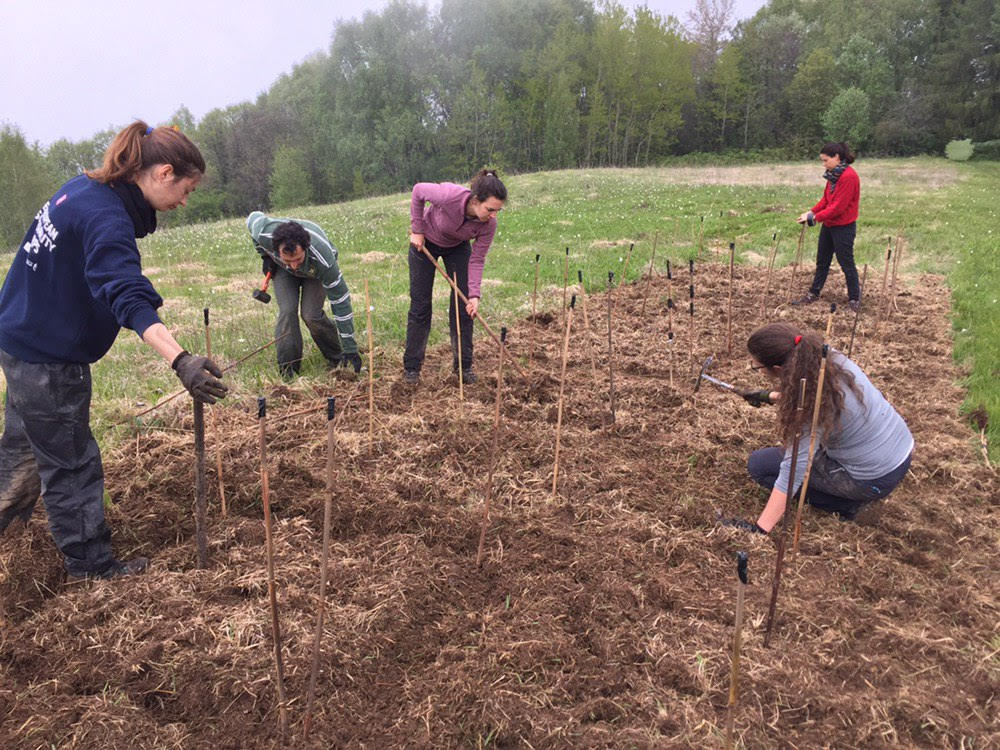
Team work to install the experiment in Friuli (NE Italy).

Recent JBI paper. Geppert, C., Boscutti, F., La Bella, G., De Marchi, V., Corcos, D., Filippi, A., & Marini, L. (2021). Contrasting response of native and non‐native plants to disturbance and herbivory in mountain environments. Journal of Biogeography, 48(7), 1594-1605 https://doi.org/10.1111/jbi.14097

Motivation behind this paper. In temperate mountains, plant diversity is currently under threat by climate warming and human disturbance, while the same drivers promote non-native spread. Although biotic interactions should modulate plant invasions, it is still unclear how invertebrate herbivores can affect non-native spread. Most previous research focused on lab experiments, and we were surprised by the lack of experiments under realistic field conditions investigating the interaction between global change and herbivory in plant invasions. We decided to design such a field experiment. In this paper, we report findings from a large manipulative experiment along an elevational gradient designed to disentangle the effects of climate warming, human disturbance, and herbivory on the establishment dynamics of native and non-native plants.

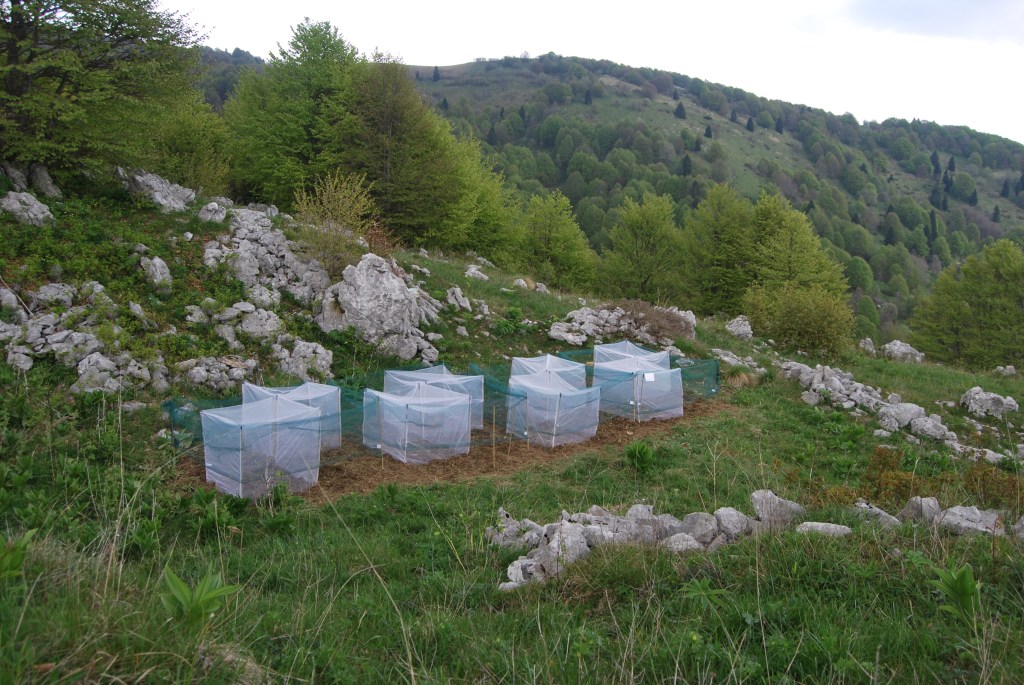
Experimental set up: after disturbing the soil, we installed in half of the plots cages to exclude herbivores.

Key methodologies. Often studies on plant redistributions disregard biotic interactions. Moreover, research on herbivory and global change is carried out mainly in controlled environments, while the experiments that are under realistic field conditions usually involve transplanting and, thereby, overlook plants’ natural establishments. The novelty of this paper is to consider herbivory and to observe the natural dynamics of plant invasions. We selected fifteen dry semi-natural grasslands along an elevational gradient (0 – 1300 m) in the European Alps. In each grassland, we manipulated soil disturbance, nitrogen deposition, and invertebrate herbivory. Then, we followed the natural establishment under real field conditions of both native and non-native plants for one growing season.

Unexpected challenges. Tilling the soil and installing the 120 herbivory exclusion cages in fifteen sites along the elevational gradient proved to be quite challenging. Together with two enthusiastic MSc students, I planned to install the experiment over a few days, but, on the first day, we ended up exhausted with only two out of the fifteen sites ready. That night we called for backup, and luckily three days later, we were ready to start the experiment.

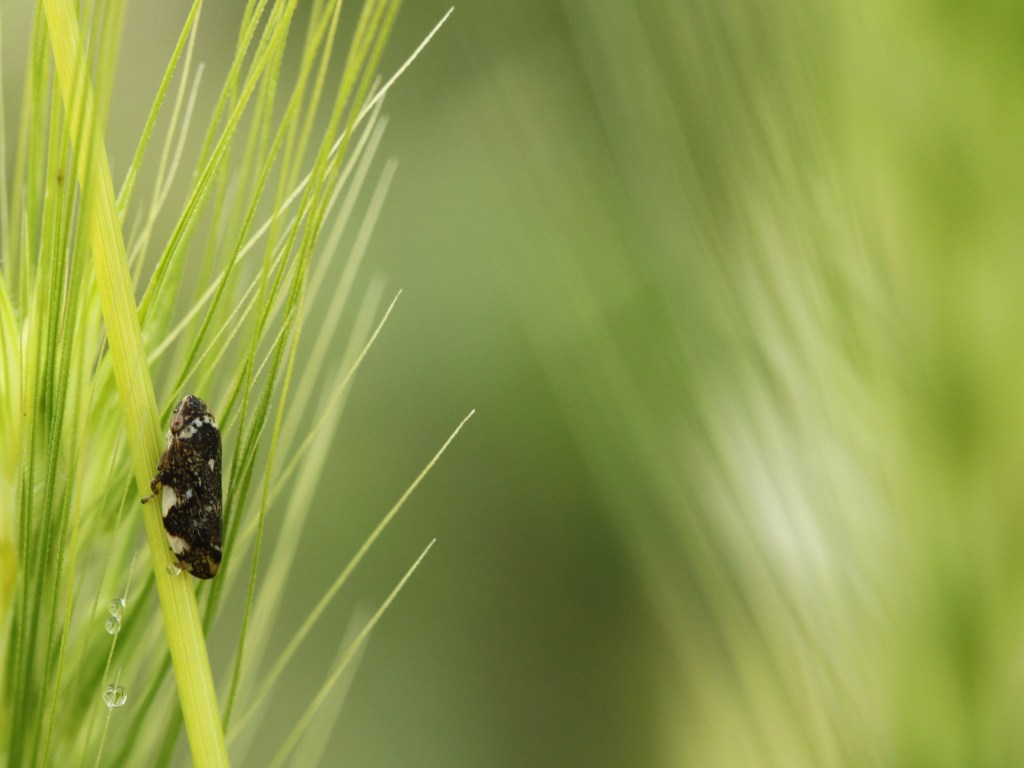
Philaenus spumarius L., meadow spittlebug, one of the many arthropod herbivores found in our study area (NE Italy). Photo by Francesco Sanna.

Major results. Our findings show that the combination of warm temperatures and human-induced disturbance favoured non-native plant establishments over natives, suggesting that global change will promote the further spread of non-native plants in mountain environments. Moreover, invertebrate herbivores played an important role in invasion dynamics. Natural herbivory pressure from invertebrates might amplify the negative effects of disturbance on resident native species, facilitating the emergence and growth of non-native species. Our experiment is one of the first to elucidate the complex interactions between biotic and abiotic drivers of plant invasions.

Next steps for this research. The next step would be to observe how the novel plant communities were established and developed after our manipulations over a long time. Unfortunately, we had to stop our experiment after one year because of Covid restrictions, but we are continuing to investigate plant distributional changes and plant-herbivore interactions under global change with new observational studies and experiments. In addition, it would be extremely interesting to understand whether functional traits can explain plant community responses to global change and whether we would be able to make predictions based on community traits.

Dry grasslands rich in plant species before tilling the soil in the Italian Alps. Photo by Lorenzo Marini.

If you could study any organism on Earth, what would it be? The story of my fascination with plants and insects goes back to my childhood, but as a conservation ecologist, what is most compelling to me are biotic interactions and species responses to environmental change. After all, I would be curious about any organism!

Anything else to add? This research is part of my PhD thesis, and this experiment would not have been possible without the help of Greta and Vittoria, two MSc students that were motivated enough to carry out with me four 4 months of fieldwork. Also, the collaboration with Francesco, an expert botanist from Udine University, was essential for teaching and helping us identify the 264 plant species even when they were small seedlings.

ECR Feature: Shahan Derkarabetian on the biogeography of opilionoid arachnids

Shahan is a postdoc at the Museum of Comparative Zoology, Harvard University. He is a systematic and evolutionary biologist with a keen interest in Opiliones, an order of arachnids. Shahan shares his recent work on the opilionoid family, Triaenonychidae, investigating the role of geological events and past climate on their geographical distribution.

Shahan Derkarabetian sifting leaf litter for triaenonychids in southern Australia. Photo courtesy Jennifer Trimble.

Personal links. Twitter

Institute. Museum of Comparative Zoology, Harvard University

Academic life stage. Postdoc

Major research interests. Opiliones, Systematics, Evolutionary Biology

Current study system. My current and ongoing study system is a group of arachnids called Opiliones (a.k.a. harvesters, harvestmen, daddy-long-legs). A plethora of reasons make Opiliones interesting, including their diverse morphology and behaviour. There are Opiliones that are covered in sharp spines, some that are as green as moss, some that aggregate in groups numbering in the1000s, some that build mud nests, and so much more. Another reason is because there is still much to discover about their basic biology and ecology, and there are still many new species that need to be described, even from places that are considered well studied, like North America.

Recent paper in JBI. Derkarabetian S, Baker CM, Giribet G. 2021. Complex patterns of Gondwanan biogeography revealed in a dispersal-limited arachnid. DOI: 10.1111/jbi.14080

Motivation behind this paper. This study focused on one family of Opiliones, called Triaenonychidae, that we have been working on for many years. This group is widely distributed throughout the temperate forests of the southern hemisphere in continents associated with Gondwana. Our motivation for this study was to determine their biogeographic history through geologic time, and how geologic events and climate shaped their present-day distribution and diversity. Previous research suggested very complex patterns of geographic distribution not found in other studies of Gondwanan taxa, which is especially interesting given their low dispersal ability. We wanted to explore this complexity in more detail using modern phylogenomic approaches.

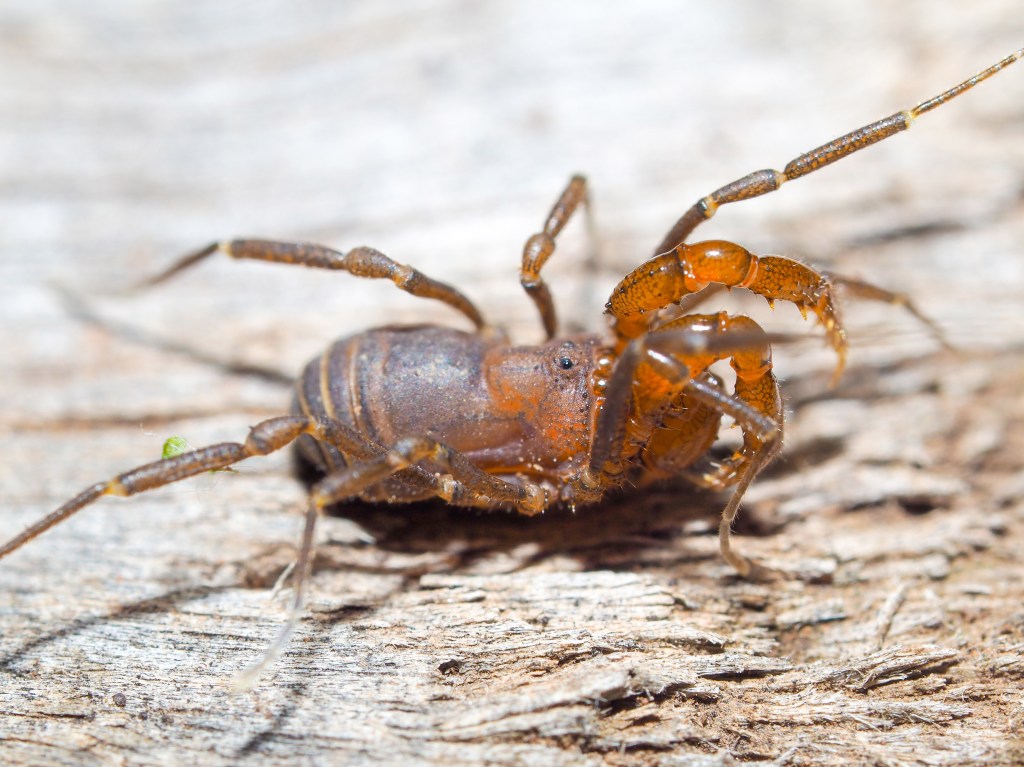
A representative of a new and undescribed genus of Triaenonychidae from southern Australia. Photo by Shahan Derkarabetian.

Key methodologies. We relied on excellent taxon sampling for this study; we included ~80% of the 100+ genera in this family. These specimens were either acquired through fieldwork we conducted ourselves over the last 20 years, or through borrowing specimens held in natural history museum collections all over the world. Using modern sequencing approaches we not only included all the freshly collected specimens but were also able to sequence DNA from historical museum specimens collected up to 100 years ago. Our thorough sampling allowed us to infer both large scale inter-continental patterns as well as more regional geographic patterns within continents.

Unexpected challenges. The big challenge for this research was integrating all the sources of information to form a cohesive picture of the biogeographic history of this group. We inferred a phylogeny with dated taxonomic splits and had to correlate these relationships and dates with both the geologic and paleoclimatic history. In order to tie these disparate sources of information together I had to do some deep dives into the literature for geologic reconstructions, paleoclimate reconstructions through time, and learn a bit about how plant fossils are used as indicators for past regional climates. Much of this was new to me as a scientist, so the challenge was becoming familiar with it enough to put it all together and tell the story.

Shahan Derkarabetian searching for triaenonychids under woody debris, in typical southern temperate forest habitat of Tasmania, Australia. Photo courtesy Marshal Hedin.

Major results. In our study system, we found unexpectedly complex phylogenetic relationships and patterns in the geographic distribution of different lineages across continental landmasses. For example, the species that are endemic to New Zealand were found across 5–6 genetically distinct lineages, suggesting multiple transitions to New Zealand. Previous studies have tended to report fewer numbers of lineages within continents. Yet as evidenced from New Zealand taxa in our study, there can be incredible intra-continental diversity. We think these differences between our study and previous works have to do with the biology of these organisms. Triaenonychidae are low-dispersal organisms, so they are more directly affected by geologic events. However, they are not completely without dispersal, so they do have those very rare events where there is some chance of a long-distance dispersal event happening. This particular balance of dispersal ability led to geographic patterns and diversity shaped by both geology and rare long-distance dispersal across small and large geographic ranges.

Next steps. We want to take more detailed looks at the biogeography of smaller more regional groups within the Triaenonychidae with better species level sampling. The biological characteristics of triaenonychids, specifically low dispersal ability and specific microhabitat preferences, make them great candidates for biogeography at large and small geographic scales. As such, we expect to find equally new and complex geographic patterns within continental regions. Another aspect we were unable to explore is rare long-distance dispersal. For example, there is a species endemic to the isolated Crozet Islands, for which we were unable to obtain samples for this study. With newly acquired samples, we can ask: how and when did that species get there, and where did it come from?

If you could study any organism on Earth, what would it be? I think I would still study Opiliones, but I would want to study the species that existed 200, 300, and even 400 million years ago. I do not mean as fossils, but as they existed in those times, which would mean I would need a time machine. There were many time periods that were critical to the formation of much of the modern-day diversity in Opiliones, and it would be very cool to see what they looked like, where they were distributed, and how diversity formed through geologic time.

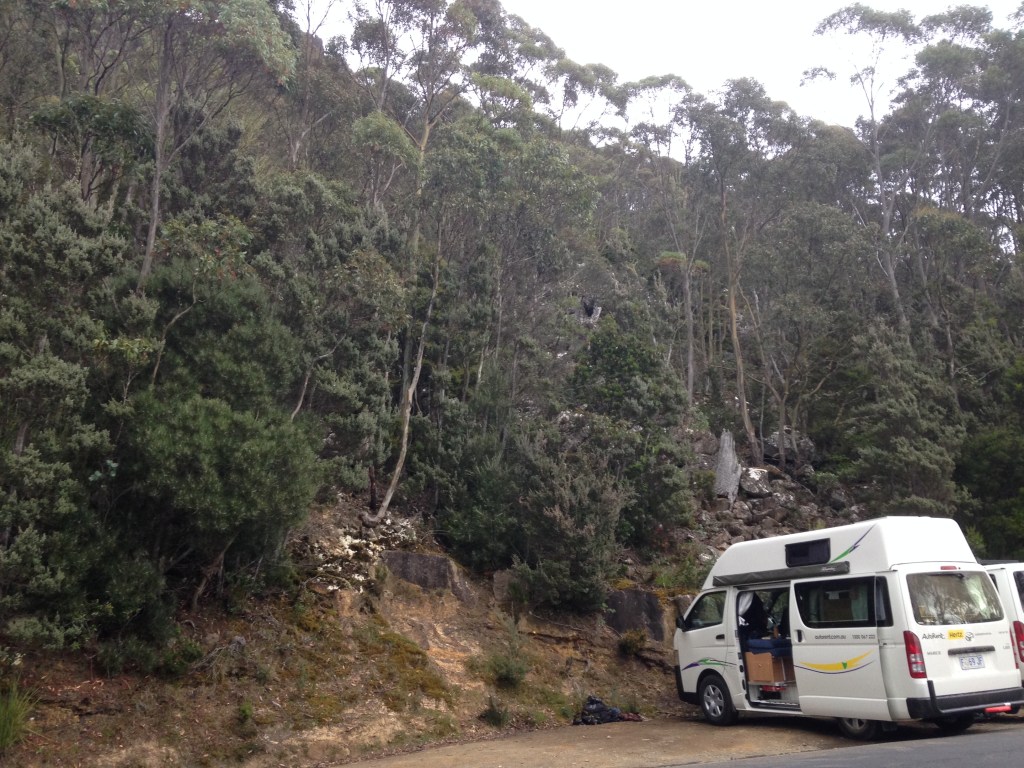
The joys of fieldwork in a campervan. Photo by Shahan Derkarabetian.

Anything else you would like to share? Fieldwork! This was of course the best part of doing this type of research. For this project I did quite a bit of fieldwork in south-eastern Australia, including Tasmania. Collecting Opiliones gives us a good idea of their preferred habitat, which helps infer biogeographic history. It also provides hints at the true amount of diversity that exists, especially what still needs to be described. Fieldwork often leads to new species discoveries, and Opiliones are no exception. From a two-week trip through southern Australia, we collected about 30–35 species, only five of which are formally named and described. As a taxonomist, this means I still have a lot of work to do!

ECR Feature: Jacob Suissa on the diversity of tropical montane ferns

Jacob Suissa is a PhD candidate at Harvard University. His major research interest is in the evolution of plants, particularly ferns. Jacob shares his recent work that has utilised vast herbarium records to understand global diversity in montane fern assemblages.

Jacob in the Tepui’s in the Brazilian highlands.

Links. Webpage | Instagram

Institute. Harvard University

Academic life stage. PhD candidate

Research interests. Plant evolution.

Recent paper in JBI. Suissa J et al. (2021) Mountains, climate and niche heterogeneity explain global patterns of fern diversity. https://doi.org/10.1111/jbi.14076

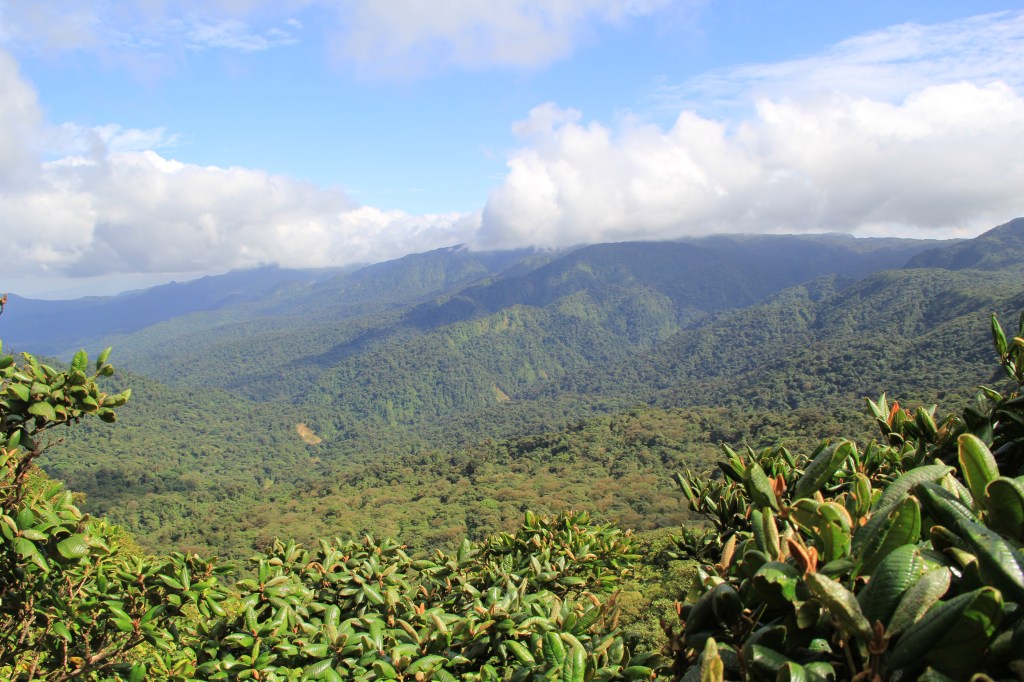
Whether its collecting plants in the Peruvian Andes or the New England Berkshires, mountains have always fascinated me. Specifically, I am captivated by the way vegetation drastically changes as I ascend a mountain. Mountain ranges across Earth, however, are not all the same with respect to their diversity. Tropical mountains contain many more species than temperate mountains of similar or larger size. For instance, there are over 10,000 flowering plant species in the Talamanca Mountain range in tropical Central America, compared to only around 5,000 species in the temperate Rocky Mountains (the “Rockies”) of North America. This difference is even more striking when considering their size: the Rockies are 3,000 miles long with a maximum height of over 14,000ft, while the Talamanca’s are only 250 miles long with a maximum height of 12,500ft. Determining what drives this uneven distribution of species across tropical and temperate ecoregions is a major biogeographical question.

Visa of the Costa Rican continental divide along the Talamanca Mountain range. 

I study ferns, the second most diverse group of vascular plants, and they are a great study system for understanding these patterns of biodiversity. Contrary to the common depictions of ferns as ancient shade and water loving plants, the majority of fern diversity is actually relatively young (<100 my), and they occur in a variety of different ecosystems ranging from lowland desert outcrops to the high elevation Páramo (tropical alpine meadows). For over 100 years it has been suggested that, relative to temperate mountains and the lowland tropics, tropical mountains may contribute disproportionately to shaping the patterns of global fern biodiversity. Massive amounts of digitized herbarium specimen data exist (from decades of botanical collections) that could be used to explore these biogeographic patterns. However, to date, no such study has been conducted.

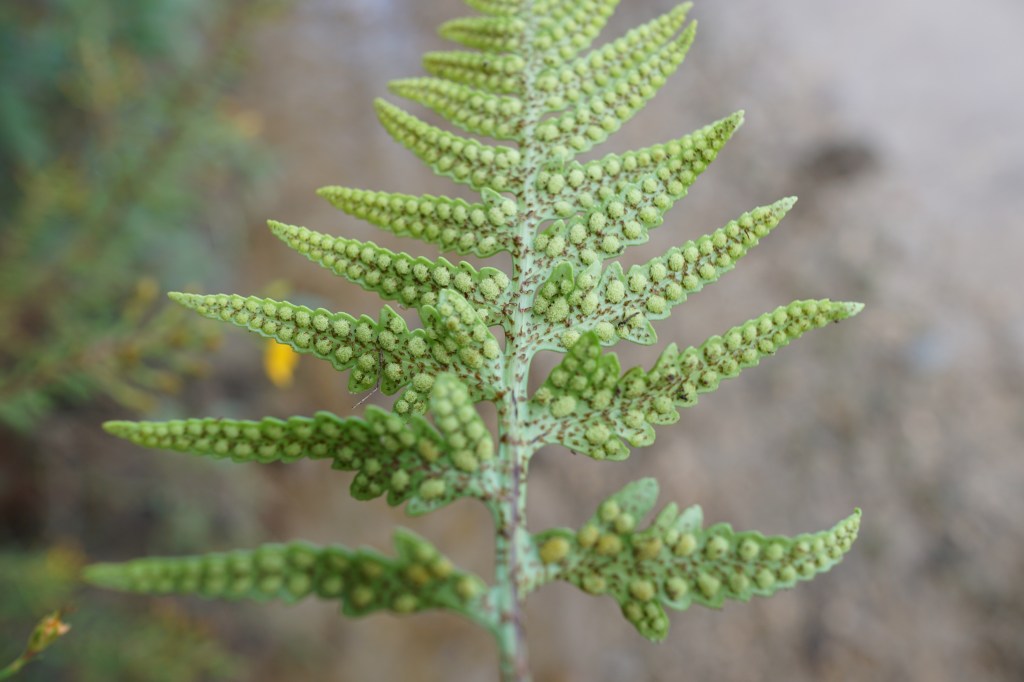
Pleopeltis from the Peruvian Andes

In our paper, we stand on the shoulders of past botanists by leveraging over 800,000 global occurrence records for nearly 8,000 fern species from the database of digitized herbarium records hosted on the Global Biodiversity Information Facility (GBIF). We integrated these occurrence data with genetic and climatic information to uncover how historical, ecological, and evolutionary processes contribute to patterns of global fern biodiversity. We first divided the Earth into a series of 1×1˚ grid cells and quantified a series of metrics within each cell including species richness, environmental variability, and lineage diversification. We discovered that the majority of fern species (58%) occur in eight principally montane hotspots that only cover a total of 7% of Earth’s land area. These spots include the Greater Antilles, Mesoamerica, the tropical Andes, Guianas, Southeastern Brazil, Madagascar, Malesia and East Asia. Importantly, within these hotspots we found that fern diversity is highest above 3500ft in elevation and peaks around 8,000ft in the tropics, which corresponds to cloud forests, the home of fern epiphytes. This recovered pattern echoes the importance of tropical mountains and cloud forests in contributing to fern biodiversity.

            Once we had characterized general trends in species richness, we turned our attention to understanding the ecological and evolutionary processes that generated these patterns. We incorporated climate, soil, and topological data and found a strong positive relationship between increased climatic space with species richness and diversification within our montane hotspots. These patterns suggest that ferns might be undergoing greater lineage diversification across ecological gradients within tropical montane ecosystems, compared to adjacent lowlands and temperate mountains. Lowland tropical rainforests like the Amazon are touted for their plant biodiversity; while they are diverse for certain organisms like woody trees, herbaceous understory fern species are quite depauperate. We think that this is because of the relatively low diversity of different ecosystems in these lowland tropical zones. Furthermore, unlike temperate mountains, a unique set of dynamics occurs in tropical mountains. First, in the tropics small amounts of elevational change leads to a high degree of climatic change, which creates a series of stacked ecosystems within a small geographic space. Second, there is very low temperature seasonality within each of these stacked ecosystems, meaning each habitat band is climatically stable throughout the year. The relationship between these two processes creates a diversity of seemingly allopatric or isolated habitats in a relatively narrow geographic space, and we suspect that these processes facilitate greater diversification of ferns across elevational gradients in tropical mountains, relative to adjacent lowlands and temperate mountains.

Descending Cerro Bruster (Panama) with bags full of ferns.

Our findings are not only important for deepening our understanding of global patterns of fern biodiversity, but also for contextualizing biodiverse regions for conservation. With the discovery of fine-scale patterns of geographical and elevational diversity in a major group of land plants, we can pinpoint where on Earth the important centers of biodiversity are. Given that tropical montane plant communities are at a disproportionately higher risk of climate-induced extinction, knowing that these sites are biodiversity hotspots can help make decisions on conservation efforts in the face of anthropogenic and climate-mediated habitat destruction.

ECR Feature: Thiago Laranjeiras on avian diversity in Amazonian floodplains

Thiago Laranjeiras is an an environmental analyst at Instituto Chico Mendes de Conservação da Biodiversidade. He is a biogeographer with a keen interest in the ecology and biodiversity of birds. Thiago shares his recent work on transitions in avifauna communities across floodplain habitats in the Amazon.

Name. Thiago Orsi Laranjeiras

Personal links. Web page | ResearchGate | Flickr

Institute. Instituto Chico Mendes de Conservação da Biodiversidade (Chico Mendes Institute for Biodiversity Conservation)

Current position. Environmental analyst.

Major research themes. Biogeography, ecology, natural history, ornithology, and conservation.

Current study system. I studied Amazonian birds during my PhD, especially those that inhabit floodplain forests. Amazonia is home to more than 10% of all known bird species, yet most of them are poorly studied and are data deficient. Many of the birds that inhabit the Amazonian floodplains are habitat specialists and have restricted distributions. They are conspicuous, with loud beautiful songs that can travel far distances over river water. Listening to a dawn-chorus while drifting down the river in a boat is an incredibly peaceful activity.

Klagesi’s antwren, Myrmotherula klagesi, one of the floodplain forest bird specialists that best represent the effects of the confluence of the Negro and Branco rivers for the floodplain avifauna

Recent paper in JBI. Laranjeiras TO, Naka LN, Leite GA, Cohn-Haft M. Effects of a major Amazonian river confluence on the distribution of floodplain forest avifauna. J Biogeogr. 2021;48:847–860. https://doi.org/10.1111/jbi.14042

Motivation behind this paper. One of Amazonia’s most striking features is the diversity of “colors” of its many rivers. Different drainages associated with distinct geological features (the Andes, the sandy-soil lowlands or the Brazilian and Guianan shields) create ‘white’, ‘black’, and ‘clearwater’ rivers. These different river types are also associated with varying biodiversity. Previously, comparing distinct rivers in the Rio Negro basin (in northwestern Brazilian Amazonia), the world’s largest blackwater river, it became clear that these nutrient-poor waters create floodplain forests that contain distinct avifauna from those found in sediment-rich whitewater rivers. However, not everything was “coffee au lait” or “weak black tea”. We found “intermediate” avifauna in some of the rivers. Also, rivers of distinct water types can meet and such river confluences, as critical hydrogeological phenomena, may have important implications for floodplain systems. Those who are familiar with the “meeting of the waters” of the Rio Solimões and the Rio Negro itself, in front of Manaus (the largest Amazonian city), can easily notice the magnitude of such confluences. The relevance of mixing distinct water types on floodplain terrestrial fauna has so far been largely overlooked. So, we went to the Rio Negro at the confluence with its largest tributary, the sediment-rich whitewater river, the Rio Branco, to characterise diversity variation between mixed and unmixed water types.

The meeting of two Amazonian rivers, showing the contrasts in the water and in the floodplain forests (the blackwater Rio Canumã and the whitewater Paranã do Urariá, in the Brazilian state of Amazonas)

Key methodologies. To investigate how the entrance of the Rio Branco affects the avifauna along the Rio Negro, we implemented a rapid and standardized avian sampling of floodplains of both riverbanks and nearby islands, above and below the confluence of the two rivers. Focusing on the commonest bird species that are easily identified by song, this rapid and standardized sampling allowed us to cover a huge area in a relatively small time period (stretching more than 400km of rivers). It took us a few field expeditions to sample 52 sites. More complete and traditional avian inventories would take decades. In a similar way, we retrieved estimates of sediment concentration in river water (a main parameter in Amazonian water type classification) using satellite imagery. Covering a 15-year time-series, these estimates avoided the limitations of direct measures of sediment concentration in the field in a single period and allowed us to better understand the variation throughout the confluence of these two rivers.

Major results. We found a mixed and richer avifauna along the Rio Negro below its confluence with the Rio Branco. Bird species that are typical of whitewater floodplains occurred predominantly on the left riverbank or nearby islands of the lower Rio Negro, on the same side into which the Rio Branco sediment-rich waters seem to be channelled. Rather than just representing a potential blackwater barrier between whitewater systems, the lower Rio Negro comprises a unique biogeographical transitional zone. These results indicated the importance of the dynamics and distribution of nutrient-rich sediments and that confluences of large Amazonian rivers not only affect aquatic species, but also the distribution of floodplain terrestrial fauna. Several other confluences of contrasting large rivers occur throughout the Amazon and these phenomena emerge as a key factor explaining boundaries of species’ distributions and geographic patterns of Amazonian floodplain biodiversity.

Wire-tailed Manakin, Pipra filicauda, a typical floodplain forest bird species of the Rio Negro basin

Challenges you overcame. Despite our rapid approach, sampling all the 52 sites along the confluence still had its challenges. To optimize the time in the field, we had to navigate at night from one site to another, including along stretches away from the main channel of the river. Given water level of the river was descending, some sandbars were still submerged, but close to the water surface. Navigating in this situation requires a lot of experience from the boat driver and the use of the sonar to avoid hitting the sandbars.  However, one time we miscalculated, and our boat literally jumped out of the water! Fortunately, it was a small sandbar, so we narrowly missed a stranding that would have been disastrous for continuing our field work!

Thiago boating between sampling sites.

Next steps. To look at other dimensions of the diversity than taxonomic (phylogenetic and functional) is a natural next step for understanding heterogeneity of the Amazonian floodplains and the importance of major river confluences. Investigating other confluences will also shed light on the generality of the patterns we found. Overall, synthesis of avian geographical patterns in Amazonian floodplains would offer a new background for future studies on the evolution of these ecosystems, providing new guidelines for conservation of Amazonian avian diversity. I hope such work is conducted in the near future.

If you could study any organism on Earth, what would it be? Birds are organisms hard to let aside. Their diversity and geographic patterns are captivating. Rather than other organisms, I feel that I would study birds from other regions. Amazonia is deeply fixed in my dreams. There are other huge and interesting rivers confluences and even poorly explored rivers, filled with poorly known birds and communities. I have been talking to myself for years about a long-term expedition, navigating through several Amazonian rivers from the mouth to their headwaters. Also, on my radar are the remote, almost untouched Amazonian mountains, the tepuis. Recently, I also had the opportunity to explore some of them, but this is another subject. Altogether, I feel that Amazonia is where we arrived with one question to leave with ten or to never more leave.

Sun rise provides an incredible background for listening to the dawn-chorus of birds in the floodplain forest of Anavilhanas in the lower Rio Negro.

Anything else you’d like to add? I would like to say that this research, as well as my journey as a biologist, would not be possible without support from many important people and institutions. To study birds in the remote Amazonian floodplains is a privilege. I feel that I am worth of such privilege by making Amazon my home for more than 15 years. As an environmental analyst, I also have the opportunity to apply and put in practice the ecological and biogeographical concepts into biodiversity conservation, especially regarding the protected areas in the Brazilian state of Roraima. To put these concepts into conservation practice is a duty that I am happy to deal with. Finally, I think we still need to improve our ability to communicate our results from biodiversity research with the general public, using all available media. I hope here we make greater progress in this area.