Göktug is a PhD student at Hacettepe University. He is an ecologist with a special focus on the wildfires. Here, Göktug shares his recent work on different factors influencing the distribution of tree cover in Central Anatolia.
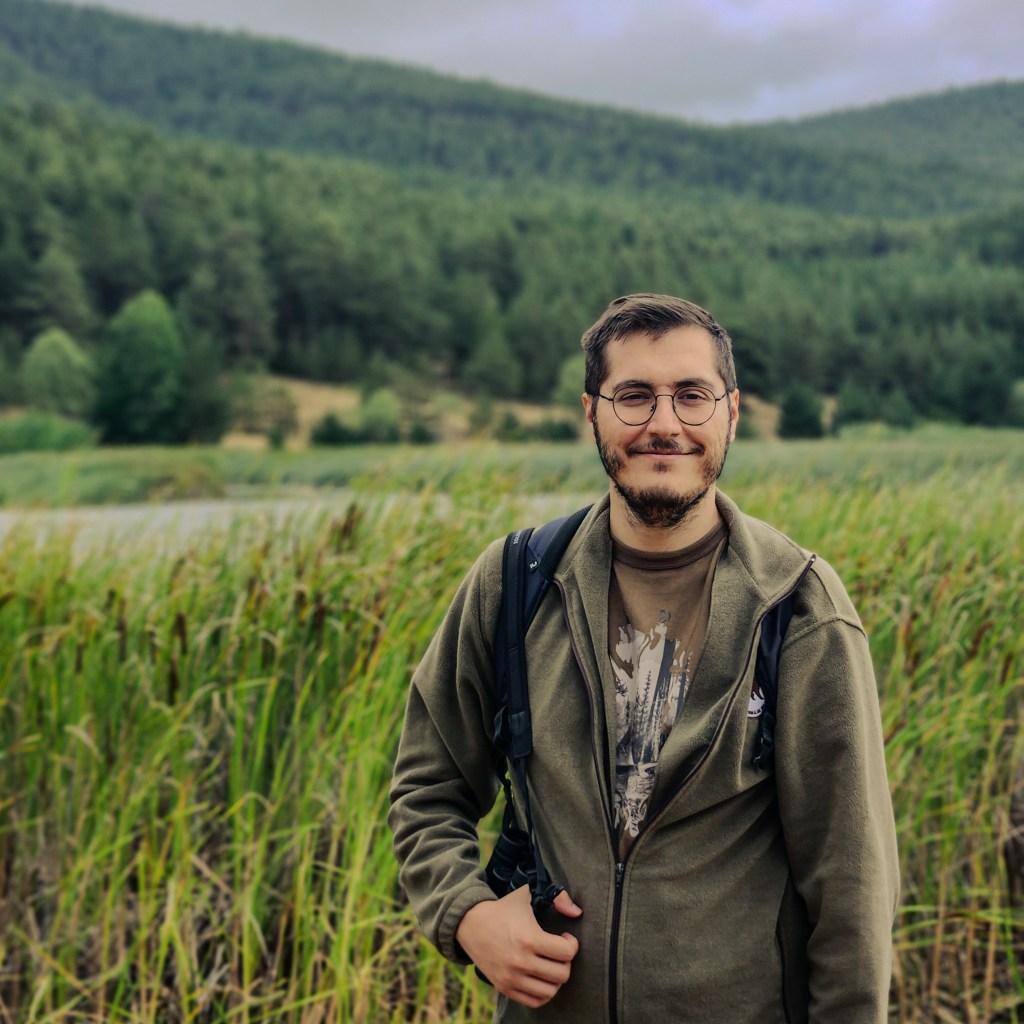
Mehmet Göktuğ Öztürk, PhD student at Hacettepe University, Türkiye.
Personal links. Personal website | Github | GoogelScholar | LinkedIn | BlueSky
Institute. Hacettepe University, Türkiye
Academic life stage. PhD Student
Major research themes. Ecology, fire ecology, biogeography, ecological modeling, spatial data science, and R programming
Recent paper. Bernardi, R. E., Bekar, İ., Öztürk, M. G., & Tavşanoğlu, Ç. (2026). Climate extremes, soils and topography, and past and present land use shape tree cover in Central Anatolia (Türkiye). Journal of Vegetation Science, 37(3), e70154. https://doi.org/10.1111/jvs.70154
Current study system. Wildfires and the distribution of biomes. I am trying to understand nature, with a particular focus on ecology. Complex phenomena in ecosystems: Why, how, where, and when do they occur? How are wildfires distributed geographically, and why are they distributed in that way? What are the natural and anthropogenic drivers influencing the fires? Why do boundaries exist between two biomes or ecosystems? What factors determine these boundaries? It is questions such as these that are the fundamental driving force behind my journey to understand and make sense of nature. For me, it is a very exciting process.
Motivation behind this paper. Steppes and other open ecosystems are often undervalued compared with forests, in Türkiye as elsewhere in Eurasia, and the world, despite their rich biodiversity and important ecosystem services. In Türkiye, many old-growth steppes are seen as secondary vegetation, the supposed result of centuries of human-driven deforestation. This view has encouraged large-scale afforestation, which now threatens steppe biodiversity. Many steppe areas also lack legal protection, leaving them vulnerable to land-use change: about half of Central Anatolia’s grasslands have already been converted to agriculture. Yet what determines tree cover across this region is still poorly understood. Understanding these drivers is essential for interpreting the natural dynamics of Central Anatolian ecosystems and for guiding their conservation and management.
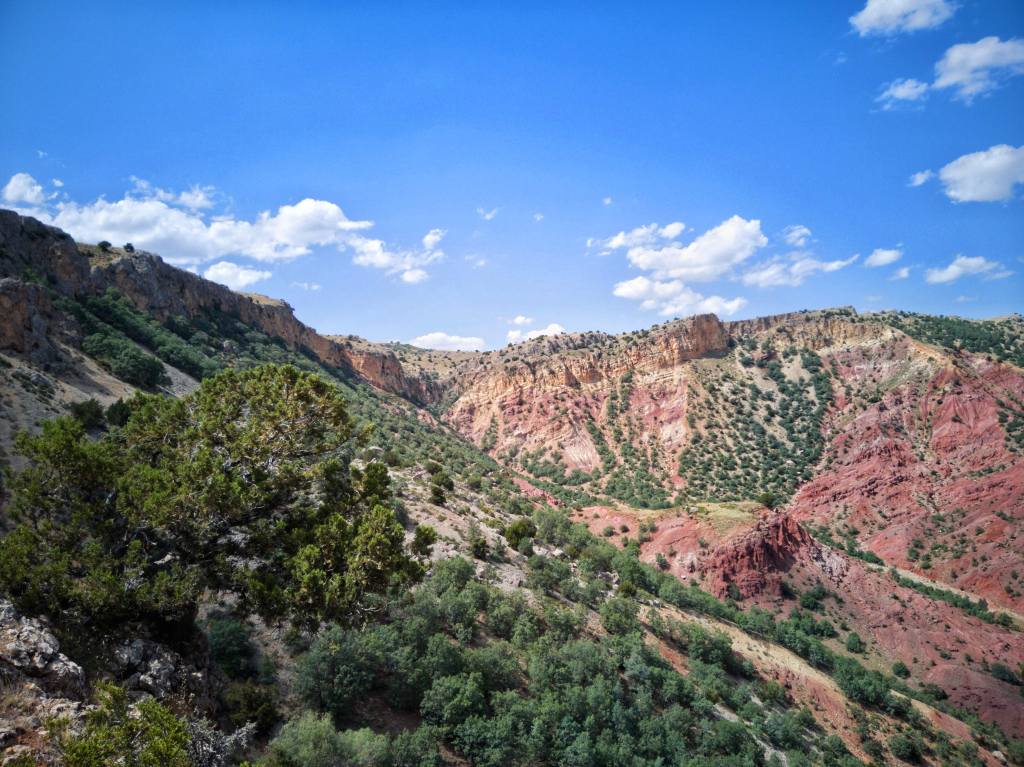
Forest steppe in Kırıkkale – Central Anatolia. Main species are Quercus pubescens, Juniperus excelsa, and Juniperus foetidissima
Key methodologies. We set out to explain where trees grow across Central Anatolia (127,000 km²), using 33 variables: climate, soils, terrain, land use, livestock and fire. We matched all data to the 100 m grid of the Corine tree-cover map and randomly sampled about 160,000 cells. Because most cells have no trees at all, we split the question in two: where do trees occur, and where they do, how dense is the cover? We then dropped factors that told the same story as others (33 down to 17) and built our models step by step, keeping only what clearly improved them.
To account for potential confounding factors, we split livestock into intensive and extensive production by breed to better represent grazing pressure, separated cropland fires from other fires, and used forestry records to test for plantation bias. Planted trees did not change our results.
Unexpected challenges. Tree cover was lowest where temperature extremes were greatest, and temperature range was the strongest single climatic predictor. The effects of disturbance were weaker than we expected: fire reduced tree cover only slightly, seems to be mostly linked to agricultural burning, and livestock effects were detectable but weak. The latter may reflect the coarse resolution of the livestock data, since more detailed data might reveal a stronger effect.
Our main challenge was data availability. Livestock data were publicly available only at the county level, which limited our ability to detect grazing effects; messy data also required extensive data wrangling. In addition, no comprehensive map of afforested areas exists for Central Anatolia, so we obtained forestry records for about 30% of the region and used them to test for plantation bias.
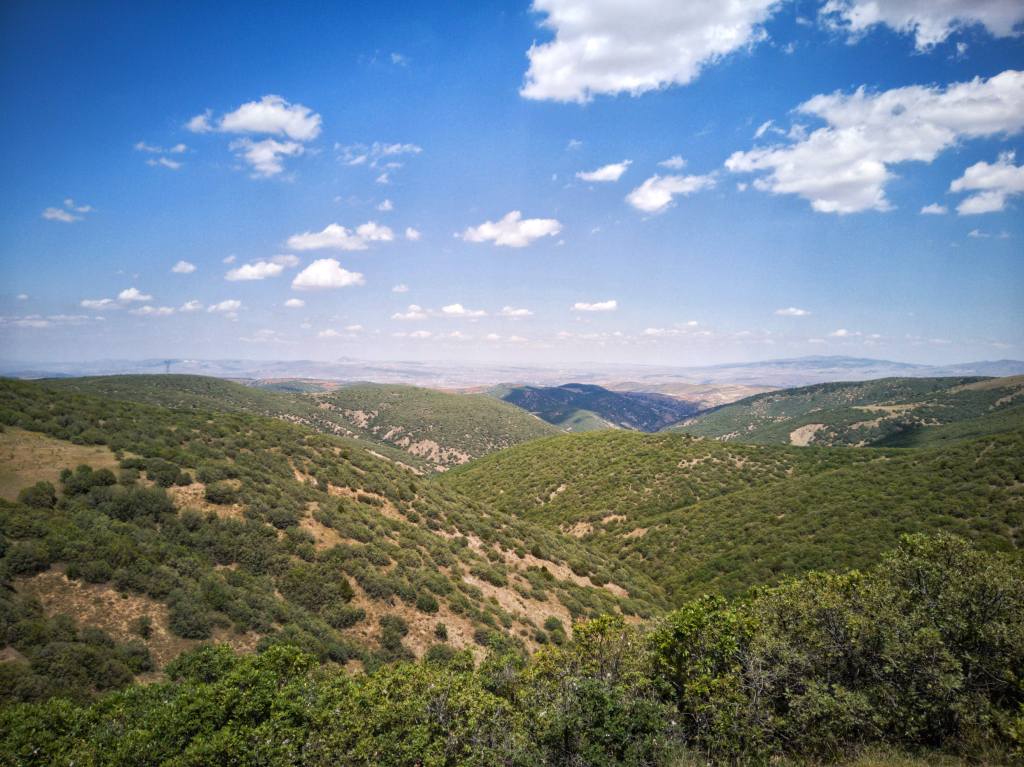
Forest in Kırıkkale – Central Anatolia. Main species are Quercus pubescens, Quercus macranthera ssp. syspirensis, and Juniperus spp.
Major results. Our major result is that tree cover in Central Anatolia is shaped mainly by environmental constraints rather than by deforestation alone. Our models explained 28% of the deviance in tree presence and 33% in tree cover, a reasonable level for broad-scale ecological data. Trees were limited by poor, saline-sodic soils and by temperature and precipitation extremes, and were concentrated in mountainous, rugged terrain that offers resources and protection from land use. Agriculture and extensive livestock were associated with lower tree cover, while proximity to human settlements was associated with higher cover.
These findings question the widespread view that steppes are secondary vegetation produced by human deforestation. They are consistent with interpreting Central Anatolia’s steppes within the old-growth grassland and alternative-biome framework. This is relevant for conserving steppe ecosystems and for designing more resilient afforestation strategies that account for climate and soil limits, especially under climate change.
Next steps for this research. The next step in this research is to study the borders of ecoregions and biomes in more detail. We would like to investigate the dynamics of transition areas more deeply and more generally.
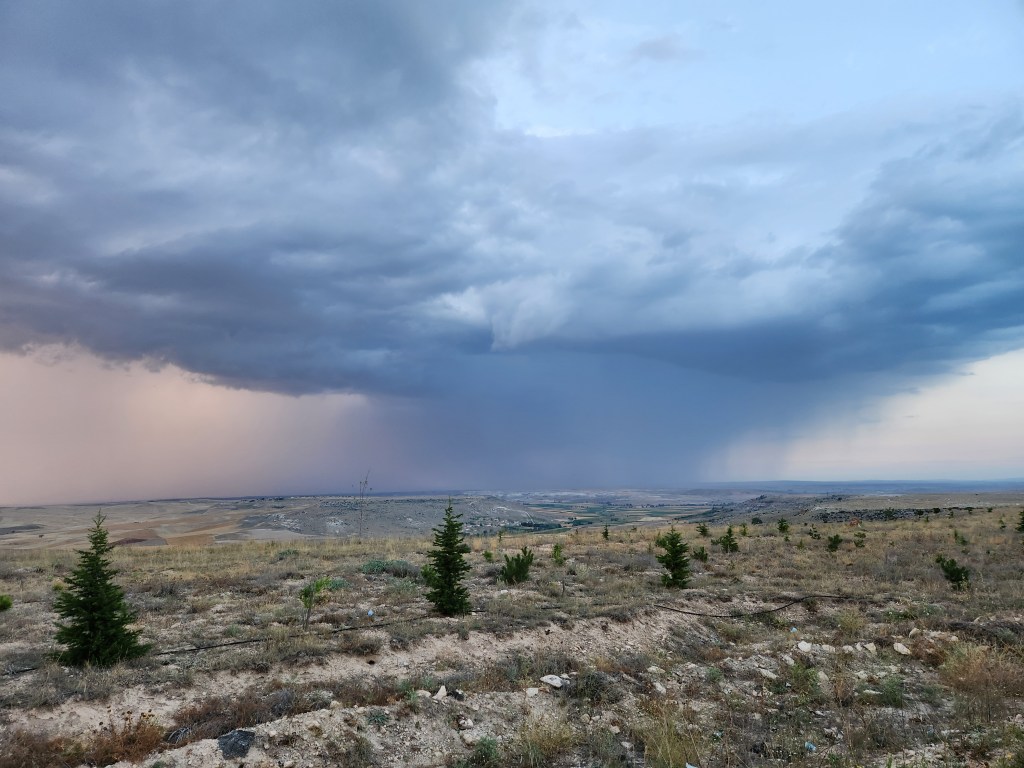
Cedrus libani afforestation in primary steppe area in Yozgat – Central Anatolia.
If you could study any organism on Earth, what would it be? I’m drawn to organisms with the strongest and most complex interactions with other species and with the abiotic parts of their ecosystems. Keystone species like wolves, bears, lynx, leopards and vultures come to mind, and so do my beloved oaks and junipers, which structure whole ecosystems. That said, the organism matters less to me than the question: I care most about good scientific hypotheses and contributing to ecological theory.
Is there anything else you would like to tell us about yourself or your featured research? I love nature and the way its parts interact, and I like digging into the origins of things: why a pattern exists, not just what it looks like. That is why I enjoy maths, statistics and programming. They are the tools that let me ask these questions properly, and I want to keep deepening them to feed my curiosity about ecology, science and nature.

